

Learning how to make bacon in air fryer setups has transformed breakfast routines for home cooks everywhere. If you have ever struggled with messy stovetop splatters or unevenly cooked strips in the oven, this method offers a cleaner and more efficient alternative. By utilizing the rapid convection cooking power of an air fryer, you can achieve a perfectly crispy texture while effectively managing rendered fat.
This approach minimizes smoke and cleanup time, making it a favorite for busy mornings. Whether you prefer your breakfast meat extra crunchy or slightly chewy, mastering this technique ensures consistent results every single time you fire up your appliance.
Understanding the Mechanics of Air Frying Bacon
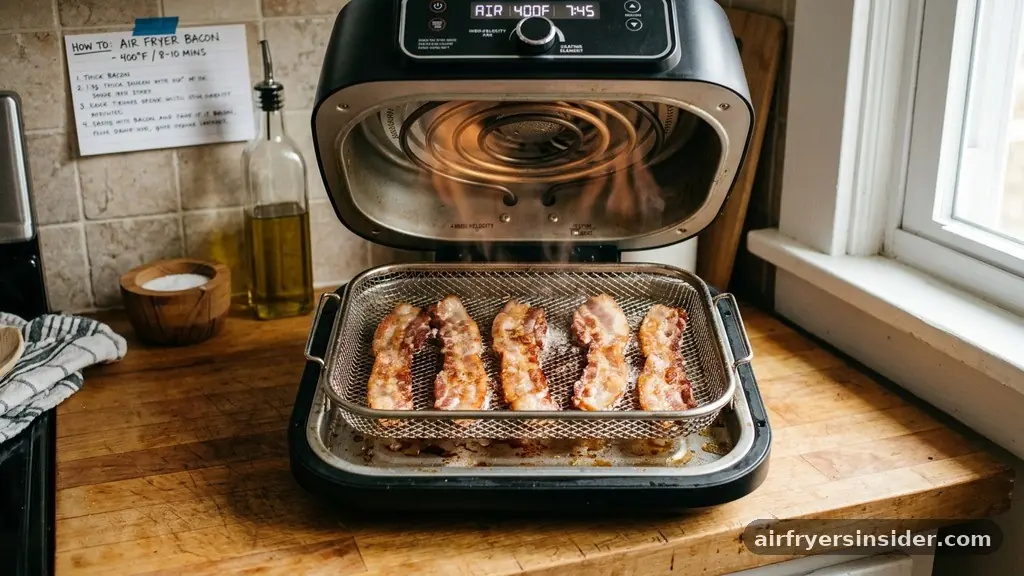
The primary appeal of using an air fryer for bacon lies in its unique convection cooking environment. Unlike a traditional frying pan where strips sit in a pool of their own rendered fat, the air fryer basket allows excess oil to drip away through the mesh into the grease tray below. This separation is crucial for achieving that signature crispy texture that many bacon lovers crave.
Because the heating element is positioned above the food, the high-velocity fan circulates hot air around the bacon strips. This constant movement ensures that heat is applied evenly across the entire surface area of the meat. As the fat renders, it evaporates or drips away, preventing the bacon from boiling in its own grease.
This process effectively speeds up the cooking time compared to conventional oven methods, which often rely on radiant heat from the sides or bottom. Understanding these mechanics helps you troubleshoot common issues like uneven browning or excessive smoke, as you can better anticipate how the machine interacts with the protein.
Essential Equipment and Preparation Steps
Before you begin, gathering the right tools will make the process much smoother and safer. You will primarily need your air fryer, a pair of kitchen tongs for flipping, and paper towels for blotting the final product. While some cooks prefer using aluminum foil or parchment paper to line the basket for easier cleanup, you must be careful.
Lining the basket can sometimes impede air circulation, which is vital for that desired crispiness. If you do use a liner, ensure it is perforated to allow the rendered fat to escape into the grease tray.
Preparation is minimal but important for the best results. Start by laying your bacon strips flat in the basket, ensuring they do not overlap excessively. While slight overlapping is acceptable, remember that the hot air needs to reach every part of the strip to cook it evenly.
If you have a large batch, it is often better to cook in multiple smaller rounds rather than crowding the basket. Cold bacon often separates more easily, so taking it straight from the refrigerator can actually make the arrangement process less frustrating than working with room-temperature, floppy strips.
Managing Bacon Grease and Smoke Points
One of the most frequent concerns when cooking with high heat is the accumulation of grease. Because air fryers are compact, large amounts of bacon fat can occasionally reach the heating element, leading to smoke. To prevent this, always ensure your grease tray is clean before you start.
If you are cooking a particularly fatty brand of bacon, consider adding a tablespoon of water to the bottom of the tray. This simple trick creates a barrier that prevents the dripping fat from reaching a high enough temperature to smoke.
Be mindful of the smoke point of the fat you are working with. While pork fat has a relatively high smoke point, the particulates in bacon can burn if they accumulate on the base of the machine. Regularly wiping out the bottom of your air fryer between batches is a simple habit that keeps your kitchen smelling fresh.
If you notice smoke, it is usually a sign that the grease tray is either too full or that the fat has reached its limit. Never ignore these signs, as they indicate that the unit needs a quick cleaning before you proceed with the next batch.
Optimizing Cooking Time and Temperature
Determining the exact cooking time for air fryer bacon depends largely on the thickness of the slices and your personal preference for texture. Most standard bacon cooks best at 350°F to 375°F.
At these temperatures, the fat renders slowly enough to crisp the meat without burning the edges too quickly. Thick-cut bacon will naturally require a few extra minutes, while thin-cut varieties may finish in as little as 7 to 9 minutes.
Recommended Cooking Guidelines
| Bacon Type | Temperature | Estimated Time |
|---|---|---|
| Thin-Cut | 350°F | 7–9 minutes |
| Standard-Cut | 375°F | 8–10 minutes |
| Thick-Cut | 375°F | 10–12 minutes |
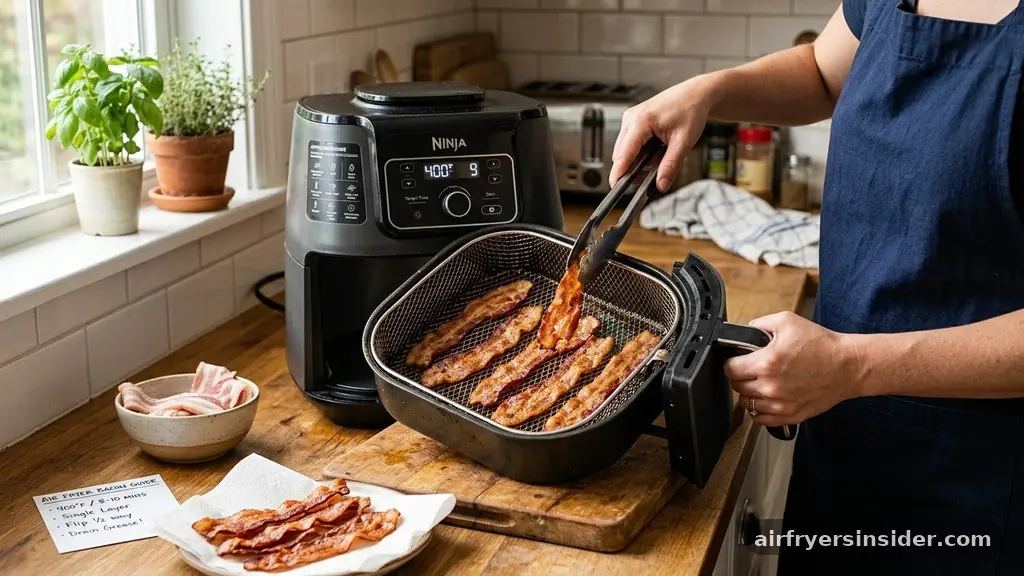
Start on the lower end of the time spectrum and check the progress. You can always add more time, but you cannot undo a burnt piece of meat. Using your kitchen tongs, flip the strips halfway through the cooking process to ensure both sides achieve the same level of crispiness.
Because every air fryer brand has a slightly different fan intensity and heating element proximity, your first attempt should be treated as a calibration run. Keep a close eye on the color, and aim for a deep, golden-brown hue rather than dark, charred edges.
Addressing Common Topical Gaps
Many enthusiasts often wonder if they should preheat their air fryer for bacon. While many modern units reach temperature almost instantly, preheating for two minutes can help start the rendering process immediately.
Another common question involves the use of a splatter screen. If your air fryer basket is deep, you might not need one, but if you have a model with an open top or a convection oven style, a splatter guard is essential to keep the interior clean.
Frequently Overlooked Tips
- Space your strips evenly to allow for maximum air circulation around each piece.
- If the bacon is too long for your basket, cut the strips in half before cooking.
- Always drain the cooked bacon on paper towels to remove any residual grease before serving.
- Save the rendered bacon fat in a jar for future cooking, as it adds incredible flavor to roasted vegetables.
One often-asked question is whether you can cook bacon with other foods. It is generally not recommended to cook bacon simultaneously with other items like toast or eggs.
The high amount of grease released can permeate other foods, and the cooking times rarely align. Stick to cooking the bacon solo to ensure the best flavor profile and to avoid cross-contamination of cooking cycles.
Ensuring Food Safety and Quality
Food safety is just as important in the air fryer as it is on the stove. While bacon is a processed meat, you should still ensure it reaches an appropriate level of doneness to be safe for consumption.
Although we often judge bacon by its visual crispiness, it is the internal temperature that confirms it has been cooked through. A safe internal temperature for pork is 145°F, though most people prefer their bacon cooked well beyond this point for the desired texture.
If you are cooking a large amount of bacon for a gathering, keep the cooked batches warm in a low-temperature oven set to 200°F. Never leave cooked bacon sitting out at room temperature for more than two hours, as it can quickly become a breeding ground for bacteria.
Store any leftovers in an airtight container in the refrigerator and consume them within three to four days. Reheating in the air fryer for just 60 seconds will bring back that fresh, crispy texture that microwave reheating simply cannot replicate.
Selecting the Right Bacon for the Appliance
Not all bacon is created equal, and your choice of product will influence how it performs in an air fryer. Thick-cut bacon is generally the best candidate for this cooking method because it holds up well to the intense, circulating heat.
Thin or center-cut bacon can become brittle very quickly, sometimes turning into shards before you have a chance to flip it. Look for high-quality, dry-cured varieties if possible, as they contain less water and tend to render more cleanly.
Avoid bacon with excessive sugar or maple glazes if you are a beginner. While delicious, these sugars have a much lower burning point than the fat itself. They will caramelize and eventually burn, creating a sticky, blackened mess on your heating element that is difficult to clean.
If you must use candied or glazed bacon, wait until the final two minutes of the cooking cycle to brush on the glaze. This provides the flavor without the risk of ruining your meal or causing excessive smoke.
Troubleshooting Common Air Frying Issues
Even with the best instructions, you might run into minor hurdles. If your bacon is not getting crispy, the most common culprit is overcrowding. When the basket is packed too tight, the air cannot flow properly, and the bacon effectively steams rather than crisps.
Remove a few strips and try again; the results will be significantly better. If the bacon is curling up too much, you can try using a small metal rack or a weighted trivet designed for air fryers to keep the strips flat.
Another issue is uneven cooking where some pieces are burnt and others are raw. This usually happens in air fryers with uneven fan distribution. To fix this, rotate the basket 180 degrees halfway through the cooking time.
If your unit has a specific “hot spot,” make sure to move the strips that are cooking faster toward the perimeter or center, depending on where your model directs the airflow. Mastering these small adjustments will turn you into an expert at using your appliance for a wider variety of proteins beyond just simple breakfast staples.
Conclusion
Mastering the process of making bacon in air fryer appliances is a game-changer for your morning routine. By focusing on proper spacing, temperature control, and grease management, you can achieve professional-level results without the hassle of a messy stovetop. Remember that the key to perfect crispiness is allowing the hot air to circulate freely around each strip, so never crowd your basket.
With a little bit of practice, you will find the specific timing that works best for your preferred brand and thickness of bacon. Whether you are prepping for a weekend brunch or just want a quick protein boost for your salad, this method delivers consistent, delicious results every time. Start with a small batch today and enjoy the convenience of perfectly cooked bacon with minimal cleanup.


