

Deciding whether you can put a paper plate in an air fryer is a common dilemma for busy home cooks who want to minimize cleanup. While the convenience of using disposable tableware is tempting, the mechanics of these high-powered convection appliances make this practice risky.
Understanding how your machine generates heat is the first step toward keeping your kitchen safe and avoiding accidental fires. Before you reach for a flimsy plate to hold your snacks, consider the intense airflow and proximity to heating elements that define the air frying process.
The Mechanics of Air Fryer Heating
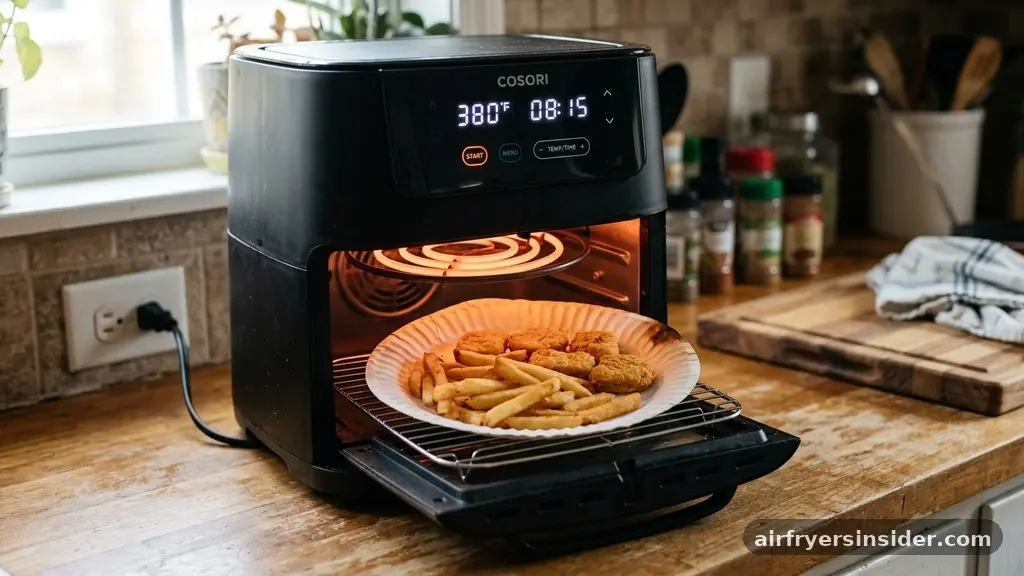
To understand why standard kitchen disposables often fail in this environment, you must look at how an air fryer operates. Unlike a traditional oven that heats air gently, an air fryer uses a powerful convection fan to circulate superheated air at high speeds. This intense airflow is designed to crisp food quickly, but it also creates a turbulent environment inside the cooking chamber.
The heating element sits directly above the food basket. When you introduce lightweight materials like thin paper, the air current can easily lift them toward that red-hot coil. Once a piece of paper touches the heating element, it will ignite almost instantly.
Even if the plate stays at the bottom, the ambient temperature inside the unit can often exceed the paper plate ignition temperature, which typically ranges between 400 and 450 degrees Fahrenheit. Because air fryers are designed to reach these temperatures rapidly, they can push materials past their thermal limits within seconds.
The Reality of Fire Hazards
The primary concern when operating any kitchen appliance is the risk of fire. Placing combustible materials inside an air fryer violates the fundamental safety protocols established by manufacturers.
Because the unit relies on high-speed air circulation, anything that isn’t heavy or secured can become a projectile. If a paper plate catches a draft, it can fold or lift, creating a direct path to the exposed heating element.
Fire prevention in the kitchen requires awareness of your equipment’s limitations. If you place a dry, thin plate inside, it acts as fuel. Should it ignite, the strong convection fan will act like a bellows, fanning the flames and potentially spreading fire into the ventilation system of the appliance.
This is why most manuals explicitly forbid the use of lightweight paper products. You should always keep a fire extinguisher nearby, but preventing the hazard by choosing appropriate accessories is a much smarter strategy for long-term safety.
Differentiating Between Paper Plates and Parchment Paper
Many users wonder why parchment paper is widely recommended for air fryers while paper plates are considered dangerous. The difference lies in thickness, composition, and how they are used.
Parchment paper is designed specifically for baking; it is thin, lightweight, and engineered to withstand high temperatures without catching fire. Crucially, when you use parchment in an air fryer, it must always be weighed down by the food you are cooking.
A paper plate, conversely, is often thicker, coated with waxes or plastics, and designed to be held in the hand. These coatings can melt or off-gas when exposed to the intense, dry heat of an air fryer. Furthermore, the shape of a plate creates a “sail” effect.
The air blowing across the surface can easily lift the edges of a plate, whereas a flat sheet of parchment stays pinned down by the weight of your chicken wings or vegetables. Never substitute a standard plate for specially designed liners.
The Dangers of Airflow Obstruction
An air fryer functions by forcing air to circulate around the food, which is what gives you that signature “fried” texture without the oil. When you place a plate inside the basket, you are effectively blocking the airflow obstruction that the appliance needs to work properly. If the air cannot move freely, the food will not cook evenly, and the appliance will struggle to maintain its temperature.
This struggle can lead to the machine overheating. When the sensors detect an imbalance, they may push the heating element to work harder, further increasing the temperature inside the chamber. This creates a dangerous feedback loop.
By placing a barrier like a plate between the air source and the food, you are not only risking a fire but also compromising the performance and lifespan of your expensive kitchen appliance. Proper convection heating requires an unobstructed path for the air to flow from the top, around the sides, and back up through the food.
Safe Alternatives for Easy Cleanup
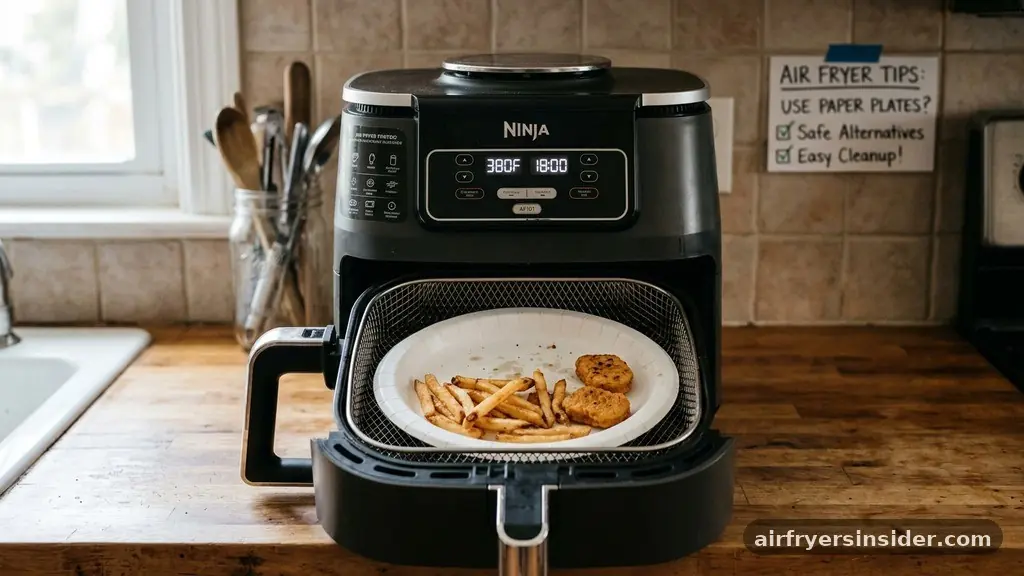
If your goal is to reduce the amount of scrubbing required after a meal, there are safer, engineered alternatives to paper plates. Investing in high-quality accessories will provide the same convenience without the risk of a kitchen fire. These products are specifically tested to withstand the heat levels common in modern convection cooking.
- Silicone liners: These are heat-resistant, reusable, and designed to fit perfectly inside the air fryer basket.
- Perforated parchment paper: Specifically made for air fryers, these sheets have holes that allow air to circulate while keeping the basket clean.
- Aluminum foil: While it can be used, use it sparingly and ensure it is not loose, as it can also fly into the heating element.
- Stainless steel racks: These elevate food, allowing air to circulate underneath and keeping the bottom of the basket cleaner.
Using these items ensures you aren’t sacrificing your safety for the sake of a quick cleanup. Always check your appliance manual to see what materials the manufacturer explicitly approves for use.
Understanding Thermal Insulation and Melting Points
When you look at the construction of a paper plate, you are looking at a material that is not designed for direct heat. Many plates are made of pressed paper fiber, and some have a thin layer of polyethylene or wax to prevent moisture from soaking through. The melting point of these coatings is significantly lower than the operating temperature of an air fryer.
Once those coatings begin to liquefy, they can drip onto the heating element or coat the non-stick basket. This creates a mess that is incredibly difficult to clean and can lead to smoking during future uses. If the material begins to char, you are inhaling fumes from burning paper and potentially synthetic coatings.
This is why food safety and equipment safety go hand in hand. Using materials that are not rated for high-heat, dry-air environments is a recipe for both tainted food and appliance damage.
Analyzing Material Compatibility
Not all materials perform the same way in a high-convection environment. To help you distinguish between what is safe and what should be avoided, refer to the following comparison table.
| Material | Safety Rating | Reasoning |
|---|---|---|
| Silicone Liners | High | High heat tolerance and flexible design. |
| Parchment Paper | Moderate | Safe only when fully weighed down by food. |
| Paper Plates | Low | Risk of ignition and airflow obstruction. |
| Aluminum Foil | Moderate | Must be secured to prevent flying into the fan. |
This data highlights why some items are purpose-built for the task. When you consider the heat resistance of these materials, it becomes clear that standard disposable tableware is simply not built for the extreme conditions inside a convection-based cooking chamber.
Addressing Common Misconceptions
A major source of confusion comes from comparing air fryers to microwaves. In a microwave, paper plates are perfectly safe because the energy is directed at water molecules in the food, not the air itself.
The air inside a microwave stays relatively cool. Many people transfer their habits from the microwave to the air fryer without realizing that these are two fundamentally different technologies.
Another misconception is that if the plate doesn’t catch fire immediately, it is safe to use. However, prolonged exposure to heat can cause paper to become brittle and eventually ignite after several minutes of cooking. Just because you have “gotten away with it” in the past does not mean the practice is safe.
The smoke point of the materials used in paper plates is often reached long before the food is finished cooking, leading to acrid smells and potential chemical contamination of your meal. Always prioritize the guidelines provided in your specific appliance manual over anecdotal advice found online.
Frequently Asked Questions
What happens if a paper plate touches the heating element?
If a paper plate makes contact with the heating element, it will almost certainly ignite immediately. The element is extremely hot and provides a direct source of ignition for combustible materials. This creates a severe fire hazard and can cause permanent damage to your appliance’s internal components.
Are there any paper products that are safe for air fryers?
Yes, parchment paper specifically designed for air fryers is safe, provided it is used correctly. These papers are perforated to allow for airflow and must be fully covered and held down by the weight of the food you are cooking to prevent them from flying into the fan.
Can I use aluminum foil as a substitute for a plate?
You can use aluminum foil, but you must be careful. It should be fitted to the bottom of the basket so it cannot be lifted by the convection fan. Avoid covering the entire bottom of the basket, as this restricts airflow and prevents the food from cooking evenly.
Why do some people say they use paper plates without issues?
Some users may have success if their air fryer has a high-clearance basket, a weaker fan, or if they are cooking at very low temperatures. However, this is dangerous and inconsistent. Using paper plates is never recommended by manufacturers, and the risk of fire remains high regardless of individual luck.
Conclusion
While the convenience of using a paper plate for a quick snack is appealing, it is never worth the risk of a kitchen fire. The combination of intense convection airflow and high-temperature heating elements makes paper plates an inherently dangerous choice for air frying. Instead of relying on disposable items that aren’t built for these conditions, invest in silicone liners or perforated parchment paper designed specifically for this purpose.
By respecting the mechanics of your air fryer and adhering to the safety guidelines provided by the manufacturer, you ensure that your kitchen remains a safe environment. Always remember that your appliance is a powerful tool designed to move air at high speeds, and keeping the chamber clear of loose, flammable materials is the best way to enjoy perfectly crisped food without incident. Take the time to choose the right accessories, and you will enjoy much better cooking results while keeping your home and family safe.


