

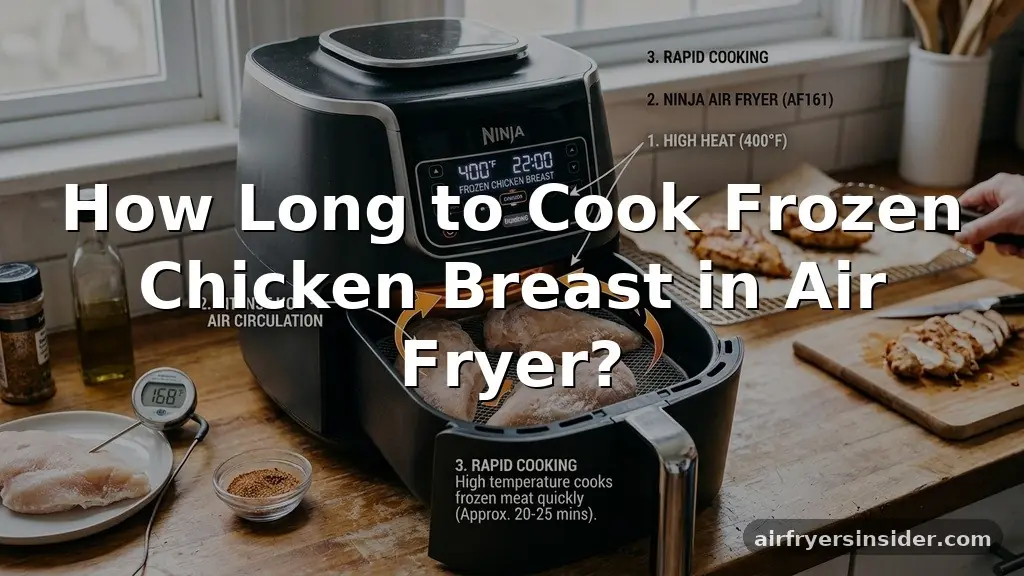
Figuring out how long to cook frozen chicken breast in air fryer can feel like a guessing game, but it is actually a reliable way to get dinner on the table quickly. When you realize you forgot to take the meat out of the freezer, the air fryer acts as a high-speed oven that handles frozen protein with ease.
You don’t need to stress about thawing times or messy water baths. By mastering the right temperature and timing, you can safely enjoy juicy, well-cooked chicken without ever needing to plan hours in advance.
Understanding the Mechanics of Air Fryer Cooking
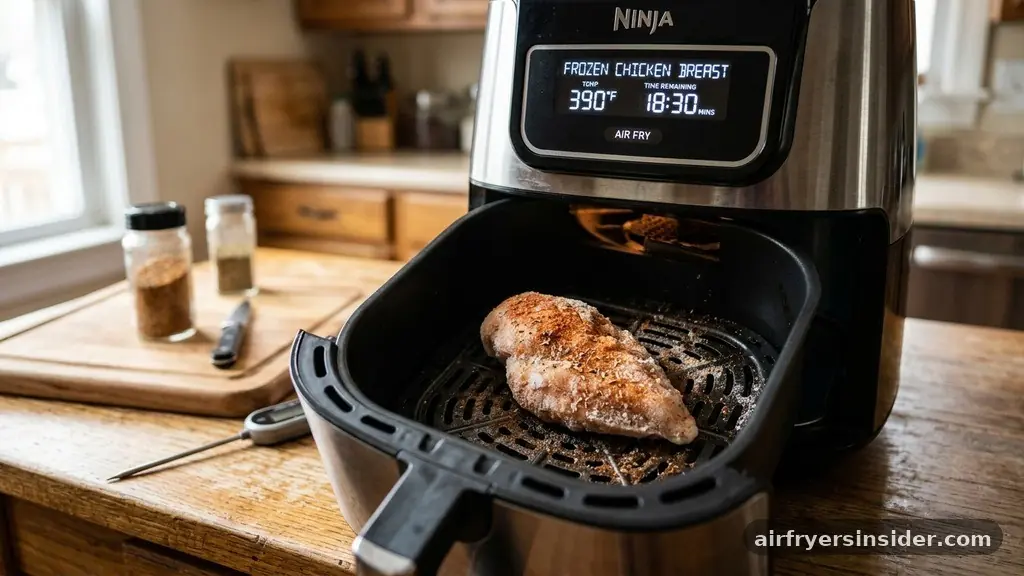
The primary reason an air fryer works so well for frozen items is its rapid convection heat. Unlike a traditional oven that relies on radiant heat from coils, an air fryer uses a powerful fan to circulate hot air around the food.
This intense air circulation is exactly what you need when dealing with a frozen block of meat. Because the surface of the chicken is frozen, the hot air begins to sear the exterior while simultaneously thawing the center.
When you cook frozen chicken, you are essentially performing a two-stage process in one go. The first stage involves breaking down the ice crystals and bringing the internal temperature of the meat up to a safe zone. The second stage is the actual browning and cooking.
In a basket-style air fryer, the airflow is concentrated, which helps prevent the meat from steaming in its own moisture. If the air didn’t move as quickly, the chicken would likely turn out rubbery or gray instead of golden and flavorful.
One of the most important aspects of using this appliance is understanding that density matters. A frozen chicken breast is essentially a solid mass of ice and protein. It takes significantly longer for heat to penetrate the center of a frozen breast than it does for a fresh one.
By keeping the temperature slightly lower than you might use for fresh chicken, you allow the heat to reach the core without scorching the outside. This balance is the secret to avoiding the common pitfall of an overcooked, dry exterior and a cold, raw middle.
Establishing the Ideal Cooking Temperature
When deciding on the settings for your appliance, 380 degrees Fahrenheit is often the sweet spot. While some recipes suggest 400 degrees, that higher heat can sometimes cause the outside of a frozen breast to dry out before the center is fully cooked. By dropping the heat slightly, you give the convection heat more time to work its way through the frozen protein.
Consistency is key to food safety when working with poultry. If you push the temperature too high, you might get a nice sear, but you risk serving chicken that is still undercooked inside.
If you go too low, the texture of the meat becomes unappealing and stringy. Aiming for that middle ground ensures that the internal temperature rises steadily.
It is also worth mentioning that different air fryers have varying power levels. A smaller unit might have more focused heat, while a larger, oven-style air fryer might require a few extra minutes to achieve the same result.
Always start by checking your manual to see how your specific model handles frozen items. If you find that your chicken is browning too fast, don’t hesitate to drop the temperature to 375 degrees and extend the time by a few minutes.
The Importance of Seasoning Frozen Meat
Many people assume you cannot season frozen food, but that is a major mistake. While it is true that salt and spices won’t stick to a sheet of ice, you can easily overcome this with a little bit of fat. A light coating of olive oil or even a neutral cooking spray acts as a glue for your dry rub.
Once you have applied the oil, the seasonings will adhere much better. You should apply your spices after the first five to seven minutes of cooking.
This is a critical step because if you add your seasoning right at the start, it may simply slide off as the ice begins to melt. By waiting until the surface of the chicken has started to soften, you ensure the flavors penetrate the meat as it finishes cooking.
When selecting a rub, avoid anything with high sugar content if you are cooking for a longer duration. Sugar burns quickly under the intense heat of an air fryer, which can lead to a bitter, charred exterior.
Stick to savory herbs, garlic powder, onion powder, paprika, and black pepper. These spices hold up well to the heat and will create a beautiful, flavorful crust once the chicken is done.
Addressing Food Safety and Internal Temperature
When you ask how long to cook frozen chicken breast in air fryer, the most important answer is that the time doesn’t matter as much as the internal temperature. According to USDA guidelines, chicken must reach an internal temperature of 165 degrees Fahrenheit to be considered safe to eat. This is the only way to ensure salmonella prevention and avoid the risk of food poisoning.
You should never rely on the clock alone. Even if the recipe says 25 minutes, you must use a meat thermometer to verify the doneness.
Insert the probe into the thickest part of the breast, making sure you aren’t hitting a bone or the basket itself. If the thermometer reads anything below 165, you must continue cooking.
Using a digital thermometer is far more accurate than the “cut and check” method. Cutting into the meat releases all the juices, which leads to a dry final product.
Furthermore, visually inspecting the color of the meat is unreliable, as chicken can look white even when it hasn’t reached the required temperature. Investing in a good thermometer is the single best way to improve your cooking results.
Managing Uneven Cooking and Rack Placement
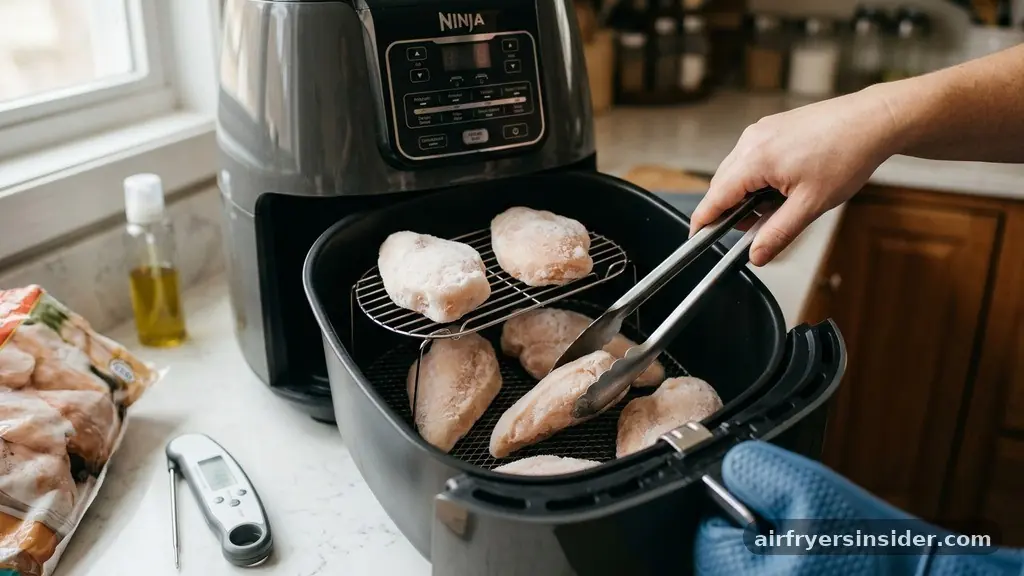
One of the biggest complaints with air-fried frozen chicken is uneven cooking. Because the breast is often thicker on one end than the other, the thin tail end might overcook while the thickest part remains frozen.
To mitigate this, try to choose chicken breasts that are uniform in size. If you have a particularly large breast, you may want to slice it into smaller cutlets before freezing, or at least keep that in mind when arranging them in the basket.
If you are using a basket-style air fryer, avoid overcrowding. Airflow is the engine of your cooking process; if the basket is packed too tightly, the air cannot circulate effectively.
This leads to steaming rather than roasting. If you have multiple breasts, ensure they are in a single layer with enough space between them for the air to move freely.
If your air fryer has multiple levels or a rack placement option, use it to your advantage. Placing the chicken on a rack can help air circulate underneath the meat, which promotes more even browning.
If you don’t have a rack, make sure you flip the chicken halfway through the cooking process. This simple act of turning the meat ensures that both sides receive equal exposure to the heat, which significantly reduces the chances of having cold spots.
The Role of Resting Time and Carryover Cooking
Once the timer goes off and your thermometer confirms the chicken has reached 165 degrees, the process isn’t quite finished. You must allow for a resting time of at least five to ten minutes. This is a crucial step that many home cooks skip, but it is vital for the texture of the meat.
During this time, carryover cooking occurs. The residual heat trapped inside the chicken continues to cook it slightly even after it is removed from the air fryer.
More importantly, the fibers of the meat relax, allowing the chicken juices to redistribute throughout the breast. If you cut into the chicken immediately, all that moisture will run out onto your cutting board, leaving you with dry, tough meat.
Resting the chicken also makes it easier to slice. When the meat is piping hot, it tends to be more fragile and prone to shredding.
By giving it a few minutes to sit, you ensure that you get clean, beautiful slices that are perfectly tender. Think of this rest period as the final stage of the cooking process rather than a pause.
Comparison of Cooking Methods
Choosing the right method for your frozen poultry depends on your priorities—speed, texture, or ease of cleanup. The table below outlines how air frying compares to other common methods for preparing frozen chicken.
| Method | Cooking Time | Texture | Best For |
|---|---|---|---|
| Air Fryer | 20–30 mins | Crispy outside, juicy inside | Quick weeknight meals |
| Oven (Baking) | 45–60 mins | Uniformly cooked | Large batches |
| Stovetop (Pan-fry) | 35–45 mins | Requires constant attention | Recipes needing a crust |
| Slow Cooker | 4–6 hours | Shredded/Soft | Soups and stews |
As the data shows, the air fryer is significantly faster than traditional oven baking. While the oven is great for cooking for a crowd, the air fryer’s ability to concentrate heat means you can get dinner on the table in about half the time. The texture achieved in the air fryer is also superior to the slow cooker, which tends to make the meat fall apart rather than holding its shape.
Addressing Common Topical Gaps
Many readers often wonder if they can cook breaded frozen chicken the same way as plain breasts. The answer is generally yes, but with a few caveats regarding timing and temperature.
Breaded items tend to brown much faster than plain meat, so you should monitor them closely. You may find that breaded pieces are finished in as little as 15 to 20 minutes, depending on the thickness of the coating.
Another common question relates to defrosting. Some people feel uncomfortable putting a rock-hard piece of meat straight into the machine. If you prefer to defrost slightly, you can run the chicken under cold water for 10 minutes or use the microwave’s defrost setting.
However, if you choose this path, you must cook the meat immediately. Never let partially thawed chicken sit on the counter, as this creates a prime environment for bacteria to grow.
* Always preheat your air fryer for 3-5 minutes before adding the chicken.
* Use a light spritz of oil to encourage even browning.
* Flip the chicken halfway through for consistent results.
* Never skip the resting period after cooking.
* Check the internal temperature with a digital probe every single time.
Finally, consider the size of the chicken. If you are cooking a massive, thick breast, you might need to lower the temperature to 360 degrees and cook it for longer to ensure the middle doesn’t stay raw.
Conversely, if you are cooking thin tenders, you can keep the temperature at 390 degrees for a shorter duration. Customizing your approach based on the specific cut of meat is what separates a good cook from a great one.
Frequently Asked Questions
Is it safe to cook frozen chicken breasts in an air fryer?
Yes, it is perfectly safe as long as the chicken reaches an internal temperature of 165 degrees Fahrenheit. Because air fryers use intense convection heat, they are capable of cooking frozen meat through to the center before the exterior becomes overcooked, provided you follow the proper temperature guidelines.
How do I know when the chicken is fully cooked?
The only reliable way to know is by using a digital meat thermometer. Insert the probe into the thickest part of the chicken breast. If it reads 165 degrees Fahrenheit, the chicken is safe to consume. Do not rely on color or cooking time alone to determine doneness.
Should I preheat my air fryer for frozen chicken?
Preheating is highly recommended. Just like a traditional oven, starting with a hot air fryer ensures that the cooking process begins immediately. This helps with browning and prevents the chicken from sitting in the basket while the machine slowly warms up, which could affect the final texture.
Can I stack the chicken breasts in the air fryer?
You should avoid stacking chicken breasts. To ensure even cooking and proper browning, the chicken should be arranged in a single layer with enough space for the hot air to circulate around each piece. Stacking prevents airflow and will lead to uneven, steamed, or undercooked meat.
Conclusion
Mastering how long to cook frozen chicken breast in air fryer is a game-changing skill for any home kitchen. By prioritizing safety through the use of a digital thermometer and understanding how convection heat interacts with frozen protein, you can consistently produce moist, delicious meals even on your busiest days. Remember that the specific timing will always vary based on the thickness of the meat and the power of your appliance, so treat the time ranges as a guide rather than a hard rule.
Start with a moderate temperature, flip your chicken halfway through for even cooking, and always give the meat time to rest before slicing. With these simple habits, you will turn a convenient freezer staple into a reliable, high-quality dinner option. Happy cooking!
Meta Description: Learn how long to cook frozen chicken breast in air fryer safely. Discover tips for perfect results, food safety, and ideal temperatures for juicy meat.


