

Achieving the perfect pub-style appetizer at home is entirely possible when you understand exactly how long to cook wings in air fryer at 400 degrees. This specific temperature is the sweet spot for balancing rapid heat transfer with the necessary time to render fat, resulting in a crunch that rivals deep-fried versions without the excess oil.
Whether you are prepping for game day or a quick weeknight dinner, mastering the timing ensures your poultry stays succulent on the inside while becoming perfectly golden on the outside. By focusing on surface moisture and proper air circulation, you can transform raw chicken into a restaurant-quality dish in under thirty minutes.
The Importance of Surface Moisture and Preparation
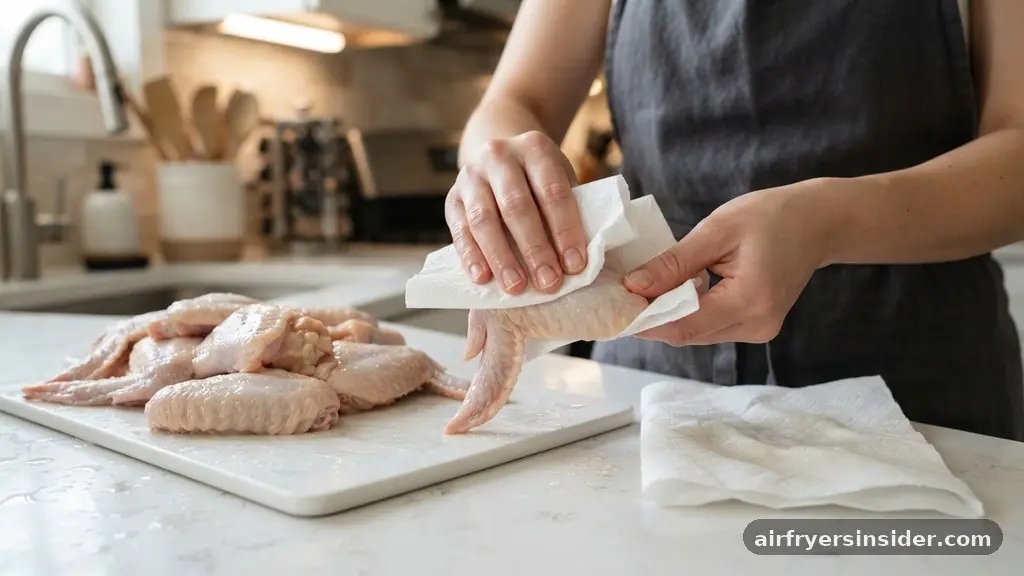
Before you even think about the timer, you must address the moisture on the surface of your chicken wing sections. Moisture is the enemy of crispiness; if the skin is damp, the air fryer will steam the meat rather than sear it.
Start by patting your wings thoroughly with high-quality paper towels. This simple act of moisture removal is the most critical step in achieving that signature snap when you bite into the skin.
Many home cooks take this a step further by using a light coating of baking powder or cornstarch. These powders draw out remaining surface liquids and react with the heat to create a microscopic crust. If you choose to use this method, be sure to toss your wings in a bowl with a small amount of the powder and your dry rub before placing them in the basket.
The goal is to ensure the skin is completely dry and lightly dusted. Avoid heavy, wet marinades until after the cooking process is finished, as excess liquid will prevent the skin from achieving that desired golden brown color.
Why 400 Degrees is the Optimal Temperature
When considering how long to cook wings in air fryer at 400 degrees, it is helpful to understand the mechanics of convection cooking. The air fryer works by circulating superheated air at a high velocity around the food.
At 400 degrees Fahrenheit, this circulation is aggressive enough to effectively render the fat out from under the skin, allowing it to crisp up while the meat remains juicy. Lower temperatures, such as 350 or 375, often result in flabby, chewy skin because the fat doesn’t have enough thermal energy to fully break down.
Furthermore, 400 degrees provides enough intensity to achieve the Maillard reaction, the chemical process that gives seared food its complex flavor and deep color. Because chicken wings are relatively small and contain a high ratio of skin to meat, they respond exceptionally well to this high-heat, shorter-duration method. Maintaining this temperature throughout the process prevents the meat from drying out, which can happen if you cook at lower temperatures for too long.
Calculating the Precise Cooking Time
The standard cooking time for raw chicken wings at 400 degrees is typically between 20 and 26 minutes, depending on the size of the wings and the efficiency of your specific appliance. Start by setting your timer for 20 minutes as a baseline.
Once the timer hits the halfway mark, around the 10 or 12-minute point, you must shake the basket or use tongs to flip each piece. This physical intervention is necessary because the bottom side of the wing does not receive the same direct airflow as the top.
If you are cooking a large batch, you may find that the internal temperature reaches the safe threshold of 165 degrees Fahrenheit right around the 22-minute mark. However, wings are often more palatable when cooked to an internal temperature of 175 to 180 degrees, as the extra heat helps break down the connective tissue and renders more fat. Do not be afraid to add an extra two or three minutes if the wings do not look sufficiently browned when the timer first goes off.
Avoiding Common Air Fryer Mistakes
One of the biggest errors home cooks make is overcrowding the air fryer basket. When you stack wings on top of one another, you obstruct the air circulation that makes the appliance work in the first place. Instead of crispy skin, you end up with a pile of steamed, pale chicken.
Aim to arrange your flats and drumettes in a single layer with a little bit of space between each piece. If you have a large amount of food to prepare, it is much better to cook in two smaller batches than to cram everything into the basket at once.
Another mistake involves neglecting the use of non-stick cooking spray. While chicken wings have plenty of natural fat, the skin can sometimes adhere to the metal grate of the basket, especially if you have used a rub containing sugar or other sticky ingredients. A quick, light spritz of oil on the basket surface before adding the wings can make clean-up significantly easier and prevent the skin from tearing when you try to flip them.
Using a Meat Thermometer for Food Safety
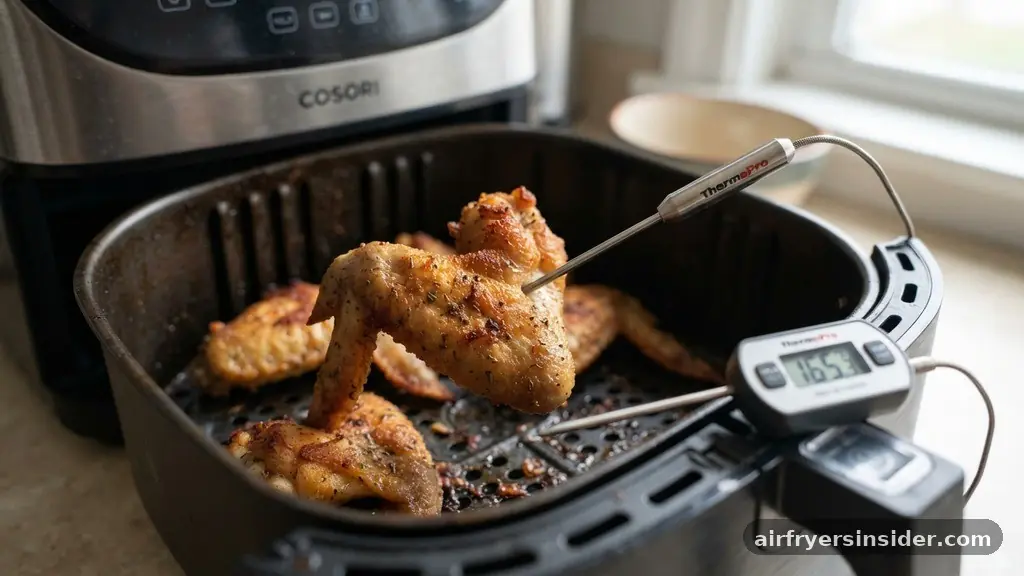
While timing is a helpful guideline, there is no substitute for using a reliable meat thermometer to ensure food safety. According to USDA guidelines, chicken must reach an internal temperature of 165 degrees Fahrenheit to be considered safe for consumption. Salmonella prevention is a serious priority, and relying solely on the clock can be risky if your air fryer runs hotter or cooler than the display indicates.
Insert your thermometer into the thickest part of the wing, being careful to avoid the bone, as the bone will conduct heat and give you an artificially high reading. By checking the temperature, you remove the guesswork from your cooking process.
If you find the temperature is still below 160 degrees at the 20-minute mark, simply continue cooking in 2-minute increments. This habit will eventually allow you to learn the quirks of your specific machine, making future cooking sessions much more consistent.
The Role of Dry Rubs and Seasoning
Applying a dry rub is the best way to add flavor without introducing extra moisture. Because you are cooking at a high heat of 400 degrees, you want to be mindful of ingredients that might burn.
Avoid rubs with high sugar content, as these will caramelize and turn bitter before the chicken is fully cooked. Stick to savory, spice-heavy blends featuring paprika, garlic powder, onion powder, salt, and black pepper.
If you prefer a wet sauce, wait until the wings are completely cooked before tossing them. Applying buffalo sauce or barbecue sauce during the cooking process will lead to a soggy, burnt mess.
Once your wings are golden brown and crispy, remove them from the basket, place them in a large mixing bowl, and add your sauce while they are still piping hot. The heat of the wings will help the sauce adhere to the skin, creating that perfect sticky, saucy finish.
Topical Gaps: Managing Frozen vs. Fresh Wings
A common question that often goes unaddressed is how to handle frozen wings compared to fresh ones. If you are starting with frozen wings, you should increase the total cooking time by about 5 to 8 minutes. You should also start the first 5 minutes at a lower temperature, around 350 degrees, to gently thaw and cook the interior before cranking the heat up to 400 to crisp the skin.
Another gap in many guides is how to handle the resting time. Carryover cooking is a real phenomenon; the temperature of the chicken will continue to rise for a minute or two after you take it out of the air fryer. Allowing the wings to rest for three minutes before serving ensures the juices redistribute throughout the meat, preventing them from running out onto the plate the moment you take a bite.
Managing Air Circulation and Basket Capacity
The performance of your air fryer depends heavily on how the air moves inside the chamber. If you are using a basket-style model, the air comes from the top and hits the food, then flows around the sides. If you block those sides with too many wings, the air will simply bounce off the top layer and recirculate back to the heating element, causing the machine to overheat while the wings remain undercooked.
For the best results, try to keep the wings in a configuration that allows for maximum surface area exposure. If your model has a tray insert, ensure it is clean and free of old grease, as a buildup of debris can smoke significantly at 400 degrees. Keeping the airflow path clear is just as important as the temperature setting itself when you are trying to achieve that professional, crunchy texture.
Comparing Cooking Methods for Chicken Wings
Understanding how the air fryer compares to other traditional methods can help you appreciate why the 400-degree setting is so effective. The table below outlines the primary differences in texture and time for various cooking styles.
| Cooking Method | Average Time | Texture Outcome |
|---|---|---|
| Deep Frying | 10-12 Minutes | Very Crispy |
| Air Frying (400°F) | 20-26 Minutes | Crispy and Rendered |
| Oven Baking | 45-50 Minutes | Soft to Slightly Crispy |
As shown in the data, the air fryer sits in a sweet spot, offering a significantly faster result than a standard oven while maintaining a level of crispiness that is much harder to achieve without deep-frying. It provides a healthier alternative by allowing the fat to render and drip away into the bottom of the basket, rather than soaking back into the meat.
Best Practices for Consistent Results
Consistency is built on repetition and small adjustments. If your wings are consistently turning out too dark, your air fryer might run hot, and you should consider dropping the temperature to 385 degrees for the final few minutes. Conversely, if they are pale, you may need to increase the cooking time or ensure you are not overcrowding the basket.
* Always preheat the air fryer for 3 to 5 minutes before adding the wings.
* Flip the wings halfway through to ensure even browning on both sides.
* Use tongs rather than shaking the basket to ensure each wing is placed optimally.
* Check the internal temperature with a probe thermometer to guarantee safety.
* Toss with sauce only after the cooking process is complete.
By following these steps, you will find that the process becomes second nature. The key is to treat the air fryer like a high-powered convection oven, respecting the airflow and monitoring the internal progress of the meat.
Frequently Asked Questions
Do I need to flip the wings halfway through the cooking time?
Yes, flipping is essential for even cooking. Because air fryers circulate heat primarily from the top down, the bottom of the wings will remain soft and undercooked if they are not turned. Using tongs to flip them at the halfway mark ensures a uniform, crispy texture on all sides.
Can I cook frozen chicken wings directly in the air fryer?
You can, but you should add about 5 to 8 minutes to the total cooking time. It is helpful to cook them at a lower temperature for the first few minutes to thaw the center, then increase the heat to 400 degrees to finish the skin for a crispy result.
How do I know when the wings are fully cooked?
The most accurate way to determine doneness is by using a digital meat thermometer. Insert the probe into the thickest part of the wing, avoiding the bone. The chicken is safe and ready to eat when it reaches an internal temperature of at least 165 degrees Fahrenheit.
Is it necessary to preheat the air fryer?
Preheating is highly recommended for the best results. Starting with a hot chamber ensures that the rendering process begins the moment the wings touch the basket. This helps achieve a better sear and crispier skin compared to starting with a cold unit, which can lead to soggier chicken.
Final Thoughts
Mastering the technique of how long to cook wings in air fryer at 400 degrees is a simple way to elevate your home cooking game. By focusing on surface moisture, maintaining proper airflow, and using a thermometer to verify internal temperatures, you can consistently produce wings that are crisp, flavorful, and safe to eat. Whether you are experimenting with different dry rubs or sticking to a classic buffalo sauce, the air fryer provides the versatility and efficiency needed for perfect results every time.
Keep these principles in mind during your next kitchen session, and you will find that achieving restaurant-quality wings is easier than you ever imagined. Enjoy the process of refining your method and serving up a crowd-pleasing dish that always delivers on texture and taste.
Meta Description: Learn exactly how long to cook wings in air fryer at 400 degrees for perfectly crispy skin and juicy meat with our expert tips and safety guidelines.


