

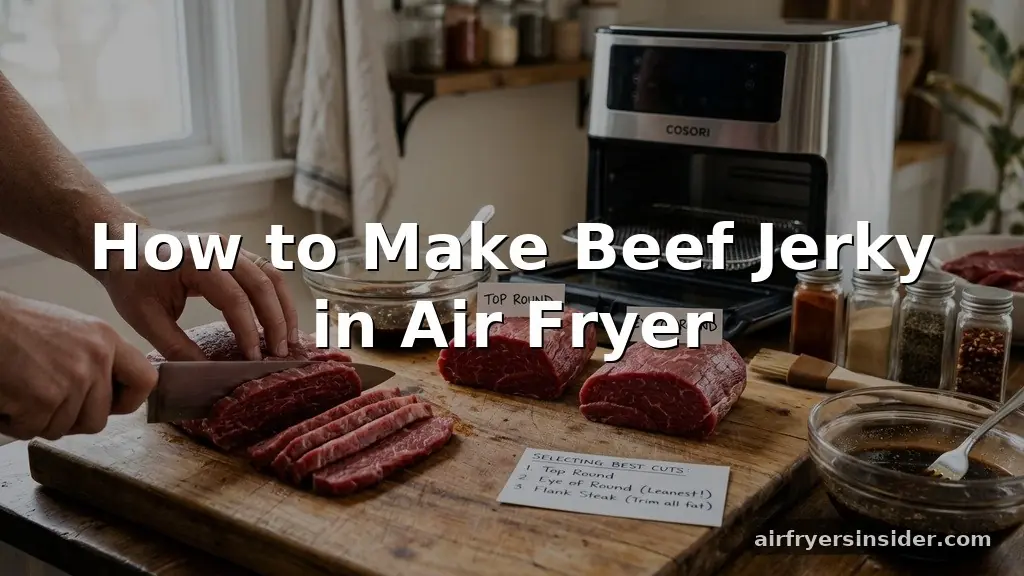
Learning how to make beef jerky in air fryer equipment is a game-changer for snack enthusiasts who want total control over ingredients and flavor profiles. While traditional methods rely on slow-drying ovens or bulky countertop dehydrators, the modern air fryer offers a surprisingly efficient alternative due to its powerful internal fan and precise temperature regulation.
By mastering the balance of heat and airflow, you can transform simple, affordable cuts of meat into chewy, shelf-stable snacks that rival store-bought versions. This process requires patience and attention to detail, but the result is a high-protein treat free from the excessive preservatives and hidden sugars found in commercial options.
Selecting the Best Cuts of Meat for Jerky
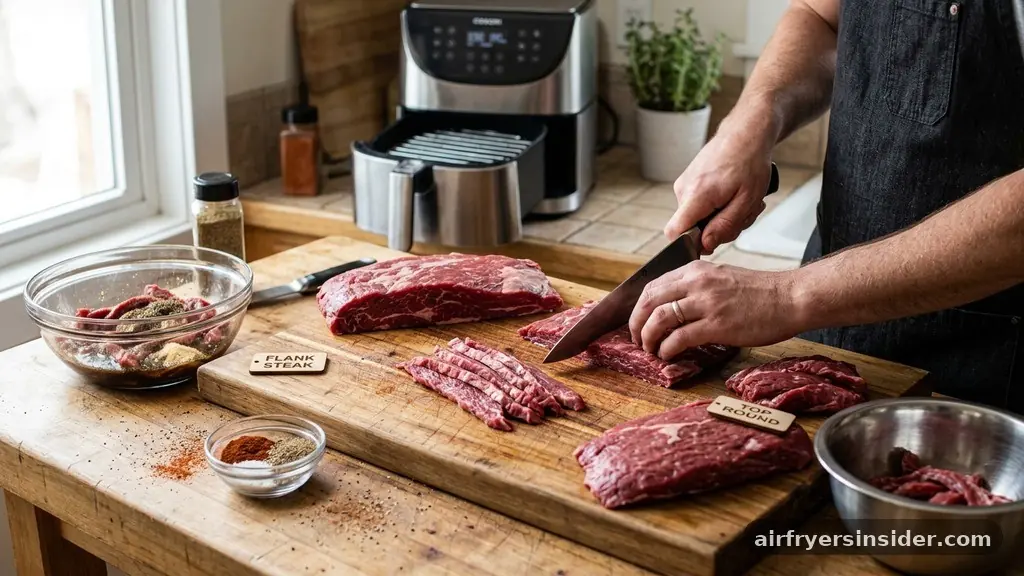
The foundation of high-quality jerky begins with the selection of the protein. When you are learning how to make beef jerky in air fryer units, you must prioritize lean beef cuts to ensure the final product has a long shelf life. Fat does not dry out during the dehydration process; instead, it remains soft and can turn rancid, which significantly compromises the safety and flavor of your finished snack.
The most popular choice among enthusiasts is the eye of round. This cut is exceptionally lean, affordable, and possesses a consistent grain structure that makes it easy to slice into uniform strips. Flank steak is another excellent option, though it is often more expensive and requires careful handling to ensure you cut against the muscle fibers to maximize tenderness. When selecting your meat, visit a local butcher and ask for the fat to be trimmed as close to the surface as possible.
If you are preparing a large batch, using a meat slicer can provide the consistency needed for even drying, though a sharp chef’s knife is perfectly adequate for smaller home projects. Regardless of the cut, always inspect the meat for any visible pockets of intramuscular fat and trim them away manually. Your goal is to start with a piece of protein that is almost entirely muscle, as this ensures the most consistent jerky texture once the moisture has been removed.
Preparing the Meat for Optimal Drying
Before you begin the marination process, the way you prepare the meat dictates the final bite of your snack. Proper preparation is essential to achieving a professional result. The most critical rule is to always perform cross-grain slicing.
By cutting perpendicular to the direction of the muscle fibers, you shorten the strands, which makes the jerky much easier to chew. If you cut with the grain, the jerky will be incredibly tough and stringy, potentially becoming difficult to eat.
Aim for a thickness of approximately one-eighth to one-quarter of an inch. If your slices are too thick, they will take significantly longer to dry and may remain raw in the center, which presents a food safety risk. Conversely, slices that are too thin can become brittle and break apart during the drying process.
Once your slices are cut, you may choose to place them in the freezer for about 30 to 60 minutes before slicing to firm up the tissue, making it much easier to achieve those precise, uniform cuts. After slicing, inspect the strips for any remaining connective tissue or gristle.
Removing these elements early ensures that your final product is uniform in texture and pleasant to consume. Taking the extra time to prepare your meat correctly is the single most important step in the entire process, as it dictates how well the marinade penetrates and how evenly the air fryer can circulate heat around each individual piece.
The Science of Marination and Flavor Development
Marinating is not just about infusing flavor; it is about altering the chemical structure of the meat to improve both taste and preservation. A basic marinade typically includes a balance of salty, acidic, and savory components. The salt acts as a curing agent, drawing out moisture and inhibiting bacterial growth, while acids like vinegar or citrus help tenderize the fibers.
Common ingredients for a classic jerky marinade include soy sauce for saltiness and umami depth, Worcestershire sauce for complexity, and a dash of liquid smoke to mimic the flavor of traditional wood-fire drying. You can also experiment with brown sugar, honey, maple syrup, or hot sauces depending on your preference. When preparing your marinade, ensure all ingredients are whisked thoroughly until the solids are dissolved.
Recommended Marinade Components
- Salt source: Soy sauce, tamari, or sea salt
- Acidic agent: Apple cider vinegar or lime juice
- Flavor profile: Garlic powder, onion powder, and smoked paprika
- Aromatics: Fresh ginger or crushed black peppercorns
- Preservative: Curing salt or Prague powder (for long-term storage)
The marinating time should ideally be between 12 and 24 hours in the refrigerator. This duration allows the flavors to penetrate deep into the meat fibers. Avoid exceeding 24 hours, as the acidic components in the marinade can begin to break down the proteins too much, resulting in a mushy or mealy texture rather than the firm, chewy bite expected from high-quality jerky.
Setting Up Your Air Fryer for Dehydration
When you transition from a standard food dehydrating setup to an air fryer, you must understand that the air fryer’s primary purpose is rapid, high-heat cooking. To make it work for jerky, you must utilize the low temperature settings that your specific model offers.
Many modern air fryers have a dedicated “dehydrate” mode that keeps the temperature between 130°F and 160°F. If your unit lacks this, you must set it to its lowest possible temperature and potentially monitor it more closely.
Effective airflow circulation is the secret to success. You want to avoid overcrowding the basket or the air fryer racks. If the meat is touching or overlapping, the moisture will be trapped between the pieces, leading to uneven drying and potentially dangerous cold spots where bacteria could survive.
Use a single layer of meat on each rack or the basket base. If your air fryer comes with multiple wire racks, these are superior to the basket because they allow air to flow both above and below the meat. If you are using a standard basket, consider placing a small piece of parchment paper at the bottom to catch any drips, but ensure it does not cover the entire base, as this will block the air intake and prevent the necessary drying cycle.
Managing Internal Temperature and Safety
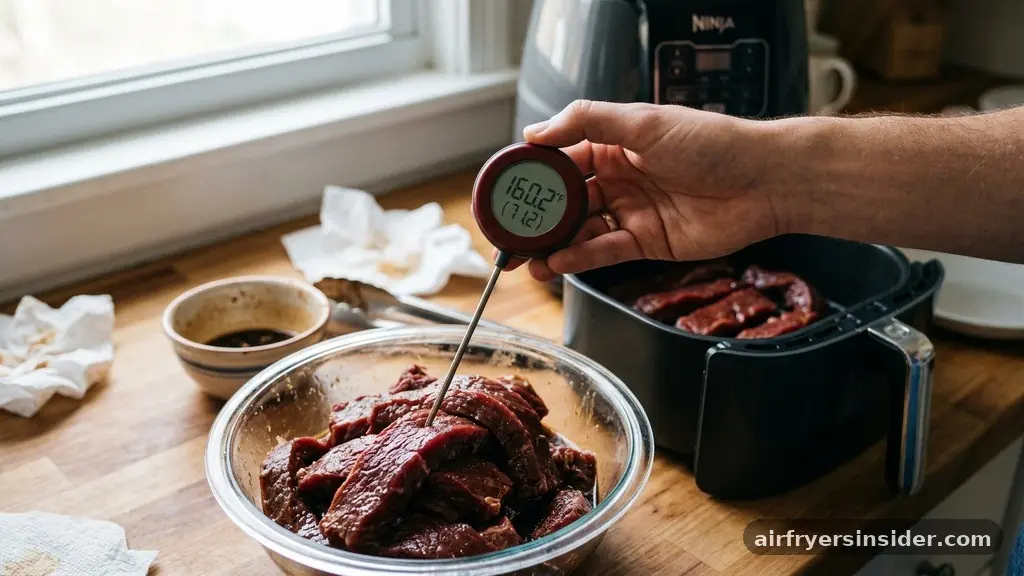
Maintaining the correct internal temperature is the most overlooked aspect of home-made jerky. Because you are drying meat at a low temperature, there is a risk that the meat could enter the “danger zone”—the temperature range where bacteria thrive—before it is sufficiently dehydrated. To mitigate this, many experts recommend heating the meat to an internal temperature of 160°F (165°F for poultry) before starting the drying process.
You can achieve this by briefly cooking the meat in the air fryer at a higher temperature for a few minutes or by simmering the meat in the marinade on the stovetop before dehydrating. Use a reliable meat thermometer to verify that the center of the thickest piece has reached this safety threshold. This step is particularly important if you are concerned about pathogens like Salmonella or E. coli.
Once the meat has reached the required safety temperature, you can drop the air fryer to the lower dehydration setting to finish the process. This hybrid method ensures that your snack is not only delicious but also safe for consumption over a longer period. Always remember that the air fryer’s thermostat may not be perfectly accurate at low settings, so using a separate, digital probe thermometer is a highly recommended practice for any serious home cook.
Monitoring the Drying Process
The time required to finish your batch depends heavily on the thickness of your meat, the humidity in your kitchen, and the specific airflow of your air fryer. Generally, the process takes between 3 and 6 hours. You must check the progress regularly, especially during the second half of the drying cycle.
Comparison of Drying Variables
| Factor | Impact on Drying Time | Observation |
|---|---|---|
| Meat Thickness | High | Thinner slices dry significantly faster. |
| Temperature | High | Higher heat speeds up the process but may cook rather than dry. |
| Airflow | Medium | Consistent fan speed is required for even results. |
| Humidity | Low | High ambient humidity will extend the drying time. |
Start checking the meat after the first 3 hours. Take a piece out, allow it to cool for a minute, and then bend it. If it is ready, the fibers should show white stress marks but not snap in half.
If it feels soft or damp, it needs more time. If it cracks or snaps immediately, you have over-dried it.
Because air fryers are so efficient at moving air, the transition from “perfectly chewy” to “over-dried” can happen in as little as 15 minutes. Set a timer and perform visual checks every 30 minutes once you reach the 3-hour mark.
The Importance of Proper Cooling and Storage
Once the jerky has reached the desired consistency, remove it from the air fryer immediately. Allow it to cool completely on a wire rack or clean paper towels before packaging. If you store warm jerky in a sealed container, the residual heat will create condensation, which introduces moisture back into the package and drastically reduces the shelf life.
For short-term storage, a simple Ziploc bag or glass jar kept in a cool, dark pantry is sufficient. However, if you plan to keep your jerky for more than a week, consider vacuum sealing. By removing the air from the bag, you prevent oxidation and moisture absorption, allowing the jerky to remain fresh for several weeks or even months.
If you used curing salt or Prague powder in your recipe, the shelf life will be significantly longer than a standard soy-sauce-only recipe. Regardless of the storage method, always keep the jerky away from direct sunlight and heat sources.
If you notice any signs of mold, a strange odor, or a slimy texture upon opening, discard the batch immediately. While home-made jerky is a fantastic way to preserve meat, it lacks the commercial preservatives that prevent spoilage indefinitely.
Troubleshooting Common Jerky Issues
Even experienced cooks encounter problems when learning how to make beef jerky in air fryer devices. The most common issue is uneven drying.
If some pieces are brittle while others are soft, it is almost always due to inconsistent slicing or improper rack spacing. Ensure that your slices are as uniform as possible; even a small difference in thickness will result in a major difference in drying time.
Another common complaint is a lack of flavor. If your jerky tastes bland, ensure you are using enough salt in your marinade. Salt is a flavor enhancer, and without it, the spices will not “pop.”
If you find the jerky is too salty, reduce the amount of soy sauce or salt in your marinade recipe for the next batch. Some people also struggle with the texture being too tough. This is often caused by slicing with the grain rather than against it, or by drying the meat for too long at too high a temperature.
If you find your jerky is consistently too tough, try lowering the temperature by another 5-10 degrees and checking the meat earlier. Remember that air fryers are powerful, and they can sometimes “case harden” the exterior of the meat—drying the outside so quickly that the moisture becomes trapped inside. A lower temperature usually solves this problem.
Frequently Asked Questions
Can I make jerky in an air fryer without a dehydrate setting?
Yes, you can, but it requires careful monitoring. Set your air fryer to the lowest possible temperature (usually around 170°F or 180°F). Because this is hotter than standard dehydration temperatures, check the meat every 30-45 minutes to prevent it from cooking or becoming too brittle.
How long should I marinate the meat for the best flavor?
For the best results, marinate your beef for 12 to 24 hours in the refrigerator. This time frame allows the salt and seasonings to penetrate the fibers fully. Avoid marinating for more than 24 hours, as the acidity can degrade the meat’s texture, making it mushy.
How do I know when the beef jerky is finished?
The jerky is finished when it is dry to the touch and bends without snapping. When you bend a piece, it should show white fibers and feel leathery. If it snaps in half, it is over-dried. If it feels soft or spongy, it needs more time in the air fryer.
Is it necessary to use curing salt when making jerky?
Curing salt is not strictly required if you eat the jerky within a few days and keep it refrigerated. However, if you want your jerky to be shelf-stable for weeks at room temperature, using curing salt or Prague powder is essential to prevent bacterial growth and botulism.
In conclusion, learning how to make beef jerky in air fryer equipment is a rewarding skill that combines culinary technique with basic food science. By focusing on lean cuts like eye of round, mastering the art of slicing against the grain, and carefully controlling the low temperature settings of your appliance, you can produce a superior, high-protein snack. Remember that the quality of your jerky depends on the care you put into the preparation, from the initial trim to the final drying stage.
Use the meat thermometer to ensure safety, prioritize proper airflow circulation to achieve an even jerky texture, and always allow the meat to cool completely before storage. With these principles, you will be able to create consistent, delicious batches of jerky that far surpass anything found on a store shelf.


