

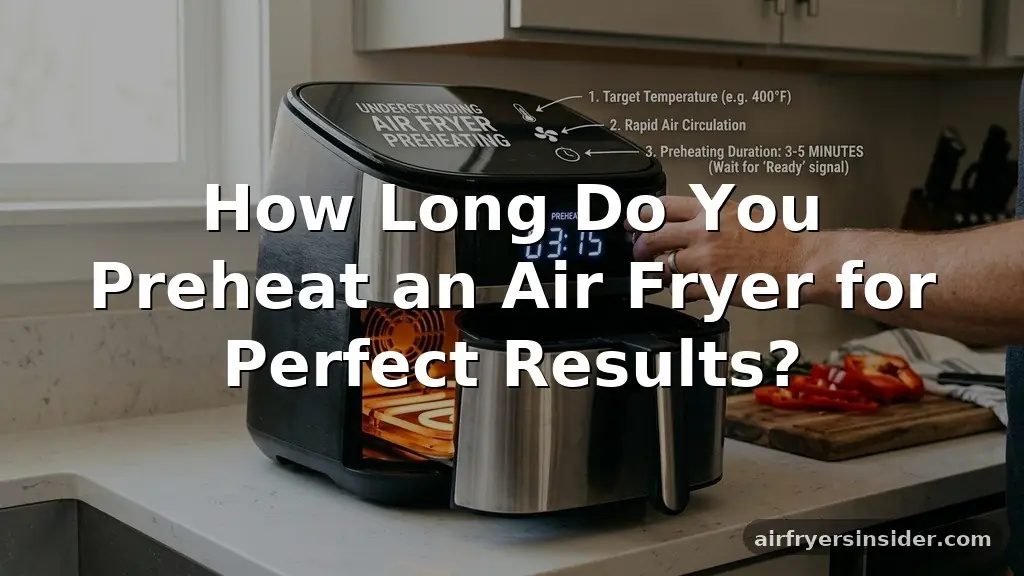
The question of how long do you preheat an air fryer is one that triggers frequent debate among home cooks, often leaving users wondering if the extra step is truly necessary for their favorite recipes. While some manufacturers suggest that their units reach optimal temperatures almost instantly, understanding the nuances of thermal dynamics and the specific mechanics of your countertop appliance can significantly elevate your culinary outcomes.
Preheating is not merely a formality; it is a critical phase in the cooking process that ensures the internal environment of the unit is prepared to initiate the Maillard reaction the moment your food is introduced. By giving the unit time to stabilize, you ensure that the exterior of your ingredients begins to crisp immediately, rather than slowly drying out while the air temperature gradually climbs.
Achieving the perfect level of crispiness requires a delicate balance between heat intensity and airflow. When you place cold ingredients into a cold air fryer, you are essentially creating a situation where the food undergoes a slow, ambient warm-up phase.
This can lead to uneven browning and a texture that feels more steamed than fried. By mastering the timing of your preheat, you take control of the cooking environment, ensuring that every batch of vegetables, protein, or frozen snacks hits the target temperature at the precise moment they enter the basket.
Understanding the Mechanics of Air Fryer Preheating
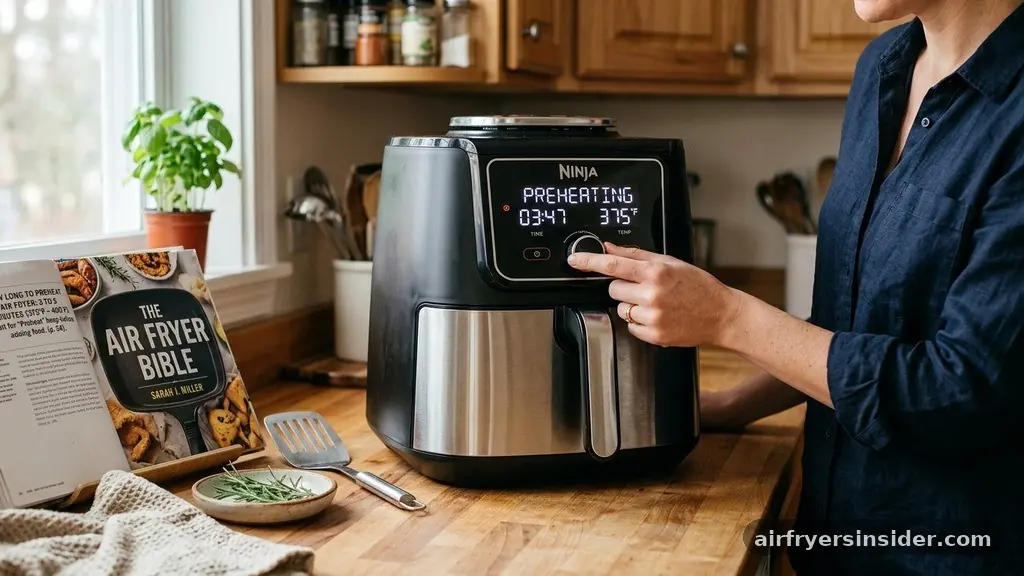
At its core, an air fryer is a high-powered convection oven that uses a concentrated heating element and a powerful fan to circulate hot air rapidly around the food. Unlike a traditional oven, which may take twenty minutes to reach a stable temperature, the smaller, compact nature of an air fryer allows it to ramp up heat much faster.
However, “fast” does not mean “instant.” The metal walls of the cooking chamber and the basket itself act as heat sinks; they must absorb thermal energy before they can effectively reflect that heat back onto the surface of your food.
When you preheat, you are essentially saturating the air inside the chamber with thermal energy. This is vital because the moment you quickly open the basket to place your food inside, the internal temperature drops drastically. If the unit hasn’t been preheated, the starting point is already low, and the unit must work double-time to recover.
By allowing the unit to run empty for a few minutes, you build up a reserve of heat that mitigates the temperature dip caused by opening the drawer. This process is essential for achieving the golden-brown crust associated with professional-style frying. Even with modern models like the Ninja Foodi or Cosori, which boast advanced heating profiles, a short preheat cycle provides a consistent foundation for your cooking process.
Standard Preheating Guidelines Based on Temperature
Determining exactly how long to run the unit depends heavily on the target cooking temperature you intend to use. Most recipes require a standard range, and while many devices now include a dedicated preheat button, manual preheating is often more reliable if you want to ensure the entire chamber is evenly saturated. As a general rule of thumb, you should aim for enough time to allow the internal sensors to stabilize without wasting electricity.
If you are setting your unit to a moderate temperature, such as 350°F, you generally need less time than if you are aiming for high-heat searing. Below is a breakdown of the standard preheating times for most household air fryers:
| Target Temperature | Recommended Preheat Time |
|---|---|
| 300°F to 350°F | 3 minutes |
| 375°F to 400°F | 5 minutes |
| Reheating Leftovers | 1 to 2 minutes |
These durations are designed to ensure that the heating element has reached its peak output and the air circulation within the unit is consistent. If you are cooking in a particularly cold kitchen, or if your air fryer is located near an open window or draft, you might consider adding an extra minute to these times to account for the ambient cooling effect on the outer casing of the machine.
When You Can Skip Preheating
There are specific scenarios where preheating becomes an optional step rather than a requirement. When you can skip preheating is usually determined by the type of food you are preparing and the desired outcome. For example, when you are roasting root vegetables that require a long, slow cook to soften the interior, a cold start is often perfectly acceptable. In these cases, the vegetables actually benefit from the gradual temperature rise, as it allows the heat to penetrate the center before the outside becomes too dark or charred.
Another instance where skipping the preheat is appropriate is when you are cooking frozen foods that are designed to be “oven-ready.” Many frozen snacks, such as breaded chicken tenders or mozzarella sticks, are pre-cooked and have a coating that can become overly dry if subjected to immediate, intense heat.
By placing these items in the air fryer while it is still cool, you allow the internal structure of the food to thaw slightly as the air warms up, leading to a more uniform texture. However, always check the packaging instructions; if the manufacturer specifies a preheated unit, it is usually because the coating requires a sharp blast of heat to crisp up properly before the interior melts or leaks.
The Impact of Preheating on Culinary Results
The primary reason to prioritize preheating is the quality of the final product. We often talk about the Maillard reaction, a chemical process between amino acids and reducing sugars that gives browned food its distinctive flavor and aroma.
This reaction is highly temperature-dependent and occurs most efficiently above 300°F. If your air fryer is not fully preheated, the food spends a significant portion of its cooking time in a “lukewarm” state where the surface moisture is merely evaporating rather than browning.
This leads to a lack of flavor development and a softer, less appetizing texture. By preheating, you ensure that the surface of the food is subjected to the required heat threshold immediately upon entry. This creates an instant crust that seals in juices and prevents the food from becoming greasy.
Furthermore, consistent preheating helps manage the thermal efficiency of the unit. When the air fryer is at the correct temperature, the fan can move the air more effectively across the surface of the ingredients, ensuring that the browning is uniform. Without this, you may find that the top of your food is charred while the bottom remains pale and under-cooked, a classic sign of insufficient heat saturation.
Managing Airflow and Basket Loading
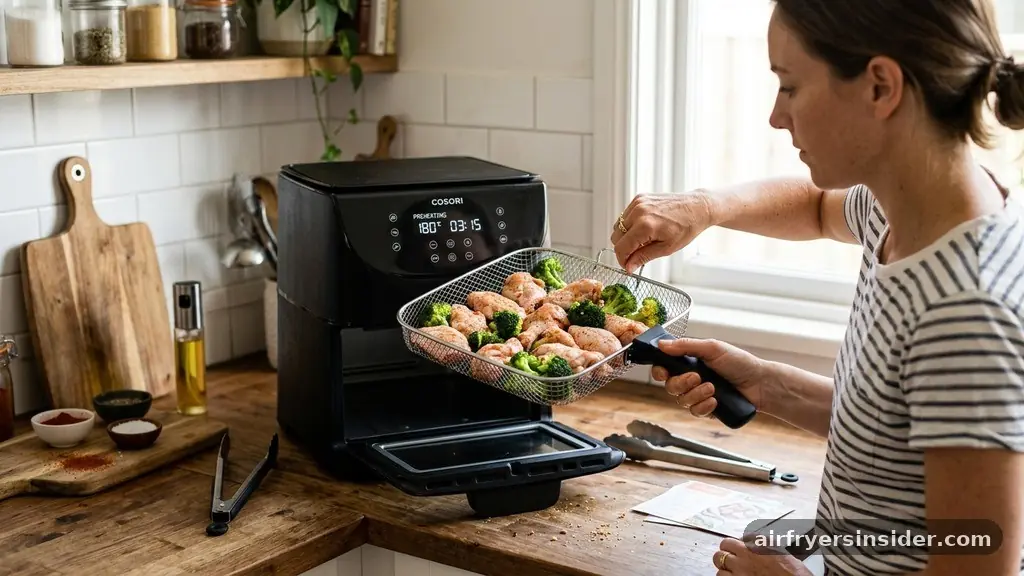
The way you load your basket is just as important as the preheating duration. Even if you have perfectly preheated your machine, poor loading techniques can negate all that hard work.
The air fryer relies on convection to move heat around the food. If the basket is overcrowded, that airflow is restricted, leading to the aforementioned uneven browning.
When loading the basket after preheating, try to arrange your ingredients in a single layer whenever possible. If you must stack food, ensure there is still some room for air to pass through the gaps. Using a kitchen timer is an excellent way to keep track of your progress, especially if you are multitasking in the kitchen.
Many people find that shaking the basket halfway through the cooking process is the perfect complement to a good preheat. By shaking, you redistribute the ingredients, allowing the hot air to hit the surfaces that were previously blocked. This combination of proper preheating and active basket management is the secret to getting “fried” results without the heavy oil content.
Addressing Topical Gaps: Preheating Without a Button
A common point of confusion for users is how to manage preheating on models that lack a dedicated “Preheat” button. Many entry-level or older models simply have a temperature dial and a timer. This does not mean you cannot preheat; it simply means you must be more intentional about the process.
To preheat a manual air fryer, simply set your desired temperature and turn the timer to 5 minutes. Stay nearby, and when the timer goes off, pull the basket out, add your ingredients, and reset the timer for the full cooking duration.
Some users worry that opening the basket to add food will cause too much heat loss. While some heat is inevitably lost, it is negligible compared to the benefit of starting with a hot basket. The air fryer recovers its temperature in seconds, provided the heating element is already glowing.
If you are using a model like the Ninja Foodi, which often has a built-in sensor, the machine will often alert you when it has reached the target temperature. If your model does not have this feature, trust the 3-to-5-minute rule, and you will achieve results consistent with the more expensive, feature-rich appliances.
Best Practices for Consistent Results
To maintain a consistent experience every time you cook, develop a routine that treats the air fryer like a precision tool. Best practices for consistent results start with clean equipment. A basket caked in old grease or carbonized food particles can act as a thermal barrier, slowing down the heat transfer to your food. Regularly deep-cleaning your basket and the area surrounding the heating element ensures that the air can flow freely and that the unit hits its target temperature without obstruction.
Additionally, consider the ambient temperature of your kitchen. In the winter months, if your kitchen is particularly cold, the air fryer will take slightly longer to reach its target temperature. In these cases, adding an extra 60 seconds to your preheat time is a smart adjustment.
Furthermore, avoid placing your air fryer directly under low-hanging cabinets or against a wall, as this can restrict the intake and exhaust vents, causing the unit to struggle to maintain a stable internal temperature. Proper ventilation is just as critical as the preheat cycle itself.
Comparing Different Air Fryer Models
It is worth noting that not all air fryers perform identically. Smaller, pod-style units tend to heat up much faster than larger, oven-style air fryers that have more internal volume to saturate. If you are using a large-capacity oven-style unit, you may find that it requires a longer preheat—sometimes up to 7 to 10 minutes—because there is simply more metal and air space to bring up to temperature.
When you are learning a new machine, take the first few uses to experiment. Try preheating for 3 minutes and compare the results to a batch where you preheat for 5 minutes. You will likely notice a difference in the initial sear of proteins or the crispness of frozen potatoes.
Keep a small log if you are serious about your cooking; noting the preheat time and the final outcome will help you dial in the perfect timing for your specific kitchen setup. Remember, the goal is to create a reliable, repeatable process that produces the high-quality results you expect from this versatile tool.
FAQ Section
How do I know when my air fryer is preheated if it doesn’t have a light?
If your air fryer lacks a preheat indicator, use a simple kitchen timer. Set your desired temperature and run the unit empty for 3 to 5 minutes. This duration is sufficient for most standard models to reach the necessary heat level to begin effective cooking immediately.
Do I really need to preheat my air fryer for frozen foods?
It depends on the food. For items like frozen fries or breaded snacks that benefit from a crisp exterior, preheating is recommended. However, if you are cooking frozen vegetables or items that require a gentle cook, starting from cold can help prevent the outside from burning before the inside thaws.
Does preheating an air fryer save time in the long run?
Yes, it does. While it adds a few minutes to the start, it ensures that your food cooks more evenly and efficiently. Without preheating, you often have to add extra time to the end of the cycle, and the final texture of the food may be compromised, leading to disappointing results.
Can I leave the basket in while preheating?
Yes, you should always keep the basket inside the unit while preheating. The basket needs to reach the same temperature as the air inside the chamber to ensure that the food begins searing the moment it touches the surface, which is essential for achieving optimal crispiness.
Conclusion
Mastering the art of how long do you preheat an air fryer is a simple yet transformative skill for any home cook. By dedicating just a few minutes to warming your unit, you ensure that the heating element is primed, the internal air is circulating effectively, and your food is ready to undergo the perfect Maillard reaction. Whether you are using a compact unit or a large-capacity Ninja Foodi or Cosori, the principles of thermal efficiency remain the same.
While there are exceptions—such as when cooking frozen foods that require a slower start—preheating remains the gold standard for achieving that sought-after crispiness and preventing uneven browning. By following the guidelines outlined, from adjusting for temperature to managing your basket load, you can consistently produce restaurant-quality meals right from your countertop. Treat your air fryer with the same respect as a high-end oven, and it will reward you with superior textures and flavors in every dish you prepare.


