

Finding yourself with a craving for a hearty dinner but realizing the protein is still a solid block of ice is a common kitchen frustration. Fortunately, learning how to cook frozen steak in air fryer units provides a reliable solution that saves you from waiting hours for a thaw.
This method leverages the rapid circulation of hot air to transform a rock-hard cut into a juicy, flavorful meal in a fraction of the time. By mastering a few specific techniques, you can achieve a respectable crust and a tender interior without ever needing to remember to move your meat to the refrigerator the night before.
The Science of Air Frying Frozen Proteins
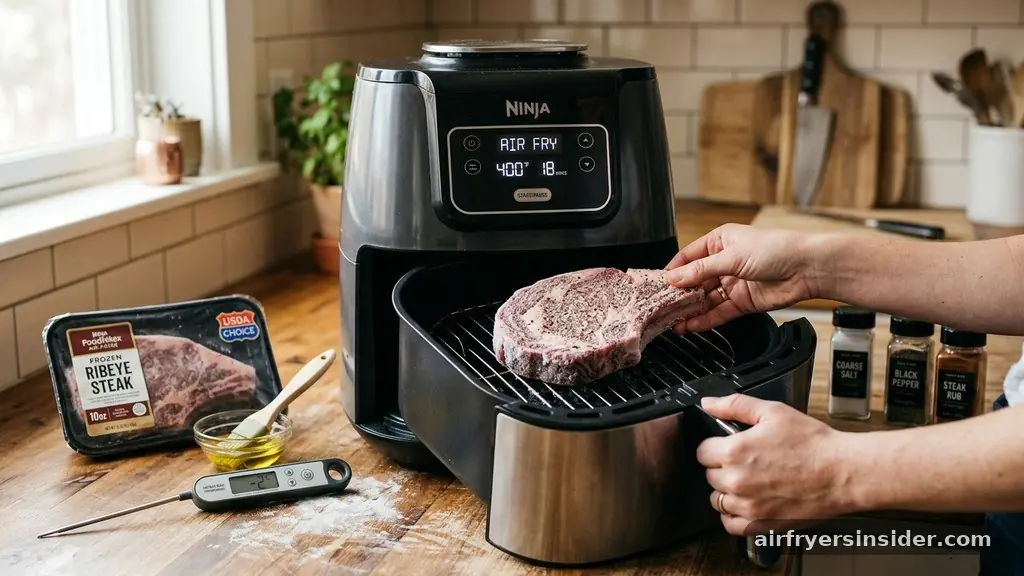
When you place a frozen steak into an air fryer, you are essentially using a high-powered convection oven. The machine circulates superheated air at high speeds, which helps compensate for the initial energy required to defrost the outer layer of the meat.
Unlike a standard oven, the concentrated airflow in a basket air fryer or a Ninja Foodi allows for more efficient heat transfer. This is critical because you need to melt the ice crystals and begin cooking the muscle fibers before the exterior becomes leathery or excessively dry.
Understanding the physics here helps you manage expectations. You aren’t getting the same intense, immediate surface contact you would find with a cast-iron skillet, so the Maillard reaction—the chemical process that creates a delicious browned crust—requires a bit of extra help. You will likely need to adjust your expectations regarding the “sear.”
While you can get a beautiful golden-brown finish, it often requires a two-stage cooking process to get the perfect texture. The air fryer excels at providing even heat distribution, which minimizes the risk of a grey, overcooked band of meat beneath the surface.
Selecting the Right Cut for Frozen Cooking
Not all steaks are created equal when it comes to the freezer-to-air-fryer pipeline. Thickness is the single most important factor.
A steak that is at least one inch thick is ideal because it provides enough mass to absorb the heat without the center becoming overcooked before the exterior is safe to eat. Thin steaks, such as flank or skirt, are prone to drying out completely before they even reach a safe internal temperature.
Ribeye and sirloin are generally the best candidates for this method. A ribeye has enough intramuscular fat, known as marbling, to remain juicy even when subjected to the dry heat of an air fryer.
Sirloin is a leaner option that also holds up well, provided you monitor the cooking time closely. Avoid extremely lean cuts if you are worried about toughness, as they lack the moisture content to withstand the rapid moisture evaporation inherent in convection cooking.
Essential Preparation and Seasoning
You might wonder how to get seasoning to stick to a frozen slab of beef. Since the surface is covered in ice crystals, salt and pepper will simply slide off if you try to apply them immediately. The secret lies in a light coating of oil.
Use a high-smoke-point oil, such as avocado or grapeseed, to help transfer heat and act as an adhesive for your spices. Once the oil is applied, use a generous amount of kosher salt and coarse black pepper.
Applying Seasonings Effectively
- Pat the steak dry with a paper towel once the initial layer of frost has melted slightly.
- Apply a thin layer of olive oil or avocado oil to ensure the seasonings adhere properly.
- Use a coarse grind of black pepper to provide a bold flavor profile that stands up to the quick cook time.
- Do not add fresh herbs like rosemary or thyme until the final minutes of cooking, as they will burn in the high-heat environment.
Managing Internal Temperatures and Safety
Adhering to food safety standards is non-negotiable when dealing with frozen meat. The USDA guidelines suggest that beef should reach a minimum internal temperature of 145 degrees Fahrenheit for safety, though many enthusiasts prefer a medium-rare finish at around 130 to 135 degrees.
Because you are starting from a frozen state, you must use a reliable meat thermometer to track progress. The surface will cook much faster than the core, so relying on time alone is a recipe for disappointment.
Carryover cooking is another vital concept. Even after you remove the steak from the air fryer, the residual heat will continue to raise the internal temperature by several degrees.
To hit that perfect medium-rare, pull the meat when the thermometer reads about 125 degrees. This ensures that by the time you sit down to eat, the steak has reached the ideal level of doneness without becoming tough or rubbery.
The Two-Stage Cooking Strategy
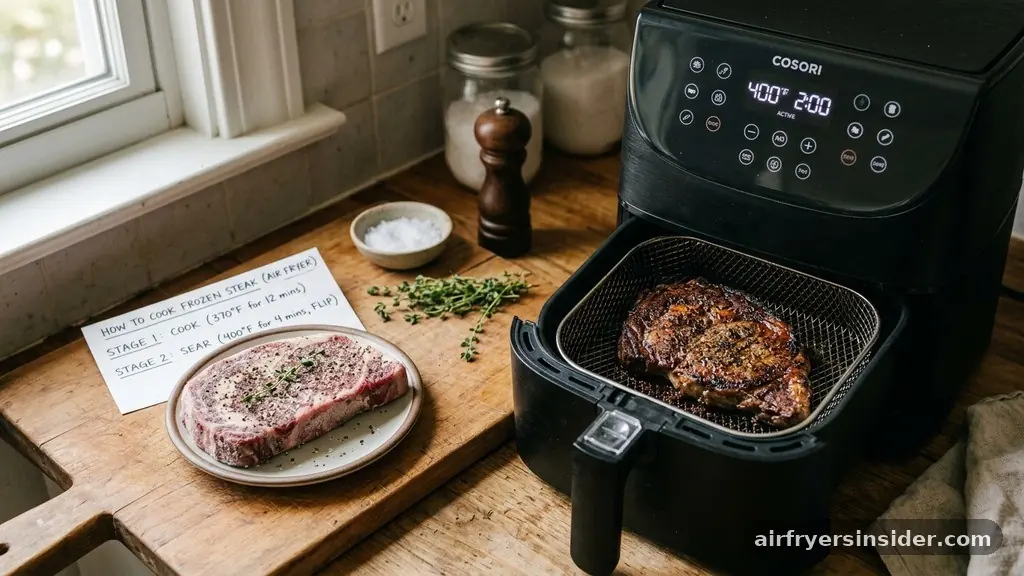
To achieve the best results, treat your cooking time as a two-part process. Start with a lower temperature to gently defrost and bring the internal temperature up, then finish with a higher blast of heat to crisp the exterior. This prevents the “frozen center, burnt crust” scenario that often ruins attempts at cooking frozen proteins.
Recommended Temperature and Time Guide
| Steak Thickness | Initial Temp (Defrost/Cook) | High-Heat Finish | Total Time (Approx.) |
|---|---|---|---|
| 1 inch | 350°F | 400°F (last 3 mins) | 12-15 mins |
| 1.5 inches | 350°F | 400°F (last 5 mins) | |
| 2 inches | 325°F | 400°F (last 6 mins) | 20-25 mins |
Addressing the Maillard Reaction Gap
One common complaint about air-fried steak is the lack of a deep, caramelized crust. Because the air fryer environment is relatively dry, you have to work to recreate the Maillard reaction.
If you find the steak is cooked through but looks a bit pale, you have two options. You can either crank the air fryer to its maximum temperature for the final two minutes, or you can perform a quick sear in a preheated searing pan on your stove.
The stovetop sear is the gold standard if you have the time. After the air fryer has done the heavy lifting of bringing the steak to temperature, move it to a cast-iron skillet with a tablespoon of butter and some garlic.
A 60-second sear on each side will provide that professional-grade finish that an air fryer alone sometimes struggles to replicate. This hybrid approach ensures you get the convenience of frozen-to-ready cooking with the flavor profile of a restaurant-quality steak.
The Importance of Resting
Never skip the resting phase. When you pull the steak out, the juices are concentrated in the center of the muscle fibers. If you slice into it immediately, those juices will run out onto your cutting board, leaving you with dry meat.
Resting allows the temperature to stabilize and the juices to redistribute throughout the steak. Wrap the steak loosely in aluminum foil for at least five to ten minutes.
This keeps the heat in while allowing the meat to relax. This simple step is what separates a mediocre home-cooked meal from a genuinely delicious dining experience.
Troubleshooting Common Air Fryer Issues
If you find your steaks are turning out unevenly, the issue is likely related to airflow. Air fryers work by forcing air around the food, so if your basket is overcrowded, the circulation is choked off.
Ensure there is plenty of space around the steak for the air to move freely. If you are cooking multiple steaks, do them in batches rather than cramming them together.
Another issue is smoke. If your steak has a high fat cap, the dripping fat can hit the heating element and create a significant amount of smoke.
You can mitigate this by placing a small piece of bread or a tiny bit of water at the bottom of the air fryer drawer—underneath the rack—to catch the drippings. Always keep your unit clean, as built-up grease from previous meals is often the primary culprit behind excessive smoking during high-heat cooking.
Maximizing Flavor with Compound Butters
Since you aren’t basting the steak in the pan for the entire duration, you can compensate for the lack of pan-drippings by using a compound butter. Prepare this while the steak rests. Mix softened butter with minced garlic, a splash of Worcestershire sauce, and fresh herbs like parsley or chives.
Placing a generous pat of this butter on top of the steak as it rests will melt into the meat, adding a layer of richness that complements the beef perfectly. It’s an easy way to elevate the final presentation and ensure every bite is packed with savory goodness.
Frequently Asked Questions
Can I cook a frozen steak directly in the air fryer without thawing?
Yes, you can cook a steak straight from frozen. The key is to start at a lower temperature to ensure the center thaws and cooks evenly before the exterior dries out. Always use a meat thermometer to ensure the internal temperature reaches your desired level of doneness safely.
How do I know when the steak is finished cooking?
You should rely on a meat thermometer rather than a timer. For medium-rare, look for an internal temperature of 130-135 degrees Fahrenheit after resting. Because of carryover cooking, pull the steak from the air fryer when it reaches about 125 degrees to avoid overcooking the center.
Does the steak get a good crust in the air fryer?
It can, but it requires a high-heat finish. By cranking the temperature to 400 degrees for the final few minutes of the cooking process, you trigger the Maillard reaction. If you want an even better crust, you can quickly sear the steak in a hot pan after air frying.
Is it safe to eat frozen steak cooked in an air fryer?
It is perfectly safe as long as you reach the proper internal temperature. Following USDA guidelines for beef, ensuring the internal temperature reaches at least 145 degrees Fahrenheit is the standard for safety, though many people prefer lower temperatures for medium-rare steaks.
Conclusion
Mastering the art of cooking frozen steak in air fryer models is a game-changer for busy weeknights. By focusing on steak thickness, utilizing a two-stage temperature approach, and prioritizing the resting phase, you can achieve results that rival traditional grilling or pan-searing. It is a practical skill that turns a kitchen emergency into a high-quality meal with minimal cleanup.
Start by experimenting with your specific machine’s heat intensity, as every unit varies slightly in power. Once you find the sweet spot for your favorite cuts, you will never feel pressured by a forgotten thaw again. Grab your thermometer, season that beef, and enjoy the convenience of a perfect steak on your own terms.
Meta Description: Learn how to cook frozen steak in air fryer with this expert guide. Get tips on temperature, seasoning, and timing for a perfect, juicy result every time.


