

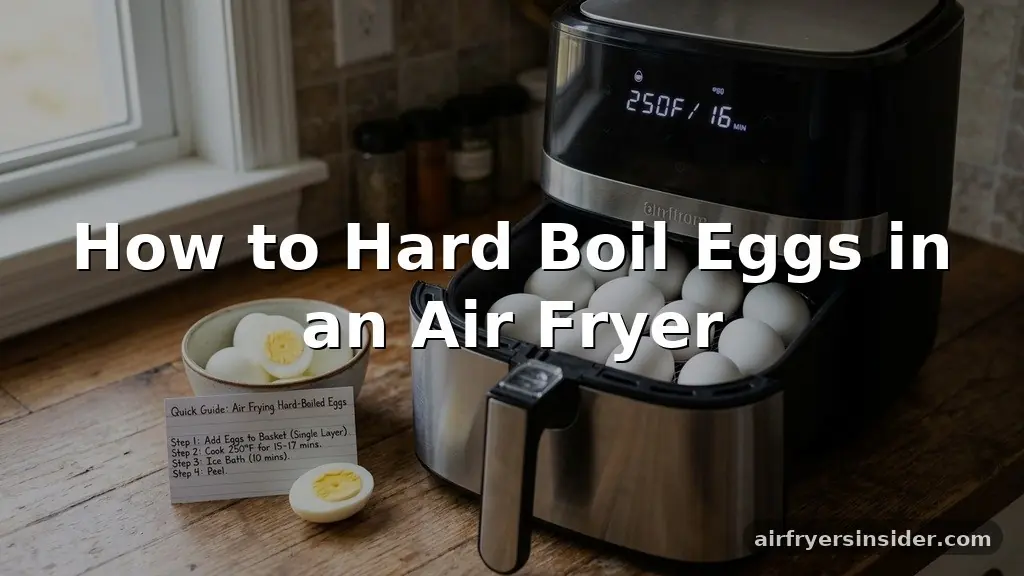
Learning how to hard boil eggs in an air fryer is a surprisingly efficient way to prep your weekly protein without waiting for a pot of water to reach a rolling boil. By utilizing the consistent heat of your countertop convection oven, you can achieve predictable results that make peeling much easier than the traditional stove-top method.
Whether you are prepping for meal kits, salad toppings, or quick snacks, this method eliminates the guesswork often associated with timing eggs in boiling water. You will find that once you master the basic technique, you can easily customize the internal texture to suit your personal preference every single time.
The Science of Air Frying Eggs
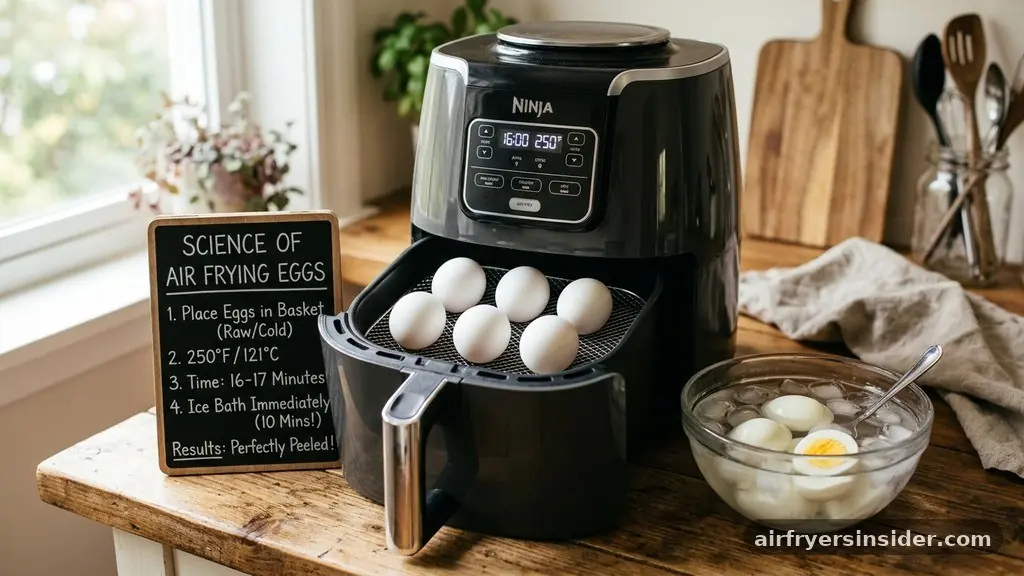
At its core, the air fryer is a miniature convection oven that uses a high-powered fan to blast hot air around the food. When you place eggs inside, the circulating heat penetrates the shell and begins the process of protein coagulation.
Unlike traditional boiling, where the egg is submerged in water, this dry-heat method relies entirely on the ambient temperature inside the chamber. Because air is less efficient at transferring heat than water, the eggs require a slightly different approach to temperature and timing to ensure the yolk sets properly without drying out the white.
The primary benefit here is consistency. In a pot of water, the temperature can fluctuate based on how many eggs you add or how high the burner is set. With an air fryer, you set a specific temperature and the appliance maintains it throughout the cooking duration.
This precision allows you to target specific textures, from a runny liquid yolk to a fully set yolk that is perfect for deviled eggs. Understanding this mechanism is the first step toward mastering the process in your own kitchen.
Managing Egg Temperature and Airflow
Successful results begin with how you arrange the eggs in the air fryer basket. You should avoid overcrowding the basket, as this restricts the necessary air circulation that ensures even cooking.
If the eggs are touching or stacked on top of each other, the hot air cannot reach all sides equally, which may lead to cold spots or unevenly cooked whites. For the best airflow, place the eggs in a single layer, ensuring there is a small amount of space between each one to allow the heat to wrap around the shell.
Another critical factor is the starting temperature of the eggs. While many people store eggs in the refrigerator, bringing them to room temperature before cooking can help prevent thermal shock. When a cold egg hits intense heat, the rapid expansion of air inside the shell can cause it to crack.
If you prefer using eggs straight from the fridge, simply reduce the cooking temperature slightly or increase the time by a minute to compensate for the initial chill. By managing these variables, you keep the shells intact and ensure the internal proteins cook at a steady, predictable rate.
Step-by-Step Cooking Times for Every Texture
To achieve the perfect texture, you need to adjust your cooking duration based on your specific goal. Because every air fryer model varies in terms of efficiency and appliance wattage, you might need to test your machine once to see how it performs. The following table provides a general baseline for large eggs cooked at 250°F (120°C).
| Doneness Level | Cooking Time (Minutes) | Resulting Texture |
|---|---|---|
| Soft-Boiled | 9–10 | Runny liquid yolk |
| Medium-Boiled | 11–12 | Jammy, sticky yolk |
| Hard-Boiled | 13–15 | Fully set, opaque yolk |
Regardless of the target doneness, always have an ice bath ready the moment the timer goes off. Dropping the hot eggs immediately into ice water stops the cooking process instantly.
This prevents the dreaded green ring that sometimes forms around the yolk due to overcooking. It also helps the shell membrane pull away from the white, making the eggs significantly easier to peel later on.
Safety and Equipment Considerations
Safety is paramount when using an air fryer for something as unconventional as eggs. While it is perfectly safe to cook eggs in the shell, you must ensure your appliance is clean and free of leftover grease from previous meals.
Old food particles can smoke at high temperatures, which might affect the flavor of your eggs. Additionally, check your air fryer basket for any loose debris that could cause the eggs to roll around during the cooking process.
You do not need any special rack or insert, but if your basket has a mesh bottom that is particularly uneven, you might consider using a small piece of parchment paper or a silicone liner to keep the eggs stable. Never attempt to poke holes in the shells before cooking, as this can cause the egg to leak out inside your machine, creating a difficult mess to clean. Stick to whole, uncracked eggs for the best results, and always allow the basket to cool down before attempting to remove the eggs, as the shells will be extremely hot immediately after the cycle ends.
Troubleshooting Common Issues
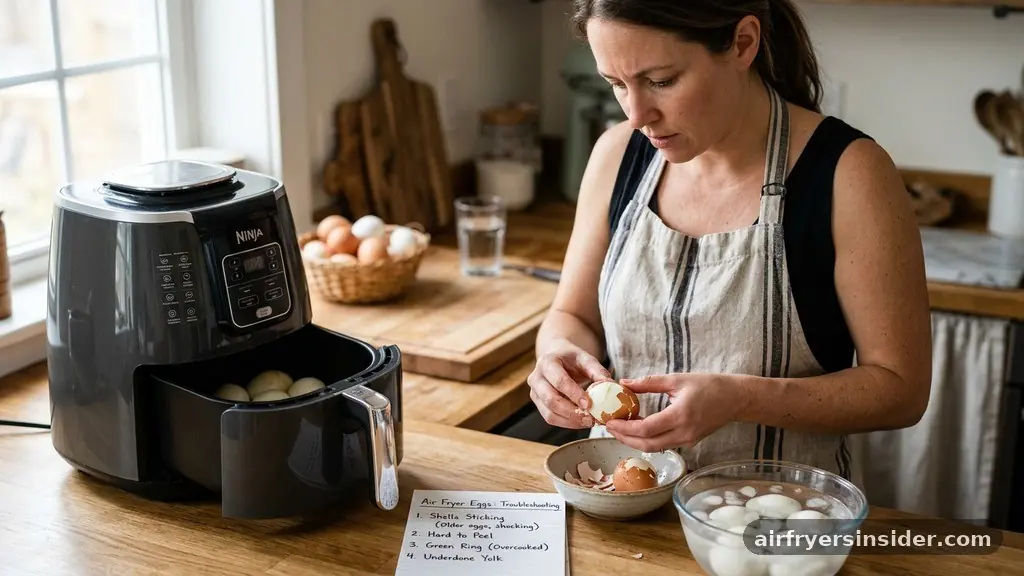
If you find that your eggs are consistently cracking, check the temperature setting. Most modern air fryers run hot, so if you are set to 300°F or higher, you are likely subjecting the shell to too much heat too quickly. Lowering the heat to 250°F or 275°F often solves this issue.
If the eggs are difficult to peel, it usually means they were not cooled down fast enough after cooking. The ice bath is not optional; it is a critical step in the chemistry of the peel.
Another common complaint is the formation of small, brown spots on the white of the egg. These are simply “air fryer freckles” caused by the convection heat and are perfectly safe to eat. They are more common in older air fryers where the heating element is very close to the food.
If you find these spots unsightly, try placing the eggs on the bottom rack or as far away from the top heating element as possible. If you are experiencing uneven cooking, it is almost certainly a result of stacking the eggs. Keep them in a single layer, and you will notice a massive improvement in the uniformity of the final product.
Why Convection Cooking Changes the Game
Convection cooking is fundamentally different from boiling because it removes the medium of water entirely. In a pot, you are limited by the boiling point of water, which is 212°F at sea level. In an air fryer, you can manipulate the temperature to reach higher levels, which can speed up the process.
However, the goal with eggs is not just speed, but control over the protein coagulation. By using a lower temperature (around 250°F), you mimic the gentle heat of a water bath while benefiting from the dry environment.
This method also yields a more concentrated flavor. Because the eggs are not sitting in water, they do not absorb any excess moisture through the pores in the shell. Many home cooks report that air-fried eggs have a slightly richer, more “egg-forward” taste compared to those boiled in a pot.
Furthermore, the lack of water means there is no risk of the eggs banging against each other and cracking due to a rolling boil. It is a cleaner, more controlled environment that produces consistent, reliable results for busy families.
Maximizing Your Air Fryer Efficiency
To get the most out of your appliance, consider the volume of food you are prepping. While you shouldn’t crowd the basket, you can often fit six to eight large eggs in a standard 5-quart air fryer.
This makes it an ideal method for batch-prepping breakfast for the week or gathering enough eggs for a large potato salad. Because the cooking time remains consistent regardless of whether you have two eggs or six, you can maximize your energy usage by filling the basket to its effective capacity.
If you are a frequent user, you might want to invest in an egg rack designed for air fryers. These small metal stands allow you to stack eggs vertically, which effectively doubles your capacity without sacrificing airflow.
They are inexpensive and can be a game-changer if you often find yourself needing a dozen hard-boiled eggs at once. Always remember to adjust your timing slightly if you are filling the basket to its maximum capacity, as the increased density of cold items can slightly lower the internal temperature of the air fryer during the first few minutes of the cycle.
Answering Common Questions About Air Fried Eggs
How do you prevent eggs from exploding in the air fryer?
Exploding is usually caused by rapid internal pressure buildup due to high heat. To prevent this, stick to a lower temperature setting like 250°F. Ensure your eggs are at room temperature before placing them in the basket, and avoid using eggs that already have hairline fractures in the shell.
Is it better to air fry or boil eggs?
Neither is strictly better; it depends on your needs. Air frying is more hands-off and often results in easier peeling. Boiling is better if you need to cook a very large quantity at once, as a large pot can accommodate more eggs than even the biggest air fryer basket.
What happens if you air fry an egg without water?
Nothing negative happens; in fact, this is the intended method. Air frying is a dry-heat process. You do not need water to cook the egg through. The hot, circulating air effectively cooks the white and yolk to your desired level of firmness without any moisture added to the basket.
Can you cook different types of eggs at once?
You can, but it is challenging to time them correctly. If you want some soft-boiled and some hard-boiled, pull the soft-boiled ones out early, but be careful of the heat. It is usually easier to cook one batch to one specific doneness to ensure the consistency remains perfect across all eggs.
Mastering the Perfect Peel
The “peelability” of an egg is often determined by the age of the egg and the cooling process. Fresh eggs are notoriously difficult to peel because the pH of the white is lower, causing it to bond tightly to the shell membrane.
If you are using farm-fresh eggs, you might find that even the perfect cooking method results in a bit of a struggle. Using eggs that are a week or two old will always yield the best results for easy peeling.
When you remove the eggs from the air fryer, they will be very hot to the touch. Use tongs to transfer them directly into a bowl filled with ice and water. Let them sit in the ice bath for at least ten minutes.
As the egg cools, the contents contract slightly, pulling away from the shell. Once they are fully chilled, gently crack the shell all over by tapping it on the counter, then peel under cool running water or submerged in a bowl of water. The water helps get under the membrane, allowing the shell to slide off in large pieces rather than tiny, frustrating shards.
Conclusion
Mastering how to hard boil eggs in an air fryer is a practical skill that simplifies your kitchen routine. By focusing on consistent temperature, proper airflow, and the essential ice bath, you can produce perfectly cooked eggs every time. Whether you prefer a jammy center or a fully set yolk, this dry-heat method offers a level of control that is hard to beat.
Start with a small batch to calibrate your specific machine’s heat, and you will soon find this becomes your go-to method for quick protein prep. Experiment with the timings provided to discover your ideal texture, and enjoy the convenience of a perfectly peeled egg without the hassle of boiling water. We hope this guide helps you feel confident in your kitchen adventures.
Meta Description: Learn how to hard boil eggs in an air fryer with this guide. Achieve the perfect yolk consistency and easy peeling with our simple, effective tips.


