

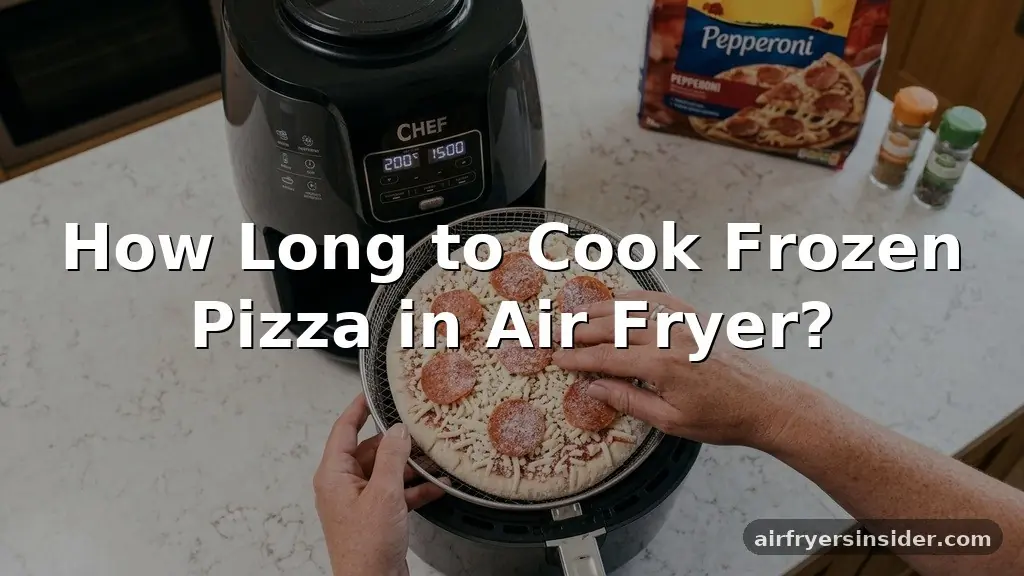
Determining exactly how long to cook frozen pizza in air fryer appliances can be the difference between a soggy mess and a perfect, crispy meal. Because these machines rely on powerful convection cooking, they often work much faster than a standard kitchen oven.
If you have been wondering how to achieve that elusive, restaurant-quality crunch at home without burning the cheese, you are in the right place. By mastering the right settings and timing, you can transform a simple store-bought snack into a delicious, quick dinner that satisfies every craving while saving you significant time in the kitchen.
Understanding the Mechanics of Air Frying Pizza
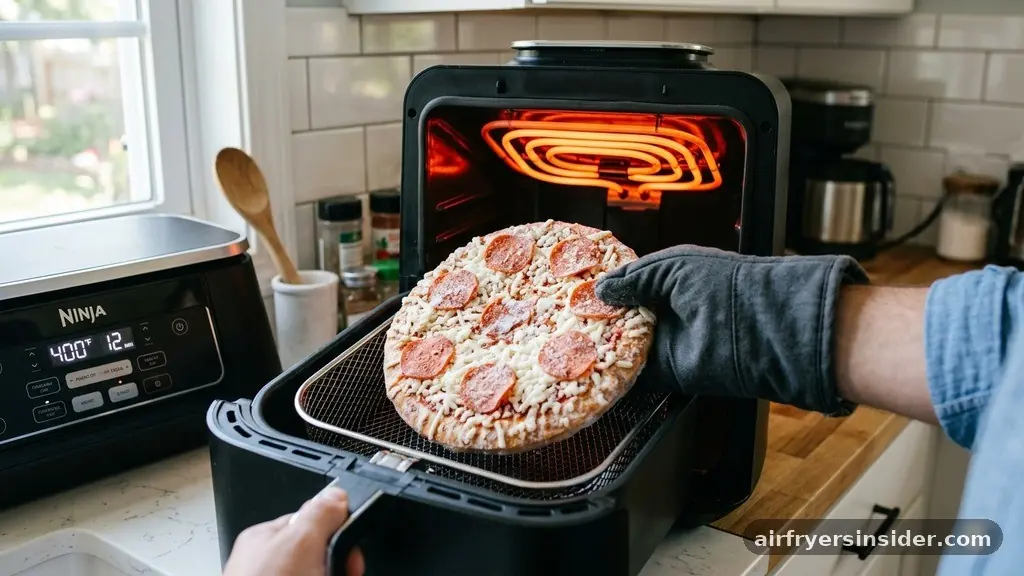
Air fryers are essentially compact, high-powered convection ovens. They utilize a powerful heating element paired with a high-speed convection fan to circulate hot air rapidly around your food.
When you place a frozen item inside, this intense air circulation works to dehydrate the surface of the crust quickly, which is why you get such excellent results compared to a microwave. The key to success is understanding that air fryer temperature settings often need to be lower than those recommended on a standard pizza box.
Because the heat source is much closer to the food in an air fryer than in a conventional oven, you run the risk of the top toppings burning before the center of the dough is fully cooked. This is why managing the cooking time is critical.
Most frozen pizzas require a balance of heat to ensure the dough rises and becomes golden brown while the cheese melts evenly. If you crank the heat too high, you will end up with a charred top and a doughy, raw middle.
Ideal Temperature and Timing Ranges
Finding the sweet spot for cooking frozen pizza involves balancing the size of the pie with the intensity of your specific machine. For most standard personal or thin crust frozen pizzas, you should aim for a temperature between 350°F and 375°F.
At these temperatures, a typical frozen pizza will take anywhere from 8 to 12 minutes. If you are dealing with a thicker crust or a deep dish style, you might need to lower the temperature slightly to 325°F and extend the time to 15 or 18 minutes to ensure the heat penetrates deep into the dough.
It is helpful to keep a food thermometer handy if you are unsure about the doneness of your pizza. While pizza toppings like pepperoni or cheese are generally safe once they hit a certain visual point, ensuring the internal temperature of the crust reaches at least 165°F is a good rule of thumb for food safety. Always remember that every appliance has different wattage variations, so the first time you try this, check the pizza at the 7-minute mark to see how it is progressing.
The Role of Preheating and Preparation
Many home cooks skip the preheating step when using an air fryer, assuming that the machine heats up instantly. While it is true that these units reach temperature quickly, preheating for 3 minutes can make a massive difference in the overall crispiness of your pizza crust. By starting with a hot environment, you initiate the crisping process immediately upon contact, which prevents the dough from absorbing excess moisture from the sauce or toppings as it thaws.
Preparation also matters regarding the base of your pizza. Many people wonder if they should use parchment paper or aluminum foil.
While you can use these, be careful to ensure the paper is weighed down by the pizza so it does not fly up into the heating element. Using a light coating of cooking spray or a fine oil mist on the basket can prevent sticking, especially if your air fryer basket has lost some of its non-stick coating over time.
Basket Style Versus Toaster Oven Style
The shape and design of your air fryer will dictate how you load your pizza. A basket style air fryer is compact, and you may find that you need to cut a standard-sized frozen pizza into quarters or halves to fit it inside. This is actually a benefit, as it allows for better air circulation around the edges of each piece, leading to even crispier results.
On the other hand, if you own a toaster oven style air fryer, you often have a flat rack or tray. This allows you to cook a round personal pizza or a small rectangular pie in one go.
Because these units are larger, they might require a minute or two of extra cooking time compared to the smaller, more concentrated basket models. Always pay attention to the distance between the top of the pizza and the heating elements in these toaster oven units, as they can sometimes be quite aggressive with radiant heat.
Strategies for Different Crust Types
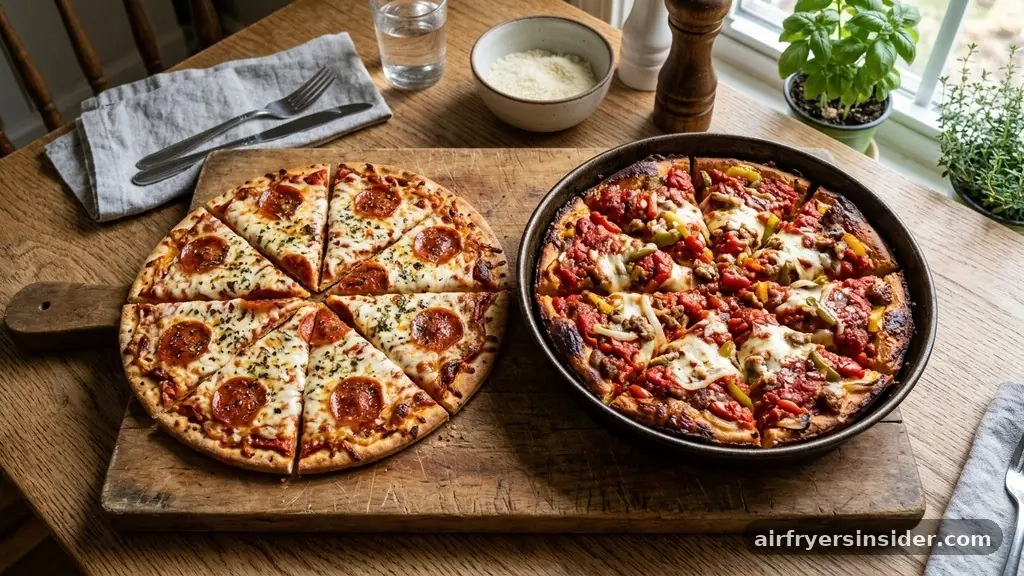
Not all frozen pizzas are created equal, and your cooking strategy should reflect the thickness of the dough. Thin crust pizzas are the easiest to manage in an air fryer because they cook through rapidly and develop those desirable crispy edges very quickly.
If you are cooking a thin crust, keep a close eye on it starting at the 6-minute mark. These pizzas can go from perfect to burnt very fast.
Deep dish or rising crust pizzas require a more patient approach. Because these are thicker, they need more time for the center to cook without the edges becoming too hard or the cheese becoming rubbery.
If you notice the top is browning too quickly, you can create a small “tent” out of aluminum foil to shield the toppings while the dough finishes baking. This technique is a lifesaver for larger, more substantial pizzas that would otherwise require a conventional oven.
Addressing Common Cooking Challenges
One of the most common issues people face is a soggy center. This usually happens when the pizza is placed in the basket while still completely frozen and the air circulation isn’t sufficient.
To combat this, try to let the pizza sit on the counter for 5 minutes before air frying, just enough to take the extreme chill off. This small step helps the moisture evaporate more consistently throughout the entire cooking process.
Another challenge is the “flying topping” problem. Because the convection fan is so powerful, lightweight toppings like small pepperoni slices or shredded cheese can sometimes get blown off the pizza.
To prevent this, you can place a small metal rack on top of the pizza to hold the toppings down, or simply choose a pizza with slightly heavier or more embedded toppings. If you are adding your own extra cheese, make sure it is pushed down into the sauce so it stays put during the high-speed air cycle.
Reheating Leftover Pizza
Reheating leftover pizza is perhaps the best use case for an air fryer. If you have a few slices of cold pizza, the air fryer will bring them back to life in a way a microwave never could.
To reheat, set your air fryer to 350°F and cook for 3 to 5 minutes. This will crisp up the bottom crust and melt the cheese perfectly, making it taste almost as good as it did when it was fresh.
Avoid using a microwave for reheating if you want to maintain the texture. The microwave makes the crust chewy and rubbery, whereas the air fryer restores the crunch by removing excess moisture. If the pizza seems a bit dry, you can lightly mist the crust with water before putting it in the basket to help rehydrate the dough while the edges crisp up.
Comparing Cooking Methods
The following table provides a quick reference for how various pizza types perform in an air fryer compared to traditional cooking methods.
| Pizza Type | Estimated Air Fryer Temp | Estimated Cooking Time | Best Practice |
|---|---|---|---|
| Thin Crust | 375°F | 7-9 Minutes | Check early for crispy edges |
| Rising Crust | 350°F | 12-15 Minutes | Use foil to protect toppings |
| Frozen Mini Pizza | 350°F | 5-7 Minutes | Space out for airflow |
| Deep Dish | 325°F | 15-18 Minutes | Lower heat for even center |
Tips for Success with Frozen Mini Pizzas
Cooking a frozen mini pizza is a fantastic way to enjoy a quick snack. Because these are small, they are perfectly suited for the air fryer environment. You can usually fit two or three mini pizzas in a standard basket.
Ensure they are not touching, as the sides that are touching will remain soft and doughy. If you are cooking multiple, it is better to do them in two separate batches for the best results.
If you are a fan of custom toppings, the air fryer is the perfect place to add them. Since the pizza is already partially cooked from the factory, you can add fresh basil, extra pepperoni, or even some thinly sliced vegetables during the last 3 minutes of cooking.
This allows the toppings to get hot and slightly roasted without burning or drying out. It is a quick way to upgrade a basic frozen product into something that feels much more artisanal.
Common Questions Answered
Can I put frozen pizza directly on the air fryer basket?
Yes, you can place it directly on the basket, but using a piece of parchment paper can make cleanup much easier. If the basket has a good non-stick surface, you might not need anything at all. Just be sure the pizza is stable and the air can flow around it.
Why is my pizza crust still soggy in the middle?
This usually happens because the temperature was too high, causing the outside to cook before the heat could reach the center. Try lowering the temperature by 25 degrees and adding a few minutes to the total cook time to allow for more even heat distribution.
Is it necessary to use oil spray on the pizza?
It is not strictly necessary, but a light oil mist on the crust can help achieve an extra-golden brown finish. If you like a crunchier, more “fried” texture on the outside of the dough, a very thin layer of oil or cooking spray can definitely help achieve that result.
How do I know when the pizza is actually finished?
The best indicators are a golden brown crust and bubbly, melted cheese. If you want to be precise, use an instant-read food thermometer to check that the center of the dough has reached at least 165°F. Visual cues combined with a timer are usually sufficient for most home cooks.
Conclusion
Mastering the art of cooking frozen pizza in an air fryer is a game-changer for quick meal preparation. By adjusting your heat settings, understanding your specific appliance, and keeping a close eye on the cooking process, you can achieve a level of crispiness that is impossible to replicate in a microwave and often superior to a standard oven. Start with the suggested time frames, monitor your pizza closely during the first attempt, and don’t be afraid to adjust based on the crust style you prefer.
Whether you are reheating leftovers or pulling a fresh personal pie out of the freezer, the air fryer is a reliable tool for getting dinner on the table in record time. Try these techniques tonight and enjoy a perfectly cooked, crispy meal.


