

Many people wonder if they can use their countertop appliance for more than just crispy fries, leading to the common question: can you boil water in an air fryer? While it is technically possible to get water hot in this device, doing so effectively or safely is a completely different matter.
Understanding how these machines work—by circulating intense heat—reveals why they aren’t designed for liquid-based cooking. This article explores the mechanics of why you should typically stick to a kettle or stovetop, helping you avoid potential damage to your appliance and ensuring your kitchen remains a hazard-free zone.
The Mechanics of Air Frying and Liquid Heating
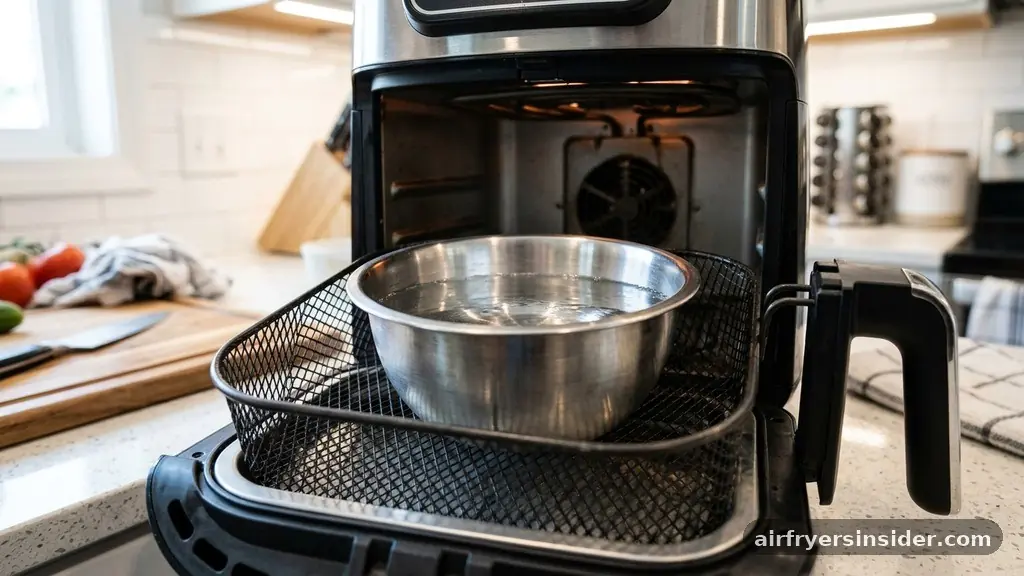
Air fryers are essentially compact, high-powered convection ovens. They utilize a powerful fan to circulate hot air at high speeds around a food basket. This process relies on heat transfer through air, which is highly efficient for browning, crisping, and roasting solid foods.
However, the physics changes entirely when you introduce a vessel of water. Because air is a poor conductor of heat compared to direct contact with a burner, the heating element struggles to transfer energy into the liquid efficiently.
When you place a container of water inside, the machine must heat the air, and finally to the water. This indirect path is inherently slow.
Unlike a stovetop, where the pot is in direct contact with a heat source, an air fryer relies on the air temperature to warm the vessel, which then warms the water. This process is inefficient and often results in the air fryer’s sensors getting confused, as they are calibrated to measure air temperature rather than the internal temperature of a liquid.
Understanding the Risk of Electrical Shorts
One of the primary reasons manufacturers advise against putting liquids in these devices is the risk of an electrical short. Air fryers are designed for dry cooking.
If water splashes or boils over, the moisture can easily find its way into the electrical components located beneath the basket. Even a small amount of steam can condense on sensitive circuitry, potentially causing a malfunction or a dangerous electrical fault.
Modern air fryers often have exposed heating elements at the top of the unit. If you attempt to boil a large volume of water, the resulting water vapor can rise and coat these elements.
This moisture buildup, combined with high heat, can damage the coating of the element or lead to corrosion over time. Keeping the interior dry is essential for maintaining the longevity of your machine and ensuring it remains safe for daily use.
Thermal Shock and Vessel Compatibility
If you are determined to heat water, you must choose the right container. Most people mistakenly assume that any pot or bowl will work, but you need oven-safe glass or heavy-duty ceramic ramekins that can withstand rapid temperature changes. Putting a standard glass jar or thin ceramic bowl into a preheated environment can lead to thermal shock, causing the container to crack or shatter unexpectedly.
Furthermore, the shape of the container matters significantly. A wide, shallow dish might allow for some evaporation, but it won’t reach a rolling boil effectively.
A deep, narrow container might trap heat but will take an eternity to reach the boiling point. Because the air fryer is designed to move air, using a container that blocks airflow can also cause the unit to overheat, as the fan will struggle to circulate the heat properly, leading to uneven results.
The Efficiency Gap: Stovetop vs. Air Fryer
When comparing tools, a standard stovetop pot is almost always superior for boiling liquids. Stovetops are designed to handle the thermal load of heating water, providing consistent, direct energy that brings water to a boil in minutes.
In contrast, an air fryer’s maximum temperature threshold is usually limited to around 400 degrees Fahrenheit. While this is plenty for crispy vegetables, it is far less efficient for heating a large mass of water.
Why Stovetops Win
- Direct contact: Stovetops transfer heat directly to the metal of the pot.
- Volume capacity: You can boil much larger quantities on a stove without risking the unit.
- Safety: Stovetops are built to handle the moisture and heat associated with boiling water.
- Speed: A kettle or stove will reach 212 degrees Fahrenheit significantly faster.
Safety Hazards and Kitchen Appliance Maintenance
Ignoring the manufacturer’s manual is a common cause of kitchen appliance safety issues. Most manuals explicitly state that the unit should not be used to heat large amounts of liquids.
This is not just a suggestion; it is a safeguard against fire and electrical hazards. If you ignore these warnings and a fire occurs, you may find that your warranty is voided, leaving you with a broken machine and no recourse.
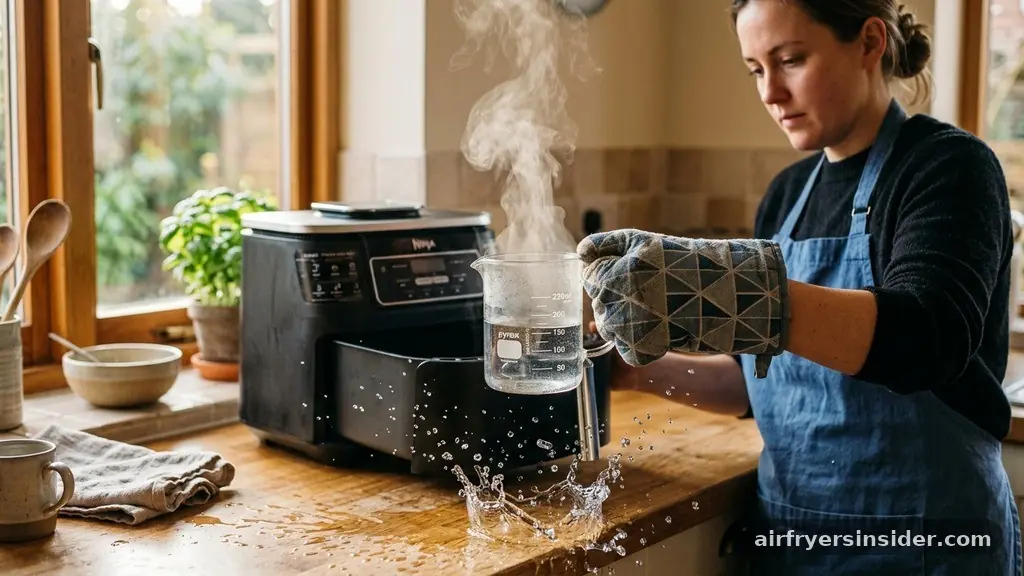
Beyond the risk of fire, there is the issue of liquid displacement and spillage. Moving a hot container of water out of a narrow air fryer basket is inherently awkward.
It is very easy to tilt the container, splashing boiling water onto your hands or onto the internal surfaces of the air fryer. The lack of a stable, flat surface to grip makes the entire process far more dangerous than using a traditional kettle.
Better Alternatives for Boiling Water
If you find yourself needing hot water but lacking a stove, there are Better Alternatives for Boiling Water that don’t involve risking your air fryer. Electric kettles are the gold standard for this task.
They are inexpensive, energy-efficient, and designed specifically to bring water to a boil safely and quickly. Even a microwave is a safer option, provided you use a microwave-safe container and a wooden stir stick to prevent superheating.
If you are in a dorm or a hotel room without a kitchen, consider purchasing a small immersion heater or a hot plate. These devices are built for the specific purpose of heating water and won’t put your expensive air fryer at risk. Using the right tool for the job always yields better results and keeps your living space safe from preventable accidents.
Can You Use an Air Fryer for Reheating Liquid?
Many people ask if they can warm up soup, coffee, or sauce in an air fryer. While this is slightly less risky than boiling water, it still presents challenges.
Because the air fryer is essentially a high-speed oven, it will rapidly dry out the surface of the liquid. This can create a crust or a skin on your food, which is the exact opposite of what you want for a smooth sauce or soup.
Additionally, the fan can cause lighter liquids to splatter inside the chamber. This creates a mess that is notoriously difficult to clean, especially if the liquid gets into the fan assembly or the heating element housing.
If you must use an air fryer to warm a liquid-based dish, ensure it is covered with foil or an oven-safe lid to contain the moisture and prevent splattering. Even then, stir the contents every few minutes to ensure it heats through evenly.
The Science of Surface Tension and Evaporation
Boiling is a state change that requires significant energy input. In a convection environment, the air constantly strips away the moisture control layer at the surface of the water.
This effectively cools the water as it evaporates, which fights against the heating process. This is why you will notice that even if the air in the fryer is 400 degrees, the water inside a container will struggle to reach 212 degrees.
The thermal conductivity of the air is simply not enough to overcome the cooling effect of rapid evaporation. You end up with a lukewarm bowl of water that has lost a significant portion of its volume to steam.
This is an inefficient use of electricity and a waste of time. Unless you are performing a very specific culinary experiment that requires slow, controlled evaporation, there is no scientific reason to use an air fryer for this task.
Comparing Methods for Heating Liquids
To help visualize why the air fryer falls short, consider the following data comparing common kitchen tools for heating water. These values are estimates based on standard household conditions.
| Appliance | Efficiency | Safety Level | Best Use Case |
|---|---|---|---|
| Electric Kettle | High | High | Boiling water for tea/coffee |
| Stovetop Burner | High | High | Boiling large pots of water |
| Microwave | Medium | Medium | Reheating small amounts of liquid |
| Air Fryer | Low | Low | Cooking crispy solid foods |
FAQ Section
Is it possible to boil water in an air fryer?
While you can heat water in an air fryer using an oven-safe container, it is highly inefficient and not recommended. The device is designed for circulating hot air to crisp food, not for heating liquids, and doing so can damage the electrical components or cause dangerous spills.
Can you heat up liquids like soup in an air fryer?
You can heat liquids in an air fryer if you use a heat-proof, oven-safe container and cover it tightly. However, it is risky because the air circulation can cause splattering, which may damage the heating element or the fan. It is usually better to use a microwave or stovetop.
How long does it take to boil water in an air fryer?
It takes significantly longer to boil water in an air fryer than on a stovetop or in an electric kettle. Because the air fryer must heat the air before transferring that heat to the water, you may wait 15 to 20 minutes for a small amount of water to reach a boil.
What happens if water gets into the air fryer fan?
If water or steam enters the fan assembly, it can cause an electrical short, rust the internal components, or damage the motor. This can lead to the machine failing entirely, and since using liquids is typically against manufacturer guidelines, it will likely void your appliance’s warranty.
Conclusion
Ultimately, while you might find a way to make it work in a pinch, boiling water in an air fryer is a poor use of the appliance. It is slow, inefficient, and poses unnecessary risks to your machine’s electrical integrity. By sticking to a kettle or a stovetop, you save time, electricity, and the lifespan of your kitchen equipment.
The air fryer is a fantastic tool for achieving the Maillard reaction on chicken, potatoes, and other solid foods, but it should remain a dry-cooking environment. Keeping your device clean and free of moisture is the best way to ensure it continues to provide perfectly crispy results for years to come. Next time you need to boil water, reach for the kettle instead of the air fryer basket.


