

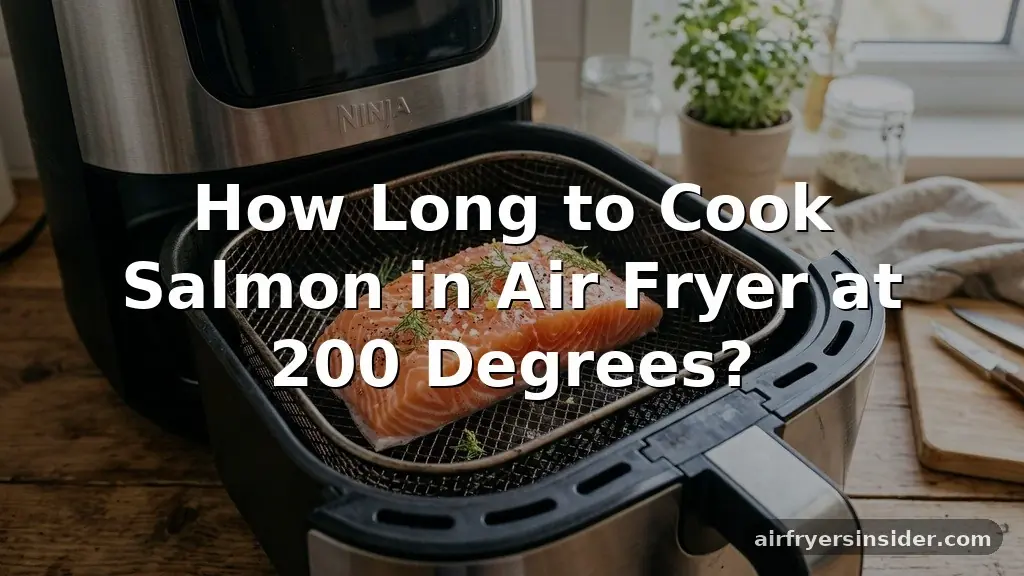
Determining exactly how long to cook salmon in air fryer at 200 degrees requires a shift in mindset from traditional high-heat roasting. While many air fryer recipes push for temperatures between 375 and 400 degrees to achieve a crust, cooking at a lower setting like 200 degrees creates a slow-roasting effect. This method is ideal for those who prioritize a buttery, tender result over a crispy exterior.
By maintaining a gentle, consistent heat, you ensure the fish stays incredibly moist while preserving its delicate flavor profile. Understanding the nuances of this low-temperature approach helps you master the art of perfectly cooked fish every time you use your countertop appliance.
Understanding the Mechanics of Low-Temperature Air Frying
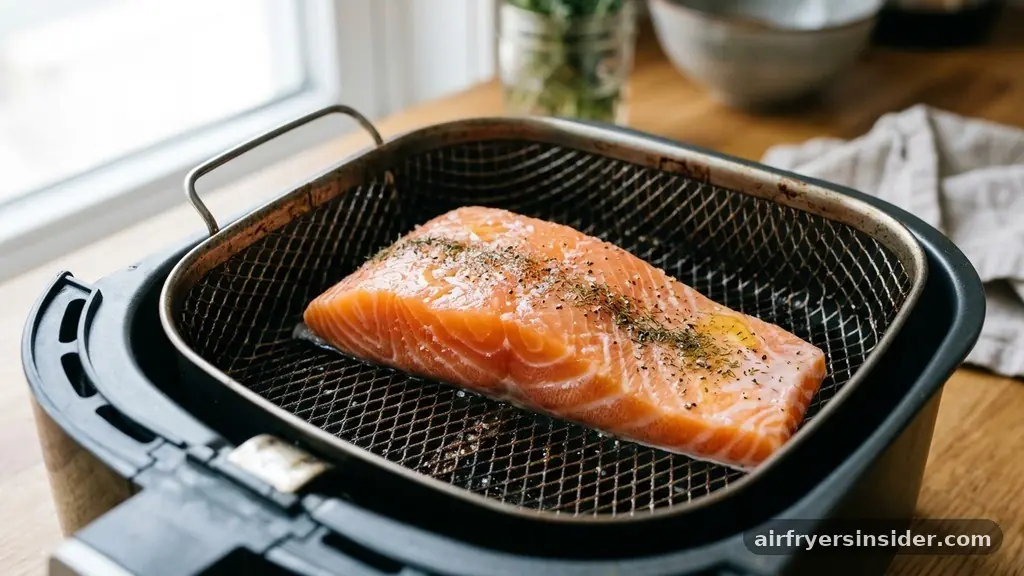
When you decide to cook salmon at 200 degrees, you are essentially poaching the fish using dry, circulating heat. Most air fryers function as compact convection ovens, meaning they rely on powerful fans to circulate air around the food.
At a lower heat setting, this convection heat works to gently coagulate the proteins in the salmon without drying out the surface. This technique is particularly effective for thick cuts of fish that might otherwise dry out on the edges before the center reaches the proper doneness.
The primary advantage of this method is the retention of natural oils. Salmon is rich in healthy fats, specifically omega-3 fatty acids, which contribute to its signature silky mouthfeel. High heat can sometimes cause these fats to render too quickly or smoke, but a lower temperature keeps them within the fillet.
You will notice that the white albumin—that unsightly white residue that sometimes appears on salmon—is significantly reduced when you use a lower temperature. Because the cooking process is slower, the structure of the muscle fibers remains intact, leading to a consistently moist salmon that practically melts on your tongue.
Preparing Your Salmon for the Air Fryer
Before you even think about the clock, your preparation determines the success of the dish. Start by ensuring your salmon fillets are patted completely dry with paper towels. Excess moisture on the surface of the fish will cause it to steam rather than roast, which prevents the development of any subtle texture.
Once dry, brush the fillets lightly with a high-quality olive oil. This not only adds flavor but also helps the seasoning adhere to the flesh.
When it comes to seasoning, keep it simple to allow the natural flavor of the fish to shine. A basic blend of kosher salt, freshly cracked black pepper, and perhaps a touch of garlic powder or dried dill works wonders. If you are working with skin-on fillets, make sure the skin is clean and dry.
Placing the salmon skin-side down on the air fryer rack or basket is the standard practice. This creates a barrier between the delicate flesh and the hot metal, protecting the bottom of the fillet while it cooks through at the lower 200-degree setting.
Determining the Ideal Cooking Time
Because air fryer models vary significantly in terms of wattage and airflow efficiency, there is no single “magic number” for cooking time. However, when cooking at 200 degrees, you should generally expect the process to take between 20 and 30 minutes.
This is significantly longer than the 10-12 minutes required at 400 degrees, but the patience pays off in the final texture. The thickness of your salmon fillet is the most important variable here; a thin tail piece will cook much faster than a thick center-cut portion.
To ensure success, use the following guide as a starting point for your timing, keeping in mind that you should always verify with a tool rather than just relying on the clock.
- Thin fillets (under 1 inch): Start checking at 18 minutes.
- Medium fillets (1 to 1.5 inches): Usually require 22 to 25 minutes.
- Thick center-cut portions (over 1.5 inches): May take up to 30 minutes or slightly longer.
- Frozen salmon: Add an additional 5 to 8 minutes to your estimated time.
The Role of Internal Temperature and Doneness
The only way to guarantee safety and quality is to rely on a digital meat thermometer. According to USDA guidelines, fish should reach an internal temperature of 145 degrees Fahrenheit. However, many culinary experts prefer pulling the fish at 135 to 140 degrees.
Because of carryover cooking, the temperature will continue to rise by a few degrees after you remove the fillets from the air fryer. If you wait until it hits 145 while still inside the basket, you risk overshooting the mark and ending up with a dry final product.
When you insert your food thermometer, aim for the thickest part of the salmon fillet. You are looking for a firm yet yielding texture. If you don’t have a thermometer, you can use the fork test.
Gently press the top of the fillet with a fork; if the salmon flakes easily along the natural white lines of the muscle, it is ready. If it feels rubbery or resistant, it needs a few more minutes. Remember that the goal is a flaky texture that is uniform from edge to edge.
Managing Air Circulation and Preheating
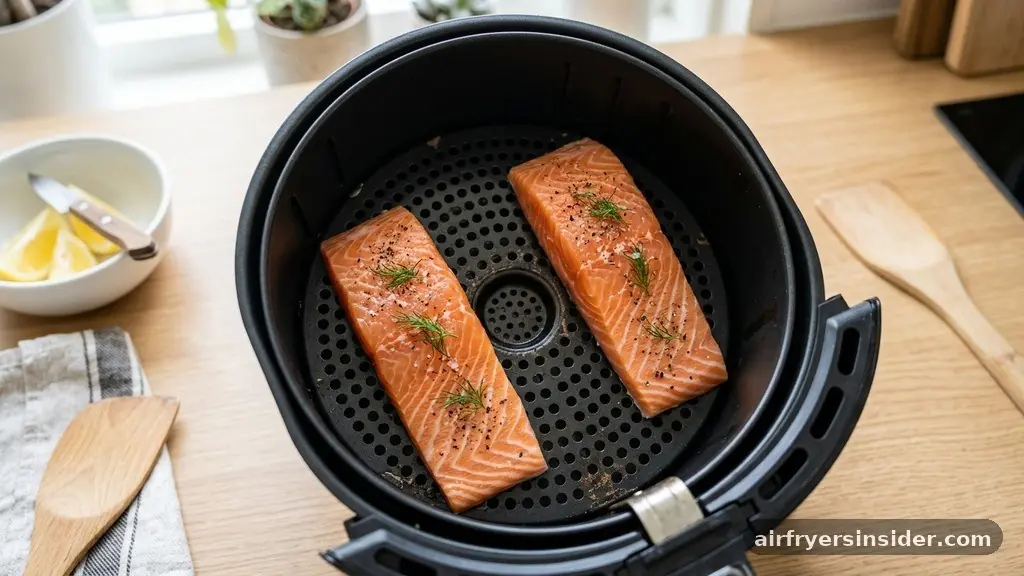
One of the most common mistakes in air frying is overcrowding the basket. Proper air circulation is the secret to even cooking. Even at 200 degrees, if the fillets are touching or piled on top of each other, the air cannot flow freely, resulting in uneven cooking.
Leave at least an inch of space between each piece of salmon. If you have a large batch, it is better to cook in multiple rounds rather than cramming everything into the basket at once.
Preheating your air fryer is another point of debate. While many manufacturers claim their units don’t need it, preheating for 3 to 5 minutes at 200 degrees ensures that the cooking time begins the moment the fish hits the basket.
This consistency is vital when you are aiming for a specific, low-temperature outcome. If you put cold salmon into a cold air fryer, the internal temperature will rise too slowly, potentially affecting the final texture of the fish.
Using Aluminum Foil and Parchment Paper
Should you use a liner when cooking at 200 degrees? Using aluminum foil or parchment paper can make cleanup significantly easier, especially if you have added a glaze or marinade that might caramelize and stick to the basket. However, you must be careful not to impede the airflow.
If you use foil, cut it to the size of the fillet rather than lining the entire bottom of the air fryer basket. This allows the air to continue circulating around the sides of the food.
Parchment paper is often a better choice because it is thinner and less likely to block the convection currents. If you choose to use a liner, ensure it is weighted down by the salmon fillet itself so it doesn’t get blown around by the fan.
Never preheat your air fryer with an empty piece of parchment paper inside, as it can be sucked into the heating element and become a fire hazard. By using liners strategically, you maintain the moistness of the salmon while keeping your kitchen cleanup to a minimum.
Comparing Cooking Methods and Temperatures
It is helpful to understand how 200 degrees compares to more traditional air frying temperatures. The table below illustrates how temperature adjustments impact the final result of your salmon.
| Temperature | Cooking Time | Texture Result | Best For |
|---|---|---|---|
| 200°F | 20–30 Minutes | Very Moist / Buttery | Thick cuts, gentle cooking |
| 350°F | 12–15 Minutes | Balanced | Standard weeknight fillets |
| 400°F | 8–10 Minutes | Crispy skin / Seared top | Quick meals, crispy preferences |
As you can see, the lower temperature is a specialized approach. While 400 degrees is excellent for a quick sear, it often sacrifices the uniform tenderness that 200 degrees provides. Choosing your temperature depends entirely on the time you have available and the specific texture you desire for your dinner.
Answering Common Topical Gaps
A common question that often goes unaddressed is whether or not you can marinate the salmon before using this low-heat method. Yes, you absolutely can, but with a caveat.
If your marinade contains high levels of sugar or honey, the extended cooking time at 200 degrees might cause the sugars to burn or turn bitter. It is better to use acidic or herbal marinades—such as lemon juice, soy sauce, or fresh dill—and save any sweet glazes for the final two minutes of cooking.
Another gap in standard advice is how to handle different types of salmon. Farmed Atlantic salmon is generally fattier and more forgiving of longer cooking times. Wild-caught Sockeye or King salmon, on the other hand, is much leaner.
Because wild salmon has less fat, it can dry out very quickly. If you are cooking wild-caught varieties, you should prioritize the lower end of the time spectrum and rely heavily on your thermometer. Monitoring the fish closely during those last few minutes is the difference between a culinary success and a dry disappointment.
Resting Your Salmon for Maximum Moisture
Just like a steak, salmon benefits from a brief resting time after it leaves the heat. Once your digital meat thermometer indicates that the salmon has reached your target temperature, remove the fillets from the air fryer and place them on a warm plate.
Let them rest for 3 to 5 minutes before serving. This allows the internal juices, which have been pushed toward the center during the cooking process, to redistribute throughout the muscle fibers.
Resting is particularly important when using the 200-degree method because the gentler heat creates a more uniform internal state. When you cut into the fish after it has rested, you will notice that it holds its shape better and retains more moisture on the plate.
This small, often overlooked step is what separates home-cooked fish from restaurant-quality results. Serve your perfectly cooked salmon with a squeeze of fresh lemon or a dollop of herb butter to complement the delicate, buttery profile you have achieved.
Frequently Asked Questions
Is 10 minutes in the air fryer enough for salmon at 200 degrees?
No, 10 minutes is not enough time. At 200 degrees, the heat is too gentle to cook a standard salmon fillet through in that timeframe. You should expect the process to take closer to 20 to 30 minutes depending on the thickness of your fish.
How do I know when the salmon is done without a thermometer?
Look for a flaky texture. If you press the top of the fillet with a fork and it separates easily along the natural muscle lines, it is likely cooked. If the center still looks translucent or feels firm and rubbery, it requires more time in the air fryer.
Can I cook frozen salmon in the air fryer at this low temperature?
You can, but you must increase the cooking time. Frozen fillets will take an additional 5 to 8 minutes to thaw and cook through. Ensure the salmon is not stacked and check the internal temperature carefully to confirm it has safely reached the proper heat level.
Does the salmon skin get crispy at 200 degrees?
No, the skin will not become crispy at this low temperature. If you prefer crispy skin, you would need to increase the temperature to at least 375 or 400 degrees for the final few minutes of the cooking process to achieve that specific texture.
The journey to perfectly prepared fish is simpler than many assume once you embrace the slow-roasting capabilities of your appliance. By learning how long to cook salmon in air fryer at 200 degrees, you unlock a method that prioritizes moisture and flavor over speed. Remember that the thickness of your fillets and the specific model of your air fryer will dictate the exact timing, so always keep your digital meat thermometer nearby for the best results.
Start by seasoning simply, monitoring your internal temperatures carefully, and allowing for that vital resting period before serving. With these steps, you will consistently produce tender, buttery salmon that elevates any meal. Experiment with your favorite herbs and citrus pairings to find the flavor profile that suits your palate, and enjoy the convenience of this reliable, low-heat technique.


