

Many home cooks wonder if an air fryer needs to preheat before they drop in their ingredients. Since these appliances are essentially compact, high-powered convection ovens, the question of whether you should wait for them to reach a target temperature is a common point of debate.
While some models feature dedicated buttons to handle this step automatically, others leave the decision entirely up to you. Understanding the mechanics of how your machine functions will help you decide when to skip the wait and when a warm-up period is essential for achieving the perfect crunch.
The Mechanics of Convection and Air Fryer Performance
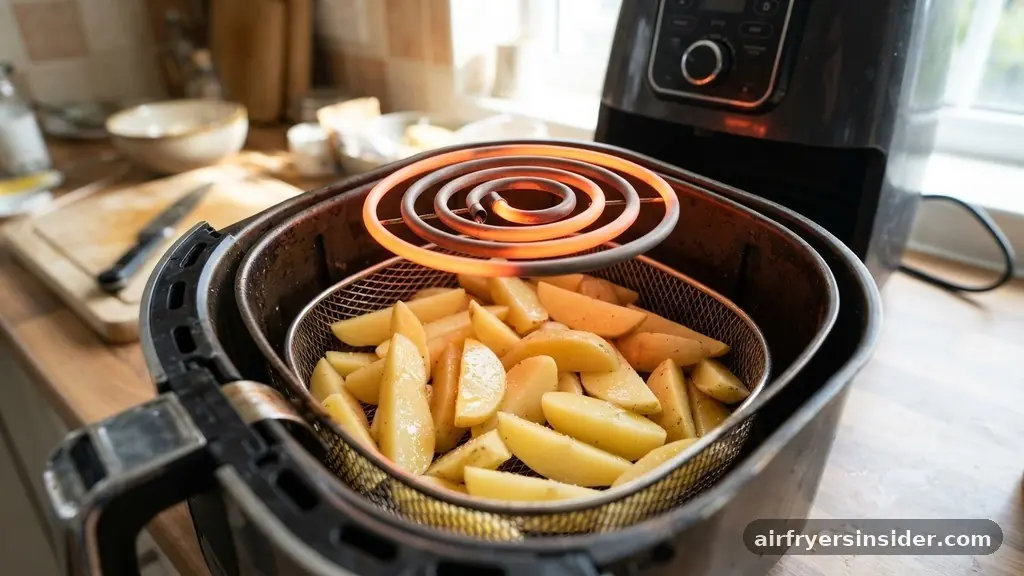
At its core, an air fryer relies on convection heating to cook food. A powerful heating element sits above the food basket, while a high-speed fan forces hot air to circulate rapidly around the contents.
This process is designed to mimic the effects of deep frying by creating a crispy texture through intense, focused heat. When you start with a cold basket, the air fryer must spend the first few minutes of the cooking cycle working to bring the internal environment up to the desired temperature.
If you don’t preheat, the food inside acts as a heat sink, absorbing energy while the appliance struggles to stabilize. This can lead to uneven cooking, where the surface of the food remains pale or soggy while the interior begins to overcook.
By letting the unit reach its target heat first, you ensure that the heat distribution is uniform the moment the food hits the basket. This is particularly important for delicate items that rely on an immediate burst of heat to set their exterior structure.
When Preheating Impacts the Maillard Reaction
The Maillard reaction is the chemical process responsible for the browning and complex flavors we associate with roasted or fried foods. It typically occurs at temperatures between 280°F and 330°F.
If your air fryer starts at room temperature, the food gradually warms up, often bypassing the optimal window for browning until the final minutes of the cycle. This often results in food that is cooked through but lacks that signature golden-brown color and depth of flavor.
Searing requires a high initial temperature to lock in surfaces and create that appealing crust. If you are preparing proteins like chicken thighs, pork chops, or steak, failing to preheat can lead to poor moisture retention.
The meat ends up steaming in its own juices rather than searing. By providing a hot environment from the start, you trigger the Maillard reaction almost immediately, resulting in a superior culinary outcome.
Analyzing Preheat Times for Different Models
Not all appliances are built the same, and the preheating time varies significantly based on the wattage, size, and brand of your machine. A small, low-wattage unit might reach 400°F in under three minutes, while a larger, more powerful device like a Ninja Foodi might take slightly longer due to its larger thermal mass. Most manufacturers provide guidance in the appliance manual, though many users find that these recommendations are conservative.
If you own a digital air fryer, you might notice a specific icon or a dedicated “Preheat” button on the interface. This feature is convenient, but it isn’t strictly necessary for every recipe.
For baking or roasting, the extra time is usually worth it. For simple tasks like reheating leftovers or crisping up pre-cooked items, the ramp-up time of the machine itself often serves as a sufficient “warm-up” period, making a manual preheat step redundant.
Impact on Cooking Time Adjustments
One of the biggest variables in the kitchen is how you handle your cooking time adjustment when skipping the preheat. If a recipe calls for 20 minutes of cooking at 375°F but assumes a preheated machine, starting from cold means your food will likely need an extra 3 to 5 minutes to reach the same level of doneness. This is why many experienced cooks suggest adding a small buffer if they decide to skip the preheating phase.
Conversely, if you do preheat, you must be careful not to overcook the food. The timer should start the moment the food enters the basket.
If you preheat for five minutes and then let the machine sit for another five while you prep your ingredients, you are essentially wasting electricity and potentially drying out the air inside the chamber. Efficiency in the kitchen is about timing your prep so that the basket is ready to load the moment the beep sounds.
Frozen Foods and the Preheating Debate
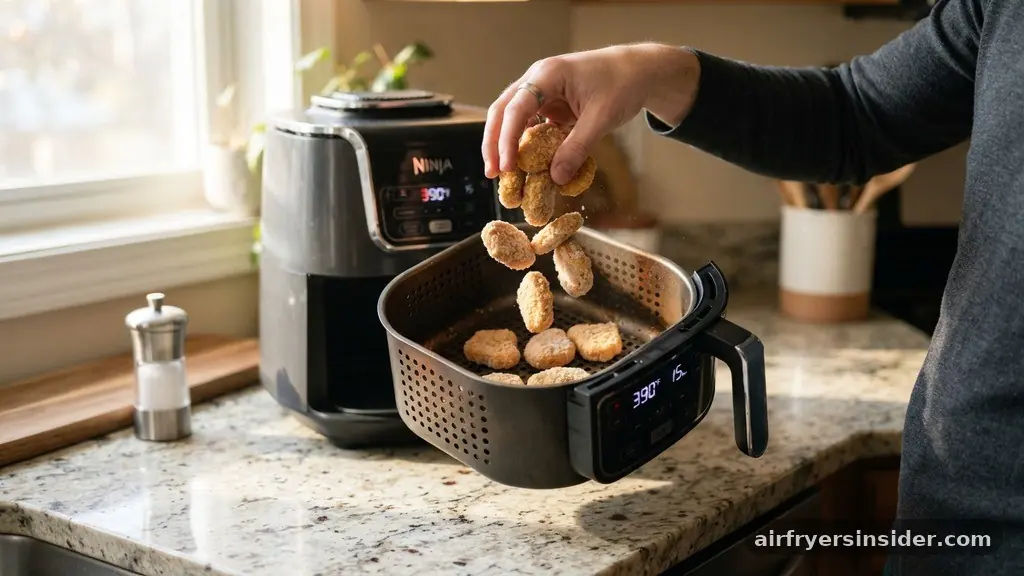
When dealing with frozen foods, the logic regarding whether an air fryer needs to preheat shifts slightly. Frozen items, such as fries, nuggets, or appetizers, have a high water content and are already at a very low temperature. Placing them in a cold basket can cause them to clump together or release excessive moisture before the air can start to crisp them.
Preheating is generally recommended for frozen goods to ensure the exterior is blasted with heat instantly. This prevents the “soggy bottom” syndrome often associated with frozen snacks.
However, if you are in a rush, many modern air fryers are powerful enough to handle frozen goods from cold without a noticeable drop in quality. It often comes down to the specific brand, such as Cosori or Philips Airfryer, and how effectively their rapid air technology manages initial heat spikes.
Managing Basket Placement and Airflow
The way you arrange your food is just as important as the temperature settings. Basket placement affects how air flows around the items. If you crowd the basket, the air cannot circulate effectively, which negates the benefits of preheating anyway. Whether you preheat or not, you should always aim for a single layer of food to maximize exposure to the hot air.
Some users prefer to preheat with the basket inserted to keep the heat contained, while others preheat with the basket removed to ensure the internal walls of the drawer get hot. While the difference is marginal, heating the basket itself adds to the overall thermal mass, which helps maintain a steady temperature once the cold food is added. If you are worried about the machine’s ability to maintain heat, preheating with the basket inside is the most reliable method.
Comparing Preheating Methods
To help you decide your own workflow, consider the following comparison of cooking scenarios.
| Recipe Type | Preheat Recommended? | Reasoning |
|---|---|---|
| Steaks/Chops | Yes | Ensures immediate searing and crust formation. |
| Frozen Fries | Yes | Helps prevent sogginess and clumping. |
| Reheating Pizza | No | Short cycle makes preheating unnecessary. |
| Vegetables | Optional | Depends on desired level of char. |
Addressing Common Topical Gaps
A common misconception is that failing to preheat will damage the heating element or the fan motor. This is generally false for modern consumer air fryers.
These devices are designed to cycle on and off to maintain a specific internal temperature, and they are built to withstand the rapid temperature fluctuations that occur during normal operation. You are not going to break your machine by starting it from cold.
Another gap in understanding involves the fan speed settings. Some advanced models allow you to adjust the fan speed independently of the temperature. If you are cooking something that is prone to drying out, you might want to use a lower fan speed during the initial phase.
However, most standard recipes assume a high fan speed, which is the default for almost all air fryers. If you are experimenting, keep in mind that higher speeds will cook food faster and potentially lead to burning if the preheat was too long.
Practical Tips for Consistent Results
If you want to achieve consistent results every time, create a standard protocol for your specific machine. You might find that for your particular model, preheating for three minutes is the “sweet spot.”
Once you establish this, you can adjust your recipes accordingly. Consistency is the key to mastering any appliance, and the air fryer is no exception to this rule.
* Check your recipe instructions to see if the author specifies a preheat.
* Use an oven-safe thermometer to check the actual heat inside the basket if you are unsure.
* Monitor your food closely during the first few uses to see how your specific unit behaves.
* Avoid using excessive oil, as this can cause smoke if the machine is preheated to high temperatures.
* Keep the air intake and exhaust vents clear to ensure maximum airflow efficiency.
FAQ
What happens if I don’t preheat my air fryer?
If you skip the preheat, your food will likely take a few extra minutes to cook, and you might notice less browning on the exterior. While the food will eventually cook through, it may lack that signature crispy texture, especially if you are working with proteins or frozen items.
Does the air fryer preheat with the basket in or out?
It is generally better to preheat with the basket inserted. This allows the internal walls of the basket to heat up along with the air, which helps maintain a more stable temperature when you open the drawer to add your food.
Are there any recipes where preheating is strictly required?
Preheating is most critical for baking tasks, like muffins or cakes, where a consistent rise is needed, and for high-heat searing of meats. If you don’t preheat for these items, the results may be uneven, under-baked, or lack the desired crust.
How long should I preheat my air fryer on average?
Most air fryers reach their target temperature within three to five minutes. Check your specific manual, as some high-wattage models may heat up faster, while larger capacity units might require a bit more time to fully stabilize before you begin the cooking cycle.
Conclusion
Whether an air fryer needs to preheat is ultimately a matter of the specific food you are preparing and your desired results. While the appliance will certainly function without a preheat, taking those few extra minutes to warm up the unit often pays off in terms of better browning, improved texture, and more reliable cooking times. For quick snacks or reheating leftovers, you can safely skip the wait, but for roasts, baking, or searing, a brief warm-up period is a best practice.
By learning how your specific model handles heat, you can tailor your technique to ensure every meal turns out exactly how you like it. Happy cooking, and feel free to experiment with your settings to find what works best for your kitchen routine.


