


Getting the timing right when you want to know how long to cook skin on salmon in air fryer setups is the secret to achieving that coveted restaurant-quality finish at home. If you have ever struggled with soggy skin or dry, overcooked flesh, you know that finding the sweet spot for your specific air fryer is essential. By mastering the relationship between heat intensity and the thickness of your fish, you can consistently serve up moist, tender fillets with a crunch that keeps everyone coming back for seconds.
Understanding the Mechanics of Air Frying Salmon
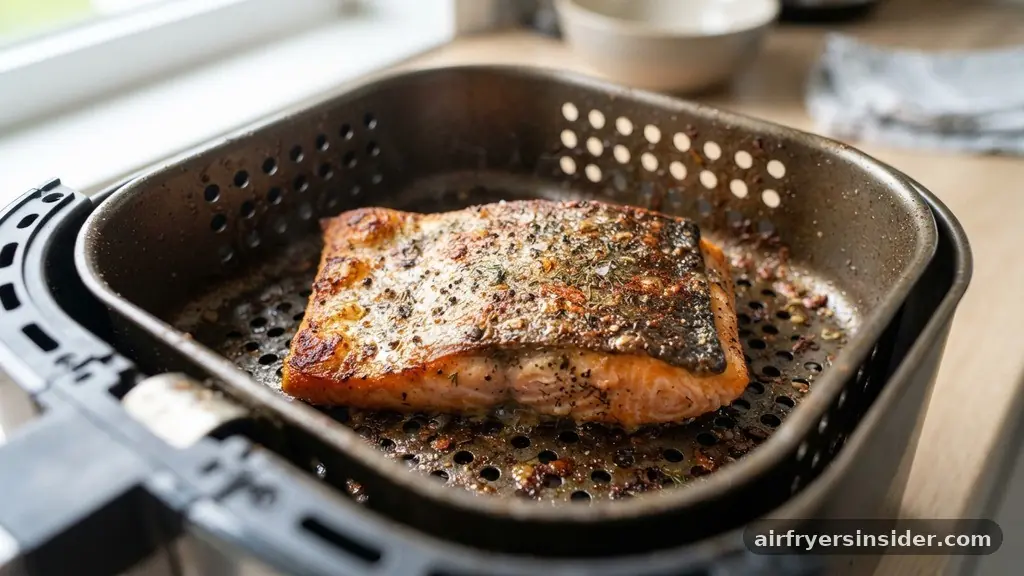
Air fryers are essentially high-powered convection ovens. They work by circulating superheated air rapidly around the food, which is why they excel at rendering fat and crisping textures.
When you are dealing with salmon, the goal is to balance the high heat needed for the skin with the gentle heat required to keep the interior succulent. Because salmon is naturally rich in omega-3 fatty acids, it is a forgiving fish, but it can still dry out if exposed to high temperatures for too long.
The salmon fat content plays a major role in how the fish behaves under heat. As the temperature rises, the fat between the skin and the flesh begins to render, which is exactly what creates that delicious, crispy skin we all desire.
If you rush the process by cranking the heat too high, the surface might char before the center is cooked through. Conversely, cooking it too slowly at a low temperature can result in a rubbery texture that lacks the snap of a well-rendered skin.
Determining the Ideal Cooking Temperature
Most home cooks find that the sweet spot for air-frying salmon is between 375 and 400 degrees Fahrenheit. Choosing between these two depends on your personal preference for texture and the thickness of your salmon fillets.
A temperature of 375 degrees Fahrenheit is slightly more forgiving, making it a great choice if you are a beginner or if your fillets are particularly thick. It allows the heat to penetrate the center of the fish without drying out the exterior too aggressively.
On the other hand, 400 degrees Fahrenheit is the gold standard for achieving a rapid, intense sear. If you prefer a more pronounced crunch, this higher setting is your best friend. However, you must be vigilant about the cooking time when using this higher heat.
A difference of just one or two minutes can mean the difference between perfectly opaque, flaky salmon and a piece that has started to lose its moisture. Always consider the power of your specific model; some air fryers run hotter than others, so the first time you try a new setting, keep a close eye on the progress.
The Importance of Prep and Seasoning
Before you even think about the timer, your preparation will dictate the final outcome. Start by patting the salmon completely dry with paper towels. Moisture is the enemy of crispiness; if the skin is damp, it will steam rather than sear.
Once dry, lightly coat the fillet with a high-smoke point oil like avocado oil or a high-quality olive oil. This helps conduct heat evenly across the surface and ensures your seasoning adheres properly to both the flesh and the skin.
For seasoning, keep it simple to let the natural flavor of the salmon shine. A generous sprinkle of kosher salt and freshly cracked black pepper is often all you need.
If you want to experiment, garlic powder, smoked paprika, or a touch of lemon zest can add complexity, but avoid heavy rubs that might burn during the quick cooking cycle. Remember that the skin side will be facing the heat source, so ensure you have a light layer of oil there as well to prevent sticking and promote that golden-brown finish.
Step-by-Step Cooking Technique
When you are ready to cook, start by preheating your air fryer for three to five minutes. This ensures that the cooking chamber is at the target air fryer temperature the moment the fish goes in.
Place the fillets skin-side down in the basket. If you are worried about cleanup, you can use parchment paper designed for air fryers, but ensure it is properly weighted down by the salmon so it doesn’t fly up into the heating element.
| Fillet Thickness | Estimated Time (at 400°F) | Doneness Check |
|---|---|---|
| 1-inch thick | 7–9 minutes | Flakes easily |
| 1.5-inch thick | 10–12 minutes | Opaque center |
| Thin/Tail pieces | 6–7 minutes | Firm to touch |
Once the timer starts, resist the urge to flip the fish. The skin needs direct, sustained contact with the heat to crisp up properly. If you flip it, you risk tearing the delicate skin and losing that texture.
If your air fryer has a basket that allows for easy airflow, leave it undisturbed until the final minute. If you notice the top is browning too quickly compared to the center, you can lightly tent a piece of foil over the top, but usually, the natural timing of the air fryer is perfect for a standard fillet.
How to Tell When Salmon Is Done
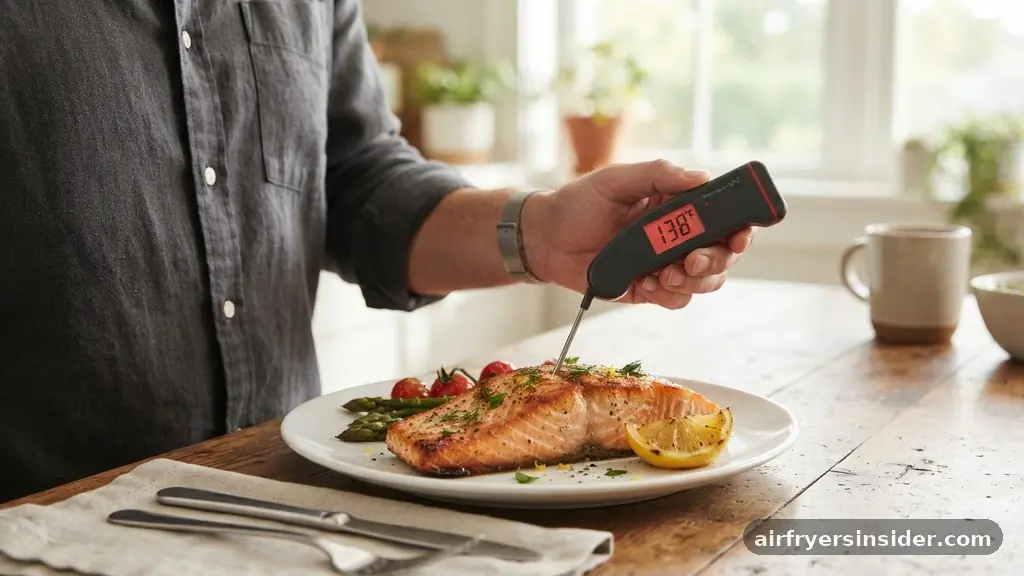
The most reliable way to check for doneness is using a food thermometer. You are looking for an internal temperature of approximately 135 to 140 degrees Fahrenheit in the thickest part of the fillet. At this range, the salmon will have a beautiful flaky texture and remain moist.
If you don’t have a thermometer handy, you can use the fork test: gently press down on the top of the fillet with a fork. If the meat separates easily along the natural white lines, it is ready.
Keep in mind the concept of carry-over cooking. The residual heat inside the fish will continue to cook it for a minute or two after you remove it from the air fryer. If you pull the fish out when it hits exactly 145 degrees, it might end up slightly overdone by the time it reaches your plate.
Aiming for that 135-140 degree mark allows for that final boost in temperature while the fish sits. This is why resting time is so important; give the salmon two to three minutes to settle before serving.
Addressing Common Topical Gaps
One question that often arises is whether you need to flip the salmon halfway through. The short answer is no, especially when you are cooking skin-on.
Flipping will almost certainly result in the skin sticking to the basket or tearing away from the flesh, which defeats the purpose of the skin-on preparation. If you find that the top of the fish is not cooking as fast as the bottom, it is likely because your air fryer is positioned too close to the heating element or the basket is overcrowded.
Another common gap is the issue of smoke. If your air fryer starts smoking, it is usually because the fat rendered from the salmon skin is hitting the bottom of the basket and burning.
To solve this, you can add a tablespoon of water to the bottom of the air fryer drawer (under the basket) to prevent the drippings from reaching high enough temperatures to smoke. This simple trick keeps the kitchen atmosphere pleasant and ensures you can cook your salmon without setting off the fire alarm.
Choosing the Right Equipment
While any air fryer can technically cook salmon, the type of basket you use makes a difference. A perforated basket promotes the best airflow, which is critical for that crispy skin.
If you have a rack-style insert, ensure it is clean and lightly oiled before placing the fish. A fish spatula is an invaluable tool here; its thin, flexible edge allows you to slide under the skin without damaging it when it is time to transfer the fillets to a plate.
If you are cooking for a crowd, avoid the temptation to stack fillets. Air fryers rely on the circulation of air, and if the basket is overcrowded, the air cannot move around the sides of the fish. This leads to uneven cooking and soggy spots.
If you have a large amount of salmon, it is much better to cook in batches. The few extra minutes it takes to do a second round will pay off in the quality of the final dish, ensuring every piece has that perfect, uniform sear.
Troubleshooting Texture Issues
If your salmon comes out with skin that is still soft, it usually means it didn’t get enough direct heat or the moisture content was too high. Always ensure the skin is bone-dry before it enters the machine.
You can even leave the fillets uncovered in the refrigerator for thirty minutes before cooking to help dehydrate the surface. This “air drying” step is a classic trick used by chefs to ensure maximum crispiness.
If the flesh itself feels dry, you have likely left it in the air fryer for too long. Salmon is a delicate protein. Unlike chicken or beef, which can benefit from a longer cook time to break down connective tissues, salmon only needs enough time to reach the point where the proteins denature and become opaque.
If you are new to using an air fryer for fish, start checking the internal temperature at the six-minute mark. It is much easier to add another minute of cooking time than it is to fix a fillet that has been cooked well past its prime.
Health Benefits and Nutritional Value
Cooking salmon in an air fryer is one of the healthiest ways to prepare this nutrient-dense protein. Because the air fryer requires very little added fat to achieve a crispy texture, you are significantly reducing the caloric load compared to pan-frying in butter or oil. You retain all the essential omega-3 fatty acids, which are known for supporting heart health and reducing inflammation.
By using only a light brush of oil, you preserve the natural health profile of the fish. Furthermore, because the fat renders out and drips into the basket, you are effectively “draining” some of the excess saturated fat that would otherwise be absorbed if the fish were sitting in a pan. It is a win-win situation: you get the indulgent, crispy-skinned experience while keeping the meal light, nutritious, and perfectly suited for a balanced weekly diet.
Frequently Asked Questions
Does the thickness of the fillet change the cooking time?
Yes, thickness is the most critical factor. A thin tail piece might cook in six minutes, while a thick center-cut fillet could take twelve. Always prioritize the internal temperature over the clock to ensure the center is perfectly cooked regardless of the specific size of the piece.
Can I cook frozen salmon directly in the air fryer?
You can, but it is not ideal for achieving crispy skin. If you must use frozen fillets, add about three to five minutes to your cooking time and cook at a slightly lower temperature (350°F) to ensure the center thaws and cooks without burning the exterior.
Is it necessary to use oil on the skin side?
Yes, using a light coating of oil on the skin is essential. It helps the skin conduct heat more efficiently, which is the primary driver behind achieving a crispy texture. Without it, the skin is more likely to stick to the basket or become rubbery rather than crunchy.
What should I do if my air fryer starts smoking?
Smoking usually happens when fat drippings hit the hot base of the air fryer. To prevent this, add a small amount of water to the bottom of the drawer beneath the basket. This creates a buffer that prevents the fat from burning and keeps the air clean.
Conclusion
Mastering the art of air-frying salmon is a rewarding skill that simplifies healthy weeknight dinners. By focusing on patting the fish dry, using a consistent temperature, and relying on a thermometer to gauge doneness, you will consistently achieve that ideal balance of crispy skin and moist, flaky flesh. Remember that your specific appliance may require minor adjustments, so observe the results and tweak your timing accordingly.
Once you find that perfect rhythm for your equipment, you will rarely look back at traditional oven or pan-searing methods. Start with these guidelines, keep your setup simple, and enjoy the ease of preparing high-quality, delicious salmon whenever the craving strikes.
Meta Description: Learn exactly how long to cook skin on salmon in air fryer for perfect, crispy results. Follow our expert tips for temperature, prep, and timing.


