

Achieving a restaurant-quality sear on a ribeye steak often feels like a task reserved for heavy cast iron skillets or outdoor charcoal grills. However, learning how to cook a ribeye in an air fryer can yield surprisingly succulent results if you understand the underlying science of heat circulation.
By leveraging the intense, concentrated convection heat of your countertop appliance, you can achieve a crusty exterior while maintaining a tender, pink center. This method is particularly effective for home cooks who want to avoid the smoke and splatter associated with traditional stovetop searing, providing a clean and efficient way to prepare a high-quality cut of beef.
Understanding the Mechanics of Air Fryer Steak
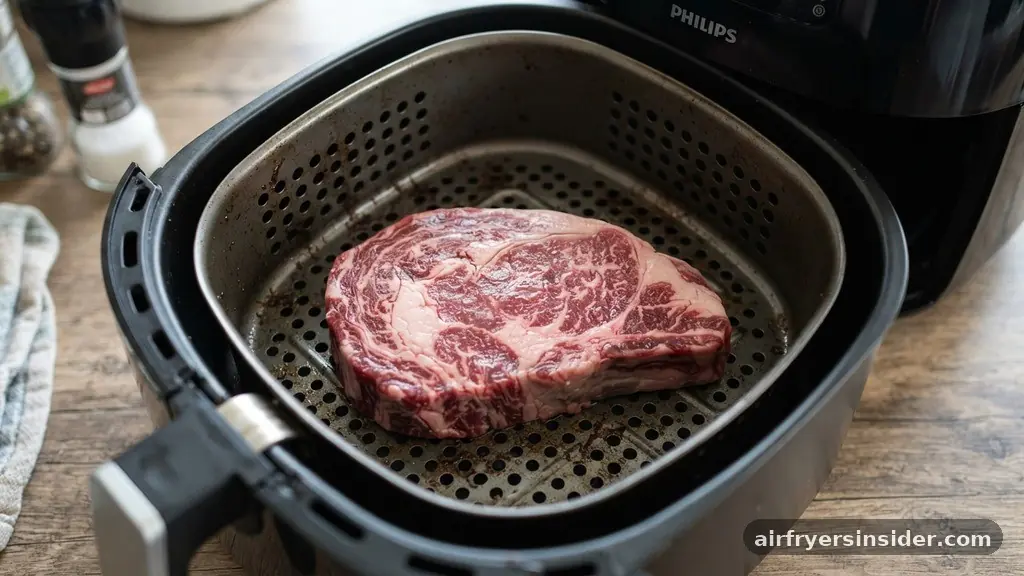
The air fryer is essentially a high-powered convection oven. When you cook a ribeye, the appliance circulates hot air at high speeds, which mimics the effect of a deep fryer without the massive amount of oil. For a ribeye, which is prized for its high level of marbling, this is an advantage.
The circulating air helps render the intramuscular fat, allowing it to baste the meat from the inside out. Unlike a standard oven, which might take longer to reach the necessary surface temperature for the Maillard reaction, the air fryer focuses heat directly on the surface of the steak.
Because the air fryer basket acts as a rack, air flows underneath the meat as well as over the top. This ensures even cooking, provided you don’t crowd the basket. It is important to remember that you aren’t actually “frying” the steak; you are roasting it rapidly.
This distinction is crucial for managing expectations regarding the crust. While you won’t get the same deep, charred sear you might get from a blistering hot cast iron pan, you will achieve a consistent, caramelized finish that is far superior to boiling or steaming.
The Importance of Selecting and Preparing the Ribeye
Not all steaks are created equal, and your success depends heavily on the quality of the beef you choose. A ribeye is a fatty cut, often featuring a large “eye” of meat surrounded by a cap of fat. Look for significant marbling—those tiny white flecks of fat distributed throughout the muscle fibers.
This fat is the secret to flavor and tenderness. When shopping, try to find a steak that is at least one inch thick. A thinner steak will likely overcook in the center before the outside has a chance to develop any color.
Preparation begins long before the steak enters the air fryer. Take your steak out of the refrigerator at least 30 to 45 minutes before cooking. Bringing the meat closer to room temperature allows for a more even cook; if the center is ice-cold, the exterior will be overdone by the time the middle reaches your desired temperature.
Pat the surface of the steak completely dry with paper towels. Moisture is the enemy of a good crust. If the surface is damp, the air fryer will steam the meat rather than sear it, resulting in a gray, unappealing exterior rather than a golden-brown finish.
Mastering the Dry Brine Technique
One of the most effective ways to ensure a flavorful steak is to use the dry brine method. This involves seasoning the steak generously with kosher salt and letting it sit uncovered in the refrigerator for several hours or even overnight.
The salt draws out moisture, dissolves into a brine, and is then reabsorbed into the meat, carrying the flavor deep into the muscle fibers. This process also helps break down some of the proteins, which can improve the final texture of the ribeye.
When you are ready to cook, do not rinse the salt off. Simply pat the steak dry again to remove any surface moisture that has been drawn out. Applying a thin layer of high-smoke-point oil, such as avocado oil, is essential.
Avocado oil has a smoke point well above 500 degrees Fahrenheit, making it perfect for the high temperatures involved in air frying. Rub the oil over the entire surface of the steak and season with freshly cracked black pepper. Avoid using garlic powder or other dry herbs at this stage, as they can burn in the intense airflow of the air fryer, leaving a bitter aftertaste.
Optimizing the Cooking Environment
Preheating your air fryer is non-negotiable when dealing with high-heat cooking. Even if your model doesn’t have a specific preheat button, run it empty at 400 degrees Fahrenheit for about five minutes.
This ensures that the moment the steak hits the basket, it begins searing immediately. If you place the meat into a cold basket, the temperature will drop, and the steak will slowly rise in temperature, leading to a loss of internal juices and a lack of surface color.
Placement within the air fryer basket is also a critical factor. Ensure the steak is placed in the center of the basket to allow for maximum airflow around all sides. If you are cooking more than one steak, they must not overlap.
If the steaks are touching, the sides that are touching will remain raw and pale. If your air fryer is small, it is better to cook in batches than to crowd the basket. Using a small wire rack or a cast iron trivet inside the basket can sometimes help elevate the meat slightly, allowing for better heat circulation, though this is optional depending on the design of your specific unit.
Determining Internal Temperature for Perfection
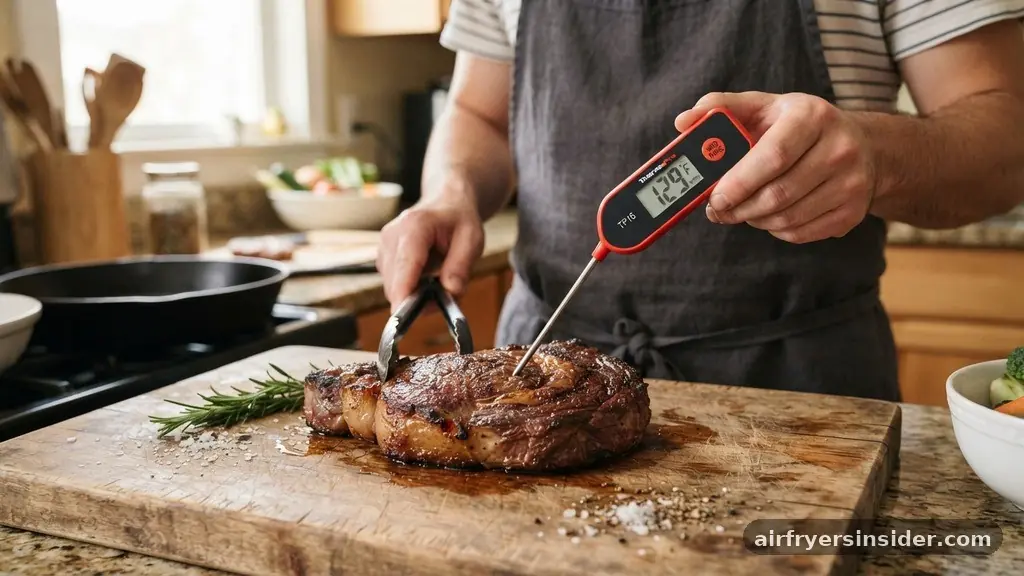
Because every air fryer has a slightly different wattage and airflow pattern, you cannot rely solely on a timer. The only accurate way to determine doneness is by using a digital meat thermometer.
You want to insert the probe into the thickest part of the steak, avoiding any large pockets of fat or bone, which can give a false reading. The internal temperature will continue to rise after you remove the steak from the air fryer, a phenomenon known as carryover cooking.
Target Temperatures for Steak
* Rare: 120-125 degrees Fahrenheit
* Medium-Rare: 130-135 degrees Fahrenheit
* Medium: 140-145 degrees Fahrenheit
* Medium-Well: 150-155 degrees Fahrenheit
These temperatures represent the reading at which you should pull the steak out of the air fryer. For a perfect medium-rare, pull the steak at 130 degrees Fahrenheit.
The temperature will climb to approximately 135 degrees during the resting period. If you prefer a more well-done steak, keep in mind that the ribeye has enough intramuscular fat to stay juicy even at higher temperatures, but you risk rendering too much of that flavor-packed fat if you go beyond medium-well.
Addressing Common Pitfalls and Topical Gaps
Many home cooks struggle with the “gray band” effect or a lack of crust. This often happens because the air fryer temperature is set too low. While 350 degrees might cook the steak through, it won’t trigger the Maillard reaction efficiently.
Always aim for 400 degrees for the initial sear. Another common issue is the smoke alarm going off.
This is usually caused by fat dripping onto the heating element. To prevent this, ensure your air fryer is clean before you start, and consider adding a tablespoon of water to the bottom of the air fryer drawer to catch the drippings and prevent them from burning.
Another gap in knowledge is the management of connective tissue in a ribeye. While ribeyes are generally tender, they can have bits of gristle. If you find your steak is tough, ensure you are slicing it against the grain after it has rested.
Slicing against the grain shortens the muscle fibers, making each bite feel more tender. Additionally, if your ribeye has a large cap of exterior fat, you can score the fat with a sharp knife before cooking. This allows the fat to render more efficiently and prevents the steak from curling up as it cooks.
The Importance of the Resting Period
The resting period is arguably the most important step in the entire process. Once you pull the ribeye from the air fryer, transfer it to a cutting board or a warm plate. Tent it loosely with aluminum foil.
During the cooking process, the heat causes the muscle fibers to contract and the juices to move toward the center of the steak. If you cut into the steak immediately, these juices will run out onto the board, leaving the meat dry.
Allow the steak to rest for at least 5 to 10 minutes. During this time, the muscle fibers relax and reabsorb the juices throughout the meat. This ensures that every bite is as succulent as the first.
This is also the time to add any finishing touches, such as a knob of herb butter or a sprinkle of flaky sea salt. The residual heat will melt the butter, creating a luxurious sauce that complements the natural, beefy flavor of the ribeye.
Comparing Cooking Methods
Choosing the right tool for the job depends on your specific goals for the meal. While the air fryer is excellent for convenience and speed, it is worth comparing it to other common methods to understand its place in your kitchen arsenal.
| Method | Cooking Time | Crust Quality | Ease of Cleanup |
|---|---|---|---|
| Cast Iron Skillet | 8-12 Minutes | Excellent | Difficult |
| Air Fryer | 10-15 Minutes | Good | Easy |
| Outdoor Grill | 10-12 Minutes | Excellent | Moderate |
As shown in the table, the air fryer offers a middle ground. It provides a better crust than a standard oven or a non-stick pan, and it is significantly easier to clean than a cast iron skillet that requires seasoning and heavy scrubbing. While it may not match the intense, smoky char of an outdoor charcoal grill, it is the most reliable method for year-round, indoor cooking without the need for constant supervision.
FAQ: Common Questions About Air Fryer Ribeye
How long does it take to cook a ribeye in an air fryer?
For a one-inch thick ribeye, cooking at 400 degrees Fahrenheit generally takes 10 to 14 minutes for medium-rare. The exact time depends on the thickness of the steak and your specific air fryer model. Always use a digital thermometer to check internal temperature rather than relying solely on the clock.
Is it better to cook a steak in an air fryer or a pan?
A pan is superior if you want a heavy, hard-sear crust, but the air fryer is far more convenient. The air fryer requires less active attention, produces less smoke, and offers a more consistent result for those who are less experienced with managing high-heat stovetop searing.
What are the most common mistakes when air frying a steak?
The most common mistakes include failing to preheat the unit, overcrowding the basket, and not patting the steak dry before seasoning. These errors lead to steaming rather than searing. Additionally, failing to use a meat thermometer often results in overcooked or undercooked meat, as air fryers vary significantly in heat intensity.
Can I cook a frozen ribeye in an air fryer?
While it is technically possible to cook from frozen, it is not recommended for a quality cut like a ribeye. You will struggle to get a good sear, and the interior will likely be unevenly cooked. It is always better to thaw the steak completely and pat it dry before cooking to ensure the best texture and flavor.
Final Thoughts on Air Frying Your Ribeye
Mastering the art of cooking a ribeye in an air fryer is a valuable skill that bridges the gap between convenience and culinary quality. By focusing on the preparation—specifically the drying and seasoning stages—and utilizing a digital thermometer to monitor the internal temperature, you can produce a steak that holds its own against more traditional methods. The convection heat provides a consistent cook, while the lack of mess makes it an ideal choice for busy weeknights or when you simply want a delicious meal without the hassle of a cleanup-intensive process.
As you become more familiar with your appliance’s heat distribution, you will find that this method becomes a reliable staple in your cooking repertoire. Experiment with your seasoning blends and resting times to find your own perfect preference, and enjoy the ease of professional-grade results from your own kitchen.
Meta Description: Learn how to cook a ribeye in an air fryer with this guide. Master the techniques for a perfect sear, internal temperature, and resting for juicy results.


