

Figuring out how long to reheat rotisserie chicken in air fryer can save your dinner when you’re craving that perfect, crispy skin without the hassle of a traditional oven. When you bring home a store-bought bird, the challenge is often keeping it succulent while warming it through to the center. Because air fryers use intense, circulating heat, they are arguably the best tool for the job.
You get that fresh-from-the-rotisserie texture back in just a few minutes, provided you know the right settings. Mastering this process ensures you never have to settle for rubbery, microwaved leftovers again.
Understanding the Air Fryer Advantage 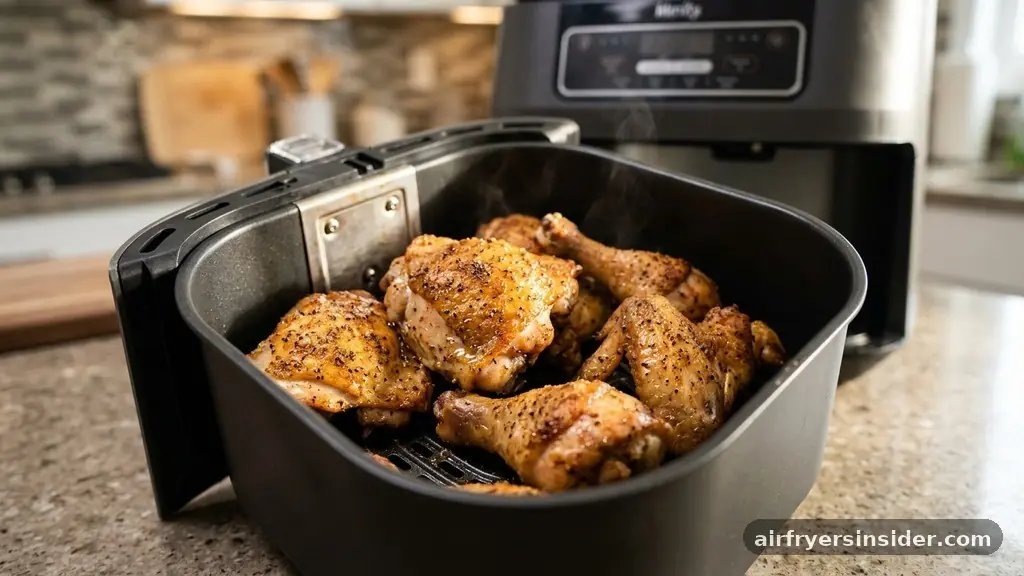
The air fryer functions as a compact, high-powered convection oven. By utilizing rapid air technology, it forces hot air to circulate around your food at high speeds, which is ideal for crisping up the exterior of poultry.
Unlike a microwave, which vibrates water molecules to heat food—often resulting in a soggy or uneven texture—the air fryer mimics the original cooking method of a rotisserie. This means you can restore the rendered fat in the skin, making it crackle just like it did the day you bought it.
When you consider the physics of reheating, thermal conductivity plays a huge role. Because rotisserie chicken is typically cooked on a spit, the meat is already tender. Reheating it too aggressively or for too long will draw out the remaining moisture, leaving you with stringy, dry fibers.
By keeping the heat concentrated and consistent, the air fryer allows you to warm the interior without incinerating the delicate surface. It’s a precise balance of timing and temperature that separates a mediocre meal from a restaurant-quality leftover experience.
Optimal Temperature Settings for Reheating
For most air fryers, the sweet spot for reheating cooked poultry is between 350°F and 375°F. If you set the temperature too high, the outside will burn before the interior reaches a safe temperature.
Conversely, a lower temperature might cause the chicken to dry out before it gets warm, as it spends too much time in the heat zone. Sticking to this moderate range allows for the gentle warming of the meat while still allowing the skin to crisp up.
Preheating your device is a step many people skip, but it’s vital for consistent results. Even just three minutes of preheating ensures that when you place the chicken pieces in the basket, the cooking process begins immediately. This reduces the total time the chicken spends inside the chamber, which is the primary factor in preventing moisture loss.
When you hit the start button on a hot machine, you are essentially sealing in the juices rather than slowly dehydrating the bird.
Determining the Correct Reheating Time
The exact duration depends on whether you are reheating the entire bird or individual pieces. If you are warming up chicken pieces, such as a breast or a leg, you should expect the process to take between 4 to 6 minutes.
For smaller portions, check the progress at the 3-minute mark. You want to reach an internal temperature of 165°F to ensure food safety, but you don’t want to overshoot that target, or the quality will diminish rapidly.
If you are attempting to reheat a larger portion, such as half a bird, the time will increase to roughly 8 to 12 minutes. Always arrange the pieces in a single layer in the air fryer basket to ensure even airflow. If you stack the meat, the bottom pieces will remain cold while the top pieces potentially dry out.
Using a meat thermometer is the only way to be 100% certain that the deepest part of the meat is hot enough to eat, which is the gold standard for avoiding any risk of food poisoning.
Managing Moisture Retention and Skin Texture
One of the most common complaints about reheated poultry is that it becomes chalky. To combat this, a light application of moisture can be a lifesaver.
Using a small amount of olive oil spray before you begin can help conduct heat more efficiently to the skin, encouraging that desired crunch. If you find the chicken looks particularly dry before it even goes into the basket, a light spritz of water or a tiny brush of chicken broth can help rehydrate the fibers during the heating process.
Another trick is the strategic use of parchment paper. While it doesn’t do much for crisping, it makes cleanup easier and prevents the chicken from sticking to the bottom of the basket. If you are worried about the wings or thin parts of the breast drying out, you can loosely cover those specific areas with a small piece of aluminum foil for the first half of the cycle.
This acts as a shield, slowing down the cooking on the extremities while allowing the thicker sections to warm through properly.
Safety Guidelines and Internal Temperature 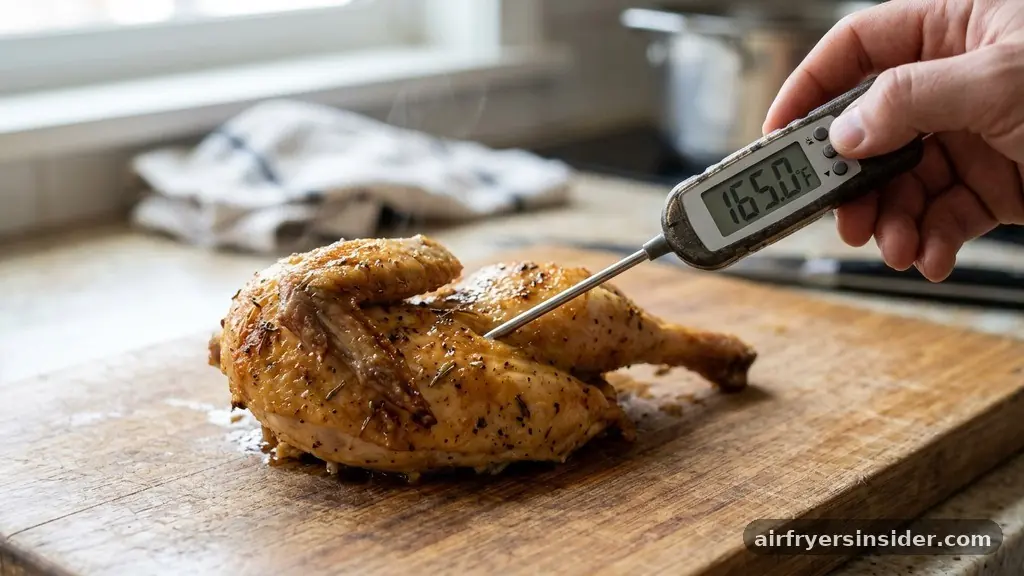
Food safety is non-negotiable when dealing with leftover poultry. The danger zone for bacterial growth is between 40°F and 140°F. When you reheat, you want to move the chicken through this range as quickly as possible.
This is why the air fryer is so effective; it reaches high temperatures almost instantly. Always aim for an internal temperature of 165°F. This temperature is the benchmark for salmonella prevention and ensures that your meal is both delicious and safe to consume.
If you are questioning the quality of your leftovers, consider the refrigerator shelf life. Cooked chicken should generally be consumed within three to four days of being refrigerated. If the chicken has been sitting out at room temperature for more than two hours, it is best to discard it regardless of how well your air fryer functions.
Never rely on smell alone to determine if leftovers are safe; if you have any doubt about how long it has been in the fridge, it is better to err on the side of caution.
Comparison of Reheating Methods
To understand why the air fryer is often superior, it helps to look at how it stacks up against other common kitchen appliances. The table below outlines the differences you might encounter when choosing your reheating method.
| Method | Time Estimate | Skin Texture | Moisture Level |
|---|---|---|---|
| Air Fryer | 4–8 minutes | Crispy | High |
| Microwave | 1–2 minutes | Soggy | Low |
| Oven | 15–20 minutes | Soft | Moderate |
| Stovetop | 5–10 minutes | Chewy | Variable |
As shown in the data, while the microwave is faster, it fails significantly in the texture department. The oven provides a consistent, gentle heat but takes significantly longer and often requires more cleanup. The air fryer sits in the perfect middle ground, offering speed and superior texture.
Addressing Common Topical Gaps
A frequent question involves the use of seasonings during the reheating process.
Many people assume that once the chicken is cooked, the flavor profile is locked in. However, you can easily enhance the final result by adding a dash of poultry seasoning or a sprinkle of garlic powder before placing the pieces in the air fryer. This provides a fresh aromatic boost that masks the “reheated” taste that sometimes develops in the fridge.
Another gap in common knowledge is how to handle the chicken bones. If you are reheating a whole carcass to pick the meat off for later use, you don’t need to worry about the skin as much. In this case, you can wrap the bird in foil to steam it slightly, which keeps the meat incredibly moist for shredding into salads or soups.
If you prefer the meat to be eaten as a standalone dish, however, always opt for the direct heat method to maintain that rotisserie-style appeal.
Troubleshooting Your Results
If you find that your chicken is coming out too dark on the outside but cold on the inside, your temperature is likely too high. Simply drop your air fryer by 25°F and extend the time by a minute or two.
This allows the heat to penetrate the core before the exterior undergoes the Maillard reaction. If the chicken is coming out dry, it may be that the initial rotisserie bird was already overcooked before you even bought it, or you are running the reheating cycle for too long.
Remember to utilize the “shake” method if you are reheating smaller pieces like nuggets or strips. For larger pieces like thighs or breasts, use tongs to flip them halfway through the cooking time.
This ensures that the heat is applied evenly to both sides. If you are using parchment paper, ensure it is weighed down by the food, or the fan might blow it into the heating element, which is a common fire hazard in many air fryer models.
- Always use a meat thermometer to verify the 165°F threshold.
- Cut the chicken into smaller, uniform pieces to reduce reheating time.
- Avoid overcrowding the basket to ensure proper air circulation.
- Lightly brush with oil or broth to maintain moisture levels.
- Let the chicken rest for one minute after removing from the air fryer.
Frequently Asked Questions
Can I reheat a whole rotisserie chicken in the air fryer?
Yes, but it depends on the size of your basket. If the bird fits without touching the heating element, you can reheat it at 300°F for about 15-20 minutes. However, it is usually more efficient to carve the bird into pieces first for a more even, crispy result.
How do I stop the chicken from drying out during reheating?
The key is to use a light coating of olive oil spray and avoid over-processing. By adding a small amount of liquid or keeping the heat at a moderate 350°F, you preserve the natural juices of the meat while still achieving a nice, crispy exterior on the skin.
Is it safe to reheat chicken multiple times?
No, you should only reheat cooked chicken once. Every time you cool down and reheat poultry, you increase the risk of bacterial growth and degrade the quality of the meat. Only remove from the refrigerator the amount of chicken you plan to eat in that specific sitting.
What should I do if my air fryer smokes during the process?
Smoke usually indicates that fat from the chicken skin is dripping onto the heating element. To prevent this, ensure the basket is clean before starting, or place a small piece of bread at the bottom of the tray to soak up the rendered fat drippings during the cycle.
Final Takeaways on Reheating
Successfully restoring a rotisserie bird to its former glory is a simple process once you understand the mechanics of your appliance. By focusing on moderate temperatures, ensuring proper airflow, and keeping a close eye on the internal temperature, you can enjoy high-quality leftovers that taste just as good as the day they were prepared. The air fryer is truly the best tool for this task, offering the perfect balance of crispy skin and juicy meat. As you experiment with your specific model, you’ll find that slight adjustments to the timing will yield the exact texture you prefer. Don’t be afraid to use a little extra seasoning or oil to bring those flavors back to life, and always prioritize food safety by confirming the meat is heated through to the center before serving.
Meta Description: Learn exactly how long to reheat rotisserie chicken in air fryer for crispy, juicy results. Discover tips for perfect timing, food safety, and moisture.


