


Many home cooks wonder if they can cook meatloaf in an air fryer to achieve that perfect balance of a caramelized exterior and a tender, juicy center. The short answer is yes, and in many cases, this method produces superior results compared to a traditional oven.
By leveraging the intense, focused heat of a modern kitchen appliance, you can significantly reduce your active time in the kitchen while still delivering a classic comfort food dinner. Whether you are looking to save energy or simply want a faster way to prepare your favorite ground beef recipes, learning how to adapt your techniques for this compact convection powerhouse is a skill worth mastering.
The Mechanics of Air Frying Your Meatloaf
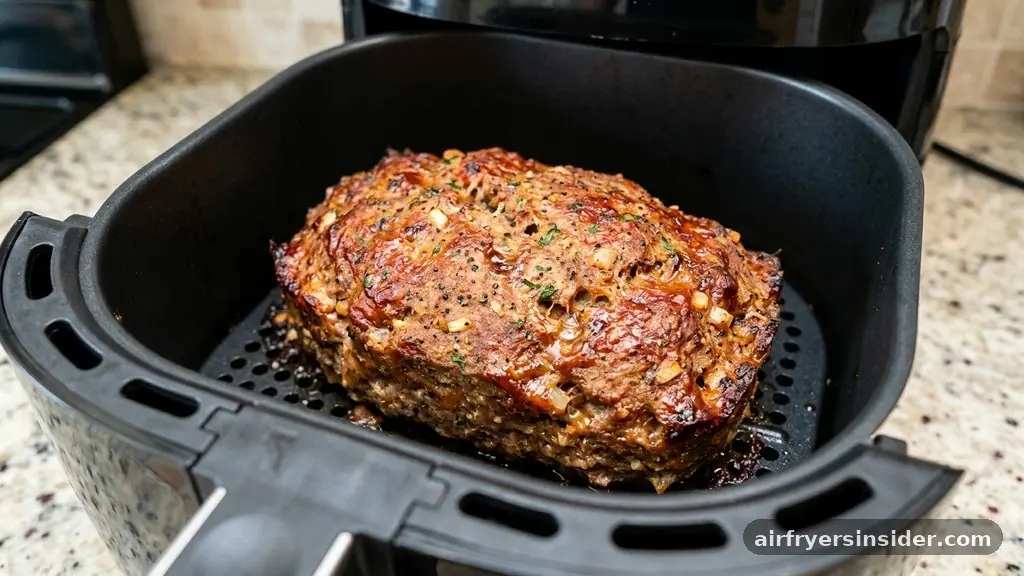
Understanding the science behind your appliance is the first step toward culinary success. An air fryer is essentially a high-powered convection oven that uses a powerful fan to circulate hot air at high speeds around your food.
This process, known as convection cooking, is highly efficient at drying out the surface of proteins quickly, which is essential for triggering the Maillard reaction. When you cook meatloaf in an air fryer, the rapid movement of air ensures that the exterior develops a savory, crispy crust while the interior remains protected and retains its moist texture.
Unlike a standard oven, which relies on radiant heat that can take a long time to penetrate a dense loaf, the concentrated airflow of an air fryer reduces the cooking time significantly. You aren’t just heating the air around the meat; you are forcing it into contact with every square inch of the surface.
This creates a more uniform cooking environment for smaller-to-medium-sized loaves. Because the chamber is smaller than a standard oven, the heat stays trapped and focused, meaning you don’t waste energy heating up a massive appliance for a single meal.
Selecting the Right Equipment and Pans
One of the biggest hurdles when you decide to cook meatloaf in an air fryer is choosing the right vessel. Not every loaf pan is designed for an air fryer, and the size of your machine will dictate your choices.
Many standard metal loaf pans are too large or tall, which can obstruct the airflow and prevent the top of the meatloaf from cooking properly. If you use a pan that is too deep, the top will burn before the center reaches a safe internal temperature.
For the best results, look for silicone or thin-gauge metal mini-loaf pans that allow the air to circulate underneath and around the sides. Alternatively, you can shape your meatloaf by hand and place it directly on a piece of parchment paper or heavy-duty aluminum foil inside the basket.
This method actually promotes better heat circulation because it exposes more of the meat’s surface area to the hot air. If you prefer the structure of a pan, ensure it is perforated or small enough to leave at least an inch of space between the edges of the pan and the walls of the air fryer basket.
Preparing the Perfect Meat Mixture
The foundation of a great meal starts with your ingredients. When you prepare a recipe for the air fryer, you need to ensure your ground beef has enough fat content to remain juicy during the rapid cooking process.
A lean blend, such as 90/10, might dry out too quickly, so an 80/20 mix is generally preferred for this specific cooking method. Your breadcrumbs and egg binder are also critical here; they provide the structural integrity required to hold the loaf together without the support of a rigid pan.
Don’t be shy with your seasonings. Because the air fryer cooks faster, flavors have less time to meld during a long, slow roast. Consider sautéing your onions or aromatics before adding them to the meat mixture to ensure they are soft and flavorful.
Incorporating fresh herbs, Worcestershire sauce, or even a splash of milk can help keep the interior succulent. Remember that the meatloaf glaze should be applied toward the final stage of the process, as the high sugar content in most glazes will burn under the intense fan if added too early.
Optimizing Temperature and Timing
Achieving that perfect balance between a well-set crust and a cooked-through center requires precise temperature control. Most experts suggest cooking at 350°F to 375°F.
If you go too high, the outside will char before the middle is safe to eat; if you go too low, you lose the advantage of the rapid air technology that gives the loaf its desirable texture. It is essential to practice proper preheating of your machine for at least three to five minutes before the meat goes in, as this jump-starts the cooking process immediately.
| Meatloaf Weight | Estimated Time | Internal Target |
|---|---|---|
| 1 Pound | 30–35 Minutes | 160°F |
| 1.5 Pounds | 40–45 Minutes | 160°F |
| 2 Pounds | 50–55 Minutes | 160°F |
These times are estimates, as every air fryer functions slightly differently based on its wattage and size. Always rely on a high-quality food thermometer to verify that your meatloaf has reached an internal temperature of at least 160°F. Placing the thermometer in the thickest part of the loaf is the only way to adhere to safety guidelines and ensure the meat is fully cooked without relying on guesswork.
The Importance of Resting Time
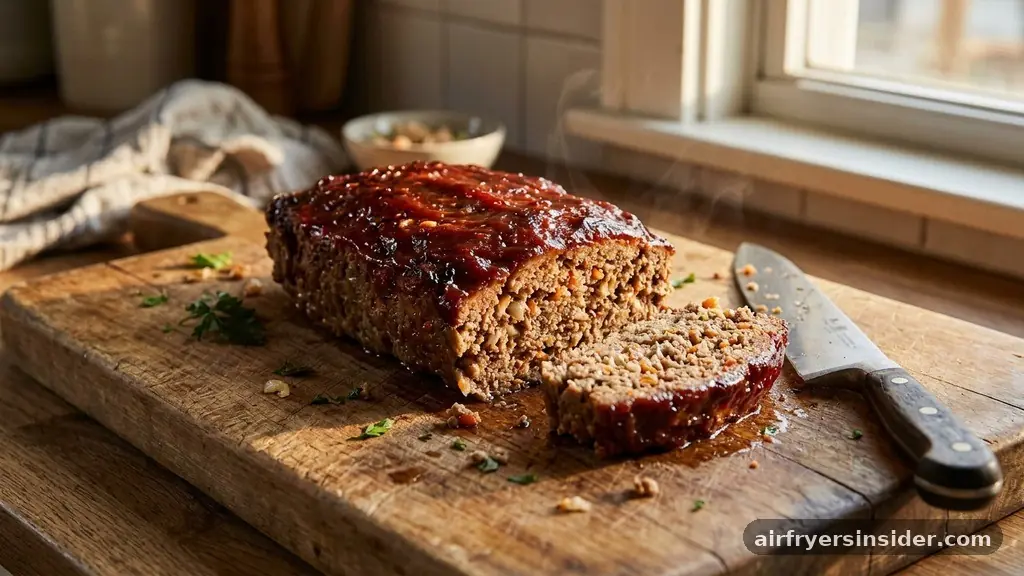
Just like a steak or a whole chicken, a meatloaf requires a significant resting time after it comes out of the air fryer. During the cooking process, the juices inside the meat are circulating and under pressure.
If you cut into the loaf immediately, those juices will run out onto the cutting board, leaving you with a dry, crumbly texture. Letting the meat rest for at least 10 to 15 minutes allows the proteins to relax and the juices to redistribute throughout the loaf.
This rest period also serves a practical purpose: it allows the meatloaf glaze to set and thicken. If you try to slice the loaf while it is piping hot and the glaze is still runny, you will likely end up with a messy presentation.
Use this time to prepare your side dishes, such as mashed potatoes or roasted vegetables, which can often be cooked in the air fryer immediately after the meatloaf has been removed. The residual heat in the chamber can often be utilized for a quick warm-up of other sides, optimizing your entire meal preparation routine.
Common Mistakes to Avoid
Even experienced cooks can stumble when transitioning from a conventional oven to an air fryer. One of the most common errors is overcrowding the basket.
If you place a loaf pan inside that is too large, you effectively block the fan, turning your air fryer into an expensive and inefficient oven. You need consistent airflow to achieve the desired crust; if the air cannot move, you are essentially steaming the meat rather than roasting it.
Another frequent mistake is failing to use a rack or parchment paper. If your meatloaf sits directly on the bottom of the basket without a barrier, the bottom can become soggy or stick, making it difficult to remove in one piece. Furthermore, some cooks forget to account for the rack placement.
If your air fryer has adjustable shelves, aim for the middle position. This provides the best distance from the heating element, preventing the top from burning while ensuring the bottom cooks at the same rate as the rest of the loaf.
Adapting Traditional Recipes
When you decide to cook meatloaf in an air fryer, you don’t necessarily need to find a brand-new recipe. Most standard meatloaf recipes can be converted with a few minor adjustments.
The main oven conversion rule is to reduce the temperature by about 25°F and shorten the cooking time by roughly 25% to 30%. Because the air fryer is so efficient, checking the meatloaf about 10 minutes before you think it should be done is a smart habit to develop.
- Shape the loaf slightly flatter to increase the surface area for better browning.
- Avoid using overly large metal pans that inhibit airflow.
- Apply the glaze during the last 5 to 10 minutes of cooking.
- Always use a thermometer to check for doneness rather than relying solely on the timer.
- Use parchment paper to make cleanup significantly easier.
By following these simple modifications, you can take your favorite family recipes and enjoy them in a fraction of the time. The result is usually a lighter, more evenly cooked loaf that retains all the flavor you expect from a slow-roasted meal.
Addressing Topical Gaps in Air Fryer Cooking
A common concern that often goes unaddressed is how to handle the excess fat that renders out of the meat. In a traditional oven, this fat pools at the bottom of a large pan. In an air fryer, if you aren’t careful, that grease can drip onto the heating element or the bottom of the basket, potentially causing smoke.
To mitigate this, consider placing a small piece of bread or a shallow heat-proof tray beneath the meat to catch the drippings. This is a simple trick that keeps your kitchen smoke-free while maintaining the integrity of the cooking process.
Another gap in many guides is how to handle leftovers. Meatloaf is famous for being even better the next day, and the air fryer is the perfect tool for reheating it. Instead of using a microwave, which can make the meat rubbery, slice your leftover meatloaf and pop it back into the air fryer at 350°F for about 3 to 5 minutes.
This brings back the crispy edges and warms the center perfectly without drying it out. This method ensures that your investment in a high-quality meal continues to pay off long after the first dinner is finished.
FAQ
How long should you cook meatloaf in an air fryer?
For a standard one-pound meatloaf, you should cook it for approximately 30 to 35 minutes at 350°F to 375°F. Always use a food thermometer to ensure the center reaches an internal temperature of 160°F, as thickness and fat content can influence the exact timing required.
Is meatloaf better in the oven or air fryer?
The air fryer is often superior for smaller loaves because it promotes a crispy crust and faster cooking times. However, the oven remains better for very large, multi-pound loaves that would not fit or cook evenly in a standard air fryer basket without blocking airflow.
Can I use a loaf tin in an air fryer?
You can use a loaf tin, but it must be small enough to allow air to circulate around all sides. If the tin fills the entire basket, the air cannot flow properly, resulting in uneven cooking. Silicone or perforated metal pans are generally the most effective choices.
What happens if I don’t use a binder in my meatloaf?
If you skip the breadcrumbs and egg binder, the meatloaf will likely fall apart during the cooking process. These ingredients are essential for holding the structure together, especially in the air fryer, where the circulating air can be quite intense and cause loose meat to crumble.
Conclusion
Learning to cook meatloaf in an air fryer is a practical way to streamline your dinner routine without sacrificing the quality of your home-cooked meals. By focusing on proper pan selection, monitoring the internal temperature, and allowing the meat to rest, you can consistently produce a loaf that is both flavorful and perfectly textured. This method highlights the efficiency of modern convection cooking, offering a crispy exterior that is difficult to replicate in a standard oven.
Whether you are experimenting with new seasoning blends or sticking to a classic family recipe, the air fryer is a reliable tool for this comfort food staple. Give it a try this week and see how much time you save while still serving a delicious, satisfying meal to your family.


