Many home cooks wonder if they can cook pork chops in an air fryer without ending up with a tough, dried-out dinner. The answer is a resounding yes, provided you understand how this convection-style appliance interacts with protein. Because air fryers circulate hot air at high speeds, they are uniquely suited to creating a golden crust while keeping the interior succulent.
By mastering a few simple techniques like proper seasoning and monitoring the internal temperature, you can achieve restaurant-quality results in under twenty minutes. This method offers a faster, cleaner alternative to traditional stovetop searing or oven roasting, making it an ideal solution for busy weeknights when you want high-quality flavor with minimal effort.
Why the Air Fryer Excels at Cooking Pork
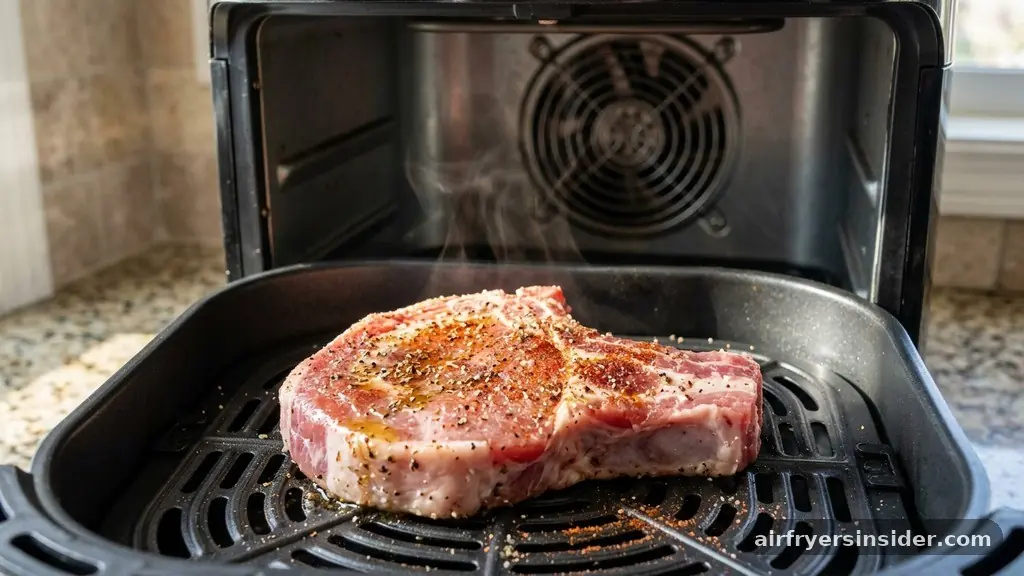
The primary reason you can successfully cook pork chops in an air fryer lies in the physics of convection cooking. Unlike a standard oven, which relies on radiant heat, an air fryer uses a powerful fan to force hot air around the food.
This rapid movement creates an intense environment that promotes the Maillard reaction—the chemical process responsible for browning and flavor development on the surface of your meat. When you place a chop inside, the immediate blast of heat helps to lock in moisture while simultaneously crisping the exterior.
Because the chamber is compact, air circulation is significantly more efficient than in a traditional convection oven. This efficiency means that the rendering of fat happens more quickly, which is crucial for cuts like bone-in pork chops that have a fat cap.
By rendering this fat early in the process, you prevent the chewy, unappealing texture that often results from pan-searing on low heat. Furthermore, the air fryer acts as a miniature dehydrator of sorts for the very surface of the chop, which is exactly what you want when aiming for a crispy coating or a well-seared, golden-brown finish.
Selecting the Right Cut for Your Appliance
Not all pork chops are created equal, and your choice of meat will dictate how you approach the cooking process. Bone-in pork chops generally fare better in an air fryer because the bone acts as a heat sink, insulating the meat near it and preventing the chop from drying out too rapidly.
The bone also contributes to better moisture retention, as it slows down the heat penetration slightly. If you prefer the convenience of boneless pork chops, you must be more vigilant with your timing, as these cuts lack that natural buffer and can reach an overcooked state in a matter of seconds.
Pork loin chops, which are typically leaner and more uniform in shape, are perfect for quick, high-heat air frying. When shopping, look for chops that are at least one inch thick.
Thinly sliced chops are notoriously difficult to cook in an air fryer without turning them into leather; they simply do not have enough mass to stay juicy once they reach the required internal temperature. A thicker cut gives you a margin for error, allowing for that essential contrast between a crispy, flavorful exterior and a tender, juicy center.
The Importance of Proper Seasoning and Preparation
Preparation is the secret to elevating a basic pork dinner into something memorable. Before your chops even touch the air fryer basket, you should ensure they are patted completely dry with paper towels.
Excess surface moisture is the enemy of crispiness; if the surface is wet, the air fryer will steam the meat rather than sear it. Once dry, applying a small amount of olive oil helps conduct heat evenly and allows your chosen seasoning rub to adhere properly to the meat.
Consider using a dry brine by salting your chops thirty to sixty minutes before cooking. This process draws moisture to the surface, dissolves the salt, and then pulls that seasoned liquid back into the muscle fibers through osmosis. This not only seasons the meat throughout but also improves the texture of the protein.
When it comes to your seasoning rub, don’t be afraid of bold flavors. Paprika, garlic powder, onion powder, and brown sugar work exceptionally well together, as the sugar can help facilitate a deep, caramelized crust during the high-heat cooking phase.
Mastering Temperature and Timing
Achieving consistency requires a clear understanding of the relationship between degrees Fahrenheit and the thickness of your meat. Most air fryer recipes for pork suggest a temperature range between 375 and 400 degrees Fahrenheit.
For a standard one-inch thick chop, 380 degrees is often the sweet spot. It is high enough to generate a beautiful sear but not so high that the outside burns before the center is cooked through.
The following table provides a general guideline for cooking times based on thickness, though you should always verify with a meat thermometer:
| Chop Thickness | Estimated Cooking Time | Final Internal Temp |
|---|---|---|
| 0.5 Inch (Thin) | 6-8 Minutes | 145°F |
| 1.0 Inch (Standard) | 10-12 Minutes | 145°F |
| 1.5 Inch (Thick) | 14-16 Minutes | 145°F |
Remember that these times are estimates. Factors such as the model of your air fryer, the starting temperature of the meat, and the spacing of the chops in the basket will influence the final result. Always flip your chops halfway through the cooking process to ensure even browning on both sides.
Addressing Common Topical Gaps in Pork Preparation
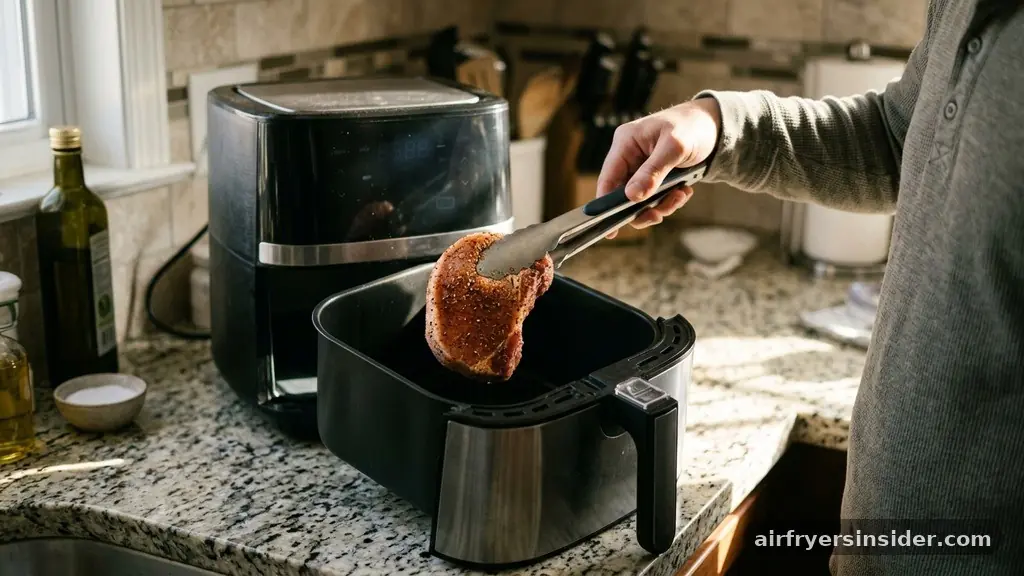
Many home cooks struggle with the “middle” phase of cooking, often wondering if they should preheat the air fryer. While it isn’t strictly necessary for every food item, preheating is highly recommended for pork chops.
When you drop a cold chop into a cold basket, the meat spends too much time in the “danger zone” where it loses moisture without gaining a sear. By preheating for at least three minutes, you ensure that the Maillard reaction begins the moment the meat hits the rack, which is vital for flavor.
Another gap in common knowledge involves the concept of carryover cooking. Many people pull their chops out of the air fryer only when they reach the target temperature, but this is a mistake. The residual heat in the meat will continue to raise the internal temperature by several degrees after you remove it from the basket.
To avoid serving dry meat, remove your pork chops when they hit 140 degrees Fahrenheit. Let them rest on a plate for five to ten minutes; they will finish climbing to the USDA safety guideline of 145 degrees during this resting period, resulting in a much juicier final product.
Ensuring Food Safety and Precision
The most reliable way to guarantee success is to ignore the timer and trust your meat thermometer. Food safety is paramount when working with pork, and the USDA safety guidelines stipulate an internal temperature of 145 degrees Fahrenheit for whole cuts of pork.
Using a digital instant-read thermometer is the only way to know exactly what is happening inside the thickest part of the chop. Inserting the probe into the center, avoiding the bone, provides an accurate reading that takes the guesswork out of the process.
If you are aiming for a slightly different texture, such as a medium-rare finish, some chefs prefer pulling the meat at 135 degrees. While this is technically below the government-recommended temperature, many culinary professionals find that the texture of pork is superior at this stage, provided the meat is of high quality and handled properly.
However, for the average home cook, sticking to 145 degrees is the gold standard for both safety and flavor. Remember that the goal is not just to cook the meat, but to cook it to the precise point where the connective tissue begins to soften without the muscle fibers contracting and squeezing out all their moisture.
Enhancing Flavor with Crispy Coatings
If you want to move beyond a simple dry rub, consider adding a breaded coating. A crispy coating can act as a protective barrier, shielding the meat from the intense heat of the air fryer and resulting in an exceptionally tender chop.
To achieve this, use a standard three-step breading station: flour, beaten egg, and a mixture of breadcrumbs with herbs. Panko breadcrumbs are particularly effective in an air fryer because their larger surface area allows them to stay crunchier than fine, powdery breadcrumbs.
When using a breaded coating, lightly spray the exterior with a high-smoke-point oil like avocado or grapeseed oil. This extra fat helps the breadcrumbs turn golden brown and crispy rather than remaining pale and dry.
Be careful not to overcrowd the basket, as the breading needs plenty of space for the hot air to circulate around each piece. If you pack the basket too tightly, the steam released from the breading will be trapped, leading to a soggy crust that defeats the purpose of using an air fryer in the first place.
The Science of Resting and Moisture Retention
The importance of the resting period cannot be overstated. When meat is exposed to high heat, the muscle fibers contract and push the juices toward the center of the cut.
If you cut into a pork chop immediately upon removing it from the air fryer, those juices will run out onto your cutting board rather than staying inside the meat. Resting allows the fibers to relax, redistributing the moisture throughout the chop and ensuring that every bite is as juicy as possible.
During this time, the meat is also undergoing carryover cooking, as mentioned earlier. The exterior of the chop is significantly hotter than the core, and the heat continues to migrate inward. If you carve immediately, you interrupt this equalization process.
A simple tent of aluminum foil over the chops while they rest can help retain heat, but don’t wrap them too tightly, or the trapped steam will soften the crispy crust you worked so hard to achieve. Five to ten minutes is the ideal window for a standard-sized chop.
Troubleshooting Common Air Fryer Mistakes
Even with the best intentions, things can go wrong. If you find your pork chops are coming out dry, you might be overcooking them or cutting them too thin. If they are coming out pale and undercooked on the outside, you might be overcrowding the basket or failing to use enough oil.
Another common issue is the “smoke” problem. If your air fryer starts smoking, it is usually because fat has dripped into the bottom of the tray and is burning.
To prevent this, ensure the basket is clean before you start, and consider placing a small piece of bread or a tablespoon of water at the very bottom of the air fryer drawer (under the rack) to catch any dripping fat and prevent it from smoking. If your chops are inconsistent, check that they are uniform in thickness.
If one chop is much thicker than the others, it will inevitably finish at a different time. In such cases, it is better to cook similar-sized pieces together or adjust the cooking time for the larger cuts by adding an extra minute or two.
Frequently Asked Questions
How do I prevent my pork chops from drying out?
To keep them moist, ensure you don’t overcook the meat by using a meat thermometer to pull them at 140 degrees Fahrenheit. Resting the meat for at least five minutes after cooking is essential, as this allows the juices to redistribute and the internal temperature to finish rising safely.
Can I cook frozen pork chops directly in the air fryer?
Yes, you can, but you should adjust the temperature lower to around 350 degrees Fahrenheit to allow the center to thaw and cook before the exterior burns. Add about 5 to 8 minutes to your total cooking time and ensure you check the internal temperature carefully before serving.
Is it necessary to flip the pork chops halfway through?
Flipping is highly recommended for even cooking and browning. Since the air fryer heat comes primarily from the top, the side facing up will always develop a better crust. Flipping ensures both sides receive equal exposure to the circulating hot air, resulting in a consistent texture throughout.
What is the best way to clean the air fryer after cooking pork?
Because pork can release rendered fat, the basket may get greasy. Once the basket has cooled, soak it in warm, soapy water for ten minutes to loosen the residue. Avoid using metal scrubbers, which can damage the non-stick coating; a soft sponge or nylon brush works perfectly for cleaning.
Conclusion
Cooking pork chops in an air fryer is a reliable way to get a delicious dinner on the table quickly. By focusing on the quality of your cuts, using a meat thermometer to track the internal temperature, and allowing for a proper resting period, you can consistently serve juicy, flavorful meat that rivals any traditional cooking method. The air fryer’s ability to circulate heat makes it a powerhouse for achieving that desired crispy exterior, provided you manage your timing and avoid common pitfalls like overcrowding.
Whether you prefer a simple dry rub or a crunchy breaded coating, this appliance is a versatile tool for any home cook. Now that you know the fundamentals, try experimenting with different seasonings and techniques to find your perfect pork chop preparation. Happy cooking!
Meta Description: Learn how to cook pork chops in an air fryer perfectly every time. Discover tips on timing, temperature, and moisture retention for juicy results.