

Determining whether you can put aluminum foil in your air fryer is a common point of confusion for home cooks looking to minimize cleanup. While it might seem like a simple way to protect your basket from grease and stuck-on food, the mechanics of how these appliances operate make it a bit more nuanced than tossing a sheet into a conventional oven.
Understanding the relationship between your appliance’s heating element and the materials you place inside is crucial for both food quality and kitchen safety. By learning the proper techniques, you can enjoy the convenience of foil without compromising the performance of your machine.
Understanding the Mechanics of Air Fryer Airflow
To appreciate why there are specific rules for using foil, you must first understand how an air fryer works. At its core, an air fryer is a high-powered convection oven. It relies on a powerful fan located near the top of the unit to circulate hot air at high speeds around the food.
This rapid movement is what creates that signature crispy exterior on your chicken wings or French fries. The airflow is the engine of the entire cooking process, and anything that disrupts this path can lead to unevenly cooked meals.
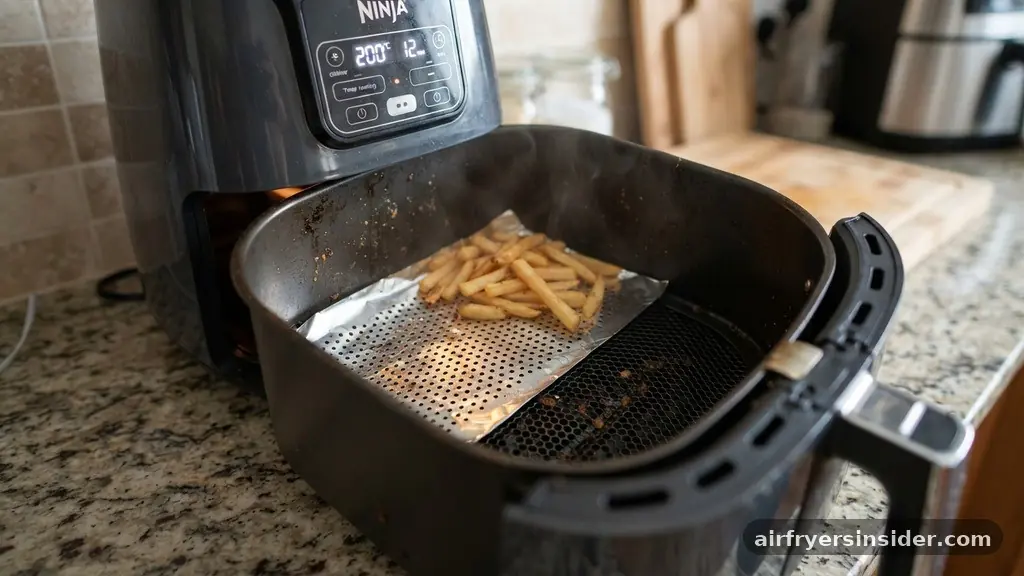
When you place a solid sheet of material like aluminum foil at the bottom of the basket, you are effectively creating a physical barrier. If the foil covers the entire base, the air cannot pass through the holes or slots in the basket. This causes the air to bounce off the foil and return to the top, potentially overheating the heating element and causing the unit to cycle off or cook your food poorly.
For the best results, the air must circulate underneath and around your food. If you choose to use foil, it must be sized correctly to allow those vital currents of hot air to continue their journey throughout the cooking chamber.
Safety Guidelines for Foil Usage
Safety guidelines for foil usage are not just suggestions; they are essential for preventing kitchen accidents. The primary concern with aluminum foil in an air fryer is the risk of it being picked up by the intense fan. If a loose piece of foil becomes airborne, it can easily make contact with the heating element located at the top of the device.
This contact can cause sparking, smoke, or even a fire. Because the fan is so powerful, even a heavy-duty sheet can be lifted if it isn’t properly anchored.
To use foil safely, you must ensure that the food itself is heavy enough to hold the foil down. Never place an empty sheet of foil in the basket and turn the machine on. The weight of your food—whether it’s a piece of salmon, a burger patty, or a pile of vegetables—must be distributed evenly across the foil to keep it firmly against the base of the basket.
If you are cooking something lightweight, such as a single slice of bread or a small handful of kale, skip the foil entirely. The risk of the material flying upward is simply too high when there isn’t enough weight to provide a secure anchor.
Chemical Reactions and Food Safety
Beyond the mechanical risks, there are chemical considerations when introducing metal to your cooking process. Certain foods can react with the aluminum, especially if they are highly acidic or contain high levels of salt. Acidic foods, such as those marinated in lemon juice, tomato sauce, or vinegar-based dressings, can cause the aluminum to leach into your meal. This reaction can sometimes leave behind a slight metallic taste that ruins the flavor profile of your dish.
While the amount of aluminum leached is generally considered safe by most health agencies, it is still a practice worth avoiding when you are working with specific ingredients. For instance, citrus marinades or heavily salted dishes are better suited for other types of liners or cooking directly on the basket surface.
If you find that your food is coming out with an off-putting flavor, it is likely due to the interaction between the acidic environment and the foil. In these cases, opting for a different material or simply washing the basket after use is a much better approach for maintaining the integrity of your food.
Comparing Foil to Parchment Paper
Many home cooks debate the merits of foil versus parchment paper. Parchment paper is a popular alternative because it is designed to withstand high heat while providing a smooth, non-stick surface. Unlike foil, which is a metal, parchment is essentially a cellulose-based paper coated with silicone. It is much less likely to cause a metallic taste and is generally easier to handle when moving food from the basket to a plate.
However, parchment paper has its own limitations. It is not as conductive as metal, meaning it won’t help with browning the bottom of your food in the same way that a hot metal surface might. Furthermore, you must be careful to use parchment paper that is specifically designed for air fryers.
These are often perforated with small holes to allow for better air circulation. If you use a solid sheet of parchment paper that is too large, you will face the same airflow issues as you would with a solid sheet of foil. Always trim your parchment to fit the base of your basket perfectly, leaving plenty of room for air to move around the edges.
The Role of Silicone Liners
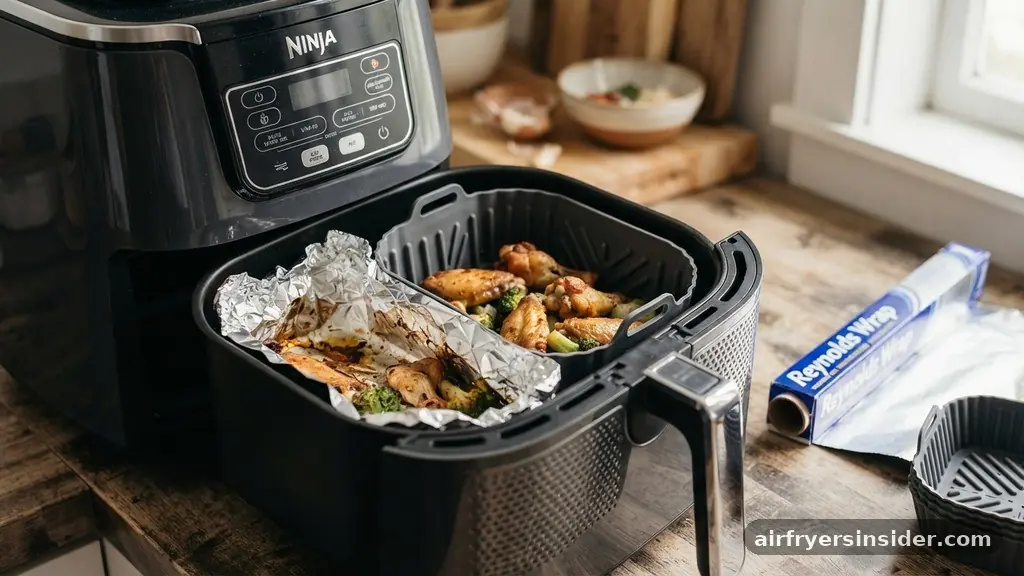
If you want a more permanent solution for easier cleanup, silicone liners are an excellent choice. These are reusable, dishwasher-safe accessories that are custom-molded to fit the shape of your air fryer basket.
Because they are made from food-grade silicone, they are heat-resistant and won’t react with acidic or salty ingredients. They often feature raised ridges that help elevate the food slightly, which can improve heat circulation compared to a flat sheet of foil.
| Feature | Aluminum Foil | Parchment Paper | Silicone Liners |
|---|---|---|---|
| Heat Conductivity | High | Low | Moderate |
| Reusability | No | No | |
| Dishwasher Safe | No | No | |
| Best For | High-heat browning | Easy cleanup/Baking | Daily use/Durability |
The convenience of silicone cannot be overstated. You can simply pull the liner out, dump the crumbs, and toss it in the dishwasher.
While they require an initial investment, they pay for themselves over time by reducing your reliance on disposable materials. Just be sure to check that your specific model of air fryer doesn’t have any restrictions on the use of silicone accessories, as some units have very specific temperature thresholds that could potentially degrade the material over long periods of high-heat cooking.
Essential Tips for Successful Air Frying
Regardless of whether you use foil, parchment, or silicone, there are several best practices to ensure your food turns out perfectly every time. First, never overcrowd the basket.
Even with the best accessories, if the food is packed too tightly, the air cannot reach every surface, resulting in soggy or unevenly cooked items. Give your food space to “breathe,” and if you are cooking a large batch, it is always better to cook in two smaller cycles.
Another critical tip involves the use of cooking spray. While you don’t want to use aerosol sprays that contain propellants (as these can damage the non-stick coating of your basket), a light mist of oil from a pump bottle can make a significant difference. If you are using foil, the oil helps prevent the food from sticking to the metal surface, which is particularly helpful for delicate items like fish or breaded vegetables. By following these simple precautions, you can maximize the efficiency of your appliance while keeping your cleanup time to a minimum.
Addressing Topical Gaps in Air Fryer Usage
There are several common questions that often go unanswered in general guides. One such gap is the concern regarding the “burning” of the foil itself. While aluminum foil has a high melting point, it can become brittle and tear after being exposed to high temperatures.
If you reuse a piece of foil, you increase the risk of it breaking apart and creating small, sharp shards that could get lodged in the fan or the heating element. Always use a fresh piece of foil for every cooking session to avoid these structural failures.
Another frequently overlooked point is the difference between various types of air fryers. A basket-style air fryer has different airflow dynamics than a toaster-oven-style air fryer. In a toaster-oven model, the heating elements are often exposed at the top and bottom.
Placing foil on the bottom rack of a toaster-style unit can cause the bottom heating element to overheat, potentially damaging the internal sensors or the floor of the appliance. Always check your manufacturer’s manual to see if they explicitly forbid the use of foil, as some high-end units have specific internal coatings that could be scratched or compromised by the friction of metallic foil.
Managing Clean-up and Maintenance
Maintaining your air fryer is just as important as how you cook your food. Even if you use foil to catch grease, small particles and oils will inevitably find their way into the crevices of the basket. Alternatives for easier clean-up include soaking the basket in warm, soapy water for a few minutes before scrubbing.
Never use harsh abrasive pads or metal scouring tools, as these will ruin the non-stick surface of the basket. Once the coating is compromised, food will stick regardless of whether you use foil or not.
If you find that your basket is becoming difficult to clean, it may be time to perform a deep clean of the heating element. Over time, grease can splatter upward and accumulate on the element, which can create smoke during operation. To clean this, ensure the unit is unplugged and completely cool.
Use a soft brush or a damp cloth with a mild degreaser to gently wipe away any buildup. Keeping the interior clean is the best way to ensure that your air fryer remains a reliable tool in your kitchen for years to come.
Final Considerations for Your Kitchen Routine
Ultimately, deciding to use foil comes down to weighing the convenience against the potential risks. If you are cooking a recipe that produces a lot of grease, such as bacon or marinated chicken, the foil can make the aftermath much less painful. However, if you are simply roasting vegetables or reheating pizza, the foil is likely unnecessary and may even hinder the quality of the final product.
The most important takeaway is to always keep the airflow in mind. If you feel like your food isn’t crisping up the way it usually does, remove the foil and try cooking directly on the basket.
You might find that the extra cleaning time is worth the superior texture. By experimenting with these different methods, you will develop a better understanding of how your specific appliance responds to various materials, allowing you to achieve the perfect balance between convenience and culinary excellence.
Frequently Asked Questions
Can I put aluminum foil in my air fryer every time I cook?
While you can use it frequently, it is not always necessary. Foil is best reserved for messy, greasy foods. For simpler items, cooking directly on the basket or using a reusable silicone liner is often safer and more effective for maintaining proper airflow and cooking quality.
Is it dangerous if the foil touches the heating element?
Yes, it can be a significant hazard. If the foil is lifted by the fan and touches the heating element, it can cause sparking, smoke, or a potential fire. Always ensure your food is heavy enough to hold the foil down and never use oversized sheets.
Does aluminum foil prevent my food from getting crispy?
It can if the foil covers too much of the basket surface. Because air fryers rely on circulating air to crisp food, blocking the airflow with a solid sheet of foil will result in uneven cooking and a less crispy texture. Always keep the sides of the basket clear.
What is the best way to clean an air fryer if I don’t use foil?
The best method is to soak the basket in warm, soapy water immediately after cooking. This loosens grease and food particles, making them easy to wipe away with a soft sponge. Avoid metal scrubbers to protect the non-stick coating and keep the unit performing at its best.
Conclusion
Using aluminum foil in your air fryer is a practical way to simplify your kitchen routine, provided you prioritize safety and airflow. By ensuring that your food provides enough weight to anchor the foil and by keeping the air vents unobstructed, you can enjoy the benefits of easier cleanup without sacrificing the crispy results you expect from your appliance.
Always remember that while foil is a useful tool, it is not a requirement for every dish, and exploring alternatives like silicone liners or simply cleaning the basket directly can offer better long-term results. We invite you to try these methods and see how they improve your cooking experience—your perfectly crisped meals are just a few adjustments away.
Meta Description: Can I put aluminum foil in my air fryer? Learn the safety guidelines, airflow tips, and best alternatives for a cleaner, more efficient cooking experience.


