

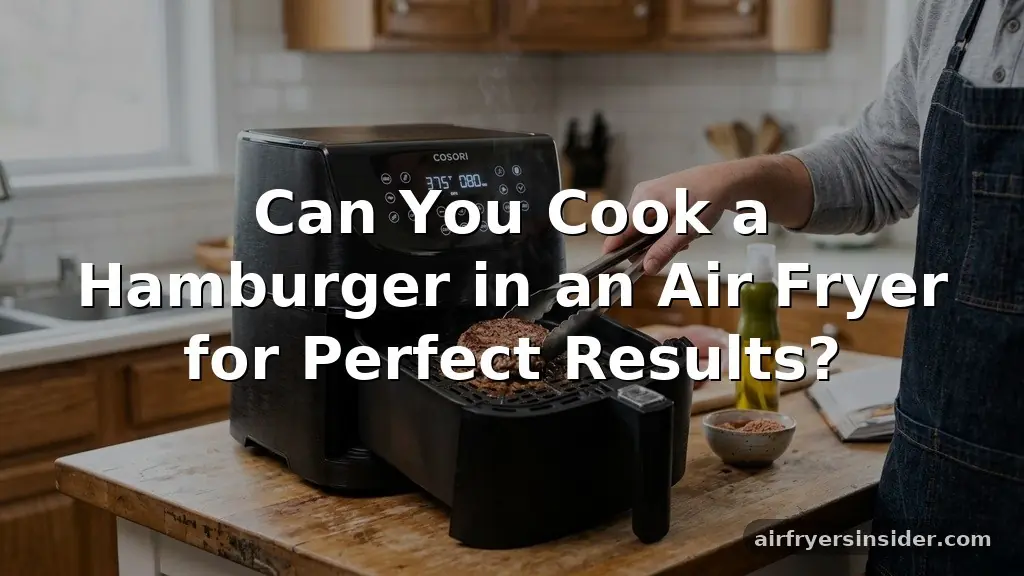
Many home cooks wonder if you can cook a hamburger in an air fryer with the same quality as a traditional grill or skillet. The short answer is yes, and for many people, it becomes their preferred method once they master the technique. By leveraging high-speed convection heat, these countertop appliances create a crispy exterior while keeping the center juicy.
If you are looking for a way to enjoy a classic burger without the mess of stovetop grease splatter or the hassle of lighting a charcoal grill, this approach is a genuine kitchen upgrade. Understanding how to manage temperatures and timing ensures your next meal is restaurant-quality.
Understanding the Mechanics of Air Fryer Cooking
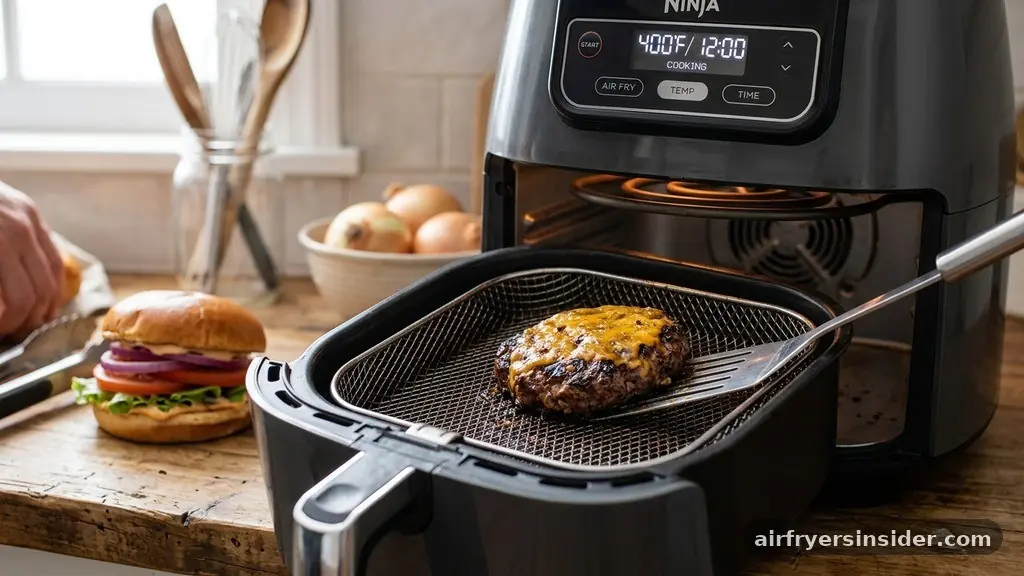
The reason an air fryer works so well for ground beef is its powerful internal fan. Unlike a standard oven that relies on radiant heat, an air fryer uses intense convection heat to circulate air around the food. When you place a patty inside, the hot air hits the surface immediately, which is essential for triggering the Maillard reaction.
This chemical process is what gives your burger that savory, browned crust that defines a great cookout meal. Because the air is constantly moving, the heat penetration is more uniform than in a pan, where only the bottom of the meat makes direct contact with the heat source.
Another advantage is the way the appliance manages moisture. While you might worry about drying out your meat, the rapid cooking time actually helps retain juices. A standard skillet often requires flipping and pressing, which can squeeze out natural liquids.
In an air fryer, the patty sits on a rack, allowing hot air to reach the bottom and sides simultaneously. This efficiency means your cooking time is significantly shorter than in an oven, making it perfect for weeknight dinners. You get the benefits of high-heat searing without the heavy smoke and oil buildup associated with traditional stovetop frying.
Selecting the Right Ground Beef for Air Frying
The success of your meal begins at the butcher counter. When choosing ground beef for the air fryer, the fat content is the single most important factor. A common mistake is using meat that is too lean, which results in a dry, crumbly burger.
Aim for an 80/20 lean-to-fat ratio. That twenty percent fat is crucial because it renders out during the cooking process, basting the meat from the inside and keeping it tender. If you use 90/10 or leaner, you will likely find the texture lacks the richness you expect from a premium tavern-style burger.
Beyond the fat ratio, consider the quality and grind of the beef. Fresh beef is generally easier to shape and holds together better on the air fryer rack than heavily processed, pre-packed options. If you are seasoning your meat, do so just before you place it in the basket.
Adding salt too early can draw out moisture and change the texture of the protein, making it dense like a sausage. Keep your seasoning rub simple—kosher salt, cracked black pepper, and perhaps a touch of garlic powder are all you need to let the natural flavor of the beef shine through.
Preheating and Preparation Techniques
While many people skip this step, preheating your air fryer is non-negotiable if you want a perfect crust. Most models only need three to five minutes to reach their target temperature. If you put cold meat into a cold basket, the beef will essentially steam rather than sear.
By the time the air reaches the right temperature, your patty might already be overcooked in the center. A hot environment ensures that the moment the meat touches the rack, the surface begins to brown.
Preparation also involves the physical shape of the patty. Since air fryers provide heat from all sides, you don’t need to make the burger as thick as you would for a grill. A standard one-inch thick patty is ideal.
Press a small indentation into the center of each patty with your thumb. This prevents the burger from puffing up into a ball as it shrinks during cooking.
Because you are working with a smaller, enclosed space, it is best to cook in batches if you are feeding a crowd. Overcrowding the basket disrupts the air circulation, which leads to uneven cooking and a lackluster, gray appearance on the sides of the patties.
Managing Internal Temperature and Food Safety
Adhering to USDA guidelines is essential when cooking ground beef at home. To minimize the risk of foodborne illness, your burgers should reach an internal temperature of 160 degrees Fahrenheit.
While some home cooks prefer their beef slightly pink in the middle, ground beef is different from a whole steak because any surface bacteria are mixed throughout the meat during the grinding process. A reliable meat thermometer is the only way to be certain your meal is safe.
Insert the probe into the thickest part of the patty, making sure not to hit the rack or pass all the way through the meat. Keep in mind the concept of carryover cooking. Your burger will continue to rise in temperature for a minute or two after you pull it out of the air fryer.
If you remove the patties when they hit 155 degrees, they will likely settle right at that 160-degree safety mark while they rest. Resting is just as important as the cooking itself.
Give the meat three to five minutes to sit on a plate before serving. This allows the juices to redistribute, ensuring that every bite is as moist as possible.
Handling Grease and Maintenance
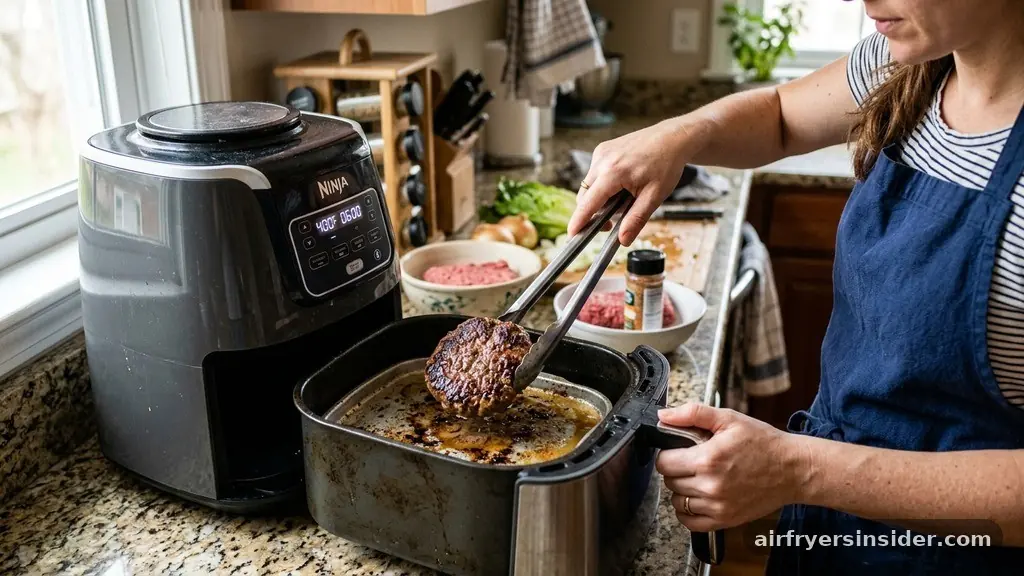
One of the biggest concerns with air frying burgers is grease splatter. Because the meat sits on a rack, the fat drips down into the bottom of the unit. While this makes for a healthier burger, it can create a mess if not managed correctly.
Some people use a small piece of parchment paper to line the bottom of the basket, but be careful—if the paper is too light, the fan can blow it up into the heating element, which is a fire hazard. Ensure your parchment is specifically designed for air fryers or use a silicone mat that stays put.
Another effective trick is to place a slice of bread or a small amount of water in the bottom tray if your model allows it. The bread absorbs the fat, making cleanup as simple as tossing a piece of toast, while the water prevents grease from smoking if it gets too hot. Always clean your drip tray and rack after every use.
A buildup of burnt fat will affect the flavor of your future meals and can cause the unit to smoke significantly during subsequent cooking sessions. Regular maintenance keeps your air fryer running efficiently and prevents unwanted odors from permeating your kitchen.
Comparing Cooking Methods for Burgers
Many home cooks debate whether the air fryer is actually superior to other methods. The following table provides a quick look at how different cooking styles compare for a standard half-pound patty.
| Method | Cooking Time | Texture | Clean-up |
|---|---|---|---|
| Air Fryer | 8-12 Minutes | Crispy edges, juicy interior | Moderate |
| Cast Iron Skillet | 6-10 Minutes | Heavy sear, greasy finish | High |
| Charcoal Grill | 8-15 Minutes | Smoky, charred flavor | High |
| Standard Oven | 15-20 Minutes | Uniform, less crust | Low |
As you can see, the air fryer offers a middle ground. It is faster than an oven and provides a better texture than a pan, without the labor-intensive cleanup of a grill.
While you lose the distinct charcoal flavor, you gain the ability to cook a consistent, high-quality burger regardless of the weather outside. It is a highly efficient tool for anyone who prioritizes speed and cleanliness without wanting to sacrifice the quality of their meal.
Addressing Common Troubleshooting Issues
Even with the right technique, you might run into minor issues when learning to air fry your beef. If your burgers are coming out too dry, you might be overcooking them. Because air fryers are so efficient, they often finish in less time than you think.
Start checking for doneness two minutes earlier than your recipe suggests. If you are dealing with excessive smoke, your grease tray is likely dirty, or you are using a meat with a fat content that is too high, causing it to drip and burn immediately.
Another issue is the “bun toast” problem. Many people want a toasted bun to go with their burger, but they don’t want to dirty another pan. You can easily toast your buns in the air fryer during the last minute of the burger’s cooking time.
Simply open the basket, remove the cooked patties, and place the buns face-down on the rack for 60 seconds. The residual heat and circulating air will give them a perfect golden crunch that holds up well against the juiciness of the beef. It is a simple, effective hack that saves time and effort.
Addressing Topical Gaps in Air Fryer Knowledge
A common gap in existing advice is how to handle frozen patties versus fresh beef. Many people assume you must thaw your meat completely before cooking, but you can actually cook frozen patties directly in the air fryer. If you are starting from frozen, increase your cooking time by about four to five minutes and drop the temperature by 25 degrees.
This ensures the center thaws and cooks through before the exterior turns into charcoal. You should also season the patties after the first few minutes of cooking, as the seasoning won’t adhere well to a frozen surface.
Another gap is the use of the broiler rack. If your air fryer comes with a specific rack accessory, use it. Raising the meat closer to the heating element increases the intensity of the sear, which is exactly what you want for a burger.
If you don’t have one, don’t worry, but consider flipping the burger halfway through. While some argue that air circulation makes flipping unnecessary, flipping ensures that both sides get an equal blast of heat and prevents the bottom of the patty from sticking to the basket surface.
Expanding the Flavor Profile of Air-Fried Burgers
Once you have mastered the basic technique, you can experiment with different flavor profiles to elevate your meal. Air-fried burgers are a blank canvas.
Consider mixing finely minced onions, Worcestershire sauce, or even a dash of soy sauce directly into your ground beef before shaping the patties. The convection heat helps these flavors penetrate the meat, creating a deeper, more complex profile than a simple salt-and-pepper seasoning.
You can also experiment with toppings that benefit from the air fryer’s heat. Placing a slice of sharp cheddar or pepper jack on the patty during the final minute of cooking is the perfect way to get a professional melt. Because the air in the fryer is contained, it melts the cheese evenly across the top without it sliding off.
If you are feeling adventurous, you can even toss some thick-cut bacon in the air fryer alongside the burgers. The fat from the bacon will render out and drip onto the burgers below, adding an extra layer of savory depth to the entire meal.
Frequently Asked Questions
Can you cook raw hamburger in an air fryer?
Yes, you can cook raw hamburger in an air fryer with excellent results. It is one of the most efficient ways to achieve a crispy exterior and a juicy center. Always ensure the internal temperature reaches 160 degrees Fahrenheit to meet safety standards for ground beef.
How long does it take to cook a burger in an air fryer?
For a standard one-inch thick patty, it typically takes between 8 and 12 minutes at 375 or 400 degrees Fahrenheit. The exact time depends on your specific appliance and how well-done you prefer your meat. Always use a thermometer to check for doneness rather than relying solely on time.
Are burgers better in the air fryer or pan?
The air fryer is often better for those who want a mess-free experience with consistent results. While a cast iron pan provides a superior crust through direct contact, the air fryer is significantly cleaner and faster, making it an ideal choice for quick, high-quality weeknight meals.
Can you cook frozen burgers in the air fryer?
You can definitely cook frozen patties in an air fryer. Simply lower the temperature by about 25 degrees and increase the cooking time by 4-5 minutes. This allows the center to thaw and cook through evenly without burning the outside of the burger before the middle is safe.
Final Thoughts on Mastering the Air Fryer Burger
Cooking a hamburger in an air fryer is a reliable way to get a high-quality meal on the table without the mess of a stovetop or the hassle of a grill. By focusing on the right fat ratio, maintaining proper internal temperature, and managing your cooking environment, you can achieve a texture and flavor that rivals your favorite local burger joint. The key is to treat the air fryer with the same respect you would a traditional grill, paying attention to preheating and resting times.
Now that you know the basics of how to cook a hamburger in an air fryer, you have the freedom to experiment with your favorite seasonings and toppings. Grab some fresh ground beef this week and try it for yourself; you will likely find it becomes a staple in your rotation.


