


Many home cooks wonder if they can cook frozen biscuits in an air fryer without ending up with a raw center or a burnt exterior. The good news is that this appliance is actually ideal for the job, as it mimics a high-speed convection oven to produce a perfectly flaky result.
Because of the intense, concentrated airflow, you can achieve a bakery-quality texture in a fraction of the time it takes to heat up a conventional oven. Whether you are using store-bought dough or homemade batches, understanding how to manage the heat ensures every biscuit turns out light and delicious.
The Mechanics of Air Frying Frozen Dough
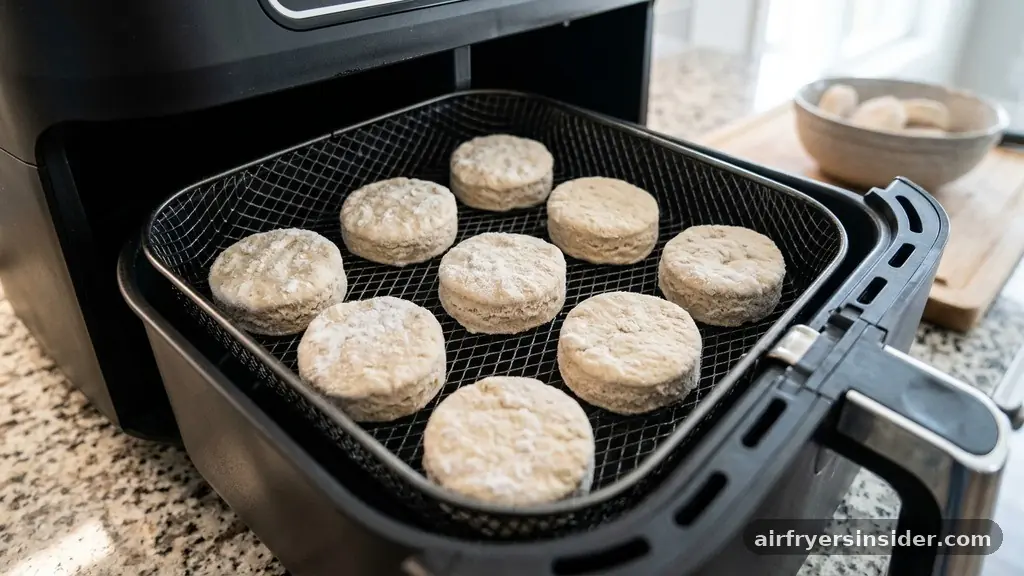
Understanding why an air fryer works so well for frozen pastry starts with the physics of the appliance. Unlike a traditional oven that relies on radiant heat from coils, an air fryer uses a powerful fan to circulate hot air at high speeds.
This process, known as convection heat, forces the heat to penetrate the surface of the dough rapidly. When you place frozen biscuit dough into the basket, the immediate blast of hot air helps to set the crust before the center has a chance to turn gummy.
Because air fryers are smaller than standard ovens, they create a more controlled environment. The air circulation is more intense, which is exactly what you want for a lift in your biscuits.
You get a much more consistent rise because the heat is hitting the dough from all angles simultaneously. This movement of air is the secret to achieving that coveted golden brown exterior that makes a biscuit truly satisfying to eat.
However, you must be careful not to crowd the basket. If you pack the biscuits too tightly, you restrict the airflow, which prevents the heat from reaching the sides of the dough.
When the air cannot move freely around each piece, you end up with pale, undercooked sides and a soggy bottom. Always leave enough space between each biscuit to allow for proper expansion, as the dough will grow as the leavening agents react to the sudden spike in temperature.
Optimal Temperature and Timing Adjustments
When figuring out how long to cook frozen biscuits in an air fryer, you have to adjust your expectations from standard oven instructions. Most packaging suggests baking at 350°F to 375°F for 15 to 20 minutes.
In an air fryer, you should generally lower the temperature by about 25 degrees and reduce the time by roughly 20 to 30 percent. A starting point of 320°F to 330°F is usually sufficient to cook the interior without scorching the outside.
Recipe adjustment is a necessary part of the process because every appliance model operates with different fan strengths. You might find that your specific model runs hotter than others, requiring a shorter duration.
Start checking for doneness at the 10-minute mark. If the tops are darkening too quickly, you can place a small piece of foil over the top to protect the crust while the internal temperature continues to rise.
Consistency is key, so keep a log of what worked for your specific brand of biscuits. If you are using Pillsbury Grands, which are thicker than standard varieties, they will naturally require a slightly longer cooking time than smaller, thinner frozen options. Always aim for a deep golden brown color, which serves as your primary visual indicator that the Maillard reaction has occurred, providing that savory, toasted flavor profile that defines a great biscuit.
The Role of Preheating and Preparation
Many users ask if preheating is necessary, and the answer is a resounding yes. While it might seem like an extra step, preheating the air fryer ensures that the cooking cycle begins at the target temperature.
If you put cold, frozen dough into a cold machine, the biscuits will slowly thaw and potentially lose their structure before the heat is high enough to activate the baking powder or yeast. This can lead to dense, flat biscuits rather than the tall, fluffy ones you desire.
Preparation also involves the surface you place the biscuits on. Using a piece of parchment paper can be helpful, but you must ensure it does not block the airflow.
If you use paper, make sure it is weighed down by the biscuits themselves so it does not fly up and hit the heating element, which is a major fire hazard. Alternatively, if your basket has a non-stick coating, you may not need any lining at all.
Using a light coating of cooking spray can help achieve a more even browning, but do not overdo it. Too much oil can cause the biscuits to smoke, especially at higher temperatures.
If you prefer a shiny, professional finish, a quick brush of melted butter or an egg wash just before the last two minutes of cooking can provide a beautiful sheen. Just be mindful that these additions will change the cooking dynamics slightly, often speeding up the browning process.
Managing Biscuit Expansion and Airflow
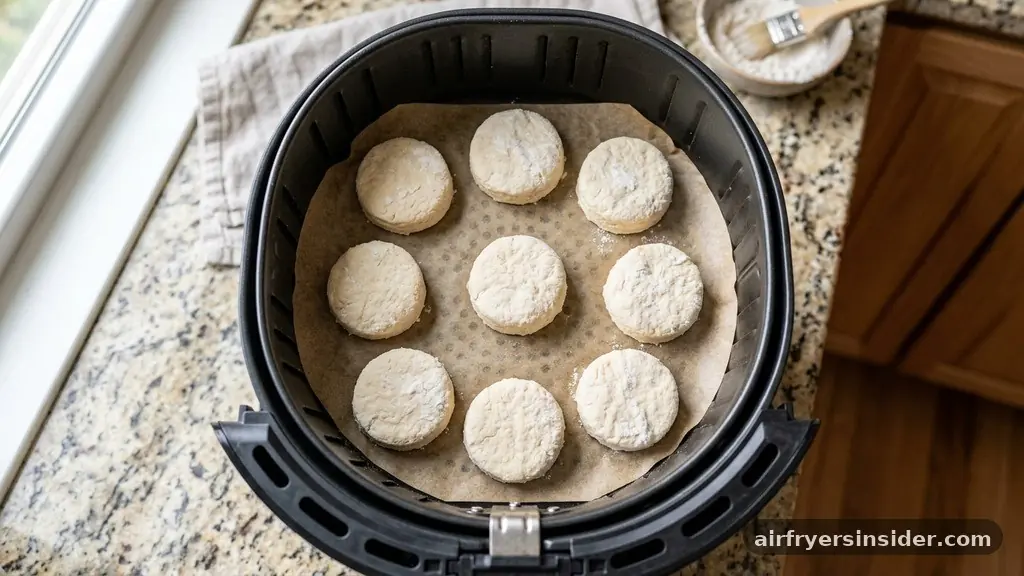
One of the most common mistakes when learning if you can cook frozen biscuits in an air fryer is ignoring the dough expansion. Biscuits are designed to rise significantly, and if they do not have enough room, they will fuse together into a single, unbaked mass.
Always arrange them in a single layer with at least an inch of space between each one. If you have a large batch, it is far better to cook them in two separate rounds than to crowd them into one.
The rack placement also matters significantly. If your air fryer has a removable tray or rack, ensure it is positioned correctly according to the manufacturer’s manual.
Placing the food too close to the heating element at the top of the unit will almost certainly result in burnt tops and raw centers. If your unit allows you to adjust the rack height, aiming for the middle or lower position is usually the safest bet for thick items like biscuits.
Furthermore, consider the thermal conductivity of your basket. Metal baskets get very hot and act as a secondary heat source, which helps brown the bottom of the biscuit.
If you are using a silicone liner, keep in mind that silicone acts as an insulator, which might prevent the bottom from crisping up as effectively as it would on the bare metal. If you notice the bottoms are staying pale, try flipping the biscuits halfway through the cooking time to ensure an even finish.
Addressing Common Topical Gaps
A frequent point of confusion involves the difference between refrigerated dough and truly frozen pastry. Refrigerated dough, like the kind found in cardboard tubes, is often already partially proofed or contains different stabilizers than store-bought frozen biscuits.
Because of this, refrigerated dough can sometimes over-expand or lose its shape in an air fryer if the temperature is too high. Always treat frozen biscuits as a more robust product that requires a more gentle, steady heat.
Another gap in knowledge concerns food safety. Many people worry about the internal temperature of the biscuits. While biscuits are not a high-risk item like chicken or beef, they must be fully cooked to be palatable.
The center should reach at least 190°F to ensure the starches have gelatinized and the dough is no longer raw. Using a food thermometer is the only way to be 100% certain, though a simple toothpick test—where the toothpick comes out clean—is usually sufficient for most home cooks.
Finally, there is the question of convection oven vs. air fryer. While they both use fans, the air fryer is much smaller and more powerful relative to its size.
A convection oven often has a slower, gentler fan, whereas an air fryer is designed for high-velocity heat transfer. This means that a recipe meant for a convection oven will almost always need a time reduction when moved to an air fryer.
Comparing Cooking Methods
To understand the efficiency of the air fryer, it helps to look at how it stacks up against traditional methods. The following table illustrates the general differences in performance and outcome when preparing frozen biscuits.
| Feature | Conventional Oven | Air Fryer |
|---|---|---|
| Cooking Time | 15-20 Minutes | 8-12 Minutes |
| Energy Usage | High (Large cavity) | Low (Small cavity) |
| Crust Quality | Soft/Uniform | Crispy/Golden |
| Preheat Time | 10-15 Minutes | 3-5 Minutes |
As shown, the air fryer is significantly faster and more energy-efficient. While the conventional oven is excellent for baking large batches at once, the air fryer is superior for quick meals or small household needs. The crispy crust produced by the air fryer is a distinct advantage for those who enjoy a bit of texture contrast in their baked goods.
Troubleshooting Common Issues
Even with the best preparation, things can go wrong. If you find your biscuits are burning on top while remaining doughy inside, this is a clear sign that the temperature is set too high.
Try lowering the temperature by 10 degrees and increasing the time slightly. This allows the heat to migrate toward the center of the biscuit before the exterior becomes too dark.
Another issue is the “dry biscuit” syndrome. If your biscuits come out tasting like cardboard, you have likely overcooked them. The high-speed air in an air fryer can dehydrate food if it is left in for too long.
Always start with the lower end of the recommended time range. If you are worried about them drying out, you can also place a small, heat-safe dish with a tablespoon of water at the bottom of the air fryer. The steam generated will help keep the interior moist while the fan crisps the crust.
Lastly, if your biscuits are sticking to the basket, ensure you are using a light coating of non-stick spray or a small piece of parchment. If you find that the biscuits are still messy to remove, let them sit in the basket for one minute after turning off the heat. This allows the internal structure to firm up slightly before you attempt to move them, which prevents the soft, hot dough from tearing.
Essential Tips for Success
To master the process, consider these actionable steps to refine your results every time you use your appliance:
- Use a digital thermometer to check the internal temperature, ensuring it reaches 190°F for perfect doneness.
- Avoid using aerosol-based cooking sprays directly on the non-stick coating of your basket, as they can cause long-term damage; instead, use a pump-style mister with oil.
- If you are reheating leftover biscuits, use a lower temperature of 300°F for just 3 to 4 minutes to restore the crust without drying out the middle.
- Always check your air fryer manual for specific weight or volume limits, as overloading the basket is the most common cause of failure.
- Experiment with flavored toppings like garlic butter or honey glaze, but apply them after the cooking is complete to prevent burning.
These practices, while simple, differentiate a mediocre result from a professional-grade breakfast. By treating the air fryer as a precision tool rather than just a “set it and forget it” box, you gain much more control over the final texture and flavor of your frozen goods.
FAQ Section
Is it better to cook frozen biscuits in an air fryer or an oven?
The air fryer is significantly faster and produces a crispier crust, making it better for smaller batches. However, a conventional oven is superior if you need to bake a large quantity of biscuits at once, as it provides more consistent space and avoids overcrowding issues.
Can I put frozen Pillsbury Grands in the air fryer?
Yes, you can cook Pillsbury Grands effectively. Because these biscuits are quite thick, it is essential to lower the temperature to around 320°F to ensure the center cooks through without the exterior burning. Always monitor them closely after the 10-minute mark to ensure the perfect golden finish.
Why are my air fryer biscuits raw in the middle?
Raw centers usually happen because the temperature is too high, causing the outside to cook too quickly. To fix this, lower your air fryer temperature by 10 to 15 degrees and extend the cooking time. Using a food thermometer to check for an internal temperature of 190°F is the best way to verify doneness.
Do I need to flip the biscuits while they are air frying?
Flipping is not strictly necessary, but it can help achieve a more even browning on the bottom. If you notice the tops are browning much faster than the bottoms, flip the biscuits halfway through the cooking time to ensure the heat is distributed evenly across the entire surface.
Final Thoughts
Cooking frozen biscuits in an air fryer is a reliable way to get fresh, hot bread on the table without the wait of a preheating oven. By focusing on temperature control, proper spacing, and monitoring the internal doneness, you can achieve a result that rivals any traditional baking method. The intense convection heat provides a unique texture that many home cooks find superior for breakfast sandwiches or simple buttered treats.
Now that you have the knowledge to manage the process, you can confidently experiment with different brands and styles of dough. Feel free to try these techniques next time you are looking for a quick, delicious addition to your meal.


