

Many home cooks wonder, “can you make steak in an air fryer?” and the answer is a resounding yes. While traditionalists might argue that a heavy cast iron skillet is the only way to achieve a perfect crust, the modern air fryer offers a surprisingly effective alternative. By utilizing powerful convection cooking technology, these appliances circulate hot air with intense speed, mimicking the environment of a professional broiler.
When executed correctly, air-fried steak provides a tender interior and a crisp, browned exterior that rivals conventional methods, all while minimizing the mess of stovetop splattering. Understanding the mechanics of how your appliance interacts with high-protein cuts is the first step toward mastering this convenient, time-saving technique.
The Science of Air Frying Steak
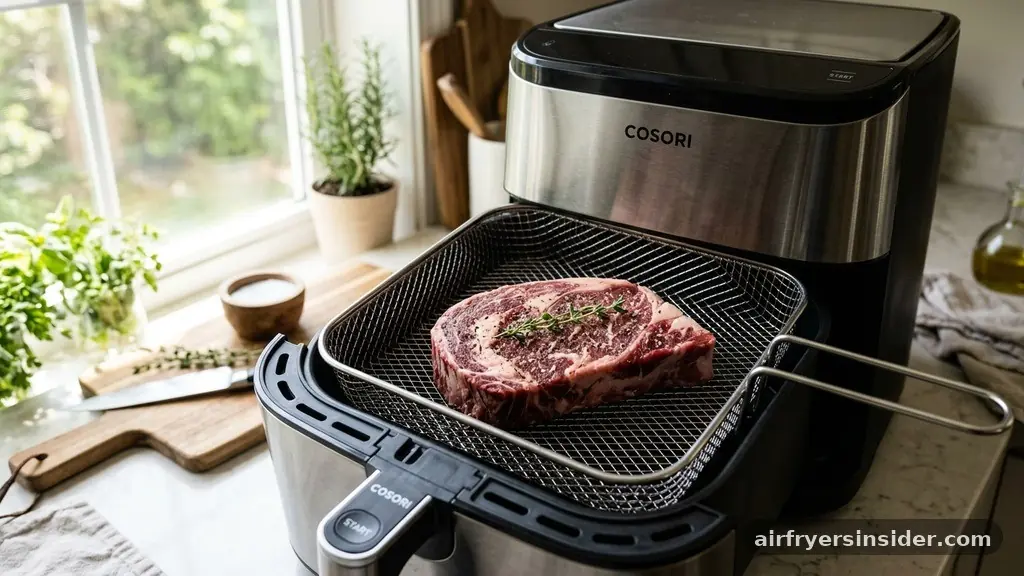
At its core, an air fryer is essentially a compact, high-powered convection oven. It forces air to move rapidly around the food, which accelerates the Maillard reaction—the chemical process responsible for the savory, browned crust we associate with excellent steak. Unlike a standard oven, which relies on radiant heat that can sometimes leave meat gray and unappealing, the air fryer’s fan-assisted airflow ensures that the surface of the meat dries out just enough to brown perfectly.
To achieve professional results, you must consider the physics of heat transfer. Because the air fryer basket allows air to flow underneath the meat, the bottom of the steak cooks nearly as fast as the top. However, the lack of a direct, heavy heating element like a cast iron pan means you will not get traditional char-like sear marks.
Instead, you gain a uniform, consistent edge-to-edge finish. The key is managing the internal temperature effectively, as the high-speed air can overcook the exterior before the center reaches your desired level of doneness if the temperature is set too high. By balancing heat intensity with proper preparation, you can achieve a result that satisfies even the most discerning steak lover.
Selecting the Ideal Cut for Air Frying
Not every cut of beef responds the same way to air frying. Because the process is relatively fast and relies on high-heat circulation, you want a steak that is thick enough to withstand the environment without drying out.
A ribeye is often considered the gold standard for air frying due to its generous marbling. The rendered fat within a ribeye helps keep the meat succulent, providing moisture that compensates for the rapid evaporation caused by the fan.
A New York strip is another excellent candidate, as it offers a balance of tenderness and beefy flavor. Its uniform shape makes it easier to position in the center of the air fryer basket, ensuring even heat distribution. If you prefer a leaner option, a sirloin steak can work well, but you must be vigilant with your timing.
Since sirloin lacks the heavy fat content of a ribeye, it can become tough if left in the heat for even a minute too long. Regardless of the cut, aim for a thickness of at least one inch.
Thin steaks, such as flank or thin-cut cube steaks, are prone to overcooking before they can develop a decent crust. Always ensure your steak is room temperature before it hits the basket to promote even cooking throughout.
Preparation Techniques for Maximum Flavor
Before the steak even touches the appliance, your preparation determines the quality of the final product. One of the most effective methods to improve texture and moisture is the dry brine.
By seasoning your steak liberally with kosher salt at least 45 minutes—or ideally, up to 24 hours—before cooking, you allow the salt to draw moisture out, dissolve, and then get reabsorbed into the muscle fibers. This process seasons the meat deeply and helps denature the proteins, resulting in a more tender bite.
After the dry brine, it is crucial to pat the surface of the steak completely dry with paper towels. Excess surface moisture is the enemy of the Maillard reaction. If the surface is wet, the air fryer will steam the steak rather than browning it.
Once dry, lightly coat the exterior with a high-smoke point oil. Using an oil like avocado oil is vital because it can withstand the high temperatures of the air fryer without breaking down or burning.
Avoid butter or low-smoke point oils, which can lead to excessive smoke production and a bitter, burnt taste. A light brushing of oil ensures that the heat is transferred evenly across the entire surface of the meat.
Managing Heat and Airflow
To get the best results, preheating your air fryer is non-negotiable. Most air fryers reach their peak temperature in just three to five minutes.
If you place a cold steak into a cold basket, the meat will slowly heat up, leading to a gray, overcooked “band” around the edges. By starting with a hot environment, you initiate the browning process immediately.
The placement of the meat within the air fryer basket also plays a significant role. Do not overcrowd the basket; if you are cooking multiple steaks, ensure there is at least an inch of space between them to allow for proper airflow. If the air cannot circulate around the meat, the cooking time will be uneven, and you will end up with steamed beef rather than a crusty steak.
Some enthusiasts choose to use a cast iron insert or a small rack inside the basket to elevate the steak slightly, which can further promote air circulation and help the bottom of the steak brown more effectively. Always place the thickest part of the steak toward the center of the air fryer, as this is typically where the heat is most concentrated.
The Importance of Monitoring Doneness
Relying on “minutes per side” is a recipe for disaster. Every air fryer model has a different wattage and airflow pattern, meaning two different machines might cook the same steak in vastly different times.
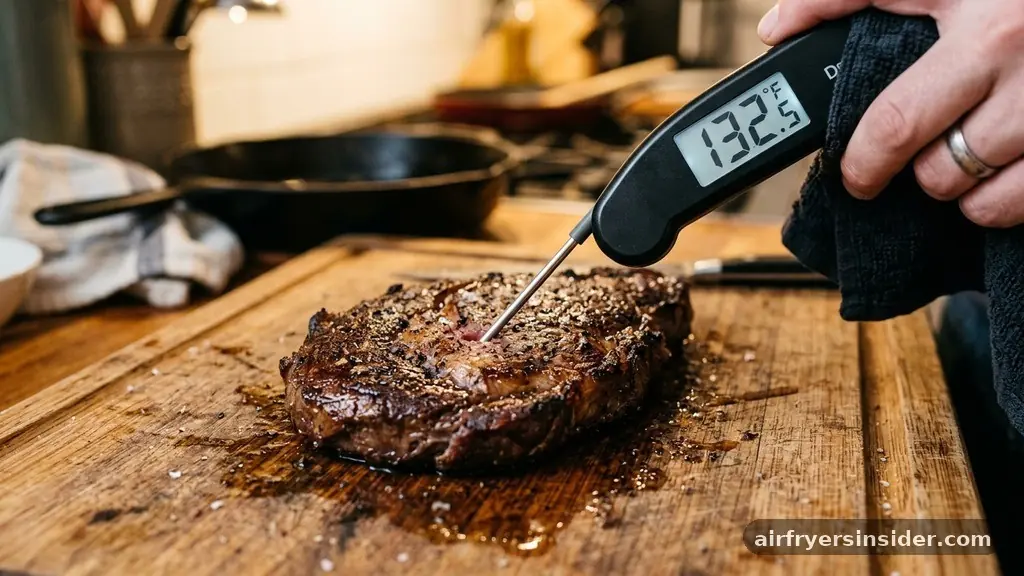
The only reliable way to ensure your steak is cooked to your preference is to use an instant-read thermometer. This tool removes the guesswork and ensures food safety, as recommended by the USDA.
| Doneness Level | Target Internal Temperature |
|---|---|
| Rare | 120°F – 125°F |
| Medium-Rare | 130°F – 135°F |
| Medium | 140°F – 145°F |
| Medium-Well | 150°F – 155°F |
When checking the temperature, insert the probe into the thickest part of the steak, avoiding any large pockets of fat or bone, which can provide inaccurate readings. Remember that the steak will continue to rise in temperature after it is removed from the air fryer, a phenomenon known as carryover cooking. If you want a perfect medium-rare result, pull the steak when it hits approximately 125°F, as it will climb to the target 130°F-135°F while it rests.
Mastering the Rest and Serving
The resting time is perhaps the most overlooked step in the cooking process. When a steak is exposed to high heat, the muscle fibers contract and push the juices toward the center of the meat.
If you slice into the steak immediately upon removing it from the air fryer, those juices will run out onto the cutting board, leaving the meat dry and lackluster. By allowing the steak to rest on a cutting board or warm plate for at least five to ten minutes, you allow the fibers to relax and the juices to redistribute throughout the cut.
During the resting period, the steak continues to develop flavor. If you find the crust needs a little extra richness, you can add a small pat of compound butter during the last minute of resting. The residual heat will melt the butter, creating a luxurious finish that complements the beefy flavor.
When it comes time to slice, always cut against the grain. This shortens the muscle fibers, making each bite significantly more tender. Taking the time to execute this final step ensures that the effort you put into selecting the right cut and monitoring the temperature pays off with a superior dining experience.
Troubleshooting Common Air Fryer Challenges
Even experienced cooks run into issues when transitioning to air-fried steak. One common problem is excessive smoke. This usually occurs if the rendered fat from the steak drips into the bottom of the air fryer and begins to burn.
To prevent this, place a small piece of bread or a splash of water in the bottom of the drawer (under the rack) to catch the drippings. Another frequent issue is a steak that is brown on the outside but raw on the inside.
This happens when the temperature is set too high. If you notice your steak is darkening too quickly, drop the temperature by 25 degrees and increase the cooking time slightly.
Conversely, if the steak is cooked through but looks pale, your surface moisture was likely the culprit. Next time, focus on the drying stage of your prep. If you are struggling with uneven cooking, check your air fryer’s manual to see if it requires a specific rack position.
Some units have a “hot spot” near the heating element that can scorch the top of the meat. If this occurs, simply rotate the steak halfway through the cooking process. Understanding how your specific machine behaves is the secret to consistency.
Addressing Topical Gaps in Air Fryer Steak Knowledge
One significant gap in most online resources is the lack of information regarding the safety of cooking fatty cuts in an air fryer. Many users worry about the potential for flare-ups or fire hazards. While it is rare, a steak with a very thick fat cap can cause smoke if that fat hits the heating element.
The solution is simple: trim the excess fat cap before cooking. You want the fat that is marbled within the muscle, but a thick external layer of fat often does not render down fully in the short time required for a medium-rare steak. By trimming the excess, you improve both the safety and the texture of the finished product.
Another neglected topic is the use of marinades. Many people assume they can marinate their steak as they would for a grill. However, the high-velocity air in an air fryer can cause sugar-based marinades to burn rapidly, creating a bitter, charred exterior before the center is cooked.
If you want to use a marinade, stick to oil-based mixtures and ensure the steak is patted dry before it goes into the basket. Alternatively, consider using a dry rub to add flavor, as this avoids the risk of burning and creates a more robust, flavorful crust that holds up well to the intense heat of the convection cooking environment.
The Future of Home Steak Preparation
The rise of the air fryer has fundamentally changed how we approach quick, high-quality meals. While it may never replace the traditional charcoal grill for large gatherings or the heavy-duty cast iron pan for professional-grade searing, it occupies a vital niche for the busy home cook.
The ability to produce a restaurant-quality steak on a Tuesday evening without the hassle of firing up the grill is a game-changer. As appliance technology continues to evolve, we are likely to see features like integrated meat probes that communicate directly with the air fryer to adjust temperatures in real-time, effectively automating the perfect steak.
Ultimately, “can you make steak in an air fryer” is a question with a very satisfying answer. By treating the air fryer as a precise culinary tool rather than just a convenience gadget, you can achieve a level of consistency that is difficult to replicate with other methods.
Focus on the quality of your beef, the precision of your temperature monitoring, and the patience of your resting time. These elements combined will ensure that your home-cooked steaks are consistently delicious, tender, and perfectly prepared, regardless of the equipment used.
Frequently Asked Questions
Is a steak actually good when cooked in an air fryer?
Yes, a steak prepared in an air fryer can be excellent. It achieves a great crust and tender interior due to the high-speed convection air. When you use quality meat and monitor the internal temperature with a thermometer, the results are comparable to pan-searing, but with much less cleanup.
How long does it typically take to cook a steak in an air fryer?
Cooking time depends on the thickness of the cut and your desired doneness. Generally, a one-inch steak takes about 8 to 12 minutes at 400°F. Always use an instant-read thermometer to check for your preferred temperature rather than relying solely on the clock to ensure it is cooked correctly.
What should I avoid cooking in an air fryer regarding meat?
Avoid cooking steaks that are extremely thin, as they will overcook before developing a crust. Also, avoid using heavy, sugar-based marinades that will burn under the high-velocity heat. Additionally, be cautious with excessively fatty cuts that might cause significant smoke when the fat renders and drips onto the heating element.
Do I need to flip the steak while it is air frying?
Flipping the steak halfway through the cooking process is recommended. Because the air fryer heats from the top down, flipping ensures that both sides of the steak receive equal exposure to the circulating air, which promotes even browning and a more consistent internal temperature throughout the entire cut of meat.
In conclusion, the air fryer is a highly capable appliance for cooking steak, provided you follow proper preparation and monitoring techniques. By selecting a well-marbled cut like a ribeye or New York strip, utilizing a dry brine to enhance flavor, and strictly adhering to internal temperature targets, you can achieve a professional-quality meal at home.
Remember to prioritize the resting time to lock in juices and always use an instant-read thermometer to guarantee safety and perfection. Whether you are a novice or an experienced cook, mastering this method offers a convenient and effective way to enjoy a perfectly cooked steak.


