

Knowing whether you can make tortilla chips in an air fryer is a common question for home cooks looking to replace greasy, store-bought snacks with a healthier alternative. The process is surprisingly simple, transforming basic pantry staples into crunchy, flavorful treats in just a few minutes. By using rapid air technology, you achieve a level of crispiness that rivals deep-frying without the excess oil.
Whether you are craving a savory base for homemade salsa or a sweet cinnamon-dusted dessert, your countertop appliance is perfectly suited for the task. You will find that mastering this technique opens up a world of quick, customizable snack recipes for any occasion.
Mastering the Fundamentals of Air Frying Tortillas
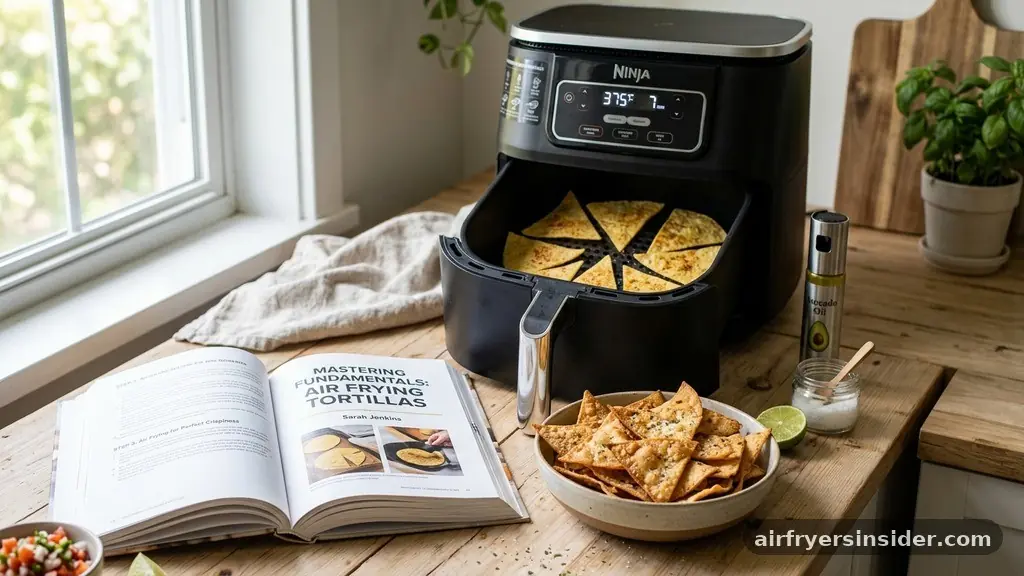
The primary appeal of using your appliance for chips lies in the efficiency of convection cooking. Unlike traditional ovens, which take time to heat the air around the food, an air fryer uses a powerful fan to circulate heat directly against the surface of the tortilla wedges.
This process rapidly removes moisture from the corn or flour tortillas, which is the secret to achieving that satisfying crunch. You don’t need a deep fryer to reach professional results; you just need to understand the relationship between surface area and airflow.
When you prepare homemade chips, the choice of tortilla matters. Traditional corn tortillas are the gold standard for authentic, crunchy chips because their lower moisture content helps them crisp up faster than flour-based alternatives. Flour tortillas tend to become more like soft crackers or crisps, which can be delightful but offer a different texture profile.
Regardless of the type you choose, the key is to cut them into uniform, bite-sized triangles so they cook evenly. If some pieces are significantly larger than others, you will end up with a batch where some chips are burnt while others remain chewy.
Optimal Temperature and Timing for Perfect Crunch
Determining the right air fryer temperature is essential for preventing the edges of your chips from burning before the center is crisp. Most recipes perform best when set between 350°F and 375°F.
At this range, the heat is intense enough to crisp the starch without turning the edges into charcoal. If you go higher than 375°F, you risk the chips flying around the basket due to the high-velocity air circulation, which can cause them to overlap and cook unevenly.
Cooking time typically ranges from five to eight minutes, depending on the thickness of your tortillas and the specific model of your machine, such as a Ninja Foodi or a Cosori. It is vital to keep a close eye on the chips after the four-minute mark.
Because they are thin, they transition from perfectly golden brown to burnt in a matter of seconds. Using a pair of kitchen tongs to flip or rearrange the chips halfway through the cycle helps ensure that both sides receive equal exposure to the heat, guaranteeing a uniform crunch throughout the entire batch.
The Role of Oil and Seasoning in Texture
While you can technically air fry tortillas without any fat, a light coating of oil acts as a heat conductor. Using an olive oil spray or a light mist of avocado oil helps the heat transfer more efficiently to the surface of the chip.
This small amount of fat is also necessary for your seasonings to adhere properly. Without a binder, dry spices like chili powder, cumin, or smoked paprika will simply fall to the bottom of the air fryer basket, leaving your chips bland and messy.
Applying seasonings is best done immediately after you lightly spray the raw triangles with oil. Arrange them in the basket, give them a quick spritz, and then sprinkle your spice blend evenly across the surface. If you are making sweet chips, a light dusting of cinnamon sugar works wonders.
If you prefer savory, a combination of sea salt and a squeeze of fresh lime juice after cooking provides a bright, tangy finish. The goal is to provide just enough moisture and oil to create a flavorful crust without making the chips feel heavy or greasy.
Preventing Common Air Frying Pitfalls
One of the most frequent mistakes beginners make is overcrowding the basket. Air circulation is the engine that makes your air fryer work, and if you stack the chips on top of one another, the air cannot pass between them.
This results in steamed, soft tortillas rather than crispy chips. Even if you have a large-capacity unit, it is almost always better to cook in two smaller batches than to try and force a single massive batch into the basket at once.
Another issue involves the physical movement of the chips during the cooking process. Because the fan is so powerful, lightweight tortilla wedges can sometimes be lifted by the airflow and plastered against the heating element at the top of the unit. This is a fire hazard and will result in an acrid, burnt taste.
To mitigate this, ensure your chips are arranged in a single layer and, if possible, use a wire rack or a specialized air fryer accessory that holds the chips down. Keeping the basket from becoming overfilled also helps keep the individual pieces grounded.
Comparing Traditional Cooking Methods
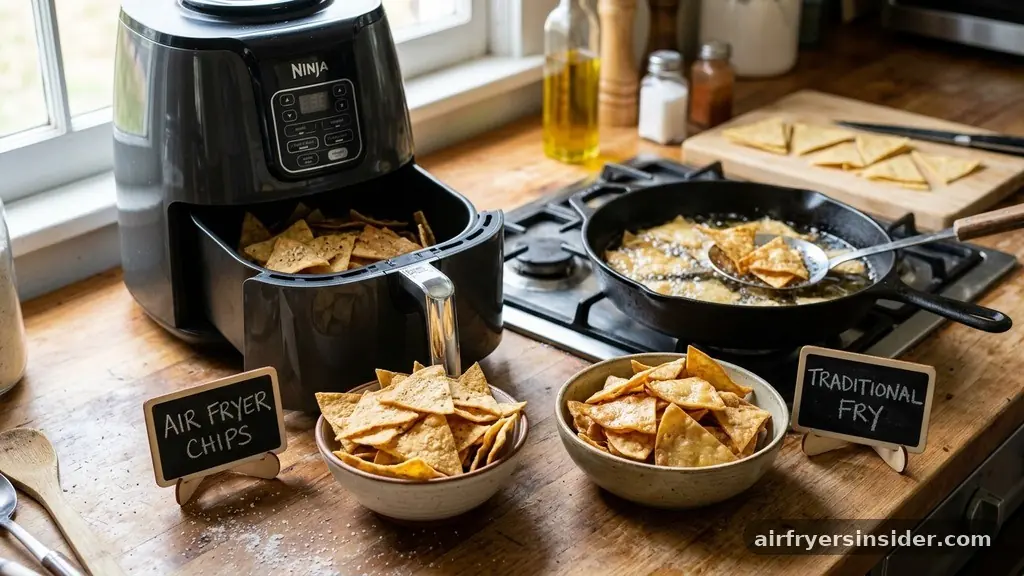
Understanding how air frying stacks up against deep frying or baking helps put the process in perspective. The primary difference is the fat content and the intensity of the heat.
Deep frying provides an immediate, uniform crunch through submersion in oil, but it leaves the final product coated in excess calories. Baking in a conventional oven is a reliable way to make chips, but it takes significantly longer because the oven lacks the rapid air circulation of an air fryer.
| Cooking Method | Time Requirement | Texture Quality | Health Impact |
|---|---|---|---|
| Air Frying | 6-8 minutes | Crispy and light | Low fat/Low calorie |
| Deep Frying | 2-3 minutes | Very crunchy/Greasy | High fat/High calorie |
| Oven Baking | 15-20 minutes | Variable/Dry | Low fat/Low calorie |
As shown in the table above, air frying hits a “sweet spot” for most home cooks. It provides a result that is much closer to deep-fried chips than oven-baked ones, while maintaining the nutritional benefits of using minimal oil. It is also significantly faster than traditional baking, making it an ideal choice for spontaneous snack cravings or last-minute party preparations.
Addressing Topical Gaps in Snack Preparation
A common point of confusion for those experimenting with air fryer snacks is whether preheating is strictly necessary. While many manufacturers suggest preheating for meats, it is generally optional for thin items like tortilla chips.
However, preheating your unit for three minutes can lead to a more consistent starting temperature, which helps the chips crisp up the moment they hit the basket. If you find your chips are coming out soft in the middle, try preheating next time to see if the increased initial heat helps.
Another gap in common knowledge involves the storage and reheating of leftovers. Many people assume that once air-fried chips lose their crunch, they are destined for the trash. This is not true.
You can easily revive stale chips by tossing them back into the air fryer at 300°F for two to three minutes. This process re-evaporates the moisture that the chips absorbed from the air, returning them to a crisp state. Avoid using the microwave for this purpose, as it will only make the chips soggier and rubbery.
Creative Flavor Profiles for Homemade Chips
Beyond the standard salted chip, your air fryer allows you to experiment with diverse flavor profiles that are difficult to find in stores. Because you are seasoning them yourself, you have complete control over the sodium content and the intensity of the spices.
For a smoky, complex chip, try combining smoked paprika with garlic powder and a touch of brown sugar. This creates a sweet and savory balance that pairs perfectly with creamy dips like guacamole or black bean hummus.
If you are aiming for something more vibrant, consider using nutritional yeast for a cheesy, dairy-free flavor profile. You can also experiment with dried herbs like oregano or thyme for a Mediterranean-inspired snack. The key to successful seasoning is to ensure the spice mix is finely ground.
If the spices are too coarse, they will fall off easily. Using a mortar and pestle to grind your herbs and spices into a fine dust before applying them to the oiled tortillas will yield a much more professional and consistent result.
The Importance of Proper Preparation
The preparation phase is just as important as the cooking phase. Before you even turn on the machine, make sure your tortillas are at room temperature.
If they are coming directly from the refrigerator, they may contain excess surface moisture that will prevent them from crisping properly. If you are using corn tortillas, you can lightly brush them with a tiny amount of water before cutting them, which can sometimes help them puff up slightly during the cooking process.
Once cut, ensure the wedges are dry. If you have been handling them with moist hands, pat them down with a paper towel. The goal is to remove as much surface liquid as possible before the oil is applied.
This creates a clean slate for the oil to coat the corn surface, ensuring that the moisture inside the tortilla is the only thing being evaporated during the cooking cycle. Taking these extra thirty seconds to prep your ingredients will make a noticeable difference in the final texture of your snack.
Integrating Air Fried Chips into Your Diet
Incorporating these homemade chips into your diet is an excellent way to maintain control over your snack intake. By making them yourself, you eliminate the preservatives and artificial flavorings often found in commercial bags.
You can also choose high-quality oils, such as extra virgin olive oil or avocado oil, which offer healthier fat profiles. Because the process is so quick, you can make exactly the amount you need, reducing food waste and preventing the temptation of mindlessly finishing a large bag of store-bought chips.
These chips also serve as a great foundation for more elaborate dishes. You can use them to make quick, individual-sized portions of nachos. Simply arrange the air-fried chips on a heat-safe plate, top them with shredded cheese and black beans, and place them back in the air fryer for one minute until the cheese is melted.
This level of customization is what makes the air fryer such a versatile tool for home cooks. Whether you are hosting a casual gathering or just enjoying a movie night, the ability to produce fresh, hot chips on demand is a significant advantage in any kitchen.
Frequently Asked Questions
Can I use flour tortillas instead of corn?
Yes, you can certainly use flour tortillas, but keep in mind that they will have a different texture. Flour tortillas tend to become more like a crisp, light cracker rather than the sturdy, crunchy chip you get with corn. Adjust your cooking time slightly, as they may brown faster.
How do I prevent the chips from flying around inside the air fryer?
The high-velocity fan can sometimes lift the chips and blow them into the heating element. To prevent this, ensure the pieces are arranged in a single layer and aren’t too small. If you have a wire rack that fits inside your basket, place it on top of the chips to hold them down.
Is it necessary to use oil when air frying tortillas?
While you can technically air fry them without oil, using a light spray of olive or avocado oil is highly recommended. The oil helps the heat transfer to the tortilla, which is essential for achieving a crispy texture and allows your seasonings to stick to the chips effectively.
How do I stop the chips from tasting burnt?
Chips can transition from golden brown to burnt very quickly. Start checking them at the four-minute mark and continue monitoring them closely. If they are browning too fast, lower the temperature by 25 degrees. Always ensure you are not overcrowding the basket to allow for even cooking.
Conclusion
Making crispy, delicious tortilla chips in your air fryer is a straightforward process that rewards you with a superior snack compared to mass-produced alternatives. By focusing on uniform cutting, avoiding the temptation to overcrowd the basket, and carefully managing your temperature, you can achieve professional-level results in under ten minutes. Whether you stick to classic sea salt or branch out into bold, custom spice blends, the versatility of your air fryer ensures that you have a healthy, crunchy option whenever the craving strikes.
Start with a small batch to learn your specific machine’s quirks, and you will soon find yourself experimenting with new flavor combinations on a regular basis. It is a simple, effective way to elevate your home snacking habits while keeping total control over your ingredients.
Meta Description: Learn how to make crispy, delicious tortilla chips in an air fryer with this guide on temperatures, timing, seasoning tips, and common mistakes to avoid.


