

Deciding whether or not you can put a glass bowl in an air fryer is a common dilemma for home cooks looking to expand their culinary repertoire. While air fryers are essentially high-powered convection ovens, the environment inside the basket is significantly different from a traditional oven. The small, enclosed space, combined with high-velocity air circulation and rapid temperature spikes, creates a unique set of conditions that can be taxing on various types of cookware.
Before you place any dish into your machine, it is vital to understand the material properties of your bakeware and how they interact with the intense heat generated by your appliance. Not all glass is created equal, and using the wrong type can lead to dangerous situations, including shattered glass and ruined meals.
Understanding Glass Properties in High-Heat Environments
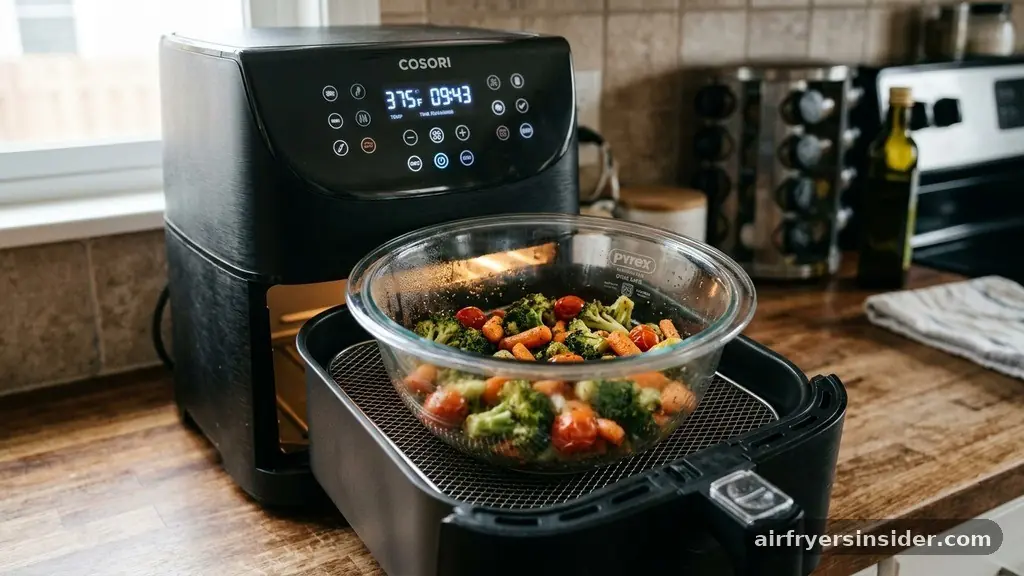
The primary concern when placing any glass item into an appliance that uses convection cooking is the risk of thermal shock. Glass is a brittle material that expands when heated and contracts when cooled.
If this process happens too quickly or unevenly, the stress within the glass structure can exceed its tensile strength, causing it to crack or shatter. This is particularly relevant in an air fryer, where the heating element is often located just inches above the food, creating a intense, focused heat source.
To safely use glassware in your machine, you must distinguish between different types of materials. Borosilicate glass is the gold standard for high-heat applications because it has a low coefficient of thermal expansion, meaning it is much less likely to shatter under sudden temperature changes. Conversely, standard soda-lime glass or older types of tempered glass may not withstand the aggressive, rapid heating cycles of an air fryer. Even if a bowl is labeled as microwave-safe, that does not automatically mean it is safe for an air fryer.
Microwave-safe glass is designed to handle the energy waves of a microwave, but it is not necessarily tested for the intense, direct heat of an oven or air fryer environment. Always verify that your cookware is specifically rated as oven-safe glass before attempting to use it in your appliance.
The Role of Manufacturer Guidelines
Before you experiment with any glass cookware, your first step should always be to consult the manufacturer guidelines provided with your specific air fryer model. Every brand designs its airflow and heating elements differently.
Some manufacturers explicitly state that only specific air fryer accessories should be used, while others provide general guidance on compatible materials. Ignoring these instructions can void your warranty and, more importantly, compromise your kitchen safety.
If your air fryer manual does not mention glass, it is safer to assume that the manufacturer has not tested it for that purpose. Many modern air fryers come with a dedicated non-stick coating on the basket, and the introduction of heavy glass bowls can scratch or degrade this coating over time. Furthermore, placing a glass bowl inside the basket can obstruct the air circulation necessary for the convection effect to work properly.
If the bowl is too large, the hot air cannot move around the food effectively, leading to uneven cooking and potential hot spots. Always prioritize the recommendations found in your user manual, as these are based on rigorous testing of the appliance’s specific thermal profile.
Thermal Shock and the Risks of Rapid Temperature Change
The most significant danger when using glass in an air fryer is the phenomenon of rapid temperature change. Imagine taking a cold glass bowl directly from the refrigerator and placing it into a preheated 400-degree air fryer. The immediate, intense heat hitting the cold glass creates an extreme temperature gradient between the outer surface and the interior core of the material.
This is the exact recipe for a catastrophic failure. Even if the glass is theoretically heat-resistant, it is rarely immune to the shock of such an extreme transition.
To mitigate this risk, you must allow your glass dishes to come to room temperature before they enter the heat chamber. Never place a frozen or chilled glass container into an active air fryer. Additionally, once the cooking cycle is complete, avoid the temptation to place the hot glass bowl directly onto a cold countertop or, worse, into a sink of cold water.
Placing a hot dish on a cold surface can cause the bottom of the bowl to contract faster than the sides, leading to a sudden, violent break. Always use a heat-proof trivet or a wooden cutting board to let the glass cool down gradually at room temperature.
Comparing Bakeware Materials for Air Fryer Use
When choosing containers for your air fryer, it is helpful to compare the pros and cons of different materials. While glass is aesthetically pleasing and allows you to monitor your food, other materials are often more practical for the high-intensity environment of air frying. The following table summarizes the suitability of common materials for this specific application.
| Material | Suitability | Key Considerations |
|---|---|---|
| Borosilicate Glass | High | Must be labeled oven-safe; avoid sudden temperature changes. |
| Silicone Molds | High | Flexible, easy to clean, and handles high heat well. |
| Ceramic Cookware | Moderate | Good heat retention but can be heavy and prone to cracking. |
| Metal Racks | High | Excellent for airflow and elevating food for crisping. |
| Standard Glass | Low | High risk of shattering due to thermal shock. |
As shown in the table, while high-quality glass can be used, other materials like silicone or metal racks are often better suited for the specific demands of air frying. Metal racks, in particular, are essential for maximizing heat distribution and ensuring that air can flow underneath the food, which is the primary advantage of using an air fryer in the first place.
Best Practices for Safe Usage
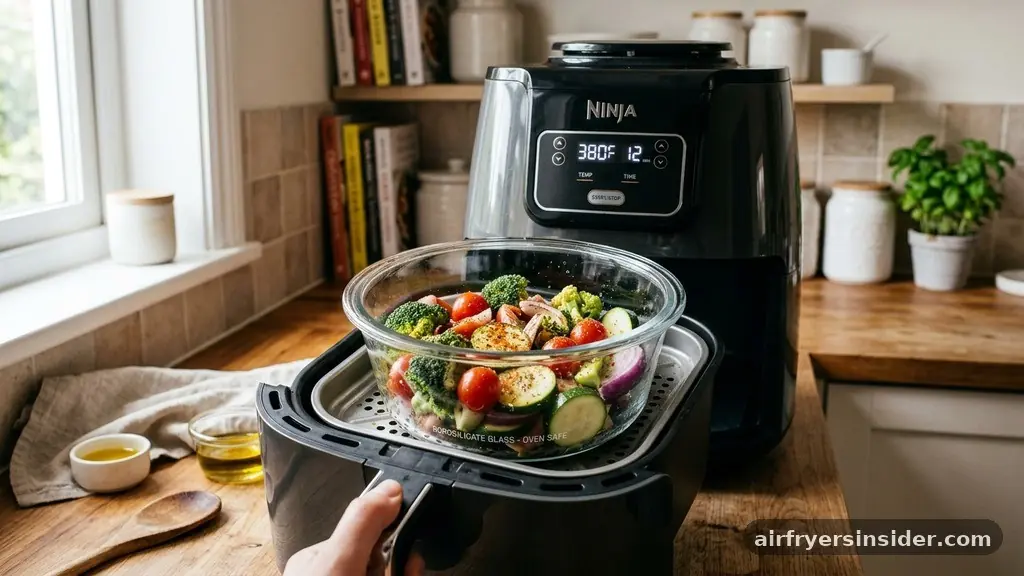
If you have verified that your glass bowl is oven-safe and you have decided to proceed with using it in your air fryer, there are several best practices to follow to ensure your safety and the success of your recipe. First, ensure the bowl is small enough to leave at least an inch of space between the sides of the bowl and the walls of the air fryer basket.
This gap is crucial for maintaining proper air circulation, which is the secret behind the crispy texture that air fryers are famous for. If you block the airflow, your food will steam rather than fry.
Second, consider the cooking temperature. While many air fryers can reach 400 degrees Fahrenheit or higher, glass performs better at lower or moderate temperatures. If a recipe requires a long, high-heat cook time, it is better to use a metal pan or a silicone mold.
Third, always place the glass bowl on a stable surface. If your air fryer basket has a removable base, ensure it is locked securely before placing the bowl on top. Avoid using glass for tasks that require frequent tossing or shaking of the food, as the bowl could slide around or tip over, creating a mess or causing the glass to collide with the basket walls.
Identifying the Right Glassware
Not all brands are created equal. When searching for glass that can withstand the heat, look for reputable manufacturers that specify oven-safe properties. Pyrex is a common household name, but even then, it is important to check the specific product line.
Older versions of these dishes were often made from different materials than modern versions. Modern consumer-grade glassware is often intended for the oven, but the air fryer’s proximity to the heating element is much more intense than a standard oven’s heat.
When shopping, look for the “oven-safe” symbol on the bottom of the dish. If the dish has plastic lids or decorative elements, remove them entirely before putting the bowl in the machine. Plastic parts will melt instantly and release toxic fumes, while decorative glass or painted finishes may crack or flake off when exposed to high heat.
The ideal glass container for an air fryer is a simple, plain, thick-walled, oven-safe bowl without any secondary materials attached. If you are ever in doubt about the quality or the origin of a glass bowl, it is always safer to opt for a metal pan or silicone container instead.
Maximizing Air Circulation and Heat Distribution
The core function of an air fryer is to move hot air around the food with high speed. When you place a solid object like a glass bowl inside, you are fundamentally altering the physics of the cooking chamber. This is why many chefs prefer using perforated metal trays or metal racks over solid bowls.
If you must use a bowl, try to keep it as shallow as possible. A deep, narrow glass bowl will trap heat at the bottom and leave the top exposed, leading to uneven cooking where the bottom is burnt and the top is undercooked.
To improve heat distribution, ensure that the bowl is centered in the basket. If you are baking a cake or a casserole, you might need to lower the temperature by 25 degrees Fahrenheit and increase the cooking time to compensate for the way the glass absorbs and radiates heat differently than metal. Metal bakeware conducts heat quickly, while glass acts as an insulator, taking longer to heat up but holding onto that heat once it reaches temperature.
This is a critical distinction that can make or break your recipe. By understanding how your specific bakeware material interacts with the heat, you can adjust your techniques to achieve professional results.
Common Mistakes to Avoid
Many people treat their air fryer like a small oven, but this mindset leads to common errors. One major mistake is overloading the basket. When you add a glass bowl, you are already reducing the available cooking space; adding too much food on top of that will result in soggy, poorly cooked meals.
Another common error is failing to preheat the air fryer. Preheating is often optional in air fryers for quick snacks, but when you are using glassware for baking, preheating ensures a more consistent temperature, which reduces the chance of the glass being subjected to sudden, uneven heat spikes.
Furthermore, avoid using glass bowls to cook foods that require high-fat content or high-heat searing. If the grease splatters onto the glass, it can create localized hot spots that may cause the glass to crack. Also, be wary of using glass for recipes that require the addition of water or liquids during the cooking process.
Adding cold liquid to a hot glass bowl is a guaranteed way to cause thermal shock, even if the glass is high quality. Stick to dry baking or roasting when using glass, and always monitor the dish closely during the first few minutes of the cycle.
* Always check the bottom of the glass for an “oven-safe” symbol.
* Ensure there is at least one inch of clearance around the bowl for airflow.
* Never place a cold glass bowl directly into a preheated unit.
* Avoid using glass for recipes that require high-heat searing or constant shaking.
* Use oven mitts when removing the glass, as it will be significantly hotter than the basket itself.
* If you notice any chips or cracks in your glass, discard it immediately.
Addressing Topical Gaps: Ceramic and Specialized Cookware
While much of the focus is on glass, it is worth noting that ceramic cookware is often a safer alternative for those who want the benefits of a non-metal container. Ceramic is generally more resistant to thermal shock than standard glass, though it still requires care. Like glass, you must ensure that the ceramic is labeled as oven-safe.
Another excellent option is the use of silicone molds. Silicone is inherently heat-resistant and flexible, making it ideal for air fryer use because it won’t shatter if it accidentally bumps against the side of the basket.
If you are looking to replicate the results of a glass bowl but want more safety, consider investing in a dedicated air fryer baking pan. These are usually made of coated aluminum or steel, which provides the best heat distribution and is specifically designed to fit the basket dimensions of your machine. While glass can be used under the right conditions, the specialized nature of air fryer cooking means that dedicated accessories will almost always provide more consistent, safer, and faster results.
FAQ Section
Can I use a Pyrex bowl in my air fryer?
Most modern Pyrex is made of soda-lime glass, which is generally not recommended for the intense, direct heat of an air fryer. While some older borosilicate versions might survive, it is safer to avoid Pyrex and use bakeware specifically designed for high-heat convection environments.
What is the biggest risk when using glass in an air fryer?
The biggest risk is thermal shock, which occurs when the glass undergoes a rapid temperature change. This can cause the glass to shatter instantly, potentially damaging your air fryer and creating a significant safety hazard in your kitchen.
Does using a glass bowl affect cooking time?
Yes, using a glass bowl often increases cooking time. Glass is an insulator, meaning it takes longer to heat up than metal. You may need to lower the temperature slightly and extend the cooking duration to ensure the center of your food is fully cooked.
What should I look for before putting a bowl in the air fryer?
Always look for an “oven-safe” label on the bottom of the bowl. Ensure the bowl is free of any chips or cracks, remove any plastic or decorative parts, and verify that it fits with enough space around the edges to allow for proper air circulation.
Conclusion
Determining whether you can put a glass bowl in an air fryer requires a careful assessment of both your equipment and your cookware. While it is technically possible to use oven-safe glass, the risks associated with thermal shock and restricted air circulation are significant. For most cooking tasks, utilizing metal racks, silicone molds, or dedicated air fryer pans will provide safer and more consistent results.
If you do choose to use glass, ensure it is high-quality borosilicate glass, always preheat your unit, and avoid extreme temperature transitions. By adhering to manufacturer guidelines and prioritizing your kitchen safety, you can successfully navigate the complexities of air frying and enjoy perfectly cooked meals every time.


