

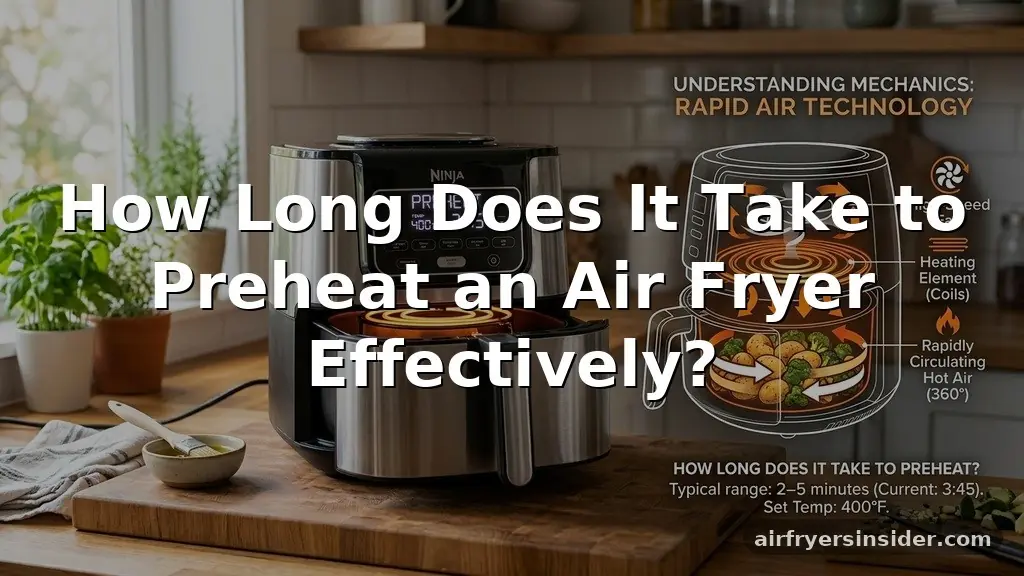
Many home cooks wonder how long does it take to preheat an air fryer before they start their recipes. While some newer models feature a dedicated button, plenty of others require a manual approach to reach the right temperature. Understanding the timing helps you achieve better results, ensuring your meals benefit from consistent heat from the very first minute.
Whether you are aiming for perfectly golden fries or crispy chicken wings, getting the timing right is a foundational skill. This article breaks down the factors that influence your preheat duration and provides practical tips to help you master your appliance for every meal.
Understanding the Mechanics of Rapid Air Technology
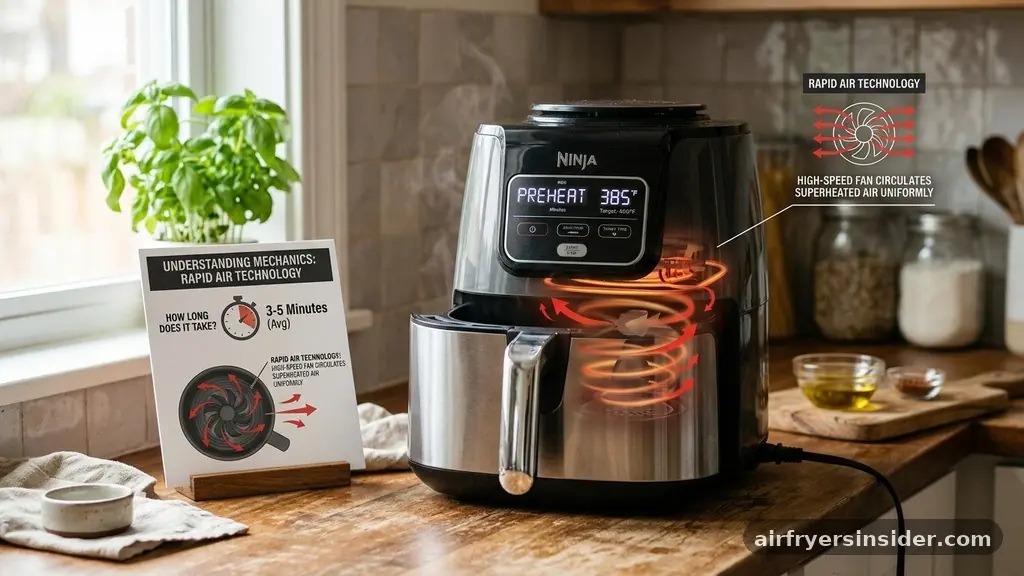
At the heart of every air fryer is a powerful heating element combined with a high-speed fan. This system creates the intense thermal circulation that makes these appliances so popular.
When you start the preheating process, the machine is working to saturate the interior cavity with hot air. Unlike a standard oven, which relies on radiant heat and takes a long time to warm up, an air fryer’s small chamber allows for rapid temperature spikes.
The wattage of your specific unit plays a significant role in how quickly this happens. A high-wattage air fryer, such as a large Ninja Foodi or an Instant Vortex, will typically reach its target temperature faster than a smaller, lower-wattage model.
Because the internal volume is smaller, the air density increases quickly, allowing the appliance to reach the desired state in as little as three to five minutes. This speed is why many people prefer using an air fryer for weeknight dinners over waiting twenty minutes for a conventional oven to stabilize.
Standard Preheat Times for Common Temperatures
While every brand behaves slightly differently, there are reliable averages you can use as a baseline. Most modern air fryers need between three and five minutes to reach a standard cooking temperature like 350 or 400 degrees Fahrenheit. If you are aiming for a lower temperature, such as 300 degrees, the process might be slightly faster, while pushing toward the maximum heat setting can sometimes take an extra minute as the heating element works harder to push past that threshold.
It is helpful to view preheating as a way to ensure the cooking cycle starts under ideal conditions. If you skip this step, the first few minutes of your recipe are essentially spent warming up the basket rather than cooking the food.
This can lead to uneven browning or a lack of that signature crunch. By consistently allowing for a brief warm-up period, you ensure that the Maillard reaction—the chemical process that gives seared food its flavor and color—begins immediately upon adding your ingredients.
| Target Temperature | Estimated Preheat Time |
|---|---|
| 300°F (150°C) | 2–3 minutes |
| 350°F (175°C) | 3–4 minutes |
| 400°F (200°C) | 4–5 minutes |
| 450°F (230°C) | 5–6 minutes |
Factors That Influence Preheat Duration
Several variables can change how long your appliance takes to get ready. The most obvious is the current ambient temperature of your kitchen. If your kitchen is cold, the appliance has a slightly larger thermal gap to bridge.
Furthermore, the basket capacity matters; a larger, empty basket requires more air displacement to heat up than a smaller one. If you have a ceramic-coated air fryer tray, the material might also hold onto heat differently compared to a stainless steel mesh insert.
Another factor is whether the machine is being used for a second batch. If you just finished cooking a round of food, your air fryer is already hot. In these cases, you can skip or significantly shorten the preheat time.
Always check the internal temperature if you are concerned, but generally, the residual heat means the unit will recover its target temperature within seconds rather than minutes. This temperature recovery is essential for maintaining consistent quality across multiple batches.
Manual Preheating Techniques for Older Models
If your air fryer lacks a dedicated preheat setting, you can easily perform manual preheating. Simply set your desired temperature and turn the timer dial to five minutes.
Once the time is up, carefully pull out the basket, add your food, and reset the timer for the full duration of your recipe. This method is incredibly simple and ensures that your food hits a hot surface right away.
Some users prefer to leave the air fryer tray inside the unit during this process to ensure the basket itself is hot. When the tray is preheated, the bottom of your food starts crisping the moment it touches the metal.
This is particularly useful for items that tend to stick or for achieving a uniform sear on both sides of a protein. Just remember to use caution when handling the hot basket, as the metal will be extremely hot during this phase.
Addressing Common Topical Gaps
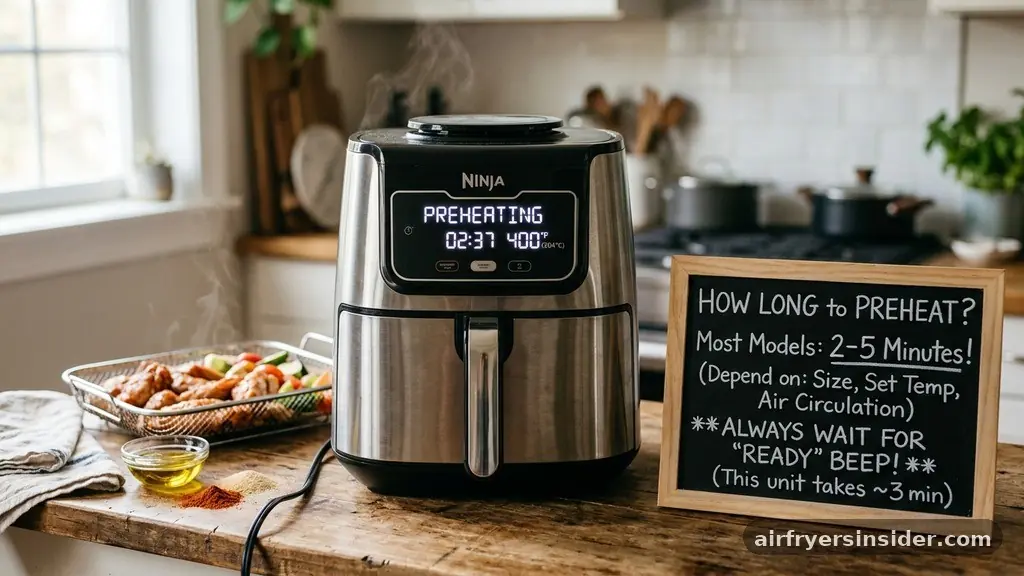
A common question is whether you should preheat when cooking frozen foods. Many people assume that because frozen items are cold, they need the extra time to thaw, but the truth is that a preheated environment is actually better for them.
The blast of hot air helps evaporate surface moisture immediately, which prevents the food from becoming soggy as it thaws. If you start with a cold air fryer, the food will slowly steam rather than crisp.
Another gap in common knowledge involves the use of the preheat indicator light. Not every model has one, and those that do can be misleading.
Sometimes the light turns off as soon as the air hits the target, but the walls of the basket haven’t fully absorbed that heat yet. It is often safer to add an extra minute to the manufacturer’s suggested preheat time to ensure full heat distribution throughout the entire chamber, especially if you are cooking a dense batch of food.
- Always ensure the air fryer is placed on a heat-resistant surface.
- Avoid overcrowding the basket, as this restricts airflow regardless of preheating.
- Use silicone-tipped tongs to prevent scratching the non-stick coating.
- Check your user manual for specific manufacturer recommendations regarding preheating.
- Keep the exterior vents clear to ensure the motor has proper ventilation.
The Role of Heat Distribution and Browning
Achieving that perfect golden-brown finish is the primary goal of any air fryer user. Proper preheating is the first step in this process.
When the air inside the chamber is already at the target temperature, the fan can immediately begin circulating that heat around the food. This creates a uniform cooking environment where the exterior of the food is subjected to high heat while the interior cooks through gently.
If you skip preheating, the food spends too much time in the “warm-up” zone. This can result in food that is dry on the inside before the outside has had a chance to brown properly.
By ensuring the air fryer is hot, you maximize the efficiency of the rapid air technology, leading to superior crisping. This is especially vital when cooking breaded items or vegetables, which rely on a high initial temperature to create that desirable crust without absorbing excess oil.
Safety Considerations and Kitchen Appliance Maintenance
Regular maintenance is necessary to ensure your appliance performs reliably over time. When you preheat your air fryer, you are also effectively “burning off” any residual oils or food particles from previous sessions. However, it is important to keep the heating element clean.
If grease accumulates near the element, it can smoke during the preheating phase. Periodically checking the ceiling of your air fryer to ensure it is free of debris will keep your machine running safely and efficiently.
Furthermore, always ensure the air fryer is plugged into a dedicated outlet if possible. Because these appliances draw a significant amount of power, they can sometimes trip a breaker if used on a circuit with other high-draw devices like a toaster or coffee maker. A well-maintained air fryer that reaches its target temperature quickly is not only better for your recipes but also safer for your home’s electrical system.
Optimizing Your Cooking Cycle for Best Results
To truly master your cooking cycle, consider how preheating fits into your overall preparation. While the air fryer is heating up, use that time to season your food or prepare your side dishes.
By the time the appliance signals it is ready, you should be prepared to load the basket immediately to avoid losing heat. This workflow turns the preheating step into a productive part of your cooking routine rather than a delay.
If you find that your food is browning too quickly on top, you might have preheated to a temperature that is slightly too high for the specific item you are cooking. Don’t be afraid to adjust your cooking time or temperature based on your own experience with your machine.
Every kitchen environment is different, and finding the sweet spot for your specific air fryer is a process of trial and error. Once you have a handle on the timing, you will find that you rarely have to guess whether your food is ready.
Frequently Asked Questions
How do I know when my air fryer is preheated if it does not have a display?
If your model lacks a digital indicator, you can safely assume it is preheated after five minutes of running at your desired temperature. Simply set the timer for five minutes, and once it clicks off, load your ingredients immediately to ensure the heat remains consistent for cooking.
Is it always necessary to preheat an air fryer before cooking?
While not strictly mandatory for every recipe, preheating is highly recommended for best results. It ensures the cooking process begins immediately, which is crucial for achieving a crispy texture and proper browning. Skipping this step often leads to uneven cooking or soggy results, especially with breaded or frozen items.
Can I preheat an air fryer with the basket already inside?
Yes, it is actually beneficial to leave the basket inside during the preheat cycle. This allows the metal tray to heat up, which helps sear the bottom of your food as soon as you place it in the unit. Just be careful when handling the hot basket during the transfer.
What is the benefit of preheating for frozen foods?
Preheating is essential for frozen foods because it provides an immediate blast of high heat. This helps evaporate surface moisture quickly, preventing the food from becoming mushy or steaming while it thaws. A hot start ensures the exterior crisps up perfectly while the center cooks through evenly.
Conclusion
Mastering the preheat process is a simple but effective way to elevate the quality of your home-cooked meals. By understanding how long it takes to preheat an air fryer based on your specific model and the temperature you require, you can ensure consistent, crispy, and delicious results every time you step into the kitchen. Whether you are using a high-wattage unit or an older manual model, remember that the goal is to create an environment where the cooking cycle begins at the ideal temperature.
Start incorporating these tips into your routine, and you will quickly notice the difference in the texture and flavor of your favorite air-fried dishes. Happy cooking!
Meta Description: Learn exactly how long does it take to preheat an air fryer, including tips for manual models, temperature settings, and why preheating improves your food.


