

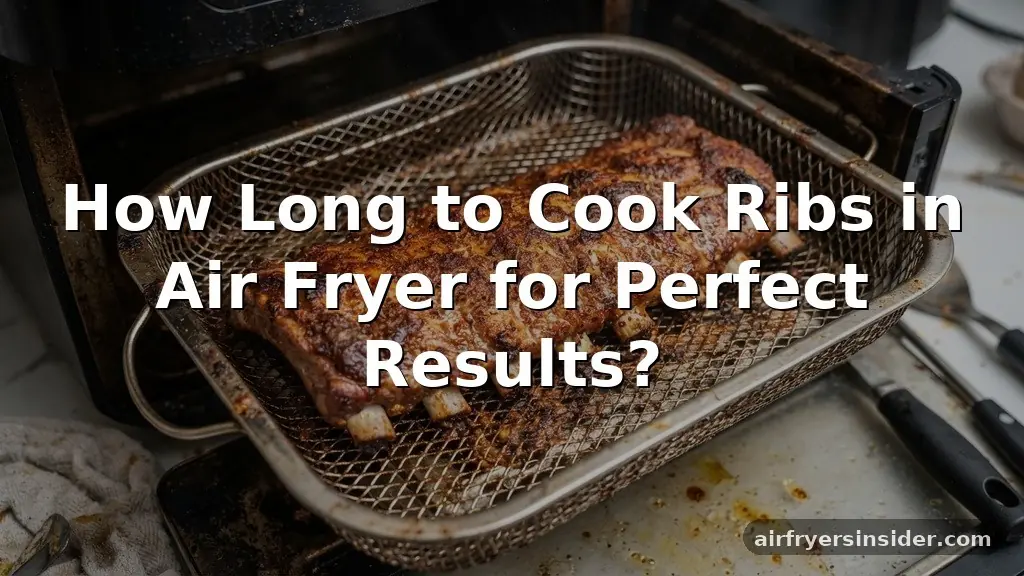
Figuring out how long to cook ribs in air fryer is the secret to achieving restaurant-quality results without heating up your entire kitchen. Many home cooks struggle with dry or tough meat because they treat their air fryer like a traditional smoker or a standard oven.
By understanding the unique mechanics of rapid hot air, you can turn a rack of ribs into a succulent, fall-off-the-bone meal in a fraction of the time. This process relies on a combination of gentle heat and precise timing to ensure the connective tissue breaks down effectively while keeping the exterior perfectly caramelized.
The Mechanics of Air Fryer Rib Cooking
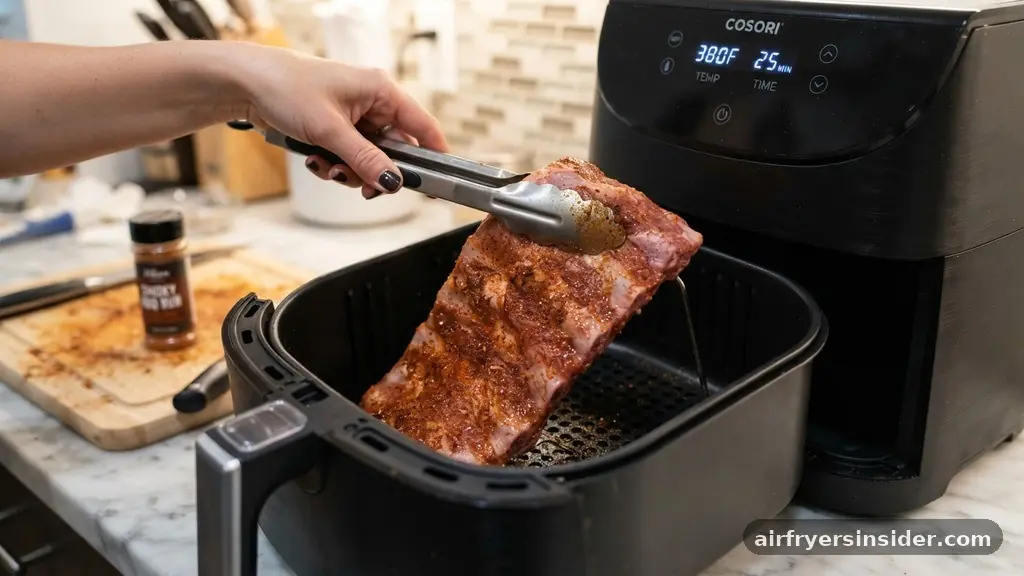
Air fryers are essentially high-powered convection ovens. They rely on intense air circulation to cook food rapidly. When you place a rack of ribs inside, the machine forces hot air around the meat, which helps create a beautiful crust.
However, because the cooking chamber is small, moisture can evaporate quickly if you aren’t careful. Understanding this environment is the first step in mastering the timing.
The biggest challenge with ribs is the presence of collagen and connective tissue. These elements require a sustained, moderate temperature to transform into gelatin, which is what gives ribs their signature tender texture.
If you rush the process with heat that is too high, the exterior will burn before the interior has a chance to soften. This is why most successful air fryer rib recipes incorporate a two-stage approach: a low-temperature phase to tenderize and a higher-temperature finish to sear.
Preparing the Ribs for Optimal Texture
Before you even worry about how long to cook ribs in air fryer, you must prep the meat properly. Removing the silver skin is non-negotiable.
This tough, papery membrane on the underside of the ribs prevents seasonings from penetrating the meat and remains chewy even after long cooking sessions. Use a butter knife to get under the membrane and pull it off with a paper towel for a better grip.
Once the silver skin is removed, apply your dry rub generously. A good rub typically contains a balance of brown sugar, smoked paprika, garlic powder, onion powder, and salt. The sugar helps create a dark, sticky bark during the final stages of cooking.
After applying the rub, let the meat sit at room temperature for about twenty minutes. This allows the salt to draw out some moisture and then reabsorb it, seasoning the meat deeply.
The Role of Foil in Air Frying
One of the most common questions is whether you need to wrap the meat. Using aluminum foil is essential for the first part of the cooking process.
By wrapping the rack in foil, you create a mini-steaming environment. This trapped moisture is vital for the collagen breakdown process, ensuring your pork spare ribs or baby back ribs don’t turn into leather.
Think of the foil as a protective shield. It keeps the meat moist while the connective tissue dissolves.
Without this barrier, the high-speed air circulation would dry out the surface of the ribs long before the meat inside becomes tender. Once the ribs have softened sufficiently, you remove the foil to allow the heat to caramelize the barbecue sauce and develop a deep, smoky flavor profile.
Determining the Correct Cooking Time
When people ask how long to cook ribs in air fryer, the answer depends on the type of ribs and the size of your machine. Generally, you should plan for 40 to 50 minutes of total cooking time.
This timeframe assumes you are using a temperature of 300°F to 325°F for the initial tenderizing phase. If you go too high right away, you risk hardening the exterior.
The specific breakdown usually looks like this:
- Phase 1: Wrap in foil and cook at 300°F for 30 to 35 minutes.
- Phase 2: Unwrap, brush with sauce, and cook at 375°F for 10 to 15 minutes.
- Phase 3: Rest the meat for at least 5 to 10 minutes before slicing.
Addressing Common Cooking Gaps
Many enthusiasts worry about the lack of smoke flavor in an air fryer. Since you aren’t using a charcoal grill, you can compensate by using ingredients like liquid smoke in your rub or a high-quality smoked paprika.
Another common gap is the uneven cooking caused by the air circulation patterns. If your air fryer basket is small, you might need to cut your rack of ribs into sections of three or four bones to ensure the air can flow freely around every piece.
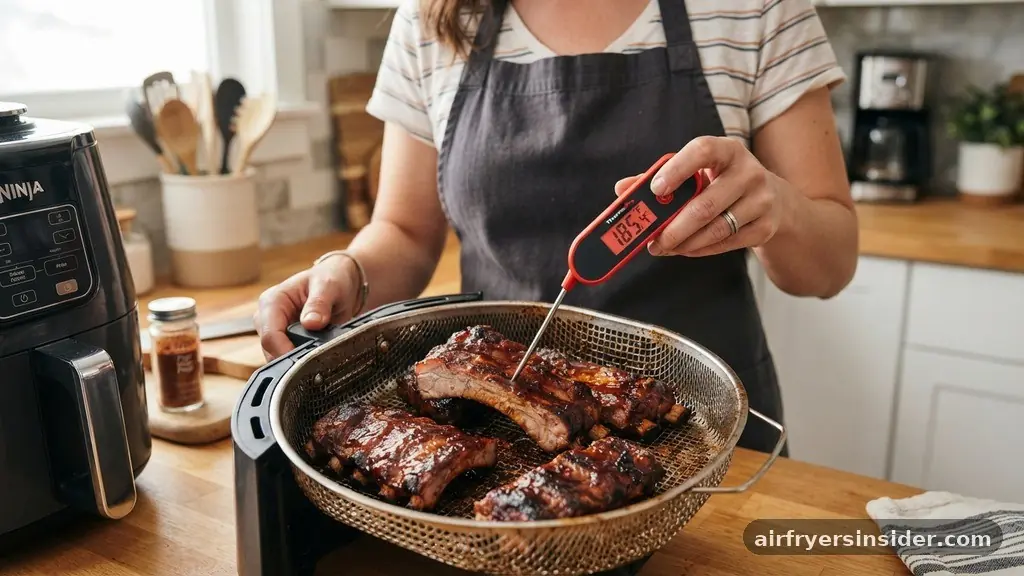
Another often overlooked aspect is the internal temperature. Even if your timing is perfect, checking with a meat thermometer is the only way to be certain.
You are looking for an internal temperature of at least 190°F to 200°F. At this temperature, the rendered fat and collagen have fully broken down, resulting in that classic, tender bite that everyone craves.
Managing Temperatures for Perfect Results
Temperature control is the most critical variable. If you are cooking baby back ribs, which are leaner and smaller, they might finish on the faster side of the 40-minute window. Pork spare ribs, which are meatier and have more fat, benefit from the longer 50-minute range.
Always preheat your air fryer for at least three to five minutes before adding the meat. This ensures that the cooking time starts the moment the ribs enter the chamber.
The Maillard reaction, which is the chemical reaction between amino acids and reducing sugars that gives browned food its distinctive flavor, happens best during the final, high-heat phase. By cranking the temperature to 375°F or 400°F after removing the foil, you trigger this reaction. This creates that desirable charred, slightly crispy edge that balances out the tender interior.
The Importance of Resting
Never skip the resting period. When you remove the ribs from the air fryer, the juices are concentrated in the center of the meat.
If you slice into them immediately, those juices will run out onto your cutting board, leaving the meat dry. Resting allows the juices to redistribute throughout the muscle fibers.
Carryover cooking also happens during this time. Even after you turn off the air fryer, the latent heat inside the meat continues to finish the process.
Five to ten minutes of resting is usually sufficient for a rack of ribs. During this time, the barbecue sauce you applied at the end will set, creating a tacky, delicious glaze that won’t slide off when you bite into the ribs.
Comparing Cooking Methods
To understand why the air fryer is a viable alternative, it helps to look at the data. Many people debate the merits of oven-roasted versus air-fried ribs. The following table highlights the differences in approach and outcome.
| Feature | Oven Roasted | Air Fryer |
|---|---|---|
| Cooking Time | 2 to 4 hours | 40 to 50 minutes |
| Surface Texture | Soft/Tender | Crispy/Caramelized |
| Energy Usage | High | Low |
| Convenience | Requires prep ahead | Quick and efficient |
As shown in the table, the air fryer is significantly faster. While it might not match the deep, long-duration smoke penetration of a traditional offset smoker, it provides a superior texture to a standard oven by effectively searing the outside while keeping the inside moist.
Mastering the Basting Technique
Basting is the final touch that transforms a good meal into a great one. When you are nearing the end of your cooking time, apply your favorite barbecue sauce in thin, even layers. If you apply a thick layer all at once, it may not caramelize properly and could end up tasting burnt or overly sugary.
Try applying one layer of sauce, letting it cook for three minutes, and then adding a second layer. This builds up a beautiful, glossy finish.
If you prefer a drier, spice-forward rib, you can skip the sauce entirely and just increase the amount of dry rub used during the initial preparation phase. The choice between sauce and dry rub is entirely personal, but the technique of building layers remains the same.
Frequently Asked Questions
How do I know if the ribs are fully cooked without a thermometer?
If you don’t have a food thermometer, use the bend test. Lift the rack of ribs with a pair of tongs from one end. If the meat begins to bend and the surface starts to crack slightly, the collagen has broken down and the ribs are ready to eat.
Can I cook frozen ribs directly in the air fryer?
It is not recommended to cook frozen ribs directly. The exterior will cook too quickly while the center remains frozen. Always thaw your ribs completely in the refrigerator overnight before seasoning and cooking. This ensures even heat distribution and better flavor absorption from your dry rub.
Why are my air fryer ribs coming out tough?
Tough ribs are usually a sign of insufficient cooking time or a lack of moisture. Ensure you are using aluminum foil for the first stage of cooking to steam the meat. If they are still tough, the temperature might have been too high, preventing the connective tissue from rendering properly.
Is it necessary to remove the silver skin?
Yes, removing the silver skin is vital for texture. This membrane does not break down during the cooking process. Leaving it on results in a leathery, chewy texture that detracts from the tenderness of the meat. Use a butter knife to lift the edge and peel it away.
Final Thoughts on Air Fryer Rib Success
Mastering the process of how long to cook ribs in air fryer is about balancing heat and moisture. By wrapping the ribs to tenderize them and finishing them with a quick, high-heat sear, you can achieve a result that rivals traditional methods. Remember to remove the silver skin, use a consistent dry rub, and always allow the meat to rest before slicing.
These small details ensure that your air-fried ribs are juicy, flavorful, and perfectly cooked every single time. Now that you have the timing and the technique down, you are ready to experiment with your favorite sauces and spice blends to find your perfect signature rack. Happy cooking, and enjoy your meal.
Meta Description: Learn exactly how long to cook ribs in air fryer for tender, fall-off-the-bone results. Follow our expert tips on timing, temperature, and technique.


