

Mastering the art of preparing seafood in a modern kitchen appliance is easier than you might think, especially when you understand exactly how long to cook salmon in air fryer for optimal flavor. Because these devices rely on intense rapid air circulation to mimic deep-frying, they are uniquely suited to creating a restaurant-quality sear on a delicate fish fillet.
Achieving that perfect balance of a flaky, moist interior and a slightly charred exterior depends entirely on managing your internal temperature correctly. By focusing on consistent variables like fillet size and heat settings, you can ensure your dinner is both nutritious, thanks to those healthy omega-3 fatty acids, and incredibly delicious every single time you hit the start button.
Understanding the Impact of Fillet Thickness
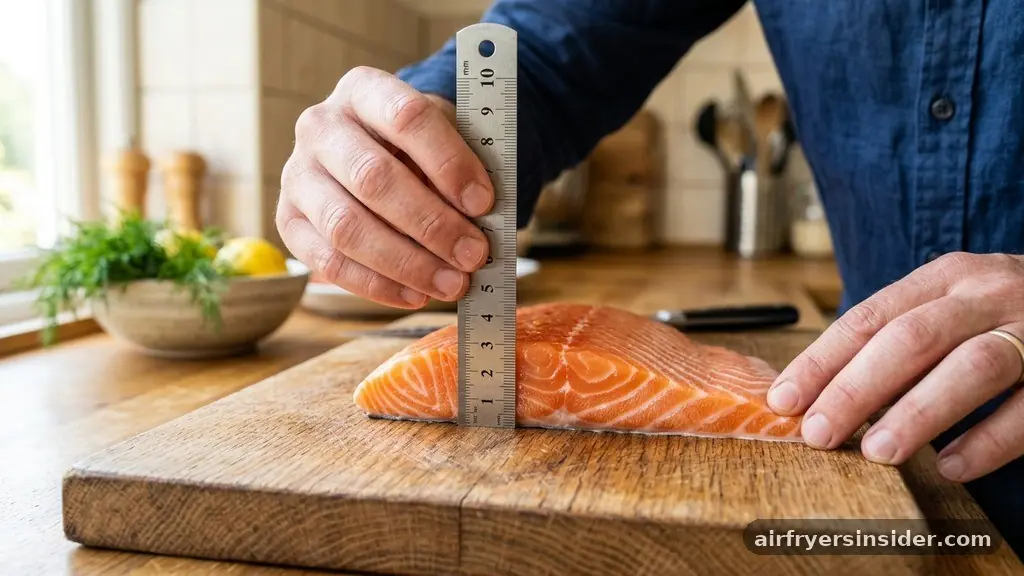
The most critical factor in determining how long to cook salmon in air fryer is the physical dimension of the protein. A thin, tail-end piece of salmon will cook significantly faster than a thick, center-cut portion, meaning there is no single “magic number” for timing. Generally, you should measure the thickest part of your fish to gauge the necessary duration.
If your fillet is roughly one inch thick, a standard cooking time of seven to nine minutes is usually sufficient. However, if you are working with a thicker, two-inch piece, you may need to add several minutes to ensure the heat penetrates the center without drying out the edges.
Consistency in preparation is vital here. If you are cooking multiple pieces, try to select fillets that are uniform in size. If you must mix thin and thick pieces, place the thicker portions toward the center of the air fryer basket where the heat is most concentrated.
Remember that convection heat works by blowing hot air around the food, so overcrowding the basket can prevent the air from circulating properly, leading to uneven cooking. Always leave enough space between fillets so the air can reach all sides of the fish, which promotes that desirable, even salmon texture throughout the entire serving.
Why Preheating Matters for Salmon Texture
Many home cooks skip the preheating phase, yet it is arguably the most important step for achieving a professional finish. When you place cold fish into a cold machine, the salmon spends too much time in a “warming” phase rather than a “searing” phase.
This can cause the fat to render too slowly and the proteins to denature in a way that leads to a mushy rather than flaky result. By running your air fryer at the desired degrees Fahrenheit for three to five minutes before inserting the food, you ensure that the cooking process begins immediately upon contact.
This immediate blast of heat is essential for developing a crisp skin if you choose to leave it on. The high heat effectively sears the surface, locking in moisture while simultaneously crisping the outer layer. If you are using a seasoning rub or a marinade, preheating also helps these flavors adhere better to the surface of the fish.
Without preheating, the moisture released from the salmon as it slowly warms up can wash away your seasoning before it has a chance to toast and become fragrant. A quick preheat ensures that the exterior is crisp and flavorful while the interior remains succulent.
Optimal Temperature Settings for Best Results
Deciding on the right temperature is just as important as deciding on the time. While some recipes suggest cooking at lower temperatures for longer periods, most enthusiasts find that 380 to 400 degrees Fahrenheit provides the best balance.
At 400 degrees, you get a beautiful, golden-brown crust and a quick cook time that preserves the delicate oils within the fish. If you prefer your fish cooked more gently, dropping the temperature to 375 degrees can be safer, though you will need to extend the cooking time by a minute or two to achieve the same level of doneness.
Consider the following table as a general guideline for different fillet sizes when cooking at 400 degrees:
| Fillet Thickness | Estimated Cooking Time | Result Description |
|---|---|---|
| 0.5 to 0.75 inches | 6–7 minutes | Fast cook, very tender |
| 1.0 inch | 8–9 minutes | Standard, flaky center |
| 1.25+ inches | 10–12 minutes | Requires checking for doneness |
Keep in mind that these are estimates. Factors like the specific model of your air fryer and whether you use parchment paper or aluminum foil can impact how the heat is distributed. Always monitor the fish as it nears the end of the suggested time range to prevent overcooking, as salmon can go from perfect to dry in a matter of seconds.
Using Seasoning Rubs and Aromatics
The beauty of cooking salmon in this manner is how well it takes to different flavor profiles. A simple dry rub can transform a basic fillet into a gourmet meal. Common ingredients like garlic powder, paprika, and salt work exceptionally well because they don’t burn easily at moderate temperatures.
When applying your seasoning, a light coating of olive oil is essential. The oil acts as a conductor for the heat and helps the dry spices stick to the flesh, creating a delicious crust. Be mindful of the smoke point of the oil you choose; extra virgin olive oil is generally fine for the temperatures used in air frying, but refined oils can be used if you prefer a higher heat tolerance.
Adding aromatics like lemon slices is another excellent way to infuse flavor. Placing a slice of lemon directly on top of the fillet not only adds a bright, acidic note that cuts through the richness of the salmon but also helps keep the top of the fish moist during the cooking process.
You can also tuck sprigs of fresh herbs like dill or parsley under the fish, though keep in mind these may wilt quickly. The goal is to enhance the natural flavor of the fish without overpowering it, so start with a light hand and adjust based on your personal preference.
The Role of Tools in Ensuring Food Safety
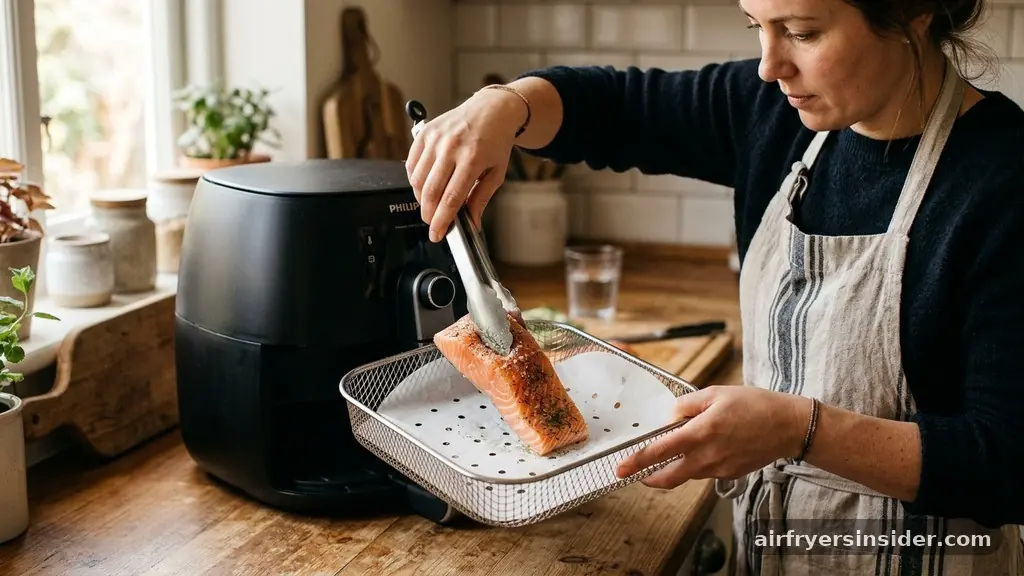
Managing cross-contamination is a fundamental aspect of kitchen safety, especially when handling raw seafood. Always use dedicated tongs for moving your raw salmon and wash them thoroughly before using them for anything else. If you are using parchment paper to make cleanup easier, ensure that the paper is weighed down by the fish itself.
If the paper is loose, the fan can blow it into the heating element, which is a major fire hazard. Using perforated parchment paper designed specifically for air fryers is a safer alternative that still allows for adequate airflow.
Investing in a high-quality food thermometer is the only way to truly guarantee success. While timing is a great guide, every piece of fish is unique. You are looking for an internal temperature of 145 degrees Fahrenheit for fully cooked fish, though many people prefer pulling it out at 135 degrees and letting carryover cooking bring it the rest of the way.
When you check the temperature, insert the probe into the thickest part of the fillet, avoiding any bones. This simple tool removes all the guesswork and ensures that you never serve undercooked or dry, overcooked salmon again.
Techniques for Achieving Crispy Skin
If you enjoy the contrast of textures, cooking salmon with the salmon skin on is a must. To get it perfectly crisp, you must ensure the skin is completely dry before seasoning. Use a paper towel to pat the skin side thoroughly, as any residual moisture will steam the skin rather than crisping it.
Place the fish in the basket skin-side down for the majority of the cooking time. This allows the fat in the skin to render directly against the hot surface of the basket or tray, resulting in a satisfying crunch.
If you find that your skin isn’t crisping enough, you can finish it by flipping the fish for the final minute of cooking, though this is often unnecessary if your air fryer has strong airflow. Be aware that the skin can sometimes stick to the basket.
A light brushing of oil on the basket surface before placing the fish down can prevent this. Once finished, the skin should easily lift away from the basket, leaving you with a delicious, golden-brown crust that serves as a perfect base for the tender, flaky meat above it.
Addressing Common Mistakes and Troubleshooting
Even experienced cooks run into issues when learning the nuances of their appliances. One of the most common mistakes is failing to account for the thickness of the fish, leading to the “outside done, inside raw” scenario.
If you find your salmon is browning too fast on the outside but is still cold in the middle, you likely have your temperature set too high. Reduce the heat by 25 degrees and add a few minutes to the cooking time to allow the heat to migrate toward the center without scorching the exterior.
Another frequent error is the improper use of aluminum foil. While foil is great for cleanup, wrapping the fish too tightly can turn the air fryer into a steamer. If you choose to use foil, keep it as an open-top boat or ensure there is plenty of space for the air to move around the fish.
Without proper circulation, the fish will lack the texture associated with air frying and will instead resemble poached or steamed salmon. Always check your manual to see if your specific model allows for the use of foil, as some air fryer baskets have non-stick coatings that can be scratched by metal or that require specific ventilation to function correctly.
Answering Topical Gaps in Salmon Preparation
A frequent question that arises involves the concept of fish doneness and how to verify it without relying solely on a thermometer. The classic method is fork-testing, where you gently press a fork into the thickest part of the fillet. If the fish flakes easily along its natural lines and looks opaque throughout, it is likely done.
However, this method is less precise than using a thermometer and can cause the fish to break apart before serving. If you are a beginner, stick to the thermometer method until you gain enough experience to judge doneness by touch and appearance.
Another gap often overlooked is how to handle frozen salmon. If you forget to thaw your fish, you can absolutely cook it from frozen in an air fryer. You will need to increase the cooking time by about 50 percent and lower the temperature slightly to ensure the center thaws and cooks through before the exterior dries out.
It is also helpful to season the fish halfway through the cooking process once the surface has thawed enough to hold the spices. This flexibility makes the air fryer an incredibly convenient tool for last-minute meal planning, provided you adjust your expectations and settings accordingly.
Frequently Asked Questions
How do I know when my salmon is fully cooked?
The most reliable method is using a food thermometer to check for an internal temperature of 145 degrees Fahrenheit. Alternatively, use a fork to gently flake the thickest part of the fillet; if it separates easily and appears opaque throughout, it is ready to serve.
Can I cook salmon skin-on in the air fryer?
Yes, cooking with the skin on is highly recommended for texture. Ensure the skin is patted dry with a paper towel before placing it skin-side down in the basket. This allows the fat to render and the skin to become crispy, providing a delicious contrast to the tender meat.
Is it necessary to use oil when air frying salmon?
Using a light coating of olive oil is beneficial for both flavor and texture. It helps the seasoning rub adhere to the fish and promotes a better sear on the surface. Without oil, the salmon can become dry and may stick to the air fryer basket during the cooking process.
What should I do if my salmon is cooking too fast on the outside?
If the exterior is browning too quickly before the center is cooked, immediately lower the temperature by 25 degrees Fahrenheit. This allows the heat to penetrate the deeper layers of the fish more slowly, preventing the surface from burning while ensuring the interior reaches a safe and delicious doneness.
Final Thoughts on Air Fried Salmon
Perfecting your technique for how long to cook salmon in air fryer opens up a world of convenient, healthy, and flavorful meal options. By prioritizing consistent fillet sizes, utilizing a food thermometer, and mastering the balance between temperature and time, you can achieve a result that rivals any restaurant preparation. Whether you are seasoning with simple pantry staples or experimenting with fresh herbs, the air fryer provides the precision needed to keep your fish moist and flaky.
Start by testing your specific appliance with a standard one-inch fillet, and don’t be afraid to adjust based on the visual cues and internal temperatures you observe. With a little practice, this method will quickly become your go-to way to enjoy nutrient-dense seafood throughout the week.


