

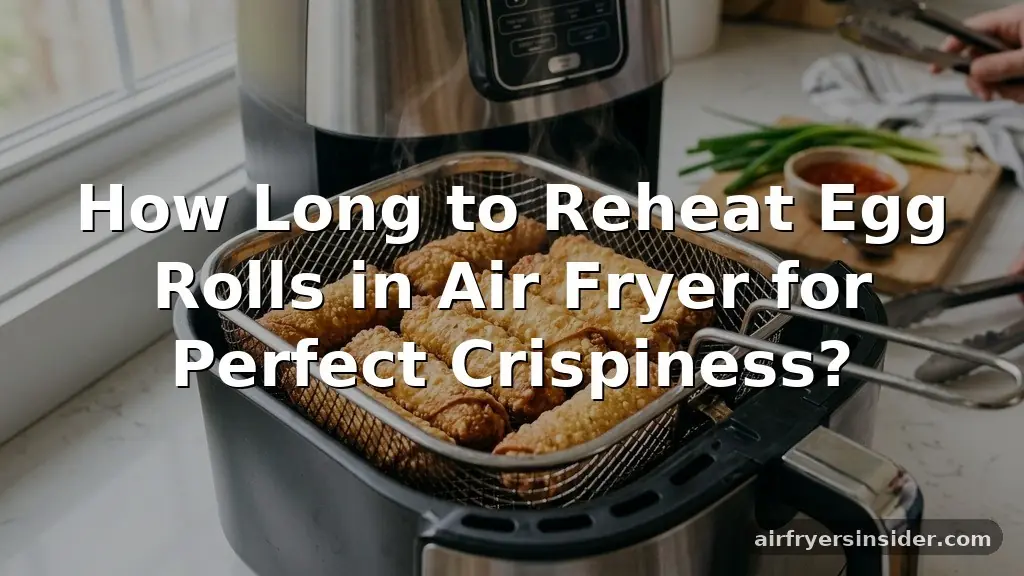
Figuring out how long to reheat egg rolls in air fryer setups is the secret to avoiding the dreaded soggy leftovers that usually come from using a microwave. When you crave that signature crunch of a freshly fried appetizer, the air fryer acts as a high-speed convection oven that restores the exterior while warming the filling through. By mastering a few simple adjustments to your air fryer temperature and timing, you can easily turn last night’s takeout into a meal that tastes like it just came out of the deep fryer.
Understanding the Mechanics of Air Fryer Reheating
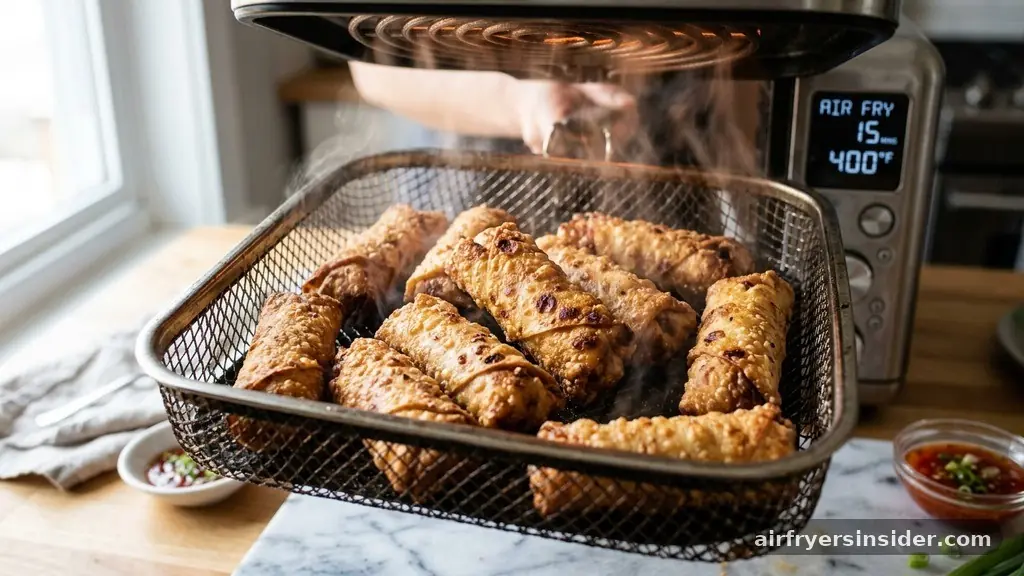
The reason air fryers are superior to other appliances for reheating is their reliance on rapid air circulation. Unlike a standard oven, which relies on ambient heat, an air fryer uses a powerful fan to blast hot air around the food.
This process is essential for achieving a crispy texture because it quickly evaporates the excess moisture trapped in the wrapper during storage. When you place leftover egg rolls in the basket, the hot air hits the surface immediately, which is why you don’t need a long reheat cycle to get results.
Thermal conductivity plays a significant role here as well. The wrapper, being thin and already cooked, heats up faster than the dense cabbage, meat, or vegetable filling inside. If you crank the heat too high, you risk burning the outside before the center reaches a safe internal temperature.
Finding the balance between the two is why most enthusiasts settle on a moderate temperature range. It allows the heat to penetrate the core gently while the exterior remains protected from charring.
Optimal Temperature and Timing Guidelines
Most kitchen experts agree that an air fryer temperature of 350°F to 375°F is the sweet spot for most rolls. At this heat, you generally need about 4 to 6 minutes for standard-sized rolls.
If you are dealing with particularly large or frozen egg rolls, you might need to extend that time by another 2 or 3 minutes. It is always better to start on the lower end of the time spectrum and check your progress; you can always add more time, but you cannot fix a burnt wrapper.
Consistency is key when you are working with different models like a Ninja Foodi or a Cosori. Because these units vary in wattage and basket size, the first time you reheat a batch, treat it as a test run.
Use kitchen tongs to flip the rolls halfway through the process to ensure even browning on all sides. This simple action prevents the bottom from getting soft while the top gets perfectly golden brown.
Preparing Your Leftovers for the Best Results
Preparation is often the difference between a mediocre snack and a restaurant-quality experience. Before you even think about the reheating time, consider the state of your food.
If your leftovers have been sitting in a tightly sealed plastic container, they have likely collected a lot of condensation. Take them out of the fridge a few minutes early to let them reach room temperature, which helps the reheating process happen more uniformly.
Using a light touch of oil can also make a massive difference. A quick spritz of oil mist or a very light coating of cooking spray helps conduct heat across the surface of the wrapper. This is especially helpful if your egg rolls were originally fried in a way that left them looking a bit dull or dry.
Do not overdo it, though; a fine mist is all you need. If you are worried about cleanup, placing a piece of parchment paper at the bottom of the basket can catch any crumbs or oil drips, though it can slightly impede air circulation if the holes are completely blocked.
Addressing Common Challenges and Topical Gaps
One of the most frequent issues people face is the “soggy bottom” problem. This happens when the egg roll rests directly against the metal basket, trapping steam underneath. To solve this, ensure you aren’t overcrowding the basket.
If the rolls are touching, the air cannot flow freely between them, leading to uneven cooking. If you have a large batch, it is much better to cook them in two smaller rounds rather than jamming them all in at once.
Another gap in common advice is how to handle different types of fillings. Meat-heavy rolls retain heat differently than vegetable-packed ones. If you are reheating rolls filled with pork or chicken, ensure they are piping hot in the center to maintain food safety.
You can use a digital probe thermometer if you are uncertain, aiming for an internal temperature of at least 165°F. This provides peace of mind, especially when you are dealing with leftovers that have been in the refrigerator for more than 24 hours.
Comparing Air Fryer Performance to Other Methods
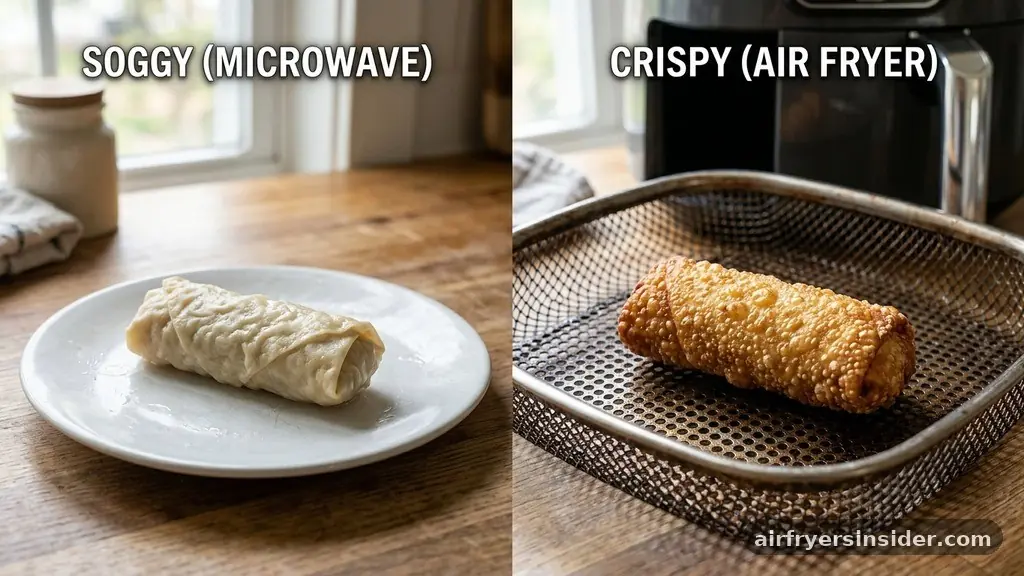
Many people default to microwave alternatives because they are fast, but the results are rarely satisfying. Microwaves work by exciting water molecules, which makes the dough soft and chewy rather than crisp.
If you are in a rush, a microwave might get the food warm, but it destroys the structural integrity of the wrapper. The stove-top method is another option, involving a skillet with a tiny amount of oil, but it requires constant monitoring to avoid burning and is much messier than using an air fryer.
Oven reheating is the closest competitor to the air fryer, but it is far less efficient. An oven takes much longer to preheat and consumes more energy to achieve the same effect.
While you can get a decent result in an oven, the lack of intense, focused air circulation means you often have to leave them in for 15 minutes or more. In the table below, we compare the general performance of these common reheating methods.
| Method | Crispiness Level | Time Required | Ease of Cleanup |
|---|---|---|---|
| Air Fryer | High | 4-6 Minutes | Easy |
| Oven | Medium | 15-20 Minutes | Moderate |
| Microwave | Low | 1 Minute | Very Easy |
| Stovetop | Medium-High | 8-10 Minutes | Difficult |
Essential Tools for Better Reheating
You don’t need a professional kitchen to get perfect results, but a few small tools make the process much smoother. Kitchen tongs are essential for safely handling the hot rolls without tearing the delicate, crispy skin.
Avoid using a fork, as it can puncture the wrapper and cause the filling to leak out during the reheat cycle. If you find your rolls aren’t getting crispy on the bottom, a small wire rack that fits inside your basket can help lift the food, allowing air to circulate underneath.
Parchment paper is another handy tool for those who dislike scrubbing their basket. However, always ensure the paper is weighed down by the food so it doesn’t fly up into the heating element, which is a major fire hazard. If you want to get fancy, a dedicated oil sprayer is better than store-bought aerosol sprays, as many commercial sprays contain additives that can eventually damage the non-stick coating of your air fryer basket over time.
Safety and Storage Best Practices
Food safety is paramount when you are dealing with reheating leftovers. Never leave cooked rolls out at room temperature for more than two hours.
If they have been sitting out, bacteria can grow rapidly, and no amount of air frying will make them safe to eat. When storing your leftovers, use an airtight container to prevent them from absorbing odors from other items in your fridge.
If you know you won’t eat them within two days, it is better to freeze them. Frozen egg rolls actually reheat quite well in the air fryer, often requiring just a few extra minutes of cooking time compared to refrigerated ones.
Always check for signs of spoilage like a sour smell or visible mold before tossing them into the air fryer. If you are ever in doubt, it is far safer to discard them than to risk a foodborne illness.
Common Mistakes to Avoid
The most common mistake people make is skipping the preheat phase. While some air fryers don’t strictly require it, preheating your unit for 2 to 3 minutes ensures the environment is at the correct temperature from the very first second. Without preheating, the rolls spend the first few minutes of the cooking cycle sitting in lukewarm air, which can cause them to dry out before they get a chance to crisp up.
Another frequent error is failing to shake or flip the items. Even if you have a high-end model with great airflow, the contact points between the basket and the food will always remain soft.
A quick flip halfway through is the single most effective way to ensure a consistent, golden brown finish across the entire surface. Finally, don’t pack the basket so tightly that the air has nowhere to go; if the rolls are touching, they are steaming each other rather than frying.
Frequently Asked Questions
How long should I reheat egg rolls in an air fryer?
For best results, reheat your egg rolls at 350°F to 375°F for 4 to 6 minutes. Always flip them halfway through the process to ensure the bottom gets just as crispy as the top. If you are starting with frozen egg rolls, add 2 to 3 minutes to the total time.
How do I keep egg rolls crispy after air frying?
The key is to remove them from the air fryer immediately after the timer goes off. Let them sit on a wire cooling rack for about a minute. This allows any residual steam to escape, preventing the wrapper from softening while you prepare your dipping sauce or serving plate.
Can I reheat egg rolls that have already been microwaved?
It is possible, but the quality will be lower. Microwaving makes the wrapper soggy, and the air fryer will struggle to draw that moisture back out. If you must use both, use a lower temperature for a longer time in the air fryer to help dry out the excess moisture.
Do I need to add oil when reheating egg rolls?
It isn’t strictly necessary, but a light mist of oil helps achieve a better golden brown color and a crunchier texture. This is especially useful if the rolls have been in the refrigerator for a day or two and look a bit dry or pale on the surface.
Reheating your favorite appetizers doesn’t have to be a guessing game. By focusing on the right air fryer temperature and ensuring your rolls have enough space for hot air to circulate, you can easily replicate that fresh-from-the-fryer experience at home. Remember to use your tongs to flip them halfway through, and don’t be afraid to add a minute or two if they aren’t quite as crispy as you like.
With these simple techniques, you’ll find that enjoying leftover egg rolls is just as satisfying as the first time around. Next time you find yourself with a few extras, try these steps and enjoy a perfectly crispy snack without the hassle of a deep fryer. Happy cooking, and feel free to experiment with the timing based on your specific air fryer model.


