


Knowing how many amps does an air fryer use is essential for anyone trying to avoid tripping breakers while cooking. Because these appliances rely on intense heat generated by powerful fans and heating coils, they are among the most energy-demanding tools in your kitchen. If you’ve ever wondered why your lights flicker or the power cuts out when you start your dinner, you are likely dealing with the limits of your home’s electrical system.
Understanding these values helps you manage your kitchen circuit effectively, ensuring you can cook safely without constant interruptions. This breakdown covers everything you need to know about calculating current draw, managing your home’s electrical load, and keeping your appliances running smoothly.
The Science of Amperage and Kitchen Appliances
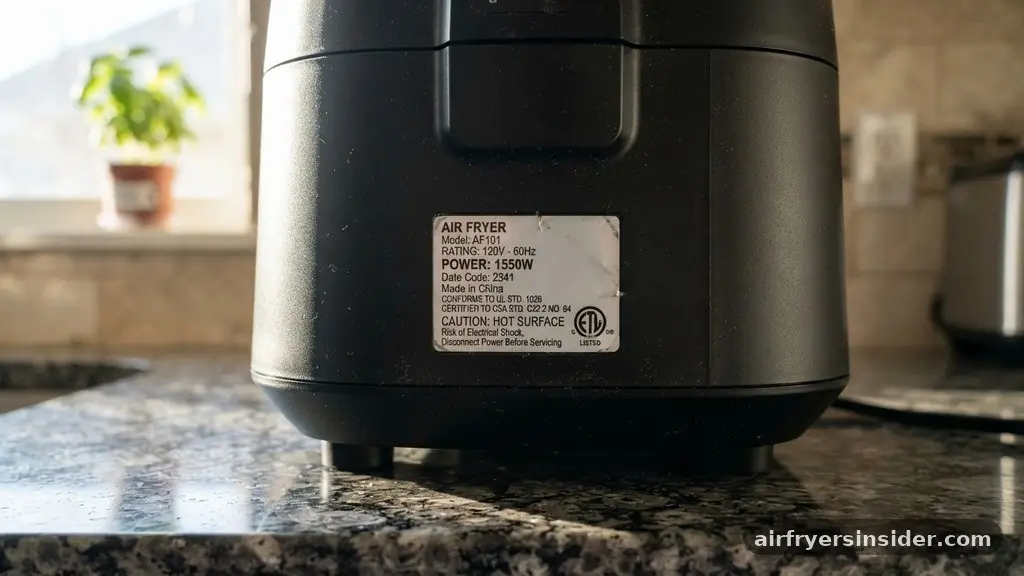
At its core, an air fryer is essentially a compact convection oven that uses a high-speed fan to circulate hot air. To achieve these temperatures quickly, the device requires a significant amount of electricity. When you look at the back of your unit, you will see an appliance rating plate that lists the wattage.
To understand how many amps does an air fryer use, you must look at the relationship between watts and volts. Most standard residential outlets in North America provide 120 volts, and the formula used to determine amperage is based on Ohm’s Law: Power equals Voltage times Current.
By rearranging this equation, you find that current equals power divided by voltage. If your air fryer is rated at 1500 watts, you divide 1500 by 120, which gives you 12.5 amps. While this math is straightforward, it only represents the sustained draw during operation.
Many modern air fryers, especially larger models from brands like Ninja or Cosori, have fluctuating power needs. During the initial preheat phase, the heating element works at maximum capacity to bring the chamber up to temperature. Once the target heat is reached, the unit cycles the heating element on and off to maintain that temperature, meaning the total current draw will fluctuate throughout your cooking session.
Understanding Circuit Loads and Breaker Capacity
Your kitchen circuit is likely protected by a 15-amp or 20-amp breaker. A 15-amp breaker, which is standard for many older homes, is designed to trip if the continuous current exceeds 80% of its capacity, or 12 amps. This is a critical safety feature of your household electrical panel.
Because a typical 1500-watt air fryer pulls 12.5 amps, it is operating right at or slightly above the continuous load limit for a 15-amp circuit. If you have other appliances plugged into the same circuit, such as a coffee maker, toaster, or blender, you will almost certainly exceed the breaker’s limit.
When you push a circuit beyond its capacity, the breaker identifies the excess heat as a potential fire hazard and cuts the power. This is why you should avoid daisy-chaining power strips or plugging multiple high-wattage appliances into the same wall outlet. If your kitchen layout is limited, try to identify which outlets are on the same circuit.
You can usually determine this by checking your electrical panel or testing which outlets lose power when you flip a specific breaker. Dedicating a single circuit to your air fryer is the best way to prevent unexpected shutdowns while you are in the middle of preparing a meal.
Calculating Power Needs for Different Models
Not all air fryers are created equal. Smaller, compact models might only pull 1000 or 1200 watts, while high-capacity, multi-zone units can push well beyond 1700 watts.
When you calculate how many amps does an air fryer use, you need to look for the specific wattage listed on the manufacturer’s label. Do not rely on estimates from similar models, as internal components and heating element efficiency vary wildly between brands.
| Appliance Wattage | Voltage | Amperage Draw |
|---|---|---|
| 1000W | 120V | 8.33A |
| 1500W | 120V | 12.5A |
| 1700W | 120V | 14.16A |
| 1800W | 120V | 15A |
As shown in the table above, the jump from 1500 watts to 1800 watts is significant. An 1800-watt air fryer hits the absolute limit of a standard NEMA 5-15 outlet and circuit. If you are using a heavy-duty model, you should be extremely cautious about what else is plugged into that same run of wire.
Using a high-wattage appliance on an older, worn-out outlet can also lead to heat buildup at the plug connection, which is a common cause of melted wall plates and potential electrical hazards. Always ensure your outlet is in good condition and firmly grips the plug prongs.
The Role of Surge Current and Startup Loads
While we often focus on the sustained draw, it is important to consider surge current. When you first turn on an air fryer, the internal electronics and the fan motor may cause a brief spike in power consumption.
While this surge is usually measured in milliseconds, it can be enough to push a circuit that is already near its limit over the edge. This is particularly true if the motor has to overcome resistance or if the heating element is cold and has lower electrical resistance.
Most residential breakers have a slight delay built-in to account for momentary surges, preventing them from tripping every time a motor starts. However, if your wiring is aging or the circuit is already heavily loaded with other devices, that initial spike can be the final straw.
If you notice your lights dimming momentarily when you start your air fryer, it is a clear sign that your circuit is under significant strain. You might consider unplugging other non-essential devices on the same circuit before hitting the start button to give your appliance the headroom it needs to begin its cycle without triggering a safety trip.
Using Air Fryers with Power Inverters
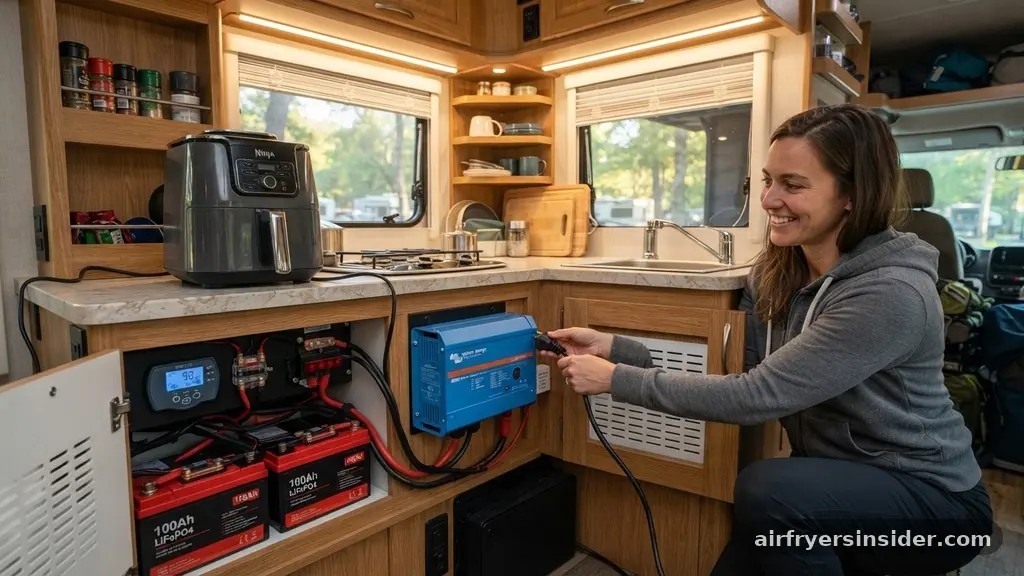
Many people want to use their air fryers while camping or in an RV, which introduces the need for a power inverter. If you are planning to run an appliance off a battery bank, you must ensure your inverter is sized correctly.
A 1500-watt air fryer does not just require a 1500-watt inverter; you need a unit with a high peak power rating to handle the initial startup surge. Most experts recommend using an inverter with at least 2000 to 2500 watts of continuous capacity to handle the load comfortably without overheating the inverter’s internal electronics.
Furthermore, you must consider the battery capacity. Running a 1500-watt load for 30 minutes consumes a significant amount of amp-hours from your battery bank.
If your battery system is not robust enough, the voltage will drop under the heavy load, potentially causing the inverter to shut down to protect the battery. Always check the inverter’s specifications to ensure it provides a pure sine wave output, as the sensitive digital control boards in modern air fryers can be damaged by the rougher power output of modified sine wave inverters.
Energy Efficiency and Long-Term Consumption
While the focus on how many amps does an air fryer use is usually about safety, it also relates to energy efficiency. Because air fryers are smaller and cook faster than traditional ovens, they are generally more energy-efficient overall.
Even though they pull a high amount of current, they run for a shorter duration. Calculating your total energy usage involves multiplying the wattage by the hours of use, measured in kilowatt-hours.
If you use a 1500-watt air fryer for 30 minutes, you have used 0.75 kilowatt-hours. In many regions, this is a relatively small cost on your monthly utility bill. The efficiency comes from the reduction in preheat time and the concentrated heat directed at the food.
By optimizing your cooking habits—such as not overcrowding the basket and keeping the air fryer clean—you can ensure the appliance reaches temperature faster and cycles the heating element less frequently. This not only saves energy but also reduces the stress on your home’s electrical circuit.
Safety Features and Electrical Protection
Modern air fryers are equipped with various safety features, including thermal fuses and overheat protection. If the internal temperature rises too high due to a blocked vent or a failure in the fan, the thermal fuse will blow, cutting power to the unit permanently to prevent a fire. This is a critical distinction from a circuit breaker, which is designed to protect your home’s wiring rather than the appliance itself.
When you are monitoring your electrical load, keep these safety points in mind:
- Always plug the air fryer directly into a wall outlet rather than using an extension cord.
- Ensure the cord is not pinched or resting against hot surfaces.
- Check the plug and outlet for signs of discoloration or melting, which indicate poor contact or overheating.
- Keep the area around the air fryer clear of flammable materials to allow for proper ventilation.
- Unplug the unit when not in use to prevent phantom power draw and protect against potential power surges in your home grid.
Following these practices ensures that even if you are pushing the limits of your circuit, you are doing so in the safest possible manner.
Addressing Common Topical Gaps
A frequent point of confusion is whether you can safely run an air fryer on a 15-amp circuit that also powers other kitchen items. The reality is that if your air fryer is pulling 12.5 amps, you only have 2.5 amps of remaining capacity on a standard 15-amp breaker. This is barely enough to power a few LED lights or a very small clock.
Therefore, the most practical advice is to treat the air fryer as a dedicated load. If you must use other appliances, wait until the air fryer has finished its preheat stage or has completed its cooking cycle.
Another gap involves the difference between 120V and 240V air fryers. While 120V units are standard in the US, international markets often use 240V. At 240V, the same 1500-watt appliance would only draw 6.25 amps.
This is why appliances in countries with higher voltage grids can often be smaller or run on different types of circuits. If you are importing an appliance or using one while traveling, always verify the voltage compatibility, as plugging a 120V unit into a 240V outlet will immediately destroy the internal components and create a significant safety hazard.
Troubleshooting Breaker Trips
If your breaker trips repeatedly, it is a sign that your electrical system is struggling with the demand. Before calling an electrician, try these troubleshooting steps to rule out simple causes:
1. Identify all other devices on the same circuit and unplug them.
2.
Check the air fryer’s vent to ensure it isn’t obstructed, which can cause the internal fan to work harder and draw more power.
3. Test the air fryer on a different circuit in a different room to see if the issue persists.
4.
Inspect the power cord for any damage that might be causing a short circuit.
5. If the breaker continues to trip even with no other items on the circuit, the breaker itself may be weak or the appliance might have an internal fault.
If the air fryer works fine on a dedicated circuit but trips the kitchen circuit, you have confirmed that the issue is the total load on that specific breaker. You may need to have an electrician install a new, dedicated circuit for your high-power kitchen appliances if you want to use them simultaneously without worry.
Frequently Asked Questions
Can I use an air fryer on a 15-amp circuit?
Yes, you can, but you must be careful. Since a 1500-watt air fryer draws about 12.5 amps, it consumes most of the circuit’s capacity. You should avoid plugging other high-wattage appliances like coffee makers or toasters into the same circuit at the same time to prevent tripping the breaker.
Do air fryers use a lot of amps compared to other appliances?
Air fryers are relatively high-draw appliances because they use powerful heating elements. While they use fewer amps than a full-sized electric oven or a clothes dryer, they are among the most demanding small kitchen tools, often exceeding the draw of blenders, mixers, or small coffee makers.
How many amps does a Ninja air fryer use?
Most Ninja air fryers are rated between 1500 and 1750 watts. At 120 volts, this translates to a draw of approximately 12.5 to 14.6 amps. You should always check the specific rating plate on the back or bottom of your unit to get the exact amperage for your model.
Can a 2000-watt inverter run an air fryer?
A 2000-watt inverter can typically run a 1500-watt air fryer, provided it has a sufficient surge rating to handle the initial startup. However, you must ensure your battery bank is large enough to sustain the high current draw, or the inverter will shut down due to voltage drop.
Understanding how many amps does an air fryer use is the key to maintaining a safe and reliable kitchen environment. By knowing your appliance’s wattage, respecting the limits of your circuit breaker, and avoiding the temptation to overload your outlets, you can enjoy the benefits of air frying without the frustration of power outages. Remember that your home’s electrical system is designed with specific safety thresholds; staying within these limits not only protects your devices but also safeguards your property from potential hazards.
If you find yourself constantly battling tripped breakers, consider consulting a professional to evaluate your kitchen’s power distribution. With the right approach to appliance management, you can keep your kitchen running efficiently and safely for every meal you prepare.


