

Finding the perfect method for reheating tamales in an air fryer can transform your leftover experience from a soggy disappointment into a meal that tastes freshly made. While many people rely on the microwave, that often leaves the masa gummy or unevenly heated.
By utilizing the convection power of an air fryer, you achieve a delightful contrast between a crispy exterior and a soft, steaming interior. This approach is efficient, fast, and remarkably effective for preserving the integrity of your favorite corn-husk-wrapped treats.
Why the Air Fryer Excels for Tamales
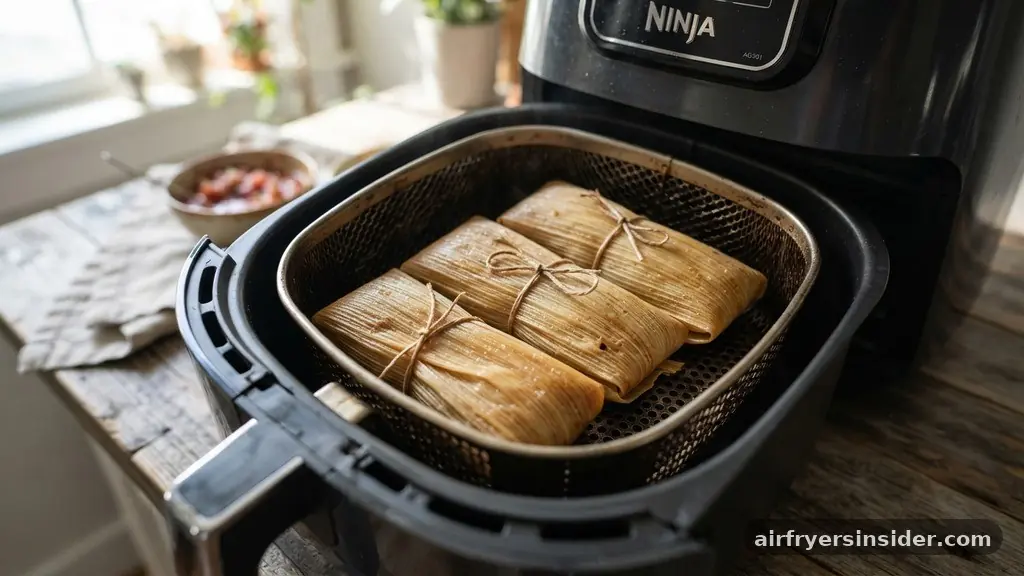
The primary challenge when reheating tamales is maintaining the delicate balance of moisture within the masa. Unlike a microwave, which can lead to rapid dehydration or uneven hot spots, an air fryer uses constant air circulation to heat the food evenly from all sides.
This convection heat mimics the environment of a high-end oven but operates in a fraction of the time. When you choose to reheat tamales in an air fryer, you aren’t just warming them up; you are restoring the structural integrity of the corn dough.
Because an air fryer is essentially a small, high-powered convection oven, it allows the exterior of the tamale to develop a slight, pleasant crunch while the center remains perfectly tender. This is particularly beneficial if you enjoy a bit of texture on your masa.
The rapid movement of hot air helps evaporate excess condensation that often accumulates in the fridge, preventing that dreaded “soggy bottom” that ruins so many leftover meals. It is a precise tool for anyone who cares about the quality of their food.
Preparing Your Tamales for the Best Results
Before you place your tamales into the basket, you need to decide whether to leave the husks on or off. If you prefer a traditional steamed texture, keeping the corn husk on provides a natural barrier that protects the masa from drying out too quickly.
However, if you want a more golden-brown crust, removing the husk is the way to go. If you choose to keep the husk on, consider spritzing it lightly with a bit of water to ensure it doesn’t scorch or turn brittle during the process.
For those who remove the husk, a light coating of cooking spray or a thin brush of olive oil can prevent the masa from sticking to the air fryer basket. This small step makes a significant difference in the final presentation. You should also ensure that the tamales are not crowded in the basket.
Proper air circulation is the secret to success; if the tamales are touching, the air cannot flow around them, leading to uneven heating. Give them a little breathing room to ensure every inch gets warm.
Optimizing Temperature and Timing
Getting the heat settings right is crucial for achieving that balance between crispy and soft. Most enthusiasts find that a moderate temperature is the sweet spot. You want the heat to penetrate to the center without burning the outer layer.
Setting your device to 350°F (175°C) is generally the gold standard for reheating. At this temperature, you can usually achieve a perfect result in about 8 to 12 minutes, depending on the size of the tamale and how cold it was when you started.
Recommended Reheating Guidelines
| Tamale State | Temperature | Estimated Time |
|---|---|---|
| Husk On | 350°F | 10-12 Minutes |
| Husk Off | 350°F | 7-9 Minutes |
| Frozen (Thawed) | 325°F | 12-15 Minutes |
If you are dealing with a larger batch, you might need to adjust your cooking time slightly. It is always better to check on your food halfway through the process.
A quick shake of the basket or a flip of the tamales ensures that the heat is distributed uniformly. If you notice the edges getting too dark before the center is hot, simply lower the temperature to 325°F and extend the time by a few minutes.
Preventing Dehydration During the Process
One common concern when using air-based cooking methods is the risk of drying out the masa. Because the air is constantly moving, it can sap moisture if you aren’t careful. To combat this, you can use a few clever techniques.
One effective method is to wrap the tamales in a small piece of parchment paper or a light layer of aluminum foil. This traps just enough steam to keep the interior soft while still allowing the circulating air to warm the exterior efficiently.
Another trick is the “water spritz” method. If you are heating them without any covering, a very light mist of water over the tamales before starting the cycle can provide the necessary humidity.
If you find your tamales are particularly dry, placing a damp paper towel in the bottom of the air fryer (ensuring it is secure and won’t fly into the heating element) can create a mini-steamer effect. Always monitor the progress closely to ensure you don’t overcook them, as smaller tamales will heat up much faster than thick, meat-heavy ones.
Safety and Internal Temperature Checks
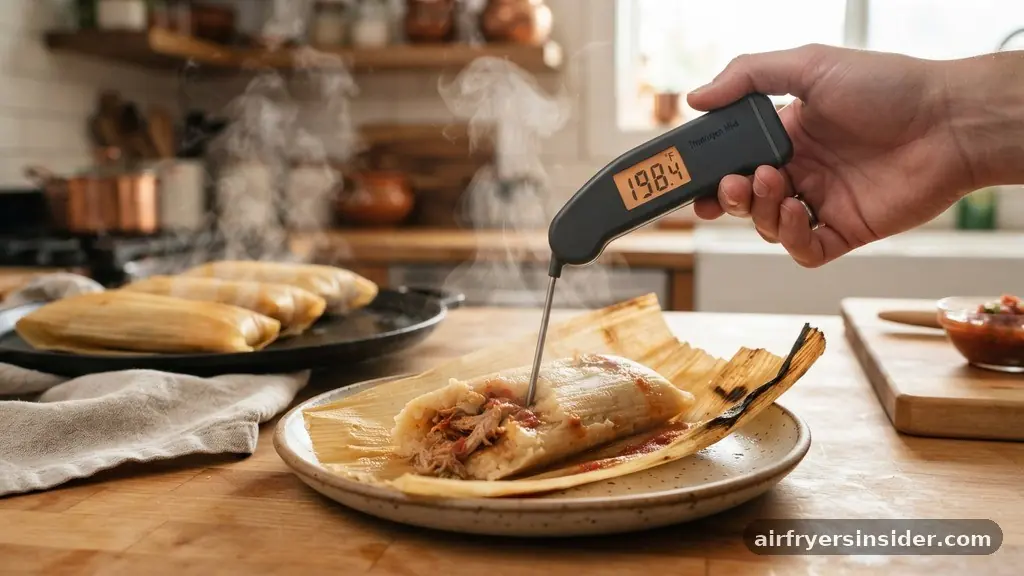
When reheating leftovers, food safety should always be a priority. You want to ensure that the internal temperature reaches at least 165°F to kill any potential bacteria that may have formed during storage. Using a reliable food thermometer is the most accurate way to verify this.
Simply insert the probe into the thickest part of the tamale. If the reading is below 165°F, pop it back in for another minute or two.
Many people rely on the “touch test,” but this is unreliable and can lead to uneven results. If you don’t have a food thermometer, you can look for visual cues. A properly heated tamale should be steaming when you break it open, and the masa should pull away cleanly from the corn husk.
If the center feels cold or dense, it needs more time. Taking these extra seconds to check the temperature guarantees that your meal is not only delicious but also safe to consume.
Adapting to Specific Air Fryer Models
Different brands, such as Ninja Foodi or Cosori, have varying fan intensities and heating element layouts. A Ninja Foodi, for example, often has a more powerful fan, which might mean your food cooks slightly faster than it would in a standard basket-style fryer.
You should always treat the first time you use a new machine for this task as a test run. Start on the lower end of the time spectrum and add time as needed.
If your model has a “Reheat” preset, you might be tempted to use it, but manual settings usually yield better results for tamales. The presets are often optimized for pizza or fried chicken, which have different moisture levels and structural needs than masa.
Stick to manual control at 350°F for the best, most consistent outcome. If you have an older model, be aware that the heating elements might take longer to preheat, so consider adding a minute or two to your initial estimate.
Addressing Common Topical Gaps
Many readers often ask if they can reheat frozen tamales directly in the air fryer. The answer is yes, but it requires patience. You shouldn’t jump straight to high heat, as the exterior will burn before the frozen center thaws.
Start by thawing them in the refrigerator overnight if possible. If you must use them straight from the freezer, lower your heat to 300°F and increase the time significantly. This gentle approach prevents the masa from becoming gummy or losing its shape.
Another common question concerns the use of aluminum foil. While foil is excellent for trapping heat, it can block the air circulation if you wrap the tamales too tightly. Use the foil to create a “boat” or a loose tent rather than a tight parcel.
This allows the heat to surround the food while still providing the protection needed to keep the masa soft. By addressing these nuances, you ensure that your reheating process is adaptable to any situation, whether you are in a rush or taking your time.
Enhancing Flavor After Reheating
Once your tamales are perfectly heated, you have the opportunity to elevate the dish even further. Because the air fryer creates a slightly crispy exterior, it pairs beautifully with fresh toppings that add contrast.
Consider a dollop of cool sour cream, a spoonful of vibrant salsa verde, or some freshly chopped cilantro. The acidity of the lime juice or the heat from a spicy sauce can cut through the richness of the masa and meat, making the leftovers taste brand new.
You might also consider melting a bit of cheese over the top during the final minute of the air frying cycle. If you use a high-quality shredded cheese, it will bubble and brown perfectly under the intense heat. This adds a layer of indulgence that is often missing from store-bought or pre-made tamales.
Experimenting with these final touches turns a simple reheating task into a culinary experience. Remember to let them sit for a minute after removing them from the heat, as this allows the steam to distribute and the flavors to settle.
Common Mistakes to Avoid
Even with the best equipment, it is easy to make small errors that affect the final quality. One of the most frequent mistakes is overloading the basket. It is tempting to fit as many as possible, but this is a recipe for uneven heating.
Another mistake is failing to use any fat or moisture. Even if you don’t want a “fried” texture, a tiny bit of oil or a spritz of water acts as a heat conductor, helping the tamale warm through without drying out.
Finally, avoid the impulse to blast the heat to the maximum setting. While it might seem like a way to save time, high heat will only result in a burnt, hard exterior and a cold, doughy center. Patience is your best ingredient here.
By keeping the temperature consistent and checking on the progress, you will avoid these common pitfalls. Your goal is to replicate the texture of a fresh steam, and that requires a gentle, controlled environment that only a properly managed air fryer can provide.
FAQ Section
Can I reheat tamales in an air fryer if they are still frozen?
Yes, but you must use a lower temperature of around 300°F and increase the cooking time. It is best to let them thaw partially in the fridge first to ensure the center gets hot without the exterior burning or drying out during the longer cycle.
How do I stop the masa from drying out while reheating?
To maintain moisture, lightly spritz the tamales with water or wrap them loosely in parchment paper or aluminum foil. This creates a small amount of steam inside the wrapper, which prevents the masa from becoming hard or brittle while the air fryer circulates the heat.
Is it better to leave the corn husk on or take it off?
It depends on your preference. Leaving the husk on provides a natural steam barrier that keeps the interior very soft. Removing the husk allows the air to circulate directly on the masa, creating a slightly crispy exterior that many people find more enjoyable.
How can I tell when my tamales are perfectly reheated?
The best way is to use a food thermometer to ensure the internal temperature reaches 165°F. If you don’t have one, look for steam escaping when you open the tamale and ensure the masa pulls away easily from the husk without feeling cold or dense in the middle.
Conclusion
Mastering the art of how to reheat tamales in air fryer setups provides a reliable way to enjoy your favorite comfort food without compromising its texture or flavor. By managing your heat settings, providing adequate spacing, and using smart moisture-retention techniques, you can achieve that elusive balance of a soft, steaming interior and a delightful, slightly crisp crust. Whether you are reheating a single tamale for a quick lunch or warming up a larger batch for the family, this method consistently outperforms the microwave and is often more convenient than a traditional steamer.
Experiment with these tips during your next meal, and you will likely find that your leftovers taste just as good as the day they were prepared. Happy cooking and enjoy every bite of your perfectly reheated meal.
Meta Description: Learn exactly how to reheat tamales in air fryer for a perfect crispy-on-the-outside, soft-on-the-inside finish every time with our expert tips.


