


Mastering the art of reheating steak in air fryer units allows you to enjoy a high-quality meal without the rubbery texture often associated with microwaves. Because air fryers rely on rapid air technology, they provide the necessary convection cooking environment to heat the meat evenly while maintaining a pleasant exterior. By following specific temperature controls and moisture-retention techniques, you can restore your protein to a state that rivals its original preparation.
This process is far superior to traditional pan-frying or microwaving, which often leads to uneven heating or excessive moisture loss. Understanding the nuances of heat transfer and timing will ensure your leftovers are just as delicious the second time around.
The Science of Air Fryer Reheating
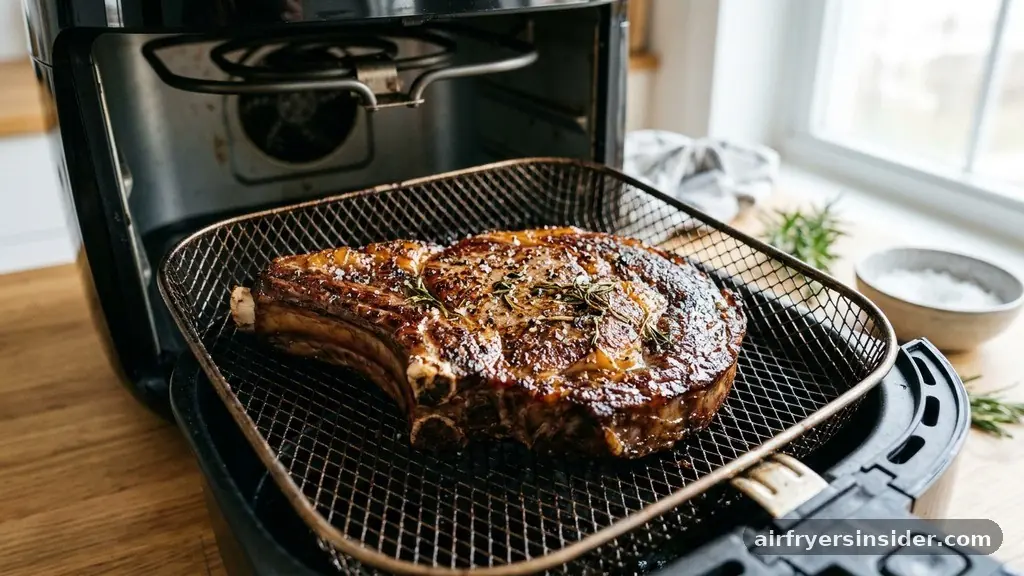
The primary challenge when warming up a cooked piece of beef is preventing the exterior from drying out before the center reaches a palatable temperature. Unlike a microwave, which uses electromagnetic radiation to excite water molecules, an air fryer uses a powerful fan to circulate hot air.
This air circulation mimics the effect of a convection oven but at a much higher intensity. When you approach reheating leftovers this way, you are essentially exposing the protein to a dry heat environment that can quickly turn a succulent ribeye into a piece of tough leather if not managed correctly.
To combat this, you must rely on the principles of thermal conductivity. Heat moves from the outside of the steak toward the center. Because the steak is already cooked, your goal is not to “cook” it further but to gently bring it to an ideal serving temperature.
If the heat is too high, the surface will continue to brown, leading to overcooked edges while the core remains cold. By lowering the temperature and utilizing the consistent environment of the air fryer, you ensure that the heat penetrates the center without pushing the internal structure into a state of toughness.
Preparation and Essential Tools
Success begins before you even place the meat inside the basket. One of the most common mistakes is placing a cold steak directly into the air fryer. Allowing the meat to sit at room temperature for about 15 to 20 minutes before reheating helps reduce the temperature gradient, making the final result much more consistent.
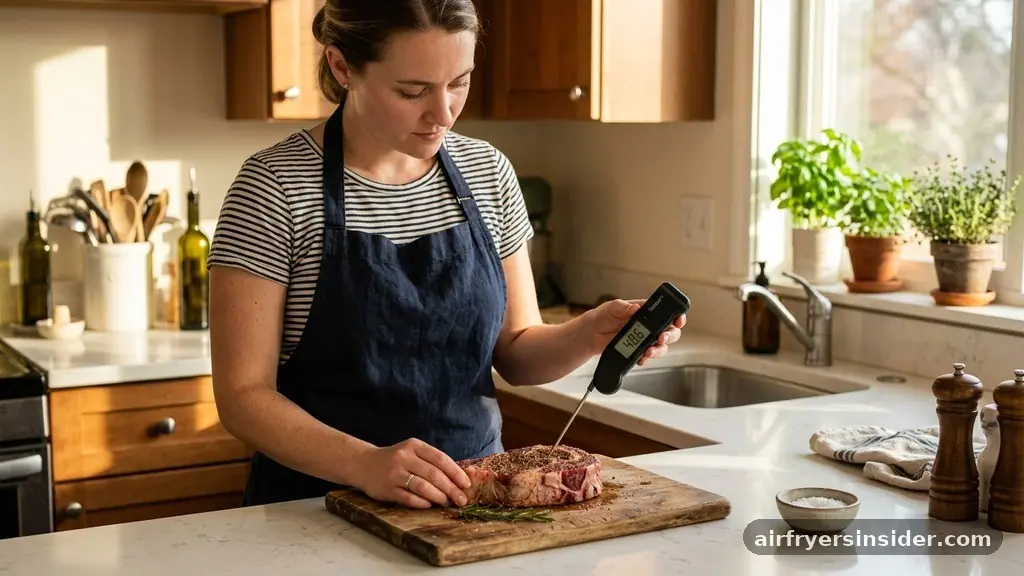
You should also ensure you have the right tools on hand to monitor the process accurately. A digital meat thermometer is arguably the most important piece of equipment you can use; it removes the guesswork and prevents the common trap of overshooting your desired doneness.
Beyond the thermometer, consider the use of protective barriers. A small piece of aluminum foil can be used to create a shield or a small boat for the meat, which helps trap steam and prevents the surface from drying out too quickly.
Additionally, if you are working with a lean cut like a sirloin or a tenderloin, which lacks the intramuscular fat of a ribeye, applying a light coating of olive oil or another food-grade oil can provide a protective layer. This extra fat helps conduct heat more efficiently across the surface, promoting a light searing effect without drying the fibers.
Optimal Temperature and Timing Settings
Setting the right temperature is critical when you want to avoid turning a medium-rare steak into a medium-well one. For most air fryers, the sweet spot for reheating is between 250°F and 300°F.
While it might be tempting to use a higher heat to speed up the process, doing so will inevitably lead to uneven results. Lower temperatures allow the heat to distribute more evenly through the steak thickness, which is vital for preserving the texture of the meat.
Recommended Heat and Time Guide
| Steak Thickness | Temperature | Estimated Time |
|---|---|---|
| Under 1 inch | 250°F | 3–5 minutes |
| 1 to 1.5 inches | 275°F | 5–8 minutes |
| Over 1.5 inches | 300°F | 8–12 minutes |
It is important to remember that these times are estimates. The actual time required will depend on your specific appliance’s wattage and the starting temperature of the meat.
Always prioritize the internal reading over the clock. Checking the meat every two minutes is a best practice to ensure you do not miss the window of perfection.
Techniques for Moisture Retention
Moisture is the enemy of a good leftover steak. When you reheat beef, the proteins tighten and release internal juices, which then evaporate. To prevent this, you need to create a humid micro-climate inside the air fryer.
One effective strategy is to place a small amount of beef broth or even a few drops of water inside an aluminum foil packet with the steak. The steam generated during the heating process will keep the meat succulent and prevent the surface from becoming brittle.
Another technique involves the use of parchment paper. While it doesn’t trap moisture as effectively as foil, it prevents the steak from sticking to the basket and allows for easier cleanup. If you are reheating slices rather than a whole cut, you must be extra vigilant.
Sliced meat has a higher surface-area-to-volume ratio, meaning it loses moisture much faster than a whole steak. Keep these pieces tightly grouped together to create a localized thermal mass, which helps them heat through without dehydrating individual strips.
Understanding Food Safety and Storage
Following USDA guidelines is non-negotiable when dealing with leftover proteins. According to standard food safety protocols, cooked beef should be refrigerated within two hours of its initial preparation and consumed within three to four days.
If you have kept your steak in the freezer, it must be thawed in the refrigerator before it ever touches the air fryer. Trying to reheat a frozen or partially frozen steak in an air fryer is a recipe for disaster, as the outside will burn long before the inside is safe to eat.
Always ensure the center of the steak reaches a safe temperature. While you may prefer a medium-rare finish, the goal of reheating is to ensure the meat has been warmed through completely. If you have any concerns about the quality or the duration the meat has been stored, discard it.
It is never worth the risk of foodborne illness. Using a meat thermometer to verify that the core has reached at least 135°F to 140°F provides both the desired eating temperature and the peace of mind that you are following safe consumption practices.
The Role of Carry-Over Cooking
Even after you remove the steak from the air fryer, the process is not finished. Carry-over cooking is a phenomenon where the internal temperature of the meat continues to rise due to the distribution of residual heat from the exterior to the center. Because air fryers use high-intensity heat, this effect can be more pronounced than with traditional oven reheating. You should aim to pull the steak from the basket when it is about 5 degrees below your target temperature.
Allowing the meat to sit for a few minutes after it comes out of the air fryer is essential. This is not just about letting it cool to a comfortable eating temperature; it is about allowing the juices to redistribute throughout the muscle fibers.
If you cut into the steak immediately, the juices will run out onto the cutting board, leaving you with a dry piece of meat. Patience during this resting phase is just as important as the precision during the heating phase.
Addressing Common Challenges and Gaps
Many enthusiasts struggle with the “burnt outside, cold inside” problem. This usually happens because they rely on the air fryer’s default high-heat settings. To resolve this, always ensure your unit is properly preheating for at least three minutes.
A cold basket causes the steak to sit in the heat for longer than necessary, drying it out. If your steak is exceptionally thick, consider cutting it into smaller portions before reheating. This increases the surface area exposed to heat and reduces the time required for the center to reach the target temperature.
Another common gap in knowledge is how to handle different cuts of meat. A fatty ribeye handles the high heat of an air fryer better than a lean filet mignon. If you are reheating a leaner cut, you must be more aggressive with your fat-based moisture additives.
You might even consider brushing the steak with a small amount of butter just before serving to add back the richness lost during the storage and reheating process. These small adjustments based on the specific cut of beef you are handling will significantly elevate the final result.
Step-by-Step Execution for Perfect Results
To summarize the most effective workflow for this task, follow these steps to ensure consistency:
- Remove the steak from the refrigerator and let it reach room temperature for 15 minutes.
- Preheat your air fryer to 275°F to ensure a stable thermal environment.
- Lightly coat the steak with a neutral oil to improve heat conduction.
- Place the steak on a piece of aluminum foil or directly in the basket if it is a thicker cut.
- Heat for 4 to 6 minutes, checking with a meat thermometer to ensure the center is warm.
- Remove the steak when it reaches your desired internal temperature, accounting for carry-over cooking.
- Let the meat rest for 3 minutes before slicing and serving.
By adhering to this sequence, you minimize the risks associated with the high-intensity nature of air frying. The goal is to move from a cold, leftover state to a warm, ready-to-eat state with minimal impact on the original texture. With practice, you will find that the air fryer becomes your preferred method for reclaiming the quality of a high-end steak dinner.
Frequently Asked Questions
Is it better to reheat a steak in the microwave or an air fryer?
The air fryer is significantly better than the microwave. Microwaves often create rubbery, unevenly heated meat by vibrating water molecules, while the air fryer uses convection heat to warm the steak uniformly, resulting in a texture that is much closer to the original preparation.
How long should I keep the steak in the air fryer?
Most steaks require between 4 and 8 minutes at 275°F. However, the exact time depends on the thickness of the cut. It is best to use a meat thermometer and check the internal temperature every two minutes to prevent the steak from drying out.
Can I reheat a medium-rare steak without overcooking it?
Yes, you can. The key is to use a lower temperature setting and monitor the internal temperature closely. Pull the steak out when it hits about 125°F to 130°F, as the residual heat will continue to bring it up to a perfect medium-rare without turning it grey.
Should I preheat my air fryer before reheating steak?
Yes, preheating is essential. Starting with a hot basket ensures that the heat transfer begins immediately. If you put the meat into a cold air fryer, it will take longer to warm up, which increases the likelihood of the exterior drying out before the center is ready.
Conclusion
Achieving restaurant-quality results when reheating steak in air fryer units is entirely possible with the right approach to temperature and moisture control. By prioritizing gentle heat and utilizing tools like a meat thermometer, you can transform what might have been a disappointing leftover into a succulent, flavorful meal. Remember that the secret lies in avoiding the rush; lower temperatures and adequate resting times are your best allies in maintaining the integrity of the beef.
As you become more comfortable with your specific appliance’s performance, you will find that this method offers a reliable way to reduce food waste while enjoying your favorite cuts exactly the way they were meant to be eaten. Experiment with these techniques during your next meal prep and enjoy the consistent, high-quality results.


