

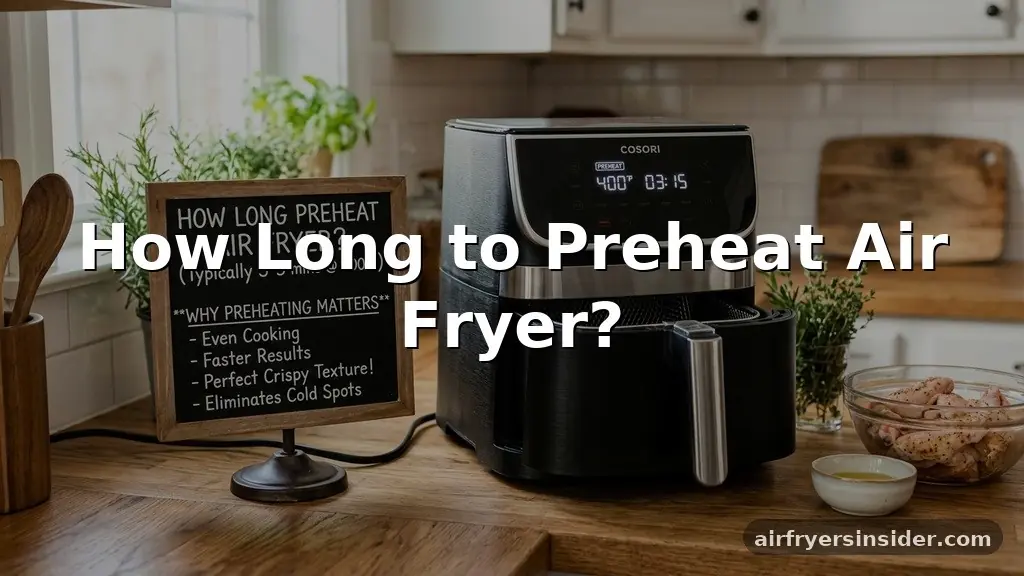
Figuring out exactly how long to preheat your air fryer often feels like a guessing game, especially when manufacturers offer conflicting advice. While some modern machines feature a dedicated preheat button, others leave you to manage the timing manually. Understanding the mechanics behind air fryer preheating ensures your food achieves that perfect, golden-brown finish without the risk of uneven cooking.
By mastering the ideal window for warming up your device, you can better control the Maillard reaction, which is essential for developing flavor and texture. This article breaks down the timing requirements for various models, helping you achieve consistent culinary results every time you plug in your kitchen appliances.
Why Preheating Matters for Air Fryer Performance
The primary function of an air fryer is to mimic deep frying through intense convection cooking. Unlike a traditional oven, which relies on a slow buildup of ambient heat, an air fryer uses a powerful fan to drive high-velocity air around the food.
When you place ingredients into a cold basket, they sit in a stagnant environment until the heating element reaches its target intensity. This delay can lead to soggy results because the moisture in the food evaporates slowly instead of being instantly locked in by a blast of hot air.
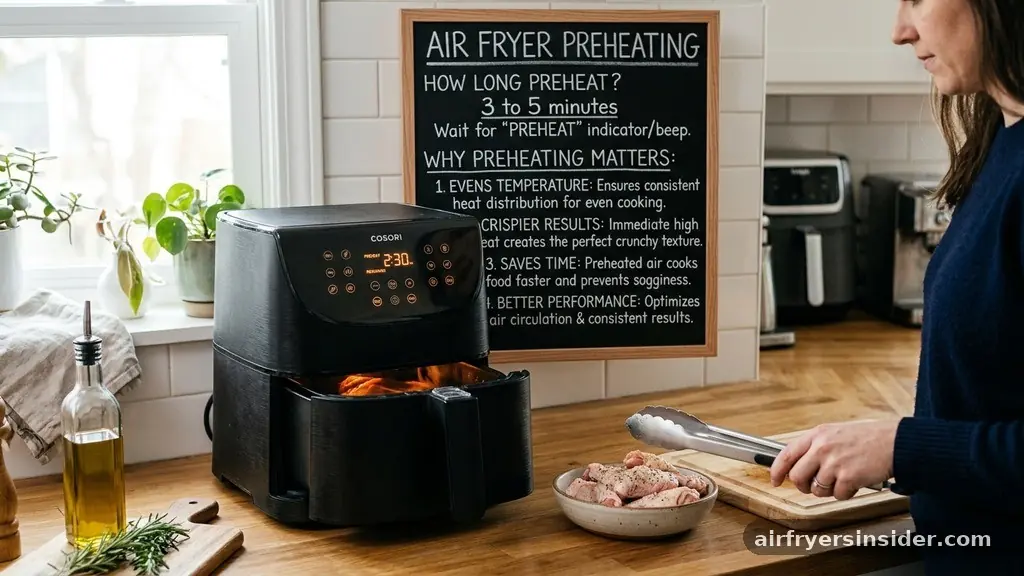
Preheating establishes a state of thermal equilibrium within the cooking chamber. When the air is already at the desired cooking temperature before the food enters, the exterior of your meal begins to crisp immediately.
This rapid heat transfer is crucial for achieving a crispy texture on items like frozen fries, chicken wings, or vegetables. Without this initial heat, you are essentially steaming your food for the first few minutes of the cycle, which often results in a rubbery texture that no amount of extra cooking time can fix.
The Standard Duration for Most Models
Most home cooks find that a preheat duration of three to five minutes is sufficient for the vast majority of air fryers. This timeframe allows the metal components and the cooking surface to absorb enough energy to maintain a steady temperature once the cooler food is introduced.
If you are cooking at a lower heat, such as 300°F, three minutes is usually plenty. However, if you are planning to cook at 400°F, giving the machine a full five minutes ensures the unit is truly ready to handle the load.
It is important to remember that the wattage of your specific unit plays a significant role in how quickly it reaches temperature. High-wattage units often heat up faster than their lower-powered counterparts. If you have a compact, entry-level model, it might reach full heat in just two minutes.
Conversely, larger, heavy-duty machines—like certain Ninja Foodi or Cosori models—have more mass to heat up and may require the full five-minute window to stabilize. Observing how your specific machine behaves during the first few uses will help you dial in the perfect timing.
Manual Preheating Without a Dedicated Button
Many users struggle with how to preheat an air fryer without a preheat button. If your unit lacks this specific feature, you can easily replicate the process by setting the timer manually.
Simply turn your air fryer on to the desired cooking temperature, set the timer for five minutes, and let it run empty. Once the timer dings, quickly open the basket, add your ingredients, and restart the timer for the actual cooking duration required by your recipe.
This method is highly effective and ensures that you aren’t sacrificing the quality of your meal for the sake of convenience. While it might seem like a chore to reset the timer, the improvement in texture is well worth the extra effort. Some cooks prefer to add an extra minute to the preheat cycle if they are cooking a large volume of food, as the sudden introduction of a cold, dense mass of ingredients will cause a temporary drop in the internal temperature of the chamber.
Differences Between Basket and Oven Styles
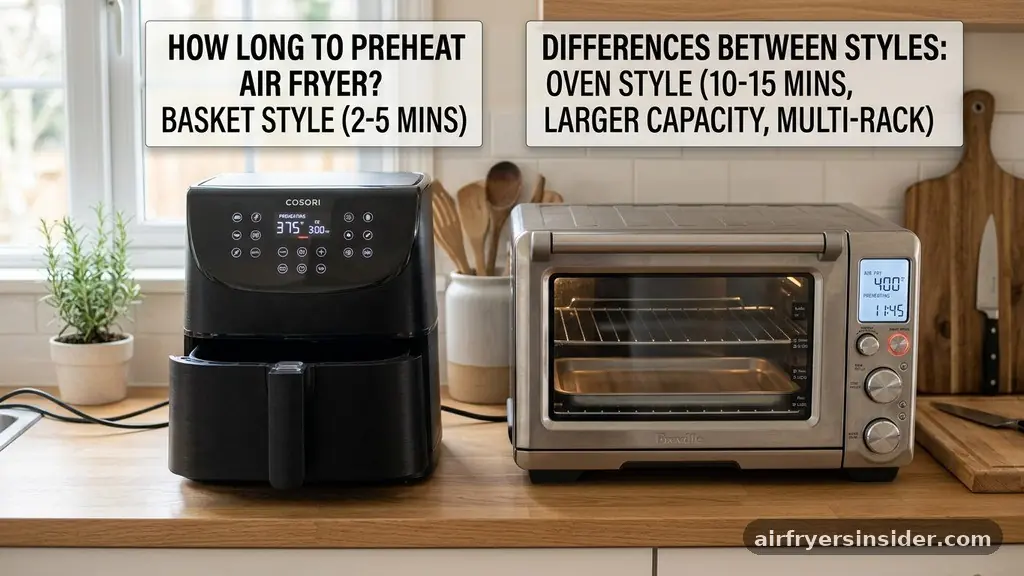
The design of your air fryer dictates how much time it needs to reach the right temperature. A basket-style air fryer has a smaller, enclosed volume, which allows it to reach thermal equilibrium quite rapidly.
Because the air has less distance to travel and the surface area is smaller, these machines are generally the most efficient at preheating. You will rarely need more than five minutes to get a basket-style unit ready for action.
In contrast, an oven-style air fryer often features a larger cavity, racks, and glass doors. These appliances act more like traditional convection ovens and typically require a longer preheat period to ensure that the entire interior environment is saturated with heat.
If you own an oven-style unit, you should plan for a preheat time of five to seven minutes. The extra space and the presence of multiple racks mean that heat distribution takes a bit longer to stabilize, especially if you are using more than one rack at a time.
How Wattage Impacts Thermal Efficiency
The wattage of your air fryer is the engine behind its performance. A machine with 1700 watts will generate heat much faster than an 800-watt model. This is a critical factor when determining how long to preheat, as high-wattage units can sometimes “overshoot” their target temperature if left on for too long, or conversely, reach the target so quickly that you risk burning the seasoning on your basket if it is left empty for an extended period.
| Air Fryer Type | Average Preheat Time | Best For |
|---|---|---|
| Compact Basket | 2-3 Minutes | Small snacks, single servings |
| Standard Basket | 3-5 Minutes | General cooking, vegetables |
| Oven-Style | 5-7 Minutes | Large batches, roasting, baking |
Understanding the relationship between power and time is key to mastering rapid air technology. If you are using a high-performance, high-wattage device, stick to the lower end of the recommended preheat window.
If your appliance is older or has a lower power rating, err on the side of caution by giving it the full five to seven minutes. Being mindful of these technical specifications helps prevent the inconsistent cooking results that often frustrate new users.
Addressing Common Misconceptions and Myths
There is a common belief that preheating is unnecessary because the air fryer is “fast enough” on its own. While it is true that you can cook without preheating, you will almost always sacrifice the quality of the final product.
Skipping the preheat phase leads to a cold start, where the heating element has to work double-time to raise the temperature of the air, the basket, and the food simultaneously. This process is inefficient and often results in food that is dry on the inside and pale on the outside.
Another misconception is that preheating is dangerous for the machine. Some users worry that running an air fryer empty for five minutes will damage the internal components. In reality, these machines are designed to withstand the heat they produce.
As long as you aren’t leaving the unit running for 30 minutes or more without food, a short preheat cycle is perfectly safe and is a standard part of the operation for any high-quality appliance. Always check your manufacturer’s manual, but generally, the heating elements and fans are built for this exact purpose.
Topical Gaps: Managing Temperature and Food Safety
One area often overlooked in discussions about preheating is the role of food safety and internal temperature. When you don’t preheat, you run the risk of the food spending too much time in the “danger zone” where bacteria can multiply, particularly with meats like chicken or pork. By starting at the correct temperature, you ensure that the surface of the meat is seared quickly, which helps in reaching the required safe internal temperature more reliably throughout the cooking process.
Another gap in knowledge involves the impact of ambient temperature on the cooking process. If your kitchen is very cold, or if your air fryer is placed near a drafty window, the unit may take slightly longer to reach its target temperature. Additionally, overcrowding the basket—even after a perfect preheat—will cause a massive drop in temperature.
To bridge this gap, always ensure there is enough space for air to circulate around the food. If you are cooking a large amount, it is better to cook in batches rather than cramming everything in at once, as the latter will negate the benefits of the preheat entirely.
Tips for Consistent Results
Achieving a crispy texture consistently comes down to habit. Start by making preheating a part of your preparation routine.
Turn the air fryer on as soon as you begin prepping your ingredients; by the time you have finished seasoning your chicken or chopping your vegetables, the machine will be at the perfect temperature. This simple workflow adjustment makes the wait time feel non-existent.
- Keep the basket empty during the preheat phase to maximize radiant heat absorption.
- Ensure the air intake vents at the back of the machine are not blocked by walls or curtains.
- Avoid using aerosol cooking sprays directly inside the basket, as they can damage non-stick coatings over time.
- If you are cooking multiple batches, you only need to preheat before the first batch.
- Use a digital thermometer to verify that your food has reached the proper internal temperature, regardless of the timer.
By following these practices, you move beyond simply “following a recipe” and start understanding how your appliance actually works. Whether you are using a Philips air fryer or a generic brand, the physics of heat transfer remain the same. Mastery comes from observing how your specific unit responds to different ingredients and adjusting your preheat strategy accordingly.
Conclusion
Mastering the duration of your preheat cycle is the simplest way to take your air-fried meals to the next level. While it may seem like a minor step, dedicating three to five minutes to warm up your device ensures that your food hits the heat running, resulting in better texture, more even cooking, and safer preparation. By understanding the nuances of your specific model—whether it’s a compact basket or a larger oven-style unit—you can eliminate the guesswork and start cooking with confidence.
Remember that consistency is key; once you find the rhythm that works for your kitchen setup, you will find that the time spent preheating is a small investment for a much better plate of food. Enjoy experimenting with your next meal and seeing the difference that a proper preheat makes.
Frequently Asked Questions
How do I know if my air fryer is preheated?
Most modern air fryers with a preheat button will beep or display a signal on the screen when the target temperature is reached. If your model lacks this, simply set a manual timer for three to five minutes, which is sufficient for the device to reach optimal heat.
Do I have to preheat every time I use the air fryer?
While not strictly required for every single food item, preheating is highly recommended for best results. It is especially important for meats, frozen goods, and any recipe where you want a crispy exterior, as it prevents the food from steaming while the appliance slowly builds up internal heat.
Can I preheat the air fryer for too long?
Running an air fryer empty for an excessive amount of time, such as 15 minutes or more, is generally unnecessary and can wear down the heating element prematurely. Stick to the five-minute mark to ensure the unit is ready without putting undue stress on the electrical components.
Is it safe to put oil in the air fryer during preheating?
No, you should never place oil or food in the air fryer during the preheat stage. The basket should remain empty so that the air can circulate freely and the surfaces can absorb heat. Adding oil or food before the unit is up to temperature can lead to smoking or uneven cooking.
Meta Description: Learn exactly how long to preheat air fryer for perfect, crispy results. Discover tips for different models and why preheating is vital for your cooking.


