

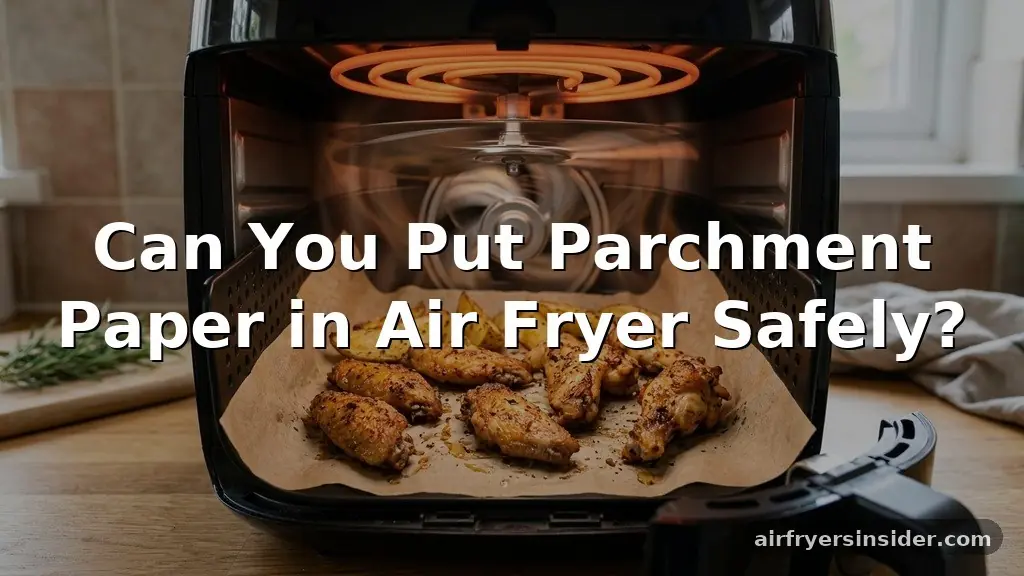
Many home cooks wonder if you can put parchment paper in air fryer baskets to minimize cleanup and prevent food from sticking. It is a common kitchen hack that promises to keep your appliance pristine while ensuring your food cooks evenly. However, the high-speed convection currents inside these devices present unique safety considerations that differ from standard oven use.
Understanding how to use these liners correctly is essential for maintaining your appliance and ensuring your safety during daily meal preparation. By following a few simple ground rules, you can enjoy the benefits of easier cleaning without compromising the integrity of your cooking process.
Understanding Air Fryer Mechanics and Heat Distribution
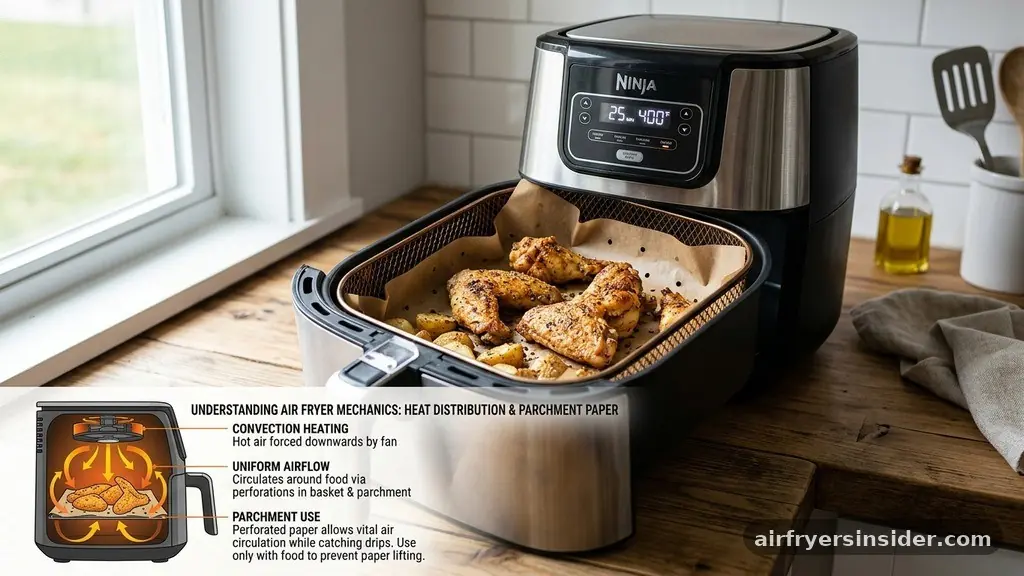
The primary function of an air fryer is to circulate extremely hot air at high speeds around your food. This process mimics deep frying but relies entirely on convection, which is why a fan is positioned at the top of the unit.
When you place any material inside the basket, you are essentially introducing a physical barrier that disrupts these air currents. If the paper is not weighted down by food, the powerful fan can easily lift it into the heating element.
This scenario creates a significant fire hazard, as the paper can ignite upon contact with the red-hot coils. Unlike an oven, where the air is relatively still, the air fryer is a wind tunnel. Because of this, you should never preheat your device with an empty liner inside.
Always wait until the food is placed on top of the parchment before starting the cooking cycle. This weight acts as an anchor, keeping the paper flat against the base of the basket throughout the entire duration of the cooking process.
Perforated vs. Standard Parchment Paper
When shopping for accessories, you will notice a distinction between perforated and standard sheets. If you use standard, non-perforated sheets, you are creating a solid floor at the bottom of your basket.
This blocks the airflow from reaching the underside of your food, which is counterproductive to the air frying method. Your food might end up soggy on the bottom instead of crispy, as the hot air cannot circulate effectively around the entire surface area.
Perforated parchment paper is designed specifically for this appliance. These sheets feature small holes throughout the surface, allowing the air to pass through while still catching drips and crumbs. Using these specialized liners is generally the safest and most effective approach.
They maintain the convective airflow needed for that signature crunch while keeping the basket cleaner. If you only have standard sheets, you can carefully trim them to fit the base, but ensure they don’t cover the entire surface area of the basket floor.
The Critical Danger of Paper Towels
One of the most frequent mistakes beginners make is substituting parchment with paper towels. You should never use paper towels in an air fryer under any circumstances.
Unlike parchment paper, which is treated to be heat-resistant, standard paper towels are highly flammable and not designed to withstand temperatures exceeding 350 to 400 degrees Fahrenheit. They are designed to absorb moisture, not to act as a cooking surface.
Attempting to use a paper towel is a recipe for disaster. Because they are lightweight and thin, the air fryer fan will instantly pull the towel up into the heating element. It will ignite almost immediately, creating smoke and a genuine risk of fire.
Always keep paper towels far away from the interior of your air fryer. If you need to pat food dry before cooking, do so on your countertop before placing the items into the basket.
Selecting the Right Size and Shape
Proper fit is just as important as the material itself. When searching for liners, you will encounter various sizes tailored to fit specific basket shapes, such as square or round.
A liner that is too large will curl up the sides of the basket, creating a loose edge that the fan can catch. This curling effect increases the surface area exposed to the heating element, which is exactly what you want to avoid.
If your liner doesn’t fit perfectly, take a moment to trim it with scissors. You want the parchment to lie completely flat against the bottom of the basket. If it touches the sides, it should be firmly pressed down by the food you are cooking.
Always prioritize a smaller, well-fitted liner over a larger one that bunches up. A tidy, flat surface ensures that the hot air continues to circulate as intended, yielding better results for your wings, vegetables, or proteins.
Alternatives to Parchment Paper
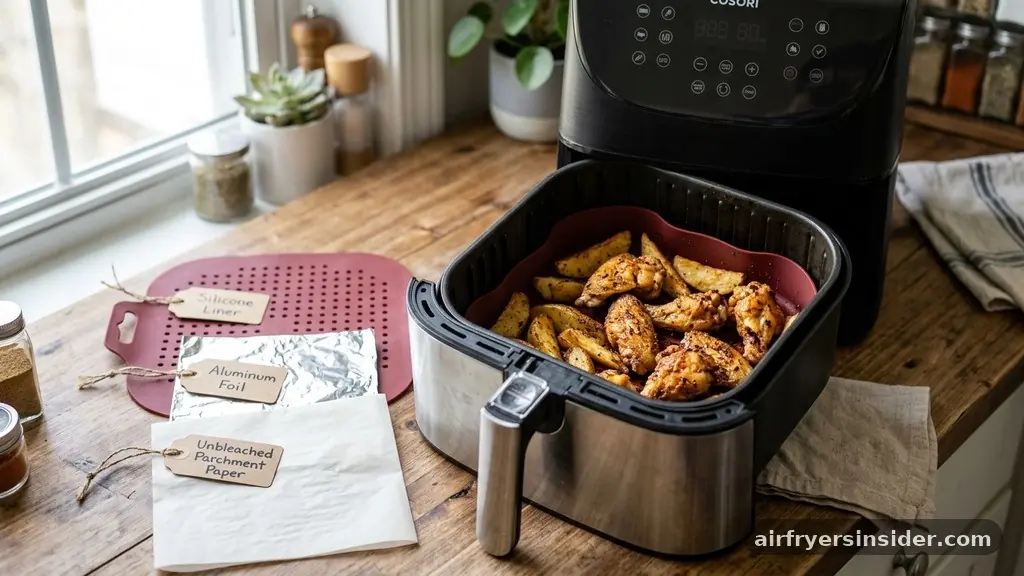
If you are worried about the safety risks or simply don’t have liners on hand, there are several effective alternatives to parchment paper. Silicone mats are a popular choice because they are reusable, heat-resistant, and heavy enough to stay in place without being lifted by the fan. They are specifically molded for air fryers and offer a non-stick surface that is easy to wash by hand or in the dishwasher.
Another option is to simply forgo the liner entirely. Most modern air fryer baskets are coated with a non-stick material that is durable enough for regular use. If you are concerned about sticking, a light spray of avocado or coconut oil can be just as effective as a paper liner.
Aluminum foil is another common substitute, but it should be used with caution. It can react with acidic foods like tomatoes or vinegar, and it is not as effective at preventing sticking as specialized parchment or silicone.
Addressing Common Performance Concerns
Many users worry that using a liner will prevent their food from browning properly. While it is true that a solid sheet of paper can block the air, a perforated liner generally has a negligible impact on the final texture.
If you notice that your food is not getting as crispy as you would like, try cooking it for an extra two or three minutes. You can also flip your food halfway through the cycle to ensure that both sides receive equal exposure to the heat.
Another concern is the buildup of grease. While liners capture a significant amount of fat, they do not replace the need for regular cleaning of the basket and the heating element.
Grease can splatter upward during high-heat cooking, eventually coating the fan and the ceiling of the unit. Even if you use liners every time you cook, you should still perform a deep clean of your air fryer every few weeks to prevent smoke and burnt odors from affecting your food quality.
Comparative Analysis of Cooking Liners
To help you decide which material works best for your needs, consider the following breakdown of common materials used in air fryers. Each has its own benefits regarding convenience, safety, and cooking quality.
| Material | Heat Resistance | Airflow Impact | Ease of Use |
|---|---|---|---|
| Perforated Parchment | High | Minimal | Disposable |
| Silicone Mat | High | Low | Reusable |
| Aluminum Foil | Very High | High (Blocks air) | Disposable |
| Paper Towels | None | N/A | Dangerous |
Safety Protocols for Every Cooking Session
Safety should always be the priority when using any kitchen appliance. Beyond the specific rules regarding paper, keep these general safety habits in mind to protect your home and your device:
- Never operate the air fryer without the basket fully inserted.
- Ensure your unit is placed on a heat-resistant surface with at least five inches of clearance on all sides.
- Always unplug the device and allow it to cool down completely before attempting to remove the liner or clean the basket.
- Do not overload the basket, as this prevents proper airflow and can lead to uneven cooking or undercooked food.
- If you notice smoke, turn the unit off immediately and check for any debris or stray pieces of paper that may have been lifted by the fan.
Following these steps ensures that you get the most out of your appliance while minimizing the risk of accidental fires or damage to the unit.
Frequently Asked Questions
Is it better to use parchment paper or foil in an air fryer?
Parchment paper is generally preferred for non-stick results, especially with delicate foods. Aluminum foil is better for capturing heavy grease or juices, but it can block airflow more significantly and may react with acidic ingredients. Both must be weighted down by food to prevent fire hazards.
What can I use if I don’t have air fryer liners?
You can use a reusable silicone air fryer mat, which is designed to withstand high temperatures and stay in place. Alternatively, you can simply use a small amount of cooking spray directly on the basket surface to prevent food from sticking without needing any liner at all.
Can I put a paper towel in my air fryer?
No, you must never use a paper towel in an air fryer. Paper towels are highly flammable and lightweight, meaning the fan will likely pull them into the heating element, which will cause them to ignite and create an immediate fire hazard in your kitchen.
What 5 foods should you not put in an air fryer?
Avoid putting wet batters, large whole roasts, cheese-heavy dishes, leafy greens, and foods with very high sugar content into an air fryer. These items can create excessive mess, smoke, or uneven cooking results that the appliance’s rapid-air technology is not designed to handle effectively.
Conclusion
Using parchment paper effectively is all about balancing convenience with safety. While it is perfectly fine to place parchment paper in your air fryer, you must always ensure it is perforated to maintain airflow and sufficiently weighted down by your food to prevent it from flying into the heating element. Never use standard paper towels, and always prioritize the correct size to keep your cooking environment stable.
By following these guidelines, you can simplify your cleanup process while keeping your meals crispy and delicious. If you have been hesitant to use liners, start with a high-quality perforated sheet and observe how it improves your experience. Happy cooking, and feel free to experiment with these tips to find what works best for your specific appliance model.


