

Figuring out how long to cook frozen salmon in air fryer setups is a common challenge for home cooks looking for a quick, healthy meal. Many people assume they need to thaw their fish for hours before cooking, but the beauty of convection cooking is that it handles frozen proteins with ease. By understanding the right temperature and timing, you can achieve a perfectly flaky texture without the hassle of advance planning.
This method saves time while ensuring your dinner reaches the necessary internal temperature for safe consumption. Whether you are using a Ninja Foodi or a standard basket unit, mastering this technique turns a block of ice into a delicious, restaurant-quality meal.
Understanding Convection Cooking for Frozen Fish
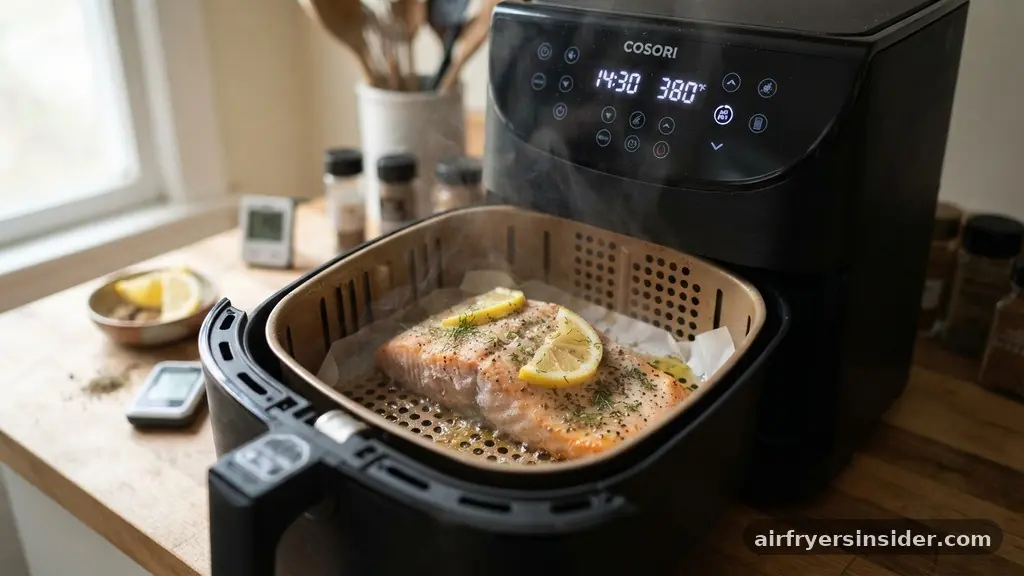
The air fryer is essentially a compact, high-powered convection oven. When you place frozen salmon fillets directly into the basket, the machine circulates superheated air rapidly around the surface of the fish.
This process is highly efficient for frozen items because it breaks through the icy exterior quickly, allowing the heat to penetrate the center of the protein. Unlike a standard oven, which might take longer to preheat and distribute heat, an air fryer focuses that energy on a smaller space, resulting in a much faster cooking process.
One of the primary benefits of this method is the preservation of moisture. Because the cooking time is shortened compared to traditional baking, the salmon doesn’t have as much time to dry out. However, you must manage the temperature carefully.
If the heat is too high, the outside will char before the middle is fully cooked. If it is too low, the fish may become rubbery. Striking that balance is the key to achieving a tender, moist, and flavorful result every single time you prepare a quick dinner.
The Importance of Proper Preheating
Many users skip the preheating step, but when working with frozen food, it is an essential part of the process. Preheating ensures that the moment the fish hits the basket, the cooking process begins immediately.
If you start with a cold unit, the salmon begins to thaw in a lukewarm environment, which can affect the final texture and potentially lead to uneven cooking. Most modern air fryers, like the Cosori or Ninja Foodi, reach their target temperature in just three to five minutes.
By preheating your air fryer to 375 or 400 degrees Fahrenheit, you create a thermal shock that helps form a nice, crispy exterior while keeping the inside succulent. This is particularly important for frozen salmon because you want to avoid the “mushy” texture that can occur if the fish sits in the chamber for too long without sufficient heat. Always check your manufacturer’s manual, as some models have specific guidelines regarding preheating, but generally, a few minutes of empty runtime is all you need to get the best results.
Determining the Ideal Cooking Time and Temperature
The exact duration for cooking frozen salmon depends on the thickness of the fillet and the specific wattage of your air fryer. Generally, you should aim for 375 to 400 degrees Fahrenheit.
At 400 degrees, you are looking at roughly 12 to 15 minutes of total time. It is helpful to start with a slightly lower temperature if your fillets are particularly thick, as this allows the heat to reach the center without burning the top layer.
If you are wondering how long to cook frozen salmon in air fryer units of different brands, remember that consistency is more important than the brand name. A thicker center-cut salmon will naturally take longer than a thinner, tail-end piece.
You should always aim for the salmon to reach an internal temperature of 145 degrees Fahrenheit, as recommended by USDA guidelines. This ensures that the protein coagulation is complete and the fish is safe to eat while maintaining its integrity and flavor.
| Fillet Thickness | Estimated Time (400°F) | Doneness Check |
|---|---|---|
| Thin (0.5 – 0.75 inch) | 10 – 12 Minutes | Flakes easily |
| Medium (1 inch) | 13 – 15 Minutes | Opaque center |
| Thick (1.25+ inches) | 16 – 18 Minutes | 145°F internal |
Preparing Your Salmon for the Best Results
Even though you are starting with a frozen product, a little preparation goes a long way toward enhancing the final flavor. First, rinse the salmon under cold water for a few seconds to remove any surface ice crystals. These ice crystals can create excess steam, which prevents the skin from getting crispy and can make the seasoning slide right off.
After rinsing, pat the fish completely dry with a paper towel. This step is non-negotiable if you want a browned, appealing exterior.
Once the fish is dry, brush it with a light coating of olive oil or avocado oil. The oil acts as a heat conductor, helping the surface brown more evenly. After the oil, apply your seasoning.
Because the fish is frozen, the seasoning won’t adhere quite as well as it would to a fresh fillet, so don’t be afraid to be generous. A simple mix of salt, pepper, garlic powder, and perhaps a touch of smoked paprika works wonders. You can also add a squeeze of fresh lemon juice once the salmon is finished cooking to brighten up the flavors.
Utilizing a Food Thermometer for Safety
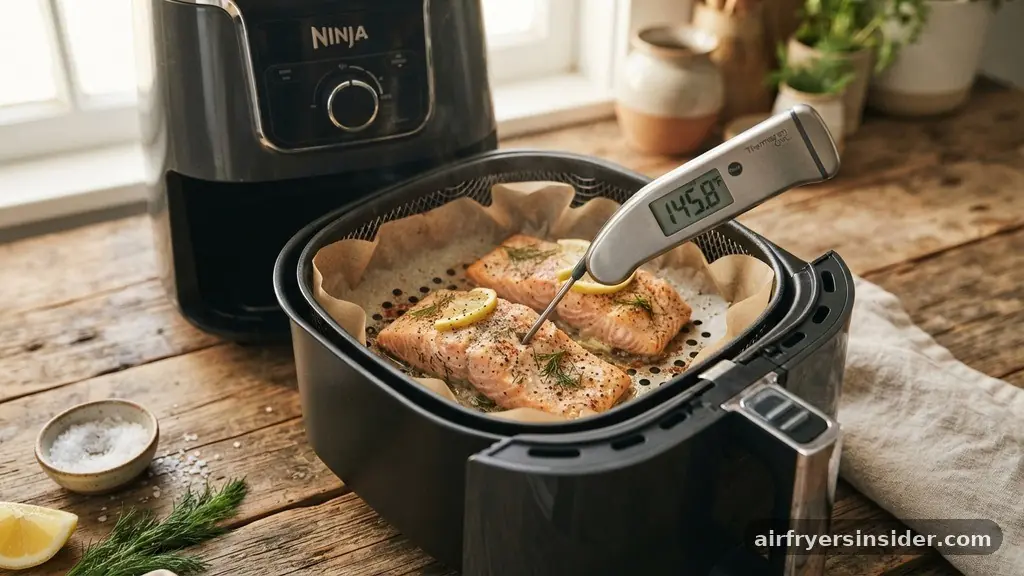
Relying solely on a timer is a recipe for either overcooked or undercooked fish. Because frozen salmon varies in water content and density, the only way to be 100% certain of salmon doneness is by using a food thermometer. Insert the probe into the thickest part of the fillet, away from any bones.
You are looking for a reading of 145 degrees Fahrenheit. This is the gold standard for seafood safety, ensuring that you have eliminated any potential pathogens while keeping the fish perfectly moist.
If you don’t have a thermometer, you can use the visual “flake” test. Use a fork to gently press on the thickest part of the fillet. If the flesh separates easily along the natural lines of the protein, it is likely ready.
However, the thermometer method is far more accurate, especially when dealing with frozen items where the outside might look cooked while the center remains icy. Investing in a digital instant-read thermometer is one of the best ways to improve your home cooking confidence.
Managing Salmon Skin and Textural Quality
Many people struggle with the skin when air frying salmon. If your fillets have the skin on, you have two choices: leave it on to protect the flesh during the high-heat cooking process, or remove it entirely before seasoning.
If you leave the skin on, place it face down in the basket initially. This creates a barrier between the heating element and the delicate meat, which is particularly helpful when the fish is starting from a frozen state.
If you prefer a crispy exterior on all sides, you can flip the salmon halfway through the cooking time. However, be careful when flipping, as frozen salmon can be fragile once it begins to soften. Use a wide spatula to support the entire length of the fillet.
If the skin becomes too soft or soggy, you can increase the temperature for the final two minutes to crisp it up. Remember that residual heat will continue to cook the fish even after you pull it out of the air fryer, so it is often wise to remove it when the thermometer hits 140 degrees and let it rest for a minute or two.
Addressing Common Topical Gaps
One common question that often goes unanswered is whether you should season the fish before or after cooking. While seasoning before is standard, the frozen surface can be resistant. A pro tip is to season the fish halfway through the cooking process.
Once the ice has melted and the surface is slightly warm, the oil and seasonings will adhere much better. This is a subtle trick that significantly improves the flavor profile compared to seasoning while the fish is rock-hard.
Another gap involves the “fishy” smell that can sometimes permeate an air fryer. To mitigate this, ensure your air fryer basket is scrupulously clean before starting. Old grease remnants in the bottom of the tray will burn and create an unpleasant smoke.
You can also place a small piece of lemon slice directly under the salmon fillet while it cooks. This helps infuse the fish with a fresh aroma and prevents the cooking juices from smoking if they drip onto the bottom of the basket.
Common Mistakes to Avoid
The most frequent mistake is overcrowding the air fryer basket. Even if you are in a rush, you must leave space between the fillets.
The air fryer works by circulating air; if the fillets are touching or piled on top of each other, the air cannot reach the sides, and you will end up with steamed, unevenly cooked fish. If you have multiple pieces, it is better to cook them in two batches or ensure they are arranged in a single layer with at least an inch of clearance.
Another error is ignoring the internal temperature. Because frozen fish contains varying amounts of moisture, visual cues can be deceptive. A fillet might look opaque and finished on the outside while remaining cold and raw in the middle.
Always take the extra thirty seconds to check with a thermometer. Finally, avoid using high-smoke-point oils like extra virgin olive oil if you are cooking at 400 degrees for a long period; instead, use avocado or grapeseed oil to prevent the oil from burning and imparting a bitter taste.
Best Practices for Consistent Results
- Always pat the fillets dry after a quick rinse to ensure proper browning.
- Use a thin layer of oil to help the heat transfer evenly across the surface.
- Place the salmon skin-side down if the skin is still attached.
- Cook in a single layer without overlapping to allow for maximum air circulation.
- Check the internal temperature in the thickest part of the fillet to ensure it reaches 145°F.
- Let the salmon rest for 2-3 minutes after removing it from the air fryer to redistribute juices.
These practices turn a simple, functional meal into something truly enjoyable. By treating the salmon with care—even when it’s frozen—you maintain the structural integrity of the protein, ensuring that it doesn’t fall apart during the cooking process. Air frying is an excellent way to prepare seafood, and once you get the timing down for your specific appliance, it will become a staple in your meal rotation.
Frequently Asked Questions
Can you cook salmon straight from frozen in an air fryer?
Yes, you can absolutely cook salmon directly from the freezer. It is a highly effective method that saves time and produces a flaky, moist fillet. Just ensure you preheat your air fryer and monitor the internal temperature to guarantee it reaches 145 degrees Fahrenheit for safety.
What is the ideal air fryer temperature for frozen salmon?
The ideal temperature for cooking frozen salmon is between 375 and 400 degrees Fahrenheit. This range provides enough heat to thaw and cook the fish simultaneously without drying out the exterior. If your fillets are very thick, 375 degrees is often better to ensure even cooking.
How do I know when the salmon is fully cooked?
The most reliable way to check for doneness is by using a food thermometer to ensure the internal temperature reaches 145 degrees Fahrenheit. Alternatively, the fish should be opaque throughout and flake easily when pressed gently with a fork in the thickest part of the fillet.
Should I flip the salmon during the cooking process?
Flipping is optional but recommended if you want the seasoning to be applied evenly or if you want both sides to have a similar texture. If you decide to flip, do it halfway through the cooking time using a wide spatula to prevent the fish from breaking apart.
Final Thoughts
Mastering how long to cook frozen salmon in air fryer units allows you to enjoy nutritious seafood even on your busiest days. By following the guidelines regarding preheating, checking the internal temperature, and ensuring proper airflow, you can avoid the common pitfalls of dry or unevenly cooked fish. The air fryer is a remarkably versatile tool for seafood, and once you are comfortable with the process, you will find it to be a reliable way to get a healthy, protein-rich dinner on the table in under twenty minutes.
Start with these basics, adjust for your specific machine’s performance, and enjoy the convenience of perfectly cooked salmon whenever you need it. If you have a favorite seasoning blend that works well with this method, feel free to experiment and make the recipe your own.
Meta Description: Learn exactly how long to cook frozen salmon in air fryer for a perfect, flaky result. Master temperatures, safety tips, and timing for a quick, healthy meal.


