

Learning how to cook butternut squash in air fryer is one of the most efficient ways to transform this dense, hearty vegetable into a tender and caramelized treat. Because of the way an air fryer uses convection cooking, you can achieve a texture that rivals traditional oven roasting in a fraction of the time.
This method is perfect for busy weeknights when you want a healthy side dish without waiting forty-five minutes for the oven to heat up and perform its magic. By mastering a few simple techniques, you will find that the natural sweetness of the squash intensifies, creating a delicious addition to salads, bowls, or as a standalone vegetable course.
Selecting and Preparing Your Squash for Success

Before you even think about the heat, you need to start with high-quality produce. Choosing the right squash is the first step toward a perfect result.
Look for a firm, heavy-feeling butternut squash with a matte, beige skin that has no deep cuts or soft spots. The neck of the squash should be thick and solid, which indicates a smaller seed cavity and more edible flesh.
Preparation requires a few essential tools: a sharp chef’s knife and a sturdy vegetable peeler. Because the skin is quite tough, a Y-shaped peeler is often the safest and most effective tool for removing the outer layer. Once peeled, cut the squash in half lengthwise to scoop out the seeds and stringy pulp.
Using a large spoon to scrape out the cavity makes this task quick and mess-free. From here, you can slice the squash into uniform, bite-sized cubes. Consistency in your cube size is critical when you learn how to cook butternut squash in air fryer, as it ensures that every piece reaches the perfect level of doneness at the same time.
The Science of Convection Cooking
An air fryer is essentially a compact, high-powered convection oven. The secret to its efficiency lies in the mechanical fan that forces hot air to circulate rapidly around the food.
When you place your cubed squash inside the basket, this powerful air circulation strips away the layer of moisture surrounding the vegetable. This process allows the natural sugars in the squash to undergo the Maillard reaction, which is a chemical process that leads to browning and deep, complex flavors.
Because the air fryer is so efficient, it creates those sought-after crispy edges that many people love. Unlike steaming, which keeps the vegetable soft and uniform, the air fryer creates a contrast between the slightly crunchy exterior and the soft, creamy interior. To maximize this, you must avoid overcrowding the basket.
If the cubes are piled too high, the air cannot reach the sides of the squash, resulting in a steamed texture rather than a roasted one. Cooking in a single layer or giving the basket a good shake halfway through is the best way to ensure even heat distribution.
Seasoning for Maximum Flavor
Butternut squash has a mild, nutty sweetness that acts as a blank canvas for various flavor profiles. While simple olive oil, kosher salt, and cracked black pepper are often enough to make a delicious base, you can easily adapt the seasoning to fit your meal.
If you are serving the squash as a savory side, consider adding dried rosemary, thyme, or a dash of smoked paprika. These savory notes balance the inherent sugar of the squash beautifully.
For those who prefer a sweeter presentation, you have plenty of options. A light toss with cinnamon and a sprinkle of brown sugar will emphasize the dessert-like qualities of the vegetable. Alternatively, a drizzle of maple syrup added during the last few minutes of cooking creates a gorgeous, sticky glaze.
Just be careful with sugary additions; because the air fryer gets so hot, sugar can burn quickly if added too early. It is best to stick to neutral oil and salt for the primary cook time and reserve the sweet glazes for the final stage.
Optimal Temperature and Timing
Getting the temperature right is essential when you want to achieve that fork-tender texture without turning the cubes into mush. Most modern air fryers perform best at a roasting temperature between 380°F and 400°F. If your unit is particularly powerful, sticking to 380°F is safer to prevent the edges from charring before the center is cooked through.
The total cook time will generally range from 12 to 18 minutes, depending on the size of your cubes. Since every air fryer model has slightly different airflow patterns, it is wise to start checking for doneness around the 10-minute mark. You are looking for a deep golden-brown color and a texture that gives easily when pierced with a fork.
| Cube Size | Estimated Cook Time | Temperature |
|---|---|---|
| Small (1/2 inch) | 10-12 minutes | 400°F |
| Medium (1 inch) | 14-16 minutes | 380°F |
| Large (1.5 inches) | 18-20 minutes | 375°F |
Addressing Common Cooking Challenges
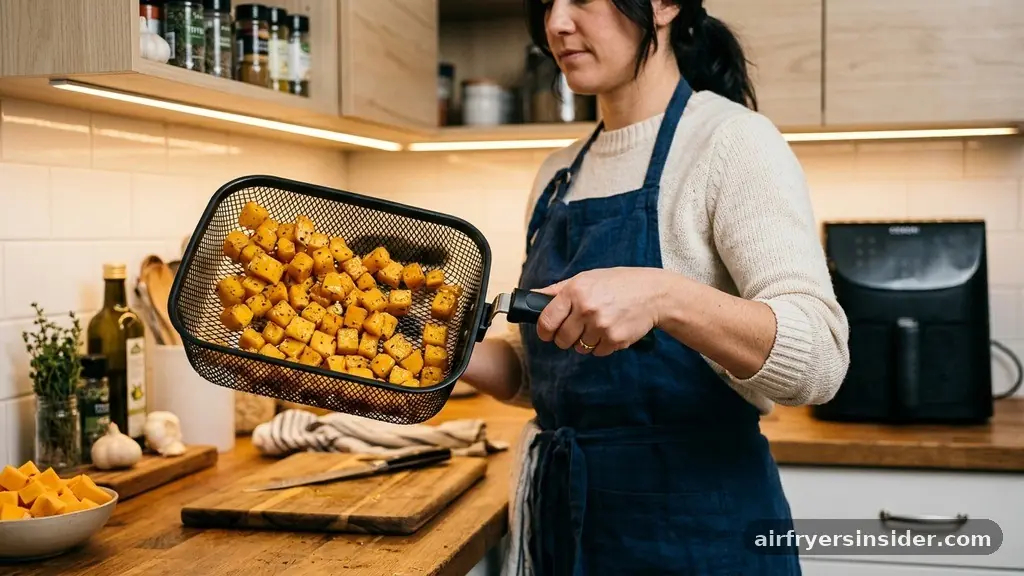
Even experienced home cooks encounter hurdles when experimenting with new appliances. One of the most common issues when learning how to cook butternut squash in air fryer is uneven cooking. This usually stems from inconsistent cube sizes or neglecting to shake the basket.
If you find that some pieces are burnt while others are raw, take a moment to cut your squash more precisely. Additionally, shaking the basket every 5 minutes is a non-negotiable step that ensures every piece gets hit with the hot air.
Another frequent challenge is the squash sticking to the basket. While most air fryer baskets are non-stick, the natural sugars in the squash can become quite sticky as they caramelize.
Using a light coating of oil—either by tossing the cubes in a bowl first or using a light spritz of cooking spray—will prevent this. If you are worried about cleanup, you can use parchment paper liners specifically designed for air fryers, but ensure that the paper is weighted down by the food so it does not fly up and hit the heating element.
Incorporating Squash into Your Meal Prep
Butternut squash is a fantastic candidate for meal prep because it holds its texture well in the refrigerator for several days. Once you have cooked a batch, you can store it in an airtight container for up to four days. This makes it incredibly easy to add a boost of nutrients to your lunches or dinners throughout the week.
You might want to consider these ways to use your pre-cooked squash:
- Toss into a warm quinoa or farro salad with toasted pecans and feta cheese.
- Blend with vegetable broth and coconut milk for a quick, creamy autumn soup.
- Fold into a breakfast scramble with kale and onions.
- Top a flatbread or pizza with the cubes, goat cheese, and a balsamic reduction.
- Use as a base for a grain bowl topped with a tahini-lemon dressing.
Ensuring Food Safety and Quality
While vegetable cooking is generally low-risk, food safety remains an important consideration. Always wash your squash under cool running water before cutting into it.
Even though you are peeling the skin, any bacteria on the surface can be transferred to the flesh by your knife. Keeping your cutting board and chef’s knife clean is essential to prevent cross-contamination.
Furthermore, do not ignore the importance of the preheat cycle. While many people skip this step in an air fryer, preheating your unit for 3 minutes before adding the squash ensures the cooking process starts immediately.
This helps in achieving that desired crispness without the squash sitting in the basket and drying out while the unit slowly climbs to temperature. If you are cooking multiple batches, remember that the second batch will usually cook faster than the first because the air fryer is already fully heated.
Answering Topical Gaps
One common question that often goes unanswered is whether you should keep the skin on. While the skin of a butternut squash is technically edible, it is quite tough and fibrous, even after roasting.
Most people find the texture unpleasant, which is why peeling is highly recommended. However, if you are roasting very small, thin-skinned squash varieties, you might get away with leaving it on.
Another frequent gap in information is how to handle “soggy” squash. If your squash turns out soft rather than crispy, it is almost always due to moisture accumulation. This happens if you add too much oil, if the squash was wet when you put it in the basket, or if you overcrowded the space.
Always pat your cubed squash dry with a paper towel before tossing it with oil to ensure that the exterior has the best chance to brown. Finally, never add salt until just before you put the squash in the air fryer; salt draws out moisture over time, which can lead to a softer, more steamed result if the squash sits on the counter for too long before cooking.
Embracing the Versatility of Autumn Produce
Butternut squash is the quintessential autumn produce, but its versatility makes it a year-round staple. By utilizing your air fryer, you remove the barrier of long cook times, allowing you to incorporate this nutrient-dense vegetable into your routine whenever you crave it. The combination of high heat and rapid air movement creates a profile that is superior to simple boiling or steaming.
As you become more comfortable with the timing and seasoning, don’t be afraid to experiment. Try tossing the cubes with different spices like curry powder or cumin for an exotic twist.
The key to success is keeping the pieces uniform, ensuring the air can circulate, and not being afraid to check the progress frequently. Once you master the basics, you will find that this method becomes a go-to technique for adding color, flavor, and nutrition to any meal you prepare.
Frequently Asked Questions
Is it necessary to preheat the air fryer?
While not strictly required, preheating for three to five minutes is highly recommended. A preheated unit ensures that the cooking process begins immediately, which is crucial for achieving that signature crispy exterior on your squash while keeping the inside tender and perfectly cooked.
Can I cook frozen butternut squash in the air fryer?
Yes, you can, but you should not thaw it first. Place the frozen cubes directly into the air fryer, increase the cook time by about five minutes, and be sure to shake the basket frequently to help evaporate the excess moisture that frozen vegetables release during cooking.
What is the best way to prevent the squash from drying out?
To avoid dry squash, ensure you toss the cubes thoroughly in enough oil to coat them. If the pieces are too small, they may dry out quickly, so aim for uniform one-inch cubes. Keep a close eye on the timer, as overcooking is the primary cause of dryness.
Should I peel the squash before cooking?
It is generally best to peel the squash using a vegetable peeler. While the skin is edible, it remains tough and chewy even after cooking. Peeling ensures a consistent, creamy texture throughout the cubes, which is much more pleasant for most diners.
Conclusion
Mastering how to cook butternut squash in air fryer is an easy way to elevate your weeknight cooking. By focusing on uniform cuts, proper air circulation, and the right temperature, you can achieve a perfect balance of crispy edges and tender, sweet interiors. Whether you choose to season your squash with savory herbs or sweet spices, the convection power of the air fryer ensures consistent results every time.
Start with a small batch to get a feel for your specific appliance’s heat intensity, and soon you will be incorporating this healthy side dish into your regular meal rotation with confidence. If you have a favorite seasoning blend or a unique way to serve your roasted squash, feel free to experiment and share your results with others in your kitchen.
Meta Description: Learn how to cook butternut squash in air fryer for perfect, crispy results every time. Follow our expert tips for preparation, seasoning, and timing.


