

Deciding whether you can put metal in an air fryer is a common dilemma for home cooks looking to expand their culinary repertoire. While these appliances function as powerful convection ovens, their compact size and proximity to the heating element make material choice critical for safety. Many users wonder if their existing kitchenware is compatible, or if they risk damaging their machine or causing a fire.
Understanding the nuances of heat resistance and airflow will help you use accessories confidently. By learning the specific rules for different materials, you can safely experiment with various recipes while ensuring your appliance remains in top working condition for years to come.
The Physics of Metal in Air Fryers
At its core, an air fryer is a high-speed convection oven. It uses a powerful fan to circulate hot air rapidly around the food, creating a crisp texture through a process known as the Maillard reaction. When you introduce metal into this environment, you are essentially placing an object into a high-velocity stream of heat.
Because metal is a highly conductive material, it absorbs and radiates heat efficiently. This is generally a good thing for cooking, as it helps distribute thermal energy evenly across the surface of the pan or rack.
However, the primary concern when considering whether you can put metal in an air fryer relates to the proximity of the metal to the heating element. Most air fryers have an exposed heating coil at the top. If a piece of metal—like a lightweight tray or a sheet of aluminum foil—is too close to this coil, it can overheat rapidly.
This intense localized heat can potentially damage the appliance’s internal sensors or, in extreme cases, lead to warping of the metal accessory itself. Always ensure that any metal items you place inside are heavy-duty enough to withstand direct heat without losing their structural integrity or releasing chemicals from coatings.
Using Aluminum Foil Safely
Many people frequently use aluminum foil to line their air fryer baskets for easier cleanup. From a technical standpoint, this is safe provided you follow specific guidelines. The foil must be weighed down by the food you are cooking.
If the fan speed is high and the foil is loose, it can be lifted by the air circulation and sucked into the heating element. This can cause electrical arcing or damage the fan assembly.
To use foil effectively, always ensure it is tucked tightly against the bottom of the basket. Never cover the entire bottom surface in a way that blocks the perforations, as these holes are essential for proper air circulation.
If you block the airflow, the air fryer will not be able to cook your food evenly, and the unit may overheat because it cannot vent the hot air properly. When in doubt, prefer perforated parchment paper, which is specifically designed to allow air to pass through while still providing a non-stick surface for your ingredients.
Stainless Steel and Oven-Safe Cookware
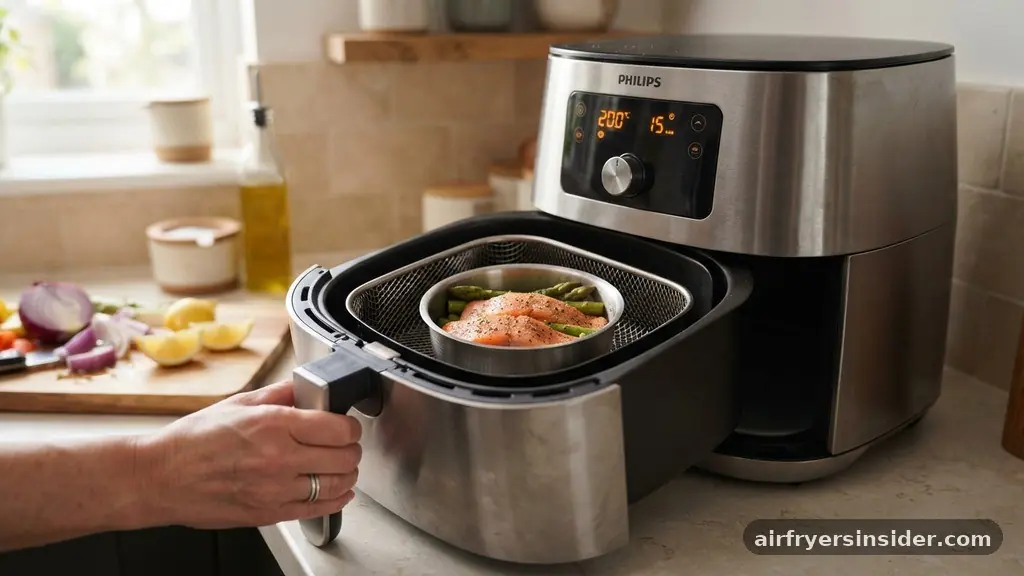
If you are wondering whether you can put metal in an air fryer in the form of pots or pans, the answer is generally yes, provided they are labeled as oven-safe cookware. Stainless steel is an excellent conductor of heat and is highly durable, making it a reliable choice for air fryer baking.
Many small stainless steel cake tins or ramekins fit perfectly inside standard air fryer baskets. Because stainless steel has a high melting point and does not contain non-stick coatings that might degrade at high temperatures, it is often safer than cheaper, coated alternatives.
When selecting stainless steel items, ensure they are free of plastic handles or decorative elements that could melt. Check the manufacturer’s temperature limits for any bakeware you intend to use.
While most stainless steel can handle the 400°F (200°C) temperatures common in air fryers, the handles or rivets might have different heat thresholds. Always prioritize items that are sturdy and heavy-gauge, as thin, flimsy metal is more prone to warping under the intense, fan-forced heat of an air fryer.
The Role of Metal Skewers
Metal skewers are a staple in many kitchens, and they are perfectly suitable for use in an air fryer. They are particularly useful for making kebabs, as they hold ingredients securely while the circulating air crisps the exterior of the meat and vegetables. Unlike wooden skewers, which can char or burn if not soaked thoroughly, stainless steel skewers are heat-resistant and reusable.
When using skewers, make sure they are short enough to fit inside your basket without touching the sides. If the ends of the skewers come into contact with the sides of the basket, they might scratch the non-stick coating of your air fryer. Furthermore, be aware that metal skewers will become extremely hot during the cooking process.
Always use heat-resistant tongs or oven mitts when removing them. It is a good practice to arrange your food on the skewers such that they don’t block the basket’s airflow, ensuring that the heat can reach every part of the food for consistent results.
Comparing Different Materials for Air Frying
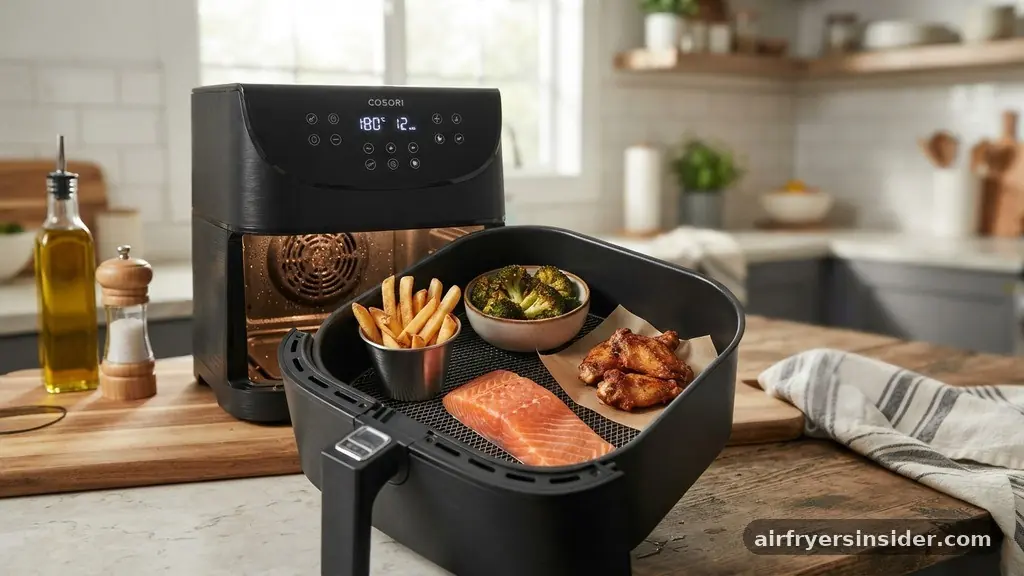
Choosing the right material for your air fryer accessories can significantly impact your cooking results and the longevity of your machine. The following table compares common materials used in air frying to help you make an informed decision.
| Material | Suitability | Key Considerations |
|---|---|---|
| Stainless Steel | High | Durable, excellent heat conduction, oven-safe. |
| Aluminum Foil | Moderate | Must be weighed down to prevent flying into the fan. |
| Silicone Molds | High | Flexible, easy to clean, check heat limits. |
| Ceramic | Moderate | Heats slowly, fragile, ensure it is heat-safe. |
Each of these materials has unique properties that affect how heat is transferred to your food. While stainless steel is a gold standard for durability, silicone is often preferred for muffins or egg bites due to its non-stick nature. Always verify that your chosen accessory is rated for high-temperature use, as some lower-quality silicone may start to degrade or emit odors at temperatures above 375°F.
Common Pitfalls and Kitchen Safety Standards
Adhering to strict kitchen safety standards is vital when modifying your air fryer with accessories. One of the biggest mistakes users make is overfilling the basket. If you place a metal tin inside that is too large, you essentially create a wall that stops the convection current.
This results in undercooked food in the center and potential overheating of the appliance’s motor. Always leave at least an inch of space around the sides of any metal container to allow the air to circulate freely.
Another safety concern involves the use of metal utensils inside the basket. While the appliance itself can handle metal, your basket likely has a non-stick coating. Using sharp metal forks or knives to scrape food out of the basket will inevitably scratch and ruin the finish.
Over time, these scratches can lead to the coating flaking off into your food. Stick to silicone or wooden utensils to protect your investment. If you are using metal racks or trays, ensure they are placed flat and stable to prevent them from tipping over during the cooking cycle.
Addressing Topical Gaps: Can You Use Coated Tins?
A common question that often goes unanswered in basic guides is whether you can put metal in an air fryer if that metal has a non-stick or enamel coating. Generally, you can, but you must be careful. Many cake tins and pie pans come with a non-stick coating similar to that of your air fryer basket.
These coatings are designed to withstand oven temperatures, which typically align with air fryer settings. However, you should avoid placing these items directly under the heating element if the manufacturer warns against high-heat exposure.
If you are using an enameled metal pan, be aware that the enamel can crack if subjected to extreme temperature fluctuations—for instance, if you take a hot pan out of the air fryer and immediately plunge it into cold water. Always let your metal bakeware cool down gradually before cleaning.
Additionally, inspect your coated tins for any signs of peeling. If the coating is damaged, the metal underneath may be exposed, which could lead to uneven heating or the release of chemical compounds into your food during the high-heat convection process.
Essential Accessories for Better Results
If you enjoy air frying, investing in a few specialized accessories can make your life much easier. Beyond basic metal trays, look for racks that allow you to cook on two levels.
These racks are typically made of stainless steel and are designed to optimize airflow while increasing the capacity of your machine. When using a second rack, remember that the food on top will cook faster than the food on the bottom, so you may need to rotate them halfway through.
Another great addition is a set of silicone molds or small ceramic dishes for baking individual portions of desserts or egg-based dishes. While these are not metal, they are often used in conjunction with metal racks.
When purchasing air fryer accessories, always check the product description to ensure they are listed as dishwasher-safe, which will save you significant time during cleanup. Remember that even if an accessory is dishwasher-safe, hand washing with a soft sponge will help preserve the non-stick coating for much longer than a high-pressure dishwasher cycle.
Maintenance and Long-Term Care
Taking care of your metal accessories is just as important as maintaining the air fryer itself. After every use, check your metal trays and skewers for any burnt-on residue. Built-up carbon can act as an insulator, preventing the metal from distributing heat effectively.
Use a non-abrasive cleaner to scrub away debris, and avoid harsh steel wool pads that can leave deep scratches. If you notice any warping in your metal pans, it is usually a sign that the metal is too thin for the high temperatures of the air fryer; consider upgrading to a thicker, higher-quality stainless steel option.
Finally, keep an eye on your air fryer’s heating element. If you notice any buildup of grease or food particles on the coil, clean it gently with a damp cloth once the unit is completely cool. A clean heating element ensures that the radiant heat is consistent and that no smoke is produced during cooking.
By treating your accessories with the same care as your primary appliance, you ensure that every meal is cooked safely and efficiently. If you ever feel unsure about an item, it is always better to stick to the manufacturer’s provided basket to avoid any risk of damage.
Frequently Asked Questions
Is it safe to use aluminum foil in an air fryer?
Yes, it is safe as long as it is weighed down by food and does not block the air vents. Never allow loose foil to circulate, as it can touch the heating element and cause damage or fire hazards. Always prioritize safety by keeping it secure.
Can I use stainless steel bowls in my air fryer?
You can use stainless steel bowls if they fit comfortably inside the basket and are oven-safe. Ensure they do not have plastic parts or non-stick coatings that might degrade. Always leave space for air to circulate around the bowl for even cooking results.
What happens if metal touches the air fryer heating element?
If metal comes into direct contact with the heating element, it can cause electrical arcing, damage the heating coil, or lead to overheating. This may permanently break your appliance. Always ensure your metal accessories are placed well below the top of the basket to avoid contact.
Are metal utensils okay to use inside the air fryer basket?
While the metal itself is heat-resistant, metal utensils will scratch the non-stick coating of your air fryer basket. Over time, this ruins the finish and causes the coating to flake. It is highly recommended to use silicone or wooden tools to protect your basket’s integrity.
Conclusion
Navigating the rules of air fryer usage is largely about understanding heat distribution and material limits. When you ask if you can put metal in an air fryer, the answer is a qualified yes: stainless steel, metal skewers, and even properly secured aluminum foil are excellent tools for your kitchen. The key is to prioritize airflow, ensure your accessories are heat-resistant, and protect the non-stick finish of your appliance.
By following these practical steps, you can safely experiment with new recipes, from roasted vegetables to decadent desserts, all while keeping your machine in peak condition. Start with high-quality, sturdy accessories, and don’t be afraid to test your culinary creativity within these safe boundaries. Happy cooking!
Meta Description: Curious if you can put metal in an air fryer? Learn the safety rules for using aluminum foil, stainless steel, and metal accessories for better results.


