

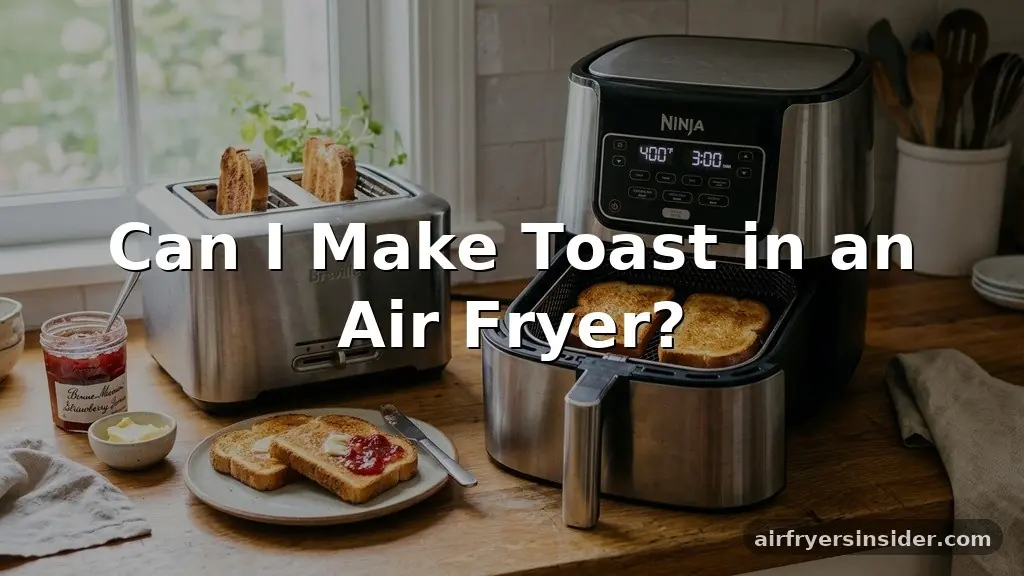
Many home cooks wonder if they can make toast in an air fryer to save counter space or avoid buying yet another appliance. The answer is a resounding yes, and once you master the technique, you might find the results superior to a traditional toaster.
Because these machines rely on powerful convection heating, they create a uniquely even crunch that transforms a simple bread slice into a gourmet experience. Whether you are working with thick-cut artisanal bread or standard sandwich loaves, understanding how to manipulate airflow and timing will ensure your morning meal comes out perfectly every time.
How Air Fryers Differ from Traditional Toasters
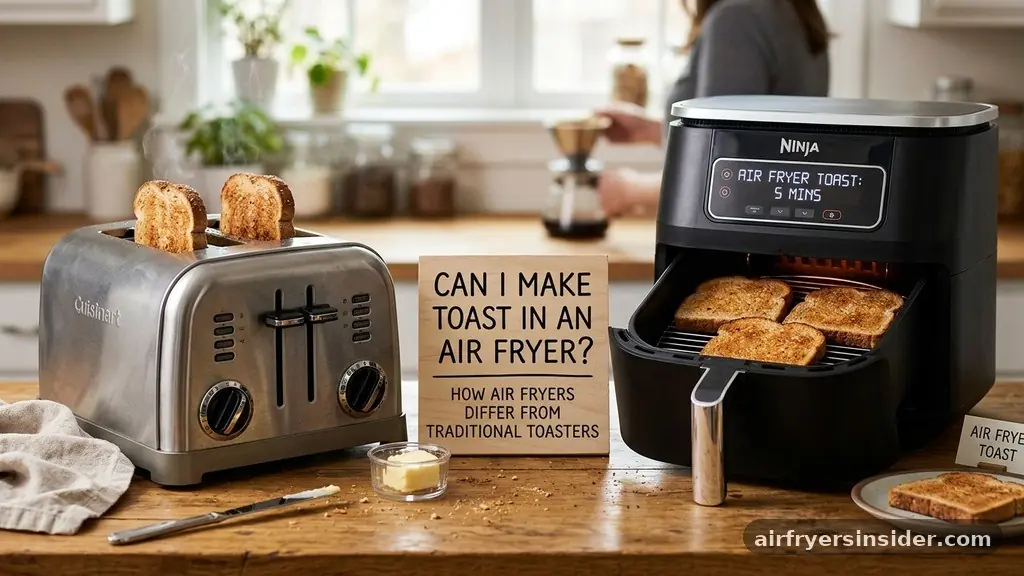
A traditional pop-up toaster works by proximity to exposed heating wires. The bread sits directly next to these elements, which rely on radiant heat to singe the exterior. In contrast, an air fryer uses a powerful internal fan to circulate hot air around the food.
This mechanism, often marketed as rapid air technology, is essentially a high-powered convection current that reaches every side of the bread simultaneously. Because the heat is dynamic rather than static, the browning process is often more uniform, provided the bread slice thickness allows for adequate airflow.
When you use a toaster, you have limited control over the distribution of heat. If your toaster has uneven coils, you end up with one side burnt and the other barely warm. Air fryers eliminate this by keeping the air moving, which helps achieve a consistent golden brown finish across the entire surface.
However, you must be mindful of the physics involved. If you pack the basket too tightly, you create an airflow obstruction, which prevents the heat from reaching the center of the bread. Keep your slices spaced out to allow that hot air to do its job effectively.
Optimizing Bread Slice Thickness for Best Results
Not all bread is created equal when it comes to air frying. Thin, standard sandwich bread can sometimes become overly dry or even brittle if left in for too long, as the intense airflow acts like a mini-dehydrator.
If you are using pre-sliced commercial loaves, you might need to reduce your cooking duration by a minute or two compared to thicker, bakery-style varieties. Conversely, artisanal bread or thick-cut sourdough slices hold up beautifully under the convection heat.
The density of the crumb also plays a significant role. A light, airy brioche might brown in seconds, while a dense, seeded rye requires more time to reach that ideal crispy texture. When choosing your bread, consider how much moisture it contains.
Denser breads benefit from the extra time in the air fryer because the heat has a chance to penetrate the center before the exterior becomes scorched. Always keep an eye on the browning levels, as air fryers can transition from perfect to burnt in a very short window once the fan hits top speed.
The Science of Airflow and Heating Elements
Understanding the heating element placement in your specific model is crucial for success. In most air fryers, the heat source is located at the top of the unit, directly above the basket. This means the top side of your bread will always brown faster than the bottom.
To get an even result, you should flip your bread halfway through the cycle. This simple adjustment ensures that both sides receive direct exposure to the heat and the moving air.
Some users worry about bread crumbs falling into the base of the machine. While most air fryers have a removable tray or a mesh basket, it is not technically a crumb tray in the same sense as a toaster.
If you are worried about small pieces of bread burning and creating smoke, you can place a small piece of parchment paper under the bread, but ensure it is weighed down by the slice so it doesn’t fly up into the heating element. This is a common safety concern, as lightweight paper can easily get sucked into the fan.
Managing Buttering and Topping Strategies
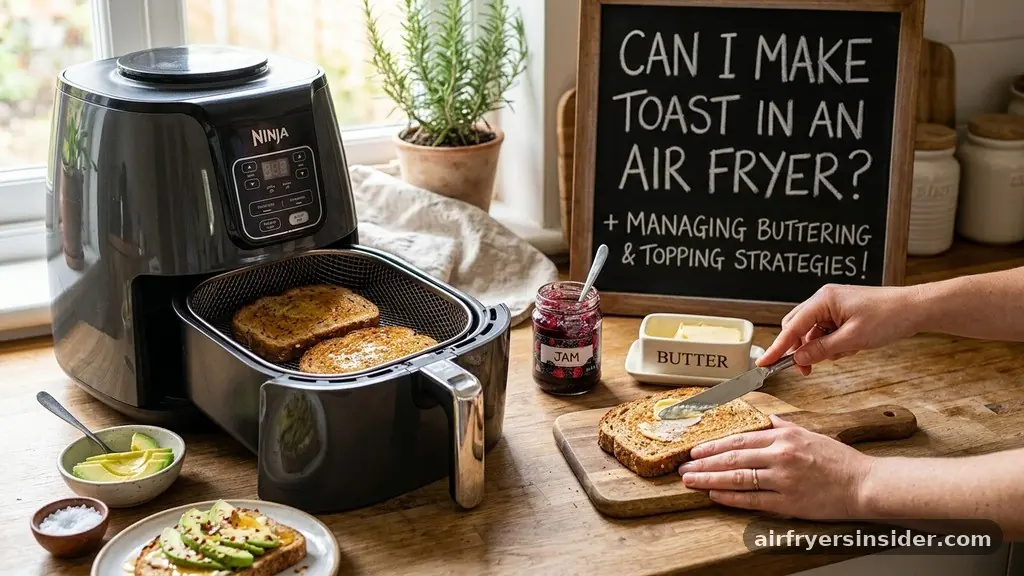
One of the most frequent questions involves when to apply butter or other toppings. In a traditional toaster, you add butter after the bread pops up. In an air fryer, you have the option to butter the bread before it goes in.
If you want a rich, toasted flavor, lightly buttering the bread before cooking can result in a delicious, pan-fried-style finish. However, be cautious with heavy toppings like cheese or garlic spreads. These can melt and drip through the basket, potentially causing a mess or creating smoke if they hit the bottom of the unit.
For cheese toast, it is best to toast the bread for a minute or two first, then add the cheese and return it to the air fryer for just enough time to melt it. This prevents the bread from becoming overly hard while waiting for the cheese to bubble.
If you are making something like avocado toast, stick to toasting the bread plain. The intense heat of the air fryer can turn delicate toppings into a soggy mess if they are exposed to the convection current for the entire duration of the cooking cycle.
Comparing the Air Fryer to the Toaster Oven
A toaster oven comparison is inevitable when discussing air-fried toast. Toaster ovens provide a larger surface area, allowing you to toast multiple slices without worrying about airflow obstruction. However, they lack the high-velocity fan of an air fryer.
Air fryers are generally faster and produce a crunchier, more consistent result because the air circulation is so much more aggressive. If you prefer a soft, chewy interior with a thin crust, a toaster oven might be more to your liking.
If you are looking for that classic, deep-crust crunch, the air fryer is the clear winner. The convection current effectively pulls moisture out of the outer layer of the bread faster than a standard oven or toaster, leading to a much more satisfying bite. The downside is the limited capacity.
If you are feeding a family of four, you will likely spend more time rotating batches in the air fryer than you would waiting for a four-slice toaster to finish. Use the air fryer when quality and texture are the priorities, not speed or volume.
Common Pitfalls and Food Safety Tips
To ensure the best experience, you must prioritize food safety and machine maintenance. Never leave the air fryer unattended, especially when toasting light, thin bread. Because the heating elements are so close to the food, the bread can catch fire if the timer is set too long.
If you notice any burning smell, stop the machine immediately and check the status of your bread. It is always better to start with a lower time and add more if needed than to start with a long timer and end up with charcoal.
Another aspect of food safety involves the cleanliness of your basket. Residual grease from previous meals, like chicken wings or bacon, can smoke when you turn the unit on for toast. Always ensure your basket is clean before starting.
If you use parchment paper, ensure it is specifically designed for air fryers and doesn’t block the airflow. Blocking the vents or the fan intake can lead to overheating, which could shorten the lifespan of your appliance or trigger a safety shutdown.
Top Tips for Perfect Air-Fried Bread
| Bread Type | Temperature | Estimated Time |
|---|---|---|
| Standard White | 350°F (175°C) | 2-3 Minutes |
| Thick Sourdough | 370°F (185°C) | 4-5 Minutes |
| Bagels | 370°F (185°C) | 3-4 Minutes |
| English Muffins | 350°F (175°C) | 3 Minutes |
Follow these best practices to guarantee success every time you fire up the machine:
- Always preheat the air fryer for 2-3 minutes; this helps the bread start browning immediately.
- Flip the bread halfway through the cooking process to ensure both sides are toasted equally.
- Avoid overcrowding; leave at least an inch of space between slices to allow for proper hot air movement.
- If your bread is very light, place a small rack or another slice of bread on top of it to prevent it from flying toward the fan.
- Experiment with lower temperatures if you find the edges are browning too fast while the center remains soft.
Addressing Common User Concerns
Many people ask if there is a specific bagel setting on their machine. While some premium models include one, most standard air fryers do not have a dedicated function for bread. You don’t need one.
Simply treat your bagel like a thick slice of bread, but focus the cut side up for the majority of the time. This ensures the cut side gets crispy while the outer crust stays tender. If you want a very crunchy bagel, you can flip it for the last minute of the cycle.
Another common gap in knowledge is the use of frozen bread. Can you toast frozen bread in an air fryer? Absolutely.
In fact, it is often better than a toaster because the air fryer can thaw and toast simultaneously. Just add an extra minute to your cooking time and monitor the progress closely. Because the bread is frozen, it won’t burn as quickly as room-temperature bread, giving you a bit more leeway to achieve that perfect golden brown finish without the risk of scorching the exterior before the inside is ready.
FAQ
Do I need to preheat my air fryer for toast?
While not strictly required, preheating for about two minutes ensures the air is already at the target temperature. This helps achieve a crisp exterior immediately, which prevents the bread from drying out too much while waiting for the center to warm up.
Can I toast multiple slices at once?
You can, provided they fit in a single layer. Do not stack slices on top of each other, as this blocks the airflow and results in uneven, soggy bread. If you need to toast more than the basket allows, it is best to do it in batches.
Why did my bread fly around inside the air fryer?
Air fryers use powerful fans that can lift light items. If your bread is thin or light, the convection current may cause it to flutter or hit the heating element. To prevent this, use a heavier bread or place a small, heat-safe rack on top of the slice to hold it down.
Is it healthier to toast bread in an air fryer?
It is not necessarily healthier than a traditional toaster, but it allows you to control the fat content if you choose to brush the bread with oil or butter. It is simply an alternative method that provides a different, often crunchier, texture than standard toasting.
Conclusion
Making toast in an air fryer is a simple way to get that perfectly golden, crispy result that many toasters struggle to replicate. By keeping an eye on your slice thickness, managing your airflow, and remembering to flip your bread, you can achieve professional-level results in your own kitchen. Whether you are using thick sourdough or a quick slice of sandwich bread, the convection power of the air fryer offers a level of consistency that is hard to beat.
Don’t be afraid to experiment with your temperature settings and timing to find the exact crunch you prefer. Now that you know the ins and outs of the process, try it out tomorrow morning and see if you prefer this method over your standard toaster.
Meta Description: Can I make toast in an air fryer? Learn how to achieve the perfect golden brown crunch using convection heating and proper airflow techniques.


