

Understanding how many watts does an air fryer use is essential for anyone looking to manage their home energy bills or determine if their kitchen wiring can handle the load. Because these appliances are essentially compact convection ovens, they pack significant heating power into a small footprint, often drawing as much electricity as a standard toaster or coffee maker. By examining the wattage, you can better estimate your daily energy consumption and decide if your current setup is ideal for your cooking habits.
Decoding Air Fryer Power Ratings
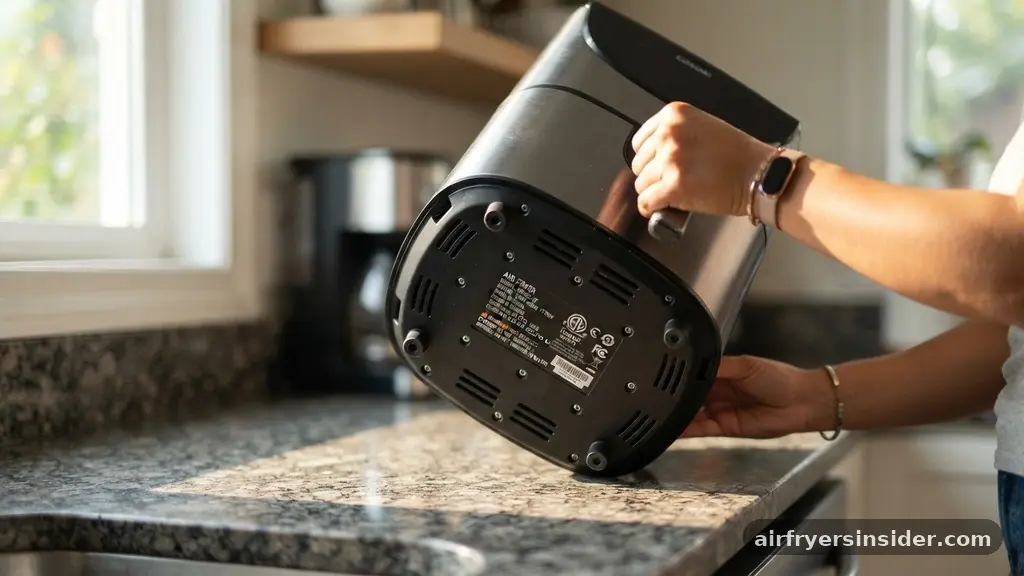
When you look at the back of your machine, you will typically see a label indicating the appliance’s power rating in watts. Most consumer-grade air fryers fall into the 800 to 1,800-watt range.
Smaller, personal-sized units often sit on the lower end, while large-capacity, family-sized models from brands like Ninja or Philips frequently require the upper limit of that range to maintain consistent temperatures. This power rating represents the maximum electrical load the device pulls when the heating element is running at full capacity.
It is important to realize that the wattage stamped on the bottom of your machine is a measure of its peak potential, not necessarily its constant usage. During a typical cooking cycle, the air fryer uses a thermostat to cycle the heating element on and off.
This mechanism ensures the internal chamber maintains a steady temperature rather than blasting heat continuously. Therefore, while your unit might have a 1,500-watt rating, the actual energy consumption over a 30-minute period is usually lower than if it ran at full power for the entire duration.
Understanding Energy Consumption in Kilowatt-Hours
To calculate how much your air fryer really costs to operate, you need to convert watts into kilowatts and then into kilowatt-hours (kWh). A 1,500-watt air fryer uses 1.5 kilowatts per hour of continuous operation.
If you cook a batch of chicken wings for 20 minutes, or one-third of an hour, you are consuming roughly 0.5 kWh of electricity. By multiplying this figure by your local residential electricity rates, you can derive a precise energy cost calculation for that specific meal.
Most utility companies bill by the kilowatt-hour, making this metric the most reliable way to track your spending. If you find your energy bills creeping upward, checking the usage of your high-drain appliances is a smart move.
Because air fryers cook faster than traditional convection ovens, they often result in lower total energy consumption despite having a high instantaneous power draw. The efficiency comes from the smaller, insulated cooking chamber and the rapid circulation of hot air, which minimizes heat loss compared to a full-sized oven.
The Role of Convection Heating and Thermal Efficiency
The core technology behind an air fryer is forced convection heating. A powerful fan circulates hot air at high speeds around the food, which is positioned close to a high-intensity heating element.
This proximity and airflow allow the device to achieve crisp textures without the long preheating times required by conventional ovens. The thermal efficiency of these units is significantly higher than that of a standard stove, as they don’t waste energy heating up a massive metal cavity that holds several cubic feet of air.
Manufacturers design these appliances to be as efficient as possible within their size constraints. A Cosori or Ninja unit will often feature specialized airflow patterns that maximize heat transfer to the food.
When the air circulates more effectively, the heating element doesn’t need to work as hard or for as long to reach the desired internal temperature. This design choice is why you can often reduce cooking times by 20% to 30%, further lowering the total kilowatt-hours used per meal compared to traditional baking methods.
Appliance Efficiency and the Duty Cycle
The duty cycle of an air fryer refers to the ratio of time the heating element is actively consuming power versus the time it is idle. During a 30-minute cooking cycle, the appliance might actively heat for 15 minutes and remain idle for 15 minutes while the fan continues to circulate the residual heat.
Understanding this cycle is vital for anyone trying to troubleshoot their home’s electrical load. If you are running multiple high-wattage appliances on the same circuit, you need to account for these bursts of power.
Factors Influencing the Duty Cycle
- Target Temperature: Cooking at 400°F requires more frequent heating element activation than cooking at 300°F.
- Food Density: Frozen or moisture-heavy foods require more energy to heat up and evaporate excess surface water.
- Airflow Obstruction: Overfilling the basket restricts air movement, forcing the unit to work harder to maintain temperature.
- Ambient Kitchen Temperature: A cold kitchen may cause the thermostat to trigger the heating element more frequently.
Electrical Safety and Circuit Breakers
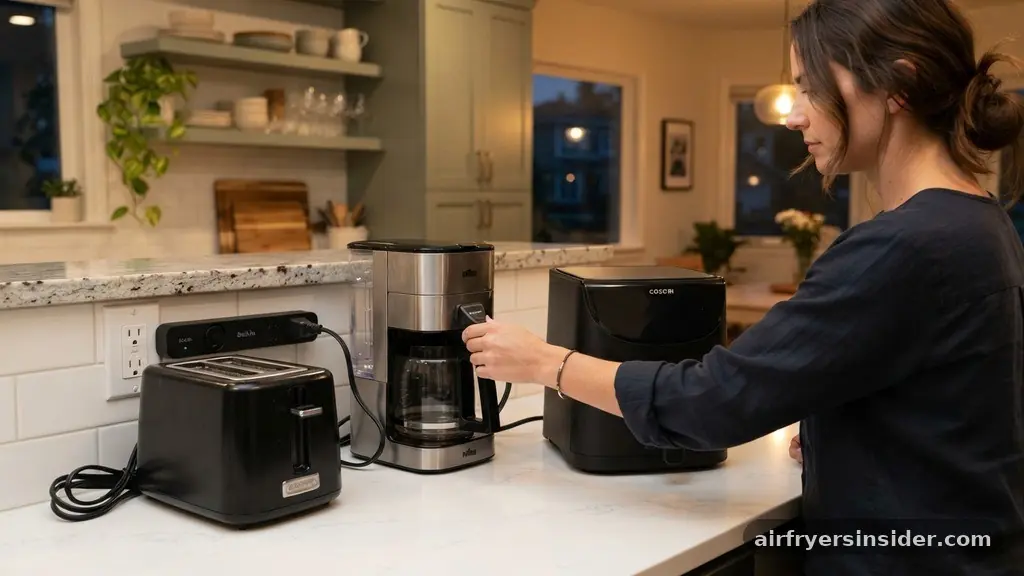
Most standard household outlets in North America are rated for 15 or 20 amps at 120 volts. A 1,500-watt air fryer pulls approximately 12.5 amps when running at peak wattage.
If you have other appliances plugged into the same circuit—such as a microwave, blender, or coffee maker—you risk tripping your circuit breaker. It is generally recommended to keep your air fryer on a dedicated circuit or at least separate from other high-draw kitchen appliances to prevent unexpected power interruptions.
If you notice your lights flickering or the breaker tripping whenever you start your air fryer, it is a clear sign that you are exceeding the electrical load capacity of that specific circuit. Do not attempt to bypass this by using light-duty extension cords, as these can overheat and present a fire hazard.
Always plug high-wattage cooking devices directly into a wall outlet to ensure the wiring can safely handle the current. If you must use an extension cord, ensure it is a heavy-duty model rated for at least 15 amps.
Operating Air Fryers on Off-Grid Power
For those living in RVs, tiny homes, or utilizing off-grid power systems, the wattage of an air fryer is a critical constraint. A portable power station or a power inverter must be capable of handling both the starting surge and the sustained load of the appliance.
While many mid-sized power stations offer 1,000 to 2,000 watts of output, running an air fryer will deplete their internal batteries rapidly. You must balance your desire for fried foods with the total capacity of your battery bank.
When selecting an inverter for off-grid cooking, look for a pure sine wave inverter to ensure the sensitive digital controllers in modern air fryers operate correctly. Modified sine wave inverters can sometimes interfere with the electronic displays and timing circuits found in premium models from brands like Philips or Ninja. Furthermore, consider the amperage draw on your battery bank; pulling 1,500 watts from a 12-volt battery system creates a significant current draw that requires thick, high-quality cabling to avoid voltage drop and heat buildup.
Comparison of Power Needs by Appliance Type
To give you a better sense of how air fryers compare to other common kitchen tools, consider the following table. This data reflects typical peak wattage ratings for standard household devices. Note that while some items have similar wattages, their actual energy consumption varies based on how long they are typically used during a single day.
| Appliance Type | Typical Wattage Range | Usage Pattern |
|---|---|---|
| Air Fryer | 1,200 – 1,800 Watts | Short bursts, high intensity |
| Electric Toaster | 800 – 1,500 Watts | Very short duration |
| Microwave Oven | 600 – 1,200 Watts | Short duration |
| Electric Kettle | 1,000 – 1,500 Watts | Short duration |
| Full-Sized Oven | 2,000 – 5,000 Watts | Long duration, high heat |
Addressing Common Topical Gaps
A frequent point of confusion is whether a lower-wattage air fryer is objectively better for your electricity bill. The truth is more nuanced: a lower-wattage unit (e.g., 800 watts) will take longer to cook the same amount of food as a 1,500-watt model.
Because the cooking time is extended, the total energy consumed (kilowatt-hours) often balances out. The primary advantage of a lower-wattage unit is not necessarily energy efficiency, but rather the ability to use it on circuits that cannot support the higher current draw of a larger, more powerful machine.
Another aspect often overlooked is the “standby” power consumption. Many modern air fryers with digital touchscreens and LED displays consume a small amount of electricity even when they are not actively cooking.
While this amount is negligible compared to the heating element, it adds up over time if you have multiple appliances plugged in. If you are strictly monitoring your energy footprint, unplugging your air fryer when it is not in use is a simple way to eliminate that phantom load.
Maximizing Efficiency in Your Daily Routine
To get the most out of your air fryer while keeping energy usage in check, focus on batch cooking and proper maintenance. If you are cooking multiple portions, ensure they are cooked in succession rather than letting the machine cool down completely between loads.
The residual heat inside the chamber helps the subsequent batches reach temperature faster, reducing the total active time of the heating element. Additionally, keeping the heating element and the fan blades clean ensures that air flows freely, preventing the unit from having to compensate for poor heat distribution.
Another tip is to avoid preheating unless a recipe specifically demands it. Most air fryers reach their target temperature within three to five minutes, and for many types of frozen or hearty foods, the preheating phase is largely unnecessary.
By simply adding an extra minute or two to your total cook time, you can skip the preheat phase entirely and save a small but measurable amount of energy. Over the course of a year, these small adjustments to your cooking habits lead to noticeable savings on your utility bills.
Frequently Asked Questions
Is 1500 watts considered high for an air fryer?
It is the standard wattage for most mid-to-large capacity air fryers. While it sounds like a lot, it is typical for appliances that generate intense heat. It allows the unit to reach cooking temperatures quickly, which is necessary for the convection effect to crisp food effectively.
Can I run an air fryer on a standard household outlet?
Yes, most household outlets are designed to handle 15 to 20 amps, which is sufficient for a 1,500-watt air fryer. However, you should avoid plugging other high-energy appliances into the same circuit simultaneously, as this can easily exceed the circuit’s capacity and cause the breaker to trip.
Is it cheaper to run an air fryer or a conventional oven?
An air fryer is generally more cost-effective. Because it has a smaller internal volume and heats up much faster, it consumes fewer kilowatt-hours to cook the same amount of food. A full-sized oven requires significant energy just to preheat the large air cavity before cooking even begins.
Can a portable power station power an air fryer?
It depends on the power station’s inverter capacity and battery size. You need a unit capable of handling at least 1,500 watts of continuous output. Be aware that air fryers are energy-intensive, so they will drain the battery of even a large portable power station very quickly.
Final Thoughts on Energy Management
Knowing how many watts does an air fryer use helps you make informed decisions about your kitchen setup and your household energy consumption. While these appliances are powerful, their efficiency stems from their ability to cook quickly, which often makes them more economical than traditional ovens for small-to-medium meals. By understanding the relationship between wattage, duty cycles, and your local electricity rates, you can effectively manage your energy usage.
Always prioritize electrical safety by ensuring your circuits can handle the load, and don’t be afraid to experiment with cooking times to find the perfect balance between crispiness and efficiency. With these insights, you can enjoy the convenience of air frying while maintaining a responsible and cost-effective home kitchen.
Meta Description: Discover how many watts does an air fryer use and learn how to manage your energy consumption, electrical loads, and cooking efficiency effectively.


