

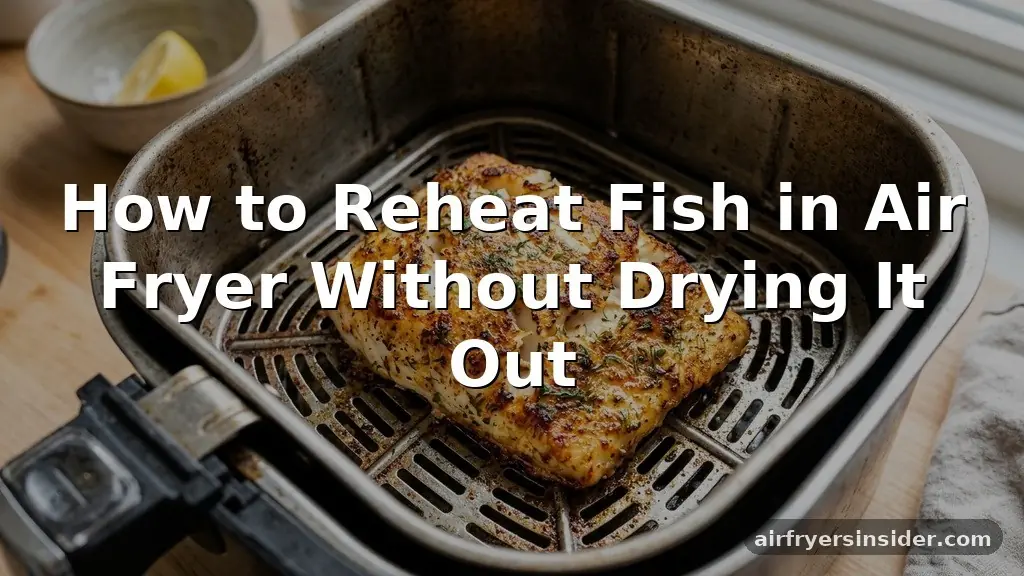
Reheating leftover fish often feels like a gamble, usually resulting in a dry, rubbery mess that loses all its initial appeal. Mastering the art of how to reheat fish in air fryer settings changes that dynamic entirely, allowing you to restore that elusive, fresh-off-the-grill quality. By leveraging rapid air circulation, you can transform yesterday’s meal into something that tastes intentional rather than salvaged.
Whether you are dealing with delicate pan-seared fillets or breaded portions that have lost their crunch, the right approach ensures your seafood remains succulent and flavorful. You will find that this method is far superior to the microwave, offering a precise balance of heat that respects the protein’s texture.
The Science of Rapid Air Circulation and Seafood
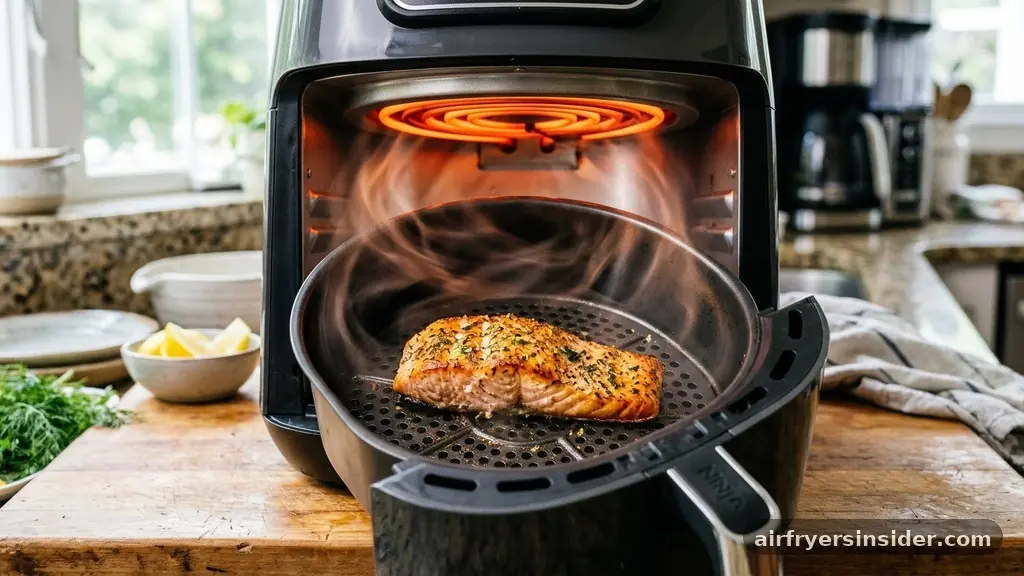
The magic of the air fryer lies in its ability to mimic a convection oven on a smaller, more concentrated scale. When you understand how it functions, you realize why it is the superior choice for warming up proteins.
The heating elements at the top of the unit work in tandem with a powerful fan to push hot air around the food. This constant movement ensures even heat distribution, which is vital when you are dealing with delicate structures like fish muscle fibers.
Unlike a microwave, which agitates water molecules to create heat, the air fryer uses thermal convection to gently warm the exterior while maintaining the integrity of the interior. This process is particularly effective for seafood because it avoids the “steam-bath” effect that makes breaded items soggy.
By controlling the airflow, you create a controlled environment where the surface can crisp up without the middle turning into a tough, overcooked block. Understanding this mechanism is the first step toward consistent results every time you reheat your dinner.
Optimal Temperature and Timing for Perfect Results
Achieving the perfect reheat depends heavily on finding the sweet spot for heat. Most people make the mistake of using the same settings they would for cooking raw food, which is almost always too high.
For reheating, you want a lower, gentler heat that warms the center before the outside burns or dries out. Generally, setting your device between 320°F and 350°F is the ideal range for most seafood varieties.
Timing is equally critical and varies based on the thickness of the fillet. A thin piece of tilapia requires significantly less time than a thick, center-cut piece of salmon. You should aim for a range of three to five minutes for most standard portions.
Always check the internal temperature to ensure it reaches at least 145°F, which is the standard recommendation for safe consumption. If you are uncertain about the thickness, start on the lower end of the time spectrum and add sixty-second intervals as needed.
Avoiding Common Reheating Pitfalls
Many home cooks struggle with seafood because they overlook the basics of moisture management. The most significant error is failing to account for the residual moisture already present in the flesh.
If you blast a piece of fish with high heat, the moisture evaporates rapidly, leaving you with a chalky, unappealing texture. Avoid the temptation to crank the dial to maximum settings just to get the job done faster.
Another common issue is overcrowding the basket. Proper airflow is the foundation of the air fryer’s performance; if you pack the basket, the air cannot circulate around the food. This leads to uneven heating where some parts are cold while others are overdone.
Furthermore, avoid using heavy oils or sprays during the reheating phase. Since the fish has already been cooked, it likely contains enough residual fats to prevent sticking. Adding more oil often results in an unpleasant, greasy mouthfeel that masks the natural flavor of the seafood.
Strategies for Breaded Fillets and Fried Fish
Reheating fried fish or breaded fillets presents a unique challenge because the goal is to revive the crunch without burning the crust. The breading acts as a shield, but if it has absorbed too much moisture in the fridge, it can become gummy.
To combat this, you need to ensure the air can reach all sides of the fillet. Using a wire rack or placing the fish directly on the basket grate is essential.
If your breading has become particularly soft, a very light brushing of oil—just a touch—can help re-crisp the exterior. However, be cautious with this, as too much oil will pool at the bottom and create smoke.
Monitor the progress closely; breading darkens much faster than the fish meat itself. If the crust begins to brown too quickly, you can tent a small piece of foil over the top, though this should be a last resort as it interferes with the crisping process.
| Fish Type | Recommended Temp | Estimated Time |
|---|---|---|
| Thin Fillets (Tilapia/Sole) | 320°F | 3-4 Minutes |
| Thick Fillets (Salmon/Cod) | 350°F | 5-7 Minutes |
| Breaded/Fried Fish | 350°F | 4-6 Minutes |
Managing Moisture Retention for Lean Seafood
Lean white fish like cod or tilapia is notorious for drying out during the reheating process. Because these varieties have very little fat content, they are highly susceptible to losing their natural juices.
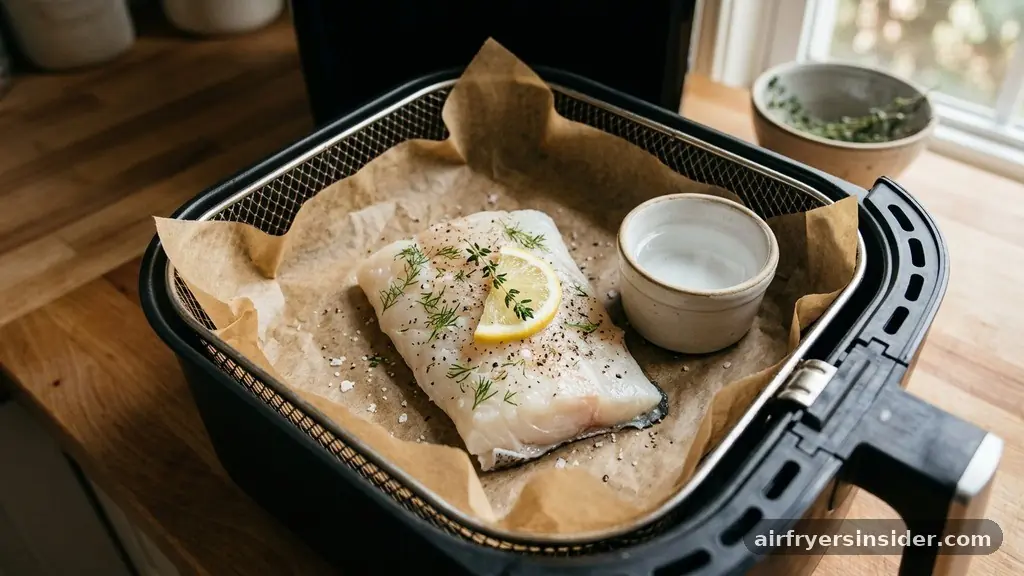
To prevent this, you can create a gentle steam environment inside the basket. Placing a small, oven-safe ramekin with a tablespoon of water at the bottom of the air fryer can introduce just enough humidity to keep the fish tender.
Another effective technique involves using parchment paper. While it is often used for cleanup, it also serves as a barrier that prevents the fish from sticking to the grate and tearing.
When the fish sticks, you lose the crispy exterior or the flaky crust, which ruins the presentation. Always ensure the parchment paper is properly weighted down by the food so it does not fly into the heating element, which is a significant fire hazard in high-velocity air fryers.
The Role of Kitchen Appliances in Seafood Preparation
Whether you are using a standard basket-style air fryer or a more advanced unit like a Ninja Foodi, the core principles remain the same. The Ninja Foodi, for instance, often features a larger capacity and more robust heating elements, which might require you to adjust your timing slightly downward. Because these units are more powerful, they can achieve a crispy texture in less time, making it easy to accidentally overcook your leftover fish.
Regardless of the model, familiarize yourself with your specific machine’s quirks. Some units have “hot spots” where the air circulates more intensely. If you notice your fish browning unevenly, pause the cycle halfway through and rotate the fillets.
This simple manual intervention is often the difference between a mediocre meal and a restaurant-quality reheat. Treat your air fryer as a precision tool rather than a “set and forget” appliance, and your seafood will consistently taste better.
Addressing Topical Gaps: Safety and Quality
A common concern involves food safety when dealing with previously cooked seafood. It is vital to recognize that fish is highly perishable. If the leftovers have been sitting in the refrigerator for more than two days, the quality will have degraded regardless of your reheating technique.
Always trust your senses; if there is an off-smell or a slimy texture, the food should be discarded. Reheating cannot fix spoilage.
Another gap often overlooked is the importance of resting the fish after it comes out of the air fryer. Just like a steak, fish needs a moment to redistribute its internal juices.
Letting the fillets sit for one to two minutes on a plate allows the heat to equalize, ensuring that the first bite is just as succulent as the last. Do not serve it immediately, as the contrast between the hot exterior and the potentially cool center can be jarring.
Batch Cooking and Storage Best Practices
If you plan on reheating fish later, the process actually begins the moment you finish your initial meal. Proper storage is the secret to a successful reheat.
Always store your leftovers in an airtight container to prevent the fish from absorbing other odors from your refrigerator. If you are planning to reheat, try to keep the fish in larger, intact portions rather than flaking it apart before storing.
When you are batch cooking specifically for future meals, slightly undercook the fish during the first session. If you pull it off the heat when it is just barely opaque, it will finish cooking perfectly during the reheating process in the air fryer.
This technique is a professional-grade strategy that ensures your protein never crosses the line from “perfectly cooked” to “dry and overdone.” It requires a bit of planning but yields significantly better results for busy weeknight dinners.
Troubleshooting Common Reheat Issues
Sometimes, despite your best efforts, the fish might not turn out exactly as expected. If the fish is still cold in the center, you likely used too high a temperature too quickly. Lower the heat and give it an extra minute or two.
If the fish is dry, you likely overcooked it. In the future, try the water-in-a-ramekin trick or reduce your total time by 30 seconds.
If the crust on your breaded fish isn’t crispy enough, ensure you are not crowding the basket. The air needs to move freely around each piece to crisp the breading.
If you are dealing with a large amount of fish, do it in two batches rather than cramming everything into one cycle. Remember that your air fryer is a tool that rewards patience and attention to detail, so don’t be afraid to pull the basket out and check the progress frequently.
FAQ
Can I safely reheat fish in an air fryer?
Yes, it is perfectly safe to reheat fish in an air fryer, provided the initial meal was handled and stored correctly. Ensure the fish reaches an internal temperature of at least 145°F to guarantee safety, and never reheat seafood that has been stored in the refrigerator for longer than two days.
Why does my fish get dry when I reheat it?
Fish becomes dry when the moisture evaporates too quickly due to high heat or excessive cooking time. To prevent this, use a lower temperature setting and shorter intervals. You can also place a small amount of water in an oven-safe dish inside the basket to create a humid environment.
What is the best way to keep breaded fish crispy?
To maintain a crispy texture, avoid overcrowding the air fryer basket, which allows for maximum air circulation. If the breading has become soft, a very light misting of oil can help restore the crunch. Always place the pieces in a single layer to ensure the heat reaches every side.
Do I need to use oil when reheating fish?
In most cases, you do not need to add extra oil, especially if the fish was fried or pan-seared previously. The residual fats are usually sufficient. If the fish is extremely lean or the breading is very dry, a tiny amount of oil can help, but use it sparingly to avoid smoking.
Conclusion
Mastering the technique for how to reheat fish in air fryer units is a valuable skill for any home cook looking to minimize waste and maximize flavor. By focusing on lower temperatures, proper air circulation, and mindful moisture control, you can consistently enjoy seafood that retains its delicate texture and taste. Whether you are dealing with a simple fillet or a breaded classic, the air fryer provides the precision needed to restore your meal to its original glory.
Take the time to monitor your food as it warms, and you will find that leftover seafood is no longer a compromise, but a delicious and convenient option for your next quick meal. Practice these steps, and you will soon find that your air fryer is the most reliable tool in your kitchen for handling even the most challenging leftovers.


