

Figuring out how long to cook frozen chicken tenders in an air fryer is a common hurdle for home cooks looking for a fast, crispy meal. If you often find yourself staring at a bag of breaded chicken strips, wondering if they are fully cooked or just burnt on the outside, you have come to the right place.
Achieving that perfect crunch without drying out the meat requires balancing the right air fryer temperature with the specific thickness of your chicken. Mastering this technique saves time and ensures your dinner is both safe to eat and delicious.
Understanding the Basics of Air Frying Frozen Poultry
When you decide to cook frozen poultry, you are essentially using rapid air technology to mimic deep-frying without the excess oil. Air fryers work by circulating hot air at high speeds around the food, which is why they are so effective at creating a crispy texture on breaded items. Because these tenders go straight from the freezer to the basket, the moisture content is higher than it would be with fresh chicken, which is why airflow is so critical.
Most standard breaded chicken strips are pre-cooked, meaning the primary goal is to heat them through while crisping the breading. If you are working with raw frozen tenders, the safety requirements change significantly.
Always check the packaging to see if the product is fully cooked or raw, as this dictates the necessary cook time. For pre-cooked varieties, you are looking at a shorter window, while raw chicken requires a longer duration to reach a safe internal temperature throughout.
Optimal Air Fryer Temperature and Preheating
Setting the right air fryer temperature is the most important factor in your success. For most brands of frozen tenders, 400 degrees Fahrenheit (approximately 200 degrees Celsius) is the sweet spot.
This high heat allows the breading to caramelize and become golden brown before the center of the chicken becomes overcooked or rubbery. If your air fryer has a tendency to run hot, you might consider dropping the heat to 380 degrees Fahrenheit and adding a minute or two to the total cooking duration.
Preheating your air fryer is a debated topic, but for frozen items, it is highly recommended. By running the machine empty for three to five minutes before adding your food, you ensure the cooking chamber is saturated with heat immediately.
This initial burst of energy helps seal the breading, preventing it from becoming soggy as it thaws. If you skip preheating, you might find that your tenders spend too much time in a “warm-up” phase, which can lead to a less desirable, softer crust.
Managing Cook Time for Consistent Results
The standard cook time for frozen chicken tenders in an air fryer typically ranges from 10 to 15 minutes. However, this is not a universal rule because individual air fryer models vary in power and basket size.
A smaller, compact basket-style air fryer might cook faster than a large toaster-oven style unit because the heat is more concentrated. You should always start checking your food at the 10-minute mark to avoid accidental burning.
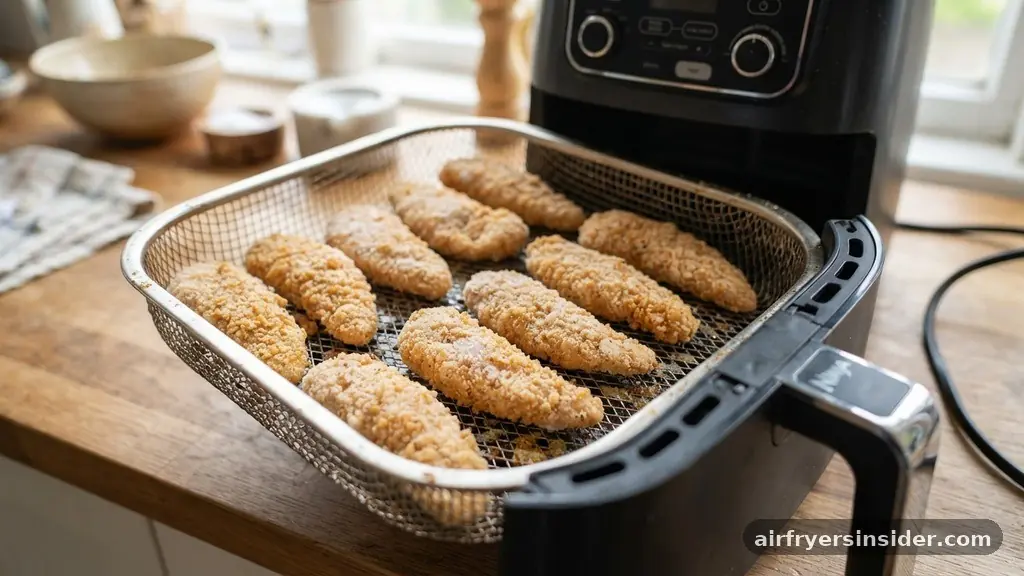
When managing your cook time, consider the quantity of chicken you are placing in the basket. Overcrowding is the enemy of crispiness. If the tenders are overlapping, the hot air cannot circulate effectively, leaving the middle of the cluster cold while the edges burn.
It is always better to cook in batches if you have a large amount of chicken to prepare. If you are preparing a single serving, you will likely find that 10 to 12 minutes is more than enough to reach that desired golden brown finish.
The Importance of Flipping and Air Circulation
One of the most effective ways to ensure even cooking is to flip your tenders halfway through the process. Even with the best rapid air technology, the bottom of the tenders often stays in contact with the basket, which can prevent it from getting as crispy as the top.
Using a pair of tongs to turn each piece ensures that both sides are exposed to the direct heat flow. This simple step is the difference between a professional-looking meal and a lopsided one.
Beyond flipping, think about how you arrange the tenders. Placing them in a single layer with a small amount of space between each piece facilitates better air circulation.
If you are using a rack-style air fryer, try to keep the tenders away from the very edges where the heat elements might be most intense. If you notice one side of the basket is cooking faster than the other, rotate the basket or the tray at the halfway point to compensate for the uneven heat distribution within your specific appliance.
Ensuring Food Safety and Internal Temperature
Food safety is paramount when working with poultry. Regardless of what the package instructions claim, the only way to be 100% certain that your chicken is safe to consume is by checking the internal temperature.
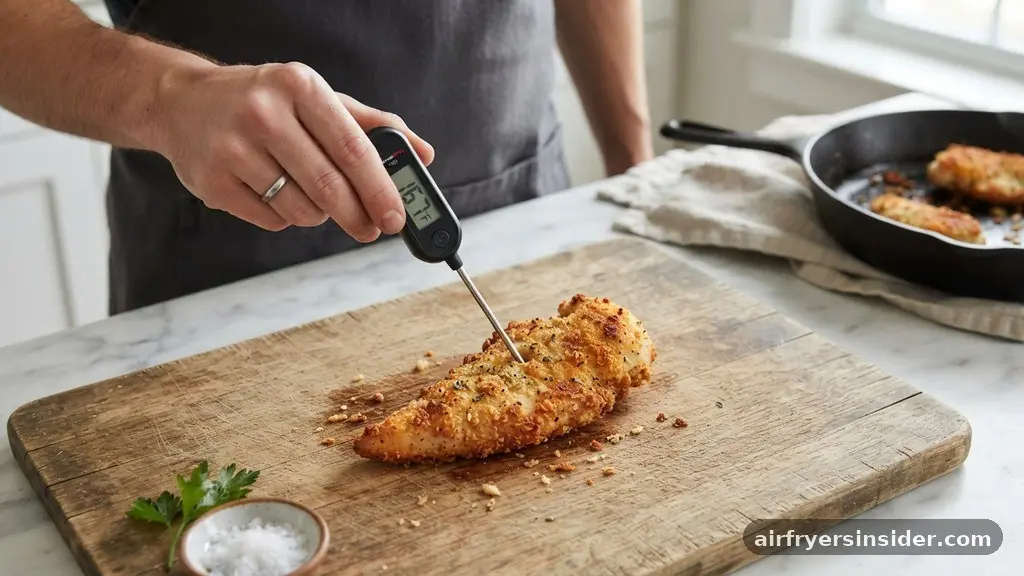
According to USDA guidelines, all poultry should reach an internal temperature of 165 degrees Fahrenheit. Using a reliable food thermometer is the best way to verify this.
To get an accurate reading, insert the probe into the thickest part of the tender, avoiding the breading as much as possible. If you are cooking raw frozen tenders, salmonella prevention is a major concern, so do not rely solely on the visual appearance of the breading.
If you do not have a thermometer, make sure the juices run clear and the meat is opaque throughout. Following these protocols minimizes risks and ensures that your home-cooked meals meet professional health standards.
Using Oil Mists for Extra Crunch
While air frying is marketed as a healthier alternative to deep frying, a light coating of oil can significantly enhance the final texture. A quick spritz of cooking spray or a light coat of oil mist on the frozen tenders before they go into the basket helps the breading crisp up more effectively. This mimics the browning process that occurs in traditional frying and results in a more uniform golden brown color.
Be careful not to over-apply the oil, as this can lead to smoking or a greasy finish. A light, even mist is all you need.
If you prefer not to use aerosols, you can use a manual oil mister filled with high-smoke-point oil like avocado or grapeseed oil. This small addition is particularly useful if you are using lower-fat breaded chicken strips, which sometimes struggle to develop a deep, crunchy exterior on their own.
Addressing Topical Gaps in Air Frying
Many guides fail to address what to do when your chicken tenders come out of the freezer with frost or ice crystals on them. If your tenders are heavily coated in ice, that excess water will turn into steam the moment it hits the hot air. This creates a soggy environment that ruins the breading.
Before putting them in the air fryer, give them a quick pat with a paper towel to remove any loose ice crystals. This simple adjustment solves the common issue of mushy breading that often plagues home cooks.
Another frequently overlooked issue is the difference between various types of breading. Tempura-style batters tend to be more delicate and may require a slightly lower temperature to prevent burning, while traditional breadcrumbs are very forgiving and handle high heat well.
If you are experimenting with different brands, keep a small log of which ones work best at which temperatures. This level of detail helps you become an expert in your own kitchen, regardless of the brand of chicken you happen to pick up at the grocery store.
Reheating Leftover Chicken Tenders
If you find yourself with leftovers, the air fryer is the absolute best tool for reheating. Microwaving breaded chicken almost always results in a rubbery, soft mess.
To restore that original crispy texture, place your leftover tenders in the air fryer at 350 degrees Fahrenheit for about 3 to 5 minutes. The rapid air circulation works wonders to dry out the surface moisture and re-crisp the exterior without drying out the meat inside.
Always monitor the tenders closely during the reheating process, as they are already cooked and can dry out quickly if left in too long. If you find they are getting too dark, lower the temperature or pull them out a minute early.
This method is so effective that you might find yourself intentionally cooking extra tenders just so you can enjoy them the next day. It is an excellent way to reduce food waste and maintain the quality of your meals throughout the week.
Comparing Cooking Methods for Best Results
When you look at the landscape of cooking frozen chicken, the air fryer stands out as the most efficient option. The following table highlights why it is often preferred over traditional methods like oven baking or microwave heating.
| Feature | Air Fryer | Conventional Oven | Microwave |
|---|---|---|---|
| Cooking Time | 10-15 Minutes | 20-30 Minutes | 2-4 Minutes |
| Texture | Crispy | Soft/Crisp | Soggy |
| Energy Use | Low | High | Very Low |
| Preheat Time | 3-5 Minutes | 10-15 Minutes | None |
As shown in the table, the air fryer offers the best balance of speed and texture. While the oven can produce good results, it takes significantly longer and uses more energy to heat up. The microwave is fast but fails to provide any texture, which is usually the main reason for choosing breaded chicken in the first place.
Frequently Asked Questions
Do I need to defrost frozen chicken tenders before air frying?
No, you should not defrost them. Cooking them directly from frozen is the intended method for air fryers. Defrosting can make the breading soggy and increase the risk of bacterial growth. Simply remove them from the freezer and place them immediately into the preheated air fryer basket.
Can I stack the chicken tenders in the air fryer?
It is highly recommended to avoid stacking. Overcrowding the basket prevents proper air circulation, which leads to uneven cooking and soft, mushy breading. For the best crispy texture, arrange the tenders in a single layer with a bit of space between each piece to allow the air to flow.
What if my air fryer does not have a preheat button?
You can easily preheat any air fryer manually. Simply turn the unit on at your desired temperature for three to five minutes before adding the food. This ensures the cooking chamber is hot from the start, which is essential for getting the breading to crisp up immediately.
How do I know when the chicken is done?
The best way to ensure the chicken is done is by using a food thermometer to check for an internal temperature of 165 degrees Fahrenheit. If you do not have one, check that the breading is golden brown and the meat inside is no longer pink or translucent.
Conclusion
Learning how long to cook frozen chicken tenders in air fryer units is a straightforward process that yields impressive, restaurant-quality results at home. By focusing on the right temperature, managing your airflow, and prioritizing food safety with a thermometer, you can transform a simple freezer staple into a delicious meal. Remember to avoid overcrowding the basket and always give your tenders a quick flip for the best possible crunch.
With these techniques in your toolkit, you will find that air frying becomes your go-to method for quick, satisfying dinners. Keep experimenting with different seasonings or dipping sauces to make these convenient meals your own, and enjoy the ease of a perfectly prepared, crispy chicken dinner any night of the week.
Meta Description: Learn how long to cook frozen chicken tenders in an air fryer for the perfect crispy texture. Get expert tips on temperature, safety, and timing.


