

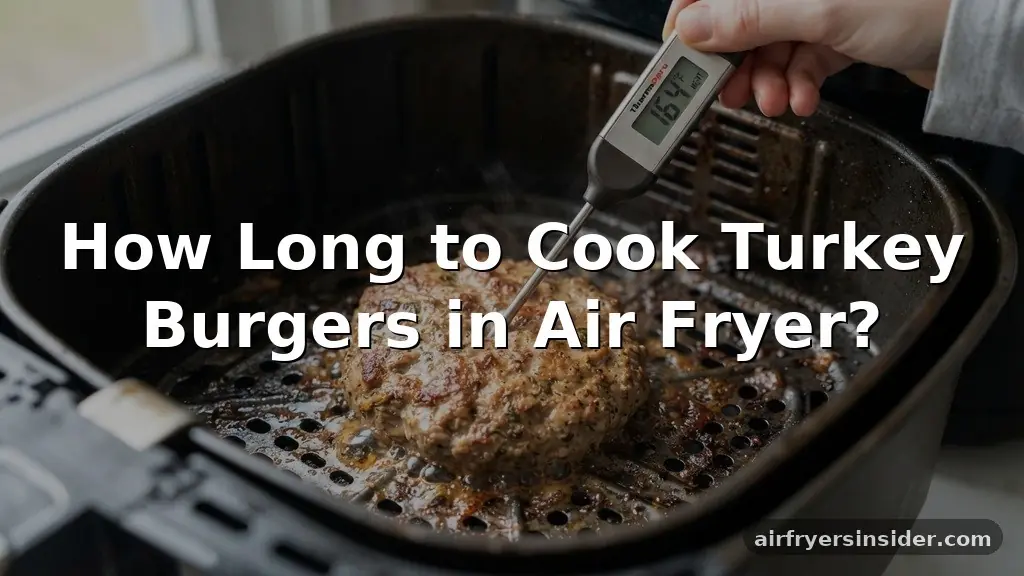
Determining exactly how long to cook turkey burgers in an air fryer is the secret to moving past dry, crumbly meals and achieving that perfectly juicy texture. Because ground turkey is much leaner than beef, it requires precise temperature control to remain moist while ensuring it reaches a safe internal temperature.
Whether you are working with fresh patties or convenience-focused frozen options, mastering the timing prevents the common mistake of overcooking. By understanding the relationship between heat intensity and patty thickness, you will consistently produce flavorful, restaurant-quality meals right from your kitchen counter.
Understanding the Importance of Internal Temperature
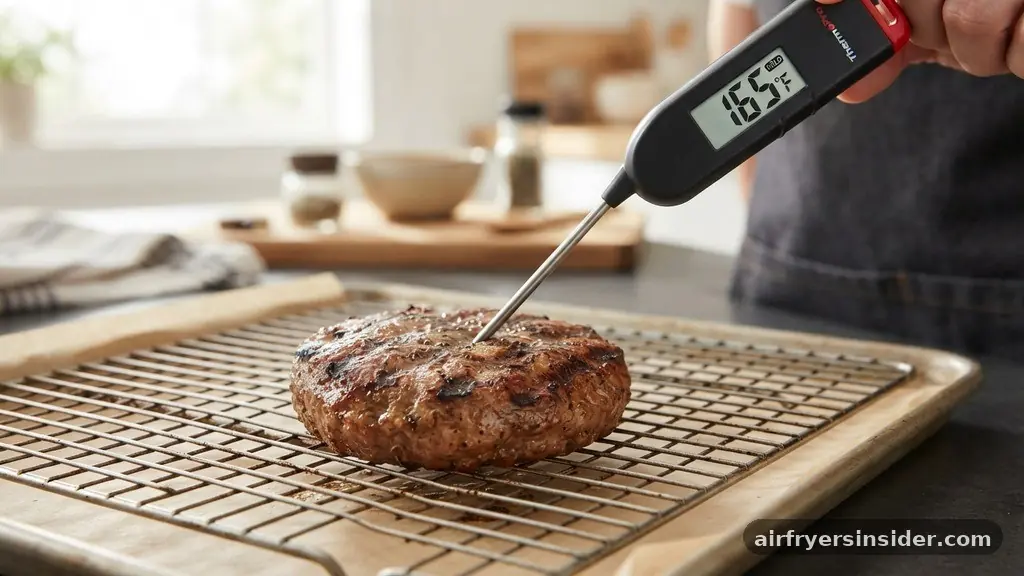
When preparing poultry, safety is the primary concern. According to official USDA guidelines, all poultry products, including ground turkey, must reach an internal temperature of at least 165 degrees Fahrenheit to eliminate the risk of salmonella and other foodborne illnesses.
Unlike beef, which some prefer served medium-rare, turkey must be cooked thoroughly. Relying on a meat thermometer is the only foolproof way to guarantee your burger is safe to eat while avoiding the excessive dryness that occurs when you cook it for too long.
Many home cooks guess the doneness by the color of the meat or the firmness of the patty, but these are notoriously unreliable indicators. Because air fryers use convection technology to blast hot air around the food, the exterior might look beautifully browned while the center remains undercooked.
By inserting a digital probe thermometer into the thickest part of the patty, you remove the guesswork. Aiming for exactly 165 degrees ensures your meal is safe without sacrificing the moisture that makes a burger enjoyable.
Optimal Air Fryer Temperatures for Turkey
Most recipes suggest a temperature range between 375 and 400 degrees Fahrenheit for air frying. For turkey burgers, 375 degrees is generally the sweet spot.
This temperature allows the exterior to develop a nice crust through browning without drying out the interior too quickly. If you crank the heat up to 400 degrees, the outside might char before the center of the patty has a chance to reach the necessary heat level, resulting in a burger that is burnt on the edges but potentially undercooked inside.
Consistency is key when you are learning how long to cook turkey burgers in an air fryer. If your specific model is known to run hot, dropping the temperature by 25 degrees and extending the time slightly can lead to a more even cook. Always consider the thickness of your patty as well.
A thin patty will cook significantly faster than a thick, hand-formed one. Regardless of the setting, keep a close watch during the final two minutes of the process to avoid crossing the line from juicy to overdone.
Handling Fresh Patties Versus Frozen
The preparation method significantly impacts the required cooking time. Fresh patties, which are usually at room temperature or refrigerated, typically require between 10 and 12 minutes at 375 degrees. Because fresh meat is more pliable, you can shape it to be uniform, which helps every part of the burger cook at the same rate. You should always aim to make your patties consistent in size and thickness to ensure they finish cooking at the same time.
In contrast, frozen turkey burgers require a slightly longer duration. When starting from a frozen state, you should add roughly 3 to 5 minutes to the total time, bringing the range to about 15 to 18 minutes.
Some people prefer to sear the frozen patties for a minute or two on each side to jumpstart the process, but the air fryer is perfectly capable of handling them from start to finish. Just remember to space them out in the air fryer basket to allow the hot air to circulate properly, which is essential for uniform heating.
Preparing the Air Fryer Basket
Proper preparation of your equipment prevents sticking and makes cleanup much easier. While many air fryer baskets are non-stick, using a small amount of olive oil or a light coating of cooking spray on the rack helps ensure the meat doesn’t tear when you go to flip it. Some cooks prefer using parchment paper designed for air fryers to catch any juices that might drip down, which keeps the bottom of the basket cleaner.
However, be careful when using paper. You must ensure the weight of the turkey patties holds the parchment in place so it doesn’t get sucked up into the heating element, which can create a fire hazard.
If you choose not to use paper, simply cleaning the basket with warm, soapy water immediately after cooking—once the unit has cooled—will prevent residue from building up. A clean basket also ensures better airflow for future batches, which is a major factor in how efficiently your machine performs.
The Role of Seasoning and Moisture
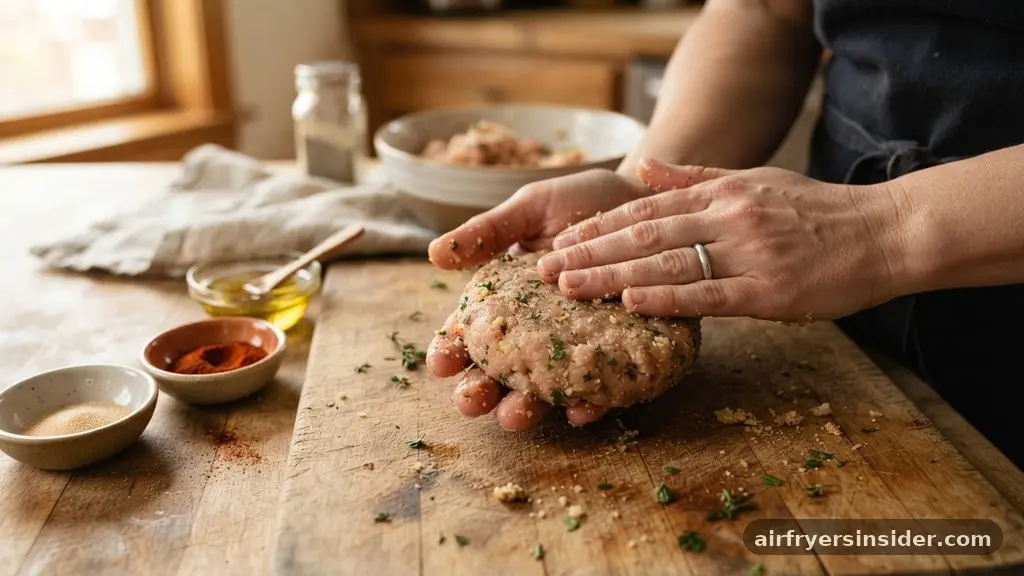
Because turkey is a lean meat, it lacks the fat content that keeps beef burgers juicy. You can compensate for this by incorporating ingredients into your mixture before forming the patties.
Adding a small amount of breadcrumbs and a splash of milk or even a tablespoon of olive oil can help bind the meat and retain moisture during the high-heat cooking process. Don’t be shy with your seasoning, as turkey acts as a blank canvas for flavors like garlic powder, onion powder, smoked paprika, or Worcestershire sauce.
Avoid overworking the meat when you are shaping the patties. The more you handle the ground turkey, the tougher the final texture will be.
Gently pressing the meat into shape and creating a small dimple in the center of each patty will prevent them from puffing up into balls while they cook. This simple technique ensures the burger stays flat and cooks evenly across its entire surface area, leading to a much better bite.
Timing and Flipping Strategy
The act of flipping your burgers is a critical step in the air frying process. You should generally flip the patties halfway through the anticipated cooking time.
This mid-point flip ensures that both sides of the burger receive direct exposure to the circulating hot air, which promotes even browning and consistent heat distribution. If you skip this step, the side facing the rack may remain pale and soft while the top side becomes excessively dry.
| Burger Type | Estimated Time (mins) | Flip Required |
|---|---|---|
| Fresh (1/4 lb) | 10-12 | Yes, at 6 mins |
| Frozen (Standard) | 15-18 | Yes, at 8 mins |
| Thick/Gourmet | 18-20 | Yes, at 10 mins |
When you flip the burgers, be gentle. Use a wide spatula to support the entire patty so it doesn’t break apart. If the meat is sticking, it means it hasn’t developed a sufficient sear yet.
Give it another minute before attempting the flip. Once you have turned them, you can also add a slice of cheese if you desire, as the final few minutes of heat are perfect for melting it onto the surface.
Understanding Carryover Cooking
One of the most overlooked aspects of cooking meat is resting time. When you remove your turkey burgers from the air fryer, the internal temperature will continue to rise for a few minutes due to carryover cooking.
If you take the burgers out when they hit exactly 165 degrees, they might actually end up slightly overdone by the time you sit down to eat. Many chefs recommend pulling the patties when the thermometer reads about 160 or 162 degrees.
Allowing the burgers to rest on a plate for 3 to 5 minutes before serving is essential for flavor and texture. This resting period allows the juices, which have been pushed toward the center by the heat, to redistribute throughout the patty.
If you cut into the burger immediately, those juices will run out onto the plate, leaving you with a dry, disappointing meal. Patience in this final stage pays off with a significantly better dining experience.
Addressing Topical Gaps in Air Fryer Cooking
Many guides fail to mention that the specific air fryer model you own can drastically change the required cooking time. A basket-style air fryer typically cooks faster than an oven-style air fryer with a rack, because the volume of air is smaller and more concentrated.
If you are using a large oven-style air fryer, you may need to add 2 to 3 minutes to the standard time. Always start checking your burgers a few minutes before the recommended time to account for these variations in equipment efficiency.
Another common gap is the handling of mixed-meat blends. Some people mix ground turkey with a bit of ground pork or bacon to add fat and flavor. If you do this, the cooking time remains similar, but the fat content will change how the burger behaves.
The added fat will render out, which can cause more smoke in the air fryer. If you notice smoke, it’s a sign that the drip tray needs to be cleaned or that the temperature is too high for the fat content of your specific blend.
Troubleshooting Common Issues
If your burgers are consistently coming out dry, you are likely cooking them for too long or at too high a temperature. Check your thermometer’s calibration, as even high-end digital thermometers can drift over time. Another common issue is the patty size.
If your patties are too thin, they will dry out instantly; if they are too thick, they will be raw in the middle. Aim for a thickness of about three-quarters of an inch for the best results in an air fryer.
- Preheat your air fryer for 3-5 minutes to ensure immediate heat contact.
- Don’t overcrowd the basket; air needs space to circulate to cook effectively.
- Use a meat thermometer to verify the 165-degree safety threshold.
- Always rest the meat for a few minutes before serving to lock in juices.
- Avoid using excessive amounts of oil, as it can cause smoking at high heat.
If you find that your burgers are sticking to the rack, check the coating on your basket. If the non-stick surface has worn away, no amount of oil will prevent sticking.
In such cases, using a small piece of perforated parchment paper is the best solution. By addressing these small technical details, you turn a simple weeknight dinner into a reliable and delicious staple in your rotation.
Frequently Asked Questions
Can I cook frozen turkey burgers without thawing them first?
Yes, you can cook frozen turkey burgers directly from the freezer in an air fryer. Simply increase the cooking time by a few minutes compared to fresh patties. Ensure you check the internal temperature with a thermometer to confirm they have reached the safe 165 degrees Fahrenheit.
How do I know if my turkey burger is done without a thermometer?
While a meat thermometer is the only truly safe way to ensure doneness, you can look for clear juices when pressed with a spatula. However, color is not a reliable indicator for poultry. Using a thermometer is highly recommended to prevent both undercooking and unnecessary drying.
Should I preheat my air fryer before cooking turkey burgers?
Preheating is highly recommended for the best results. A preheated air fryer ensures the burgers start cooking immediately upon contact with the heat, which helps develop a better crust and provides more consistent timing. Most air fryers only require 3 to 5 minutes to reach the desired temperature.
Why do my turkey burgers get dry in the air fryer?
Turkey is a very lean meat and can dry out quickly if overcooked. Using a meat thermometer to pull the burgers exactly at 165 degrees and allowing them to rest for several minutes will significantly improve juiciness. You can also mix in breadcrumbs or herbs to help retain moisture.
Conclusion
Mastering the art of how long to cook turkey burgers in an air fryer is a straightforward process once you prioritize internal temperature over simple clock-watching. By focusing on the 165-degree safety threshold and allowing for proper resting time, you ensure that your lean turkey stays succulent and flavorful. Remember that every air fryer has its own personality, so treat the standard timing as a baseline rather than an absolute rule.
With a bit of practice using a meat thermometer and paying attention to your specific appliance’s performance, you will find it incredibly easy to serve up healthy, delicious burgers whenever the craving strikes. Start with a basic recipe, keep your patties consistent, and enjoy the convenience of this efficient cooking method for your next meal.


