

Reheating leftover poultry often feels like a gamble, usually resulting in a rubbery texture or that dreaded chalky consistency that makes a perfectly good meal feel like an afterthought. Learning how to reheat chicken breast in air fryer setups changes this dynamic entirely, transforming what would otherwise be a disappointment into a juicy, flavorful meal.
By utilizing rapid air technology, the air fryer circulates heat much more effectively than a standard microwave or a conventional oven, ensuring that your protein is warmed through while maintaining its structural integrity. Whether you are dealing with a simple grilled fillet or a piece of breaded chicken, mastering the balance of heat and time is the secret to avoiding the common pitfalls of dehydration and tough, stringy meat.
The air fryer’s convection-based environment is uniquely suited for this task because it mimics the browning process of a conventional oven but at a fraction of the time and energy cost. When you understand the science of thermal conductivity and how heat interacts with cooked proteins, you can manipulate your appliance to protect the residual moisture inside the meat. This guide provides an in-depth look at the techniques, temperatures, and timing adjustments necessary to ensure your leftovers taste just as fresh as they did when they were first cooked.
The Science of Convection Cooking and Meat Reheating
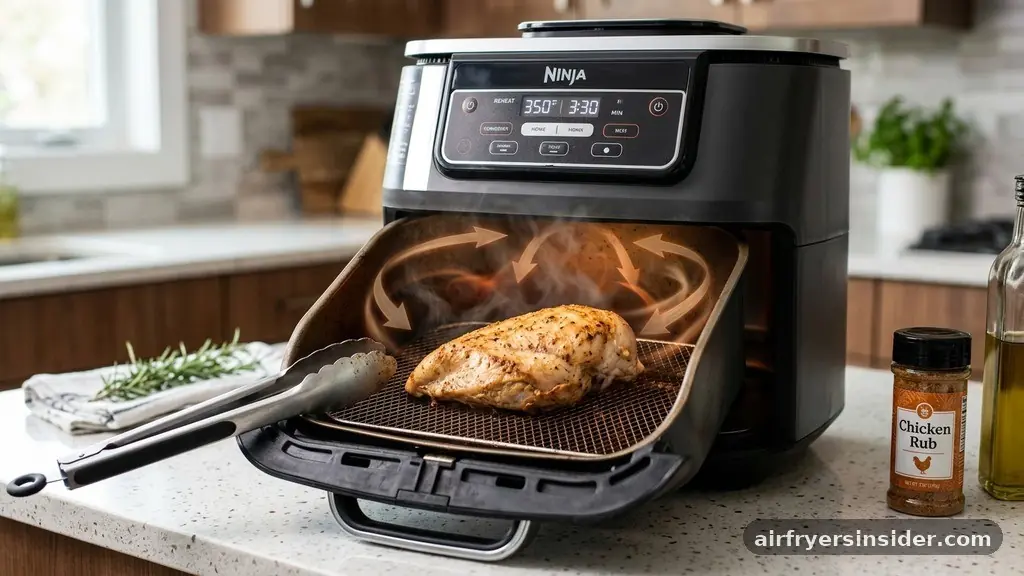
To understand why the air fryer is superior for reheating, you must first look at the mechanics of convection cooking. Unlike a microwave, which agitates water molecules to create heat—often leading to uneven cooking and the extraction of meat juices—the air fryer uses a high-powered fan to blast hot air around the food.
This process creates a consistent environment that helps crisp the exterior while keeping the center tender. When you place a chicken breast into this environment, the hot air works to gently penetrate the outer layer without immediately stripping away the moisture held within the muscle fibers.
The key to success lies in controlling the reheating time and temperature to prevent the chicken from crossing the threshold into overcooked territory. Because chicken breast is lean and lacks the intramuscular fat found in thighs, it is highly susceptible to chicken dryness. By keeping the temperature moderate, you allow the heat to transfer gradually, which is essential for preserving the texture.
Think of it as a low-and-slow approach refined by modern technology. If you blast the chicken with maximum heat, the surface will dry out and become leathery before the center even begins to warm up. Instead, finding that “sweet spot”—usually between 325°F and 350°F—allows for a gentle warming process that respects the delicate nature of the protein.
Essential Preparation for Optimal Moisture Retention
Before you even plug in your appliance, you must prepare the meat to ensure it stays succulent. One of the most effective methods for moisture retention is a light application of fat. Brushing the chicken with a small amount of olive oil or using a light mist of cooking spray helps create a protective barrier.
This fat layer not only improves the final mouthfeel but also aids in conducting heat more uniformly across the surface of the meat. If your chicken was previously grilled or pan-seared, this little bit of moisture helps bridge the gap between “leftover” and “freshly prepared.”
Another crucial step is allowing the chicken to come closer to room temperature before placing it in the basket. If you take a cold chicken breast directly from the refrigerator and expose it to intense heat, the contrast can cause the muscle fibers to seize up, leading to a tougher texture. Giving your chicken about 10 to 15 minutes on the counter while the air fryer is preheating can make a significant difference.
Furthermore, if you are reheating multiple pieces, ensure they are arranged in a single layer. Overcrowding the basket disrupts the airflow, leading to uneven results where some parts of the chicken are overcooked while others remain cold in the center.
Why Preheating Matters for Consistent Results
Many users overlook the preheating stage when using an air fryer, but when it comes to reheating, this step is non-negotiable. Preheating ensures that the moment your chicken hits the basket, it is met with the target temperature rather than a slowly rising heat.
This immediate exposure to hot air helps to sear the outside slightly, which traps the internal moisture before it has a chance to evaporate. Without preheating, the food sits in a lukewarm chamber as the appliance warms up, which can cause the breading (if present) to become soggy or the meat to start losing its juices prematurely.
Most modern air fryers reach their target temperature within three to five minutes. Setting your device to 350°F for this short duration is enough to prime the chamber. During this time, you can prep your chicken, apply your light coating of oil, and arrange your tray.
This small investment of time ensures that the reheating cycles are as efficient as possible. When the environment is already hot, the transition from cold storage to perfectly heated meal happens in the shortest amount of time, which is the ultimate goal in preventing the protein from turning into a dry, fibrous mess.
Techniques for Different Types of Chicken
Not all chicken is created equal, and the method for reheating should shift slightly depending on the preparation. A simple boneless skinless breast requires different handling than a breaded cutlet. For plain chicken, you are primarily focused on maintaining succulence.
A splash of water or chicken broth in the bottom of the basket—below the tray—can create a subtle steam effect that keeps the environment humid. This simple trick is a game-changer for lean white meat.
For breaded chicken, the goal is to revive that crisp skin without burning the coating. If you use too much moisture, the breading will turn mushy. Instead, focus on a slightly higher temperature for a shorter duration.
This “flash-reheat” approach crisps the exterior breading quickly while only warming the interior. If you find the edges of your breaded chicken are browning too fast, you can tent the top with a small piece of aluminum foil.
This allows the heat to circulate while protecting the delicate crust from direct, intense exposure. The table below outlines the recommended settings for these different types of chicken:
| Chicken Type | Temperature | Estimated Time | Key Tip |
|---|---|---|---|
| Boneless Skinless | 325°F | 5-7 minutes | Add a teaspoon of water for steam |
| Breaded / Fried | 350°F | 4-6 minutes | Use a light spray of oil for crunch |
| Grilled / Marinated | 325°F | 6-8 minutes | Flip halfway through for even heat |
Utilizing Tools for Precision and Food Safety
When working with leftovers, food safety should always be a priority. While the chicken is already cooked, it must still reach a safe internal temperature to ensure that any potential bacteria are neutralized.
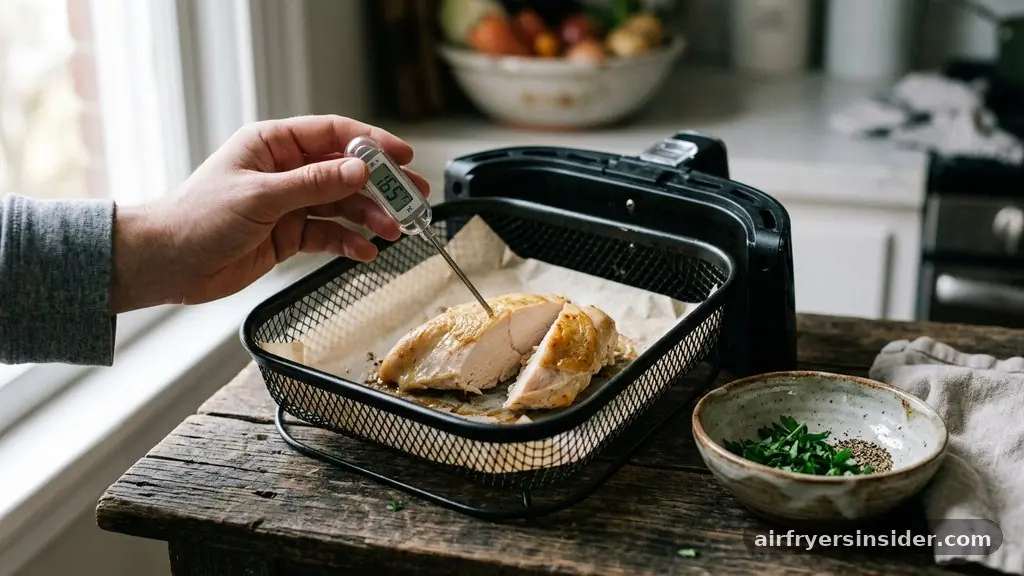
According to USDA guidelines, reheated leftovers should ideally reach an internal temperature of 165°F. Using a digital food thermometer is the only way to be certain that your chicken has been reheated thoroughly without overshooting the mark and drying the meat out.
Insert the thermometer into the thickest part of the breast to get an accurate reading. If you find that the temperature is hovering around 140°F, you need to add another minute or two of reheating time. Relying on visual cues alone can be misleading, especially with thicker cuts of meat.
By keeping the thermometer handy, you eliminate the guesswork. This habit not only guarantees that your food is safe to eat but also helps you calibrate your specific air fryer’s performance. Every appliance has slight variations in power and airflow, and learning how yours specifically handles heat will make you a more confident home cook in the long run.
Common Pitfalls and How to Avoid Them
Even with the best intentions, it is easy to make mistakes that ruin a good meal. One of the most common errors is failing to flip the meat. Even though the air fryer is designed for circulation, the bottom of the chicken often remains cooler than the top.
Flipping your pieces halfway through the reheating time ensures that both sides benefit from the hot air, leading to a more uniform texture. Another error is using excessive oil. While a light mist is beneficial, too much oil can lead to a greasy, heavy result that detracts from the flavor of the seasoning.
Furthermore, do not attempt to “speed up” the process by cranking the heat to 400°F. While this might seem efficient, it will almost certainly result in an unevenly heated chicken breast that is burnt on the outside and cold in the middle. The goal is to warm the protein through, not to cook it again.
If you find that your chicken is consistently drying out, reconsider your storage method. If you store the chicken in an airtight container with a small amount of its original juices or a drop of oil, it will enter the air fryer already primed for success.
Advanced Tips for Enhancing Flavor After Reheating
Once you have mastered the technical side of reheating, you can focus on elevating the flavor. Reheating often dulls the profile of spices and herbs, so don’t be afraid to season your chicken again before it hits the air fryer.
A quick dusting of garlic powder, smoked paprika, or a squeeze of fresh lemon juice can revitalize the dish. If you are reheating a breast that feels particularly bland, consider brushing it with a high-quality glaze, barbecue sauce, or a compound butter during the last minute of cooking.
Using parchment paper can also be a strategic move. While it might seem like a small detail, using perforated parchment paper liners can make cleanup easier and prevent small pieces of breading or seasoning from burning at the bottom of the basket.
This prevents the “burnt” smell that can sometimes permeate the food during the reheating process. Remember that the goal is to make the meal feel like it was just prepared, and a little bit of extra attention to seasoning and presentation goes a long way in achieving that restaurant-quality finish.
Addressing Topical Gaps: Why Some Methods Fail
There is a significant amount of misinformation regarding the “best” way to reheat poultry. Many people rely on the microwave because it is fast, but the microwave is the primary culprit behind the “rubbery” texture of reheated chicken. It works by exciting water molecules, which often causes the proteins to tighten and expel their moisture.
This is why microwaved chicken often ends up sitting in a pool of liquid while the meat itself remains dry. By contrast, the air fryer’s method of convection cooking actually helps to dry out the surface slightly while keeping the interior moist, which is the exact opposite of the microwave’s destructive process.
Another common gap in knowledge is the role of the basket type. Some air fryers have wire racks, while others have solid trays. If you are using a wire rack, the heat can circulate underneath the chicken more effectively, which is ideal for maintaining a crisp exterior.
If you have a solid tray, you might need to flip the chicken more frequently to prevent the bottom from becoming soggy. Understanding your specific equipment is just as important as the technique itself. If you find your chicken is still not meeting your standards, experiment with the position of the rack—sometimes moving the food closer to the heating element at the top makes all the difference.
The Future of Convenient Home Cooking
The rise of the air fryer has fundamentally changed how we manage our kitchens and our leftovers. By making it possible to achieve a “fresh-cooked” texture in under ten minutes, this appliance has reduced food waste and made meal planning much more viable for busy households. Learning how to reheat chicken breast in air fryer units is a foundational skill that allows you to cook larger batches of food at once, knowing that the leftovers will be just as enjoyable the second time around.
As technology continues to evolve, we are likely to see even more precise control over humidity and temperature, further simplifying the process. However, the core principles—protecting the moisture, ensuring even heat distribution, and monitoring internal temperatures—will remain the gold standard for quality results.
By adopting these habits, you move from simply “heating up leftovers” to curating a high-quality meal experience. Whether you are a professional cook or a busy parent, these techniques provide a reliable pathway to better, more sustainable dining.
Frequently Asked Questions
Can I reheat frozen chicken breast in an air fryer?
Yes, you can, but it is not recommended for the best quality. It is much better to thaw the chicken in the refrigerator overnight first. If you must reheat from frozen, increase the time significantly and start at a lower temperature to ensure the center thaws before the outside burns.
How do I know if the chicken is reheated enough?
The most accurate way is to use a digital food thermometer. Insert it into the thickest part of the chicken breast. According to safety standards, the internal temperature should reach 165°F. If you do not have a thermometer, the meat should be steaming hot throughout and the juices should run clear.
Is it better to use foil in the air fryer when reheating?
Using aluminum foil can be helpful, especially if you are worried about the exterior burning before the middle is warm. You can tent it over the chicken to trap heat, but avoid covering the food completely, as this will prevent the air from circulating properly and stop the skin from crisping.
What if my chicken breast has sauce on it?
If the chicken is coated in a thick sauce like barbecue or teriyaki, be careful. Sauces can burn quickly at high temperatures. Lower your air fryer temperature to 300°F and check the chicken frequently. You may also want to use parchment paper to prevent the sticky sauce from making a mess of your basket.
Conclusion
Mastering the art of reheating chicken breast is about more than just warm food; it is about respecting the ingredients and utilizing the right tools for the job. By leveraging the power of rapid air technology, you can effectively avoid the common issues of chicken dryness and rubbery textures that plague other methods. Remember to always use a light coating of oil to aid in moisture retention, preheat your device for consistent results, and use a thermometer to maintain food safety.
With these techniques, your leftovers will be transformed into a delicious, succulent meal every time. Whether it is breaded chicken or a simple grilled fillet, the air fryer remains the most effective tool in your kitchen for breathing new life into your favorite poultry dishes.


