

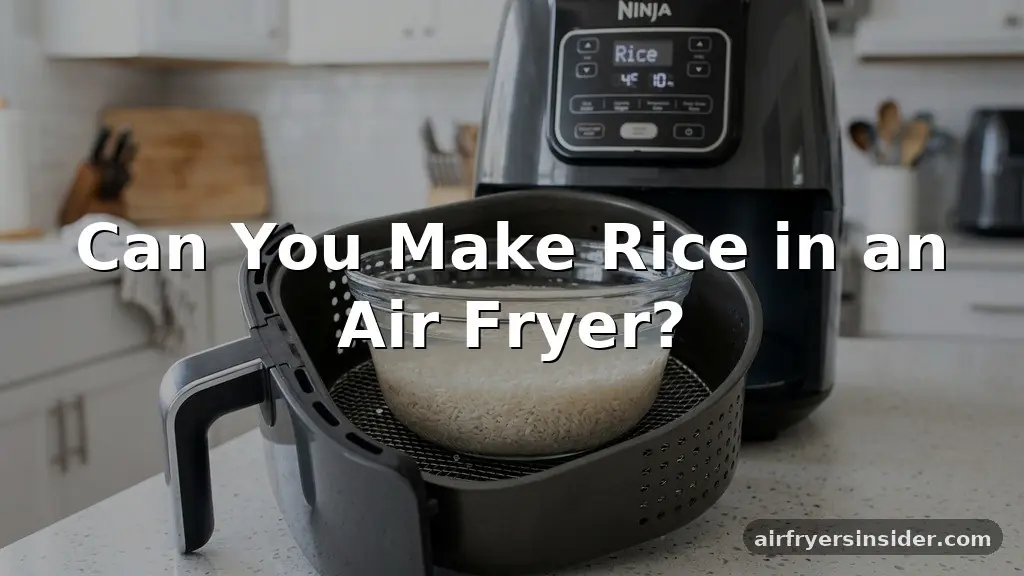
Many home cooks wonder if they can make rice in an air fryer, and the short answer is yes, provided you use the right technique. While an air fryer is primarily designed for convection cooking, it functions essentially as a powerful countertop oven. By using a proper heat-resistant container, you can successfully replicate the absorption method used on a stovetop.
This approach relies on thermal circulation to heat the water and grain evenly, resulting in perfectly fluffy results. It’s a convenient alternative when your stove is full or you are looking to simplify your cleanup process, provided you follow a few specific steps to manage the moisture correctly.
Understanding the Mechanics of Air Fryer Rice
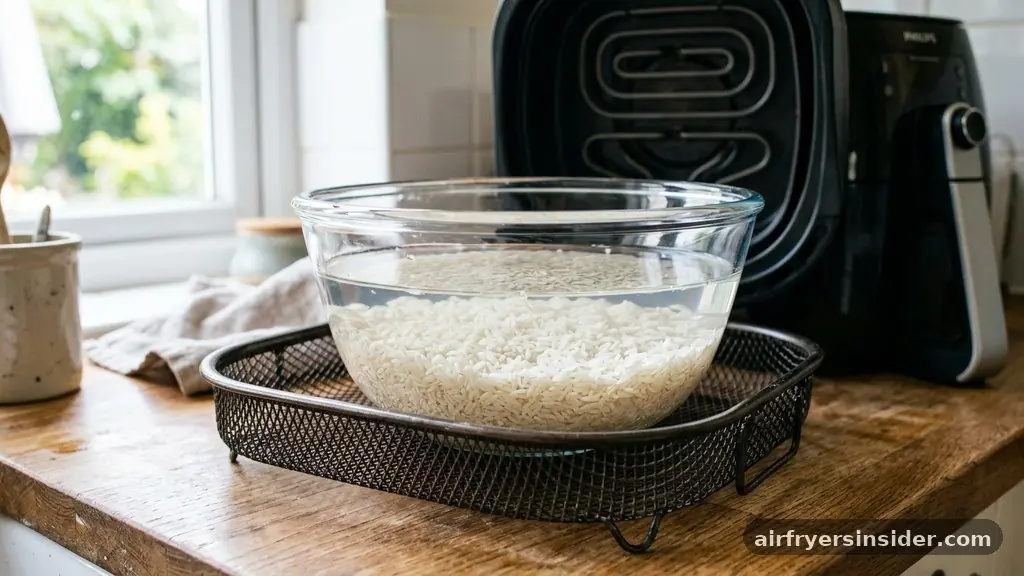
At its core, the air fryer uses rapid air technology to circulate high-temperature air around a food item. When you consider the question of whether you can make rice in an air fryer, you must understand that you are not technically “air frying” the rice in the traditional sense.
Instead, you are using the unit as a small, efficient oven to boil water inside a contained vessel. The convection heat ensures that the container remains at a steady temperature, which is essential for consistent starch gelatinization.
Because the air fryer is designed to move air quickly, it is inherently a drying environment. If you were to place raw rice and water directly into the basket, the moisture would evaporate far too quickly, leaving you with crunchy, undercooked grains. To succeed, you must create a barrier.
Using an oven-safe bowl or a silicone insert allows you to trap the steam effectively. This creates a miniature steaming environment within the basket, mimicking the conditions of a rice cooker or a covered pot on the stove.
Essential Tools for Success
To achieve the best results, you need the right hardware. Not every container is suitable for the intense environment of an air fryer. You should prioritize a heat-resistant container that fits comfortably inside your basket without touching the heating elements at the top.
Glass, ceramic, or high-quality stainless steel bowls are excellent choices. Many modern air fryer models, such as the Ninja Foodi or Cosori units, often have custom-fit non-stick accessories available that are perfect for this task.
Beyond the bowl itself, you need a way to cover the rice. A tight-fitting lid or a piece of heavy-duty aluminum foil is non-negotiable. Without a cover, the top layer of rice will dry out and harden long before the water is absorbed by the bottom layers.
The goal is to keep the moisture inside the container for the entire cooking duration. If you use foil, crimp the edges tightly around the rim of your bowl to ensure that steam cannot escape during the rapid heating process.
Mastering the Rice-to-Water Ratio
The rice-to-water ratio is the most critical factor in achieving the right texture. While standard stovetop cooking usually calls for a two-to-one ratio of water to rice, the air fryer environment can sometimes require slightly more water due to the intense ambient heat.
A good starting point is one cup of long-grain white rice to one and a quarter cups of boiling water. Using boiling water is a professional trick that helps jumpstart the cooking process immediately, reducing the time the rice spends sitting in lukewarm water.
Adjusting for Different Grain Types
Different varieties of rice react differently to heat and moisture. Basmati rice, known for its long, slender grains and delicate fragrance, often requires slightly less water than standard long-grain white rice. Brown rice, on the other hand, contains the bran and germ, which makes it much tougher and more resistant to absorbing moisture.
When preparing brown rice, you should increase your water ratio and significantly extend the cooking time. It is helpful to soak brown rice for thirty minutes before placing it in the air fryer to soften the outer layer.
| Rice Type | Water Ratio | Cooking Time (Approx) |
|---|---|---|
| Long-Grain White | 1 : 1.25 | 20-25 Minutes |
| Basmati | 1 : 1.5 | 15-20 Minutes |
| Brown Rice | 1 : 2 | 40-45 Minutes |
Addressing Common Topical Gaps
A common point of confusion is whether you can achieve the same texture in an air fryer as you would with a dedicated rice cooker. The answer depends on your expectations. A rice cooker uses precise sensors to monitor the internal temperature and moisture levels, automatically switching to a warm setting once the water is fully absorbed.
An air fryer requires manual monitoring. If you leave the rice in the unit too long after the timer goes off, the residual heat can cause the bottom layer to become overly dry or even crispy.
Another gap in knowledge involves the risk of debris. Air fryers are essentially fans inside a box; if you are using lightweight foil or parchment paper, the fan can blow these materials into the heating element. This is a significant kitchen safety concern.
Always ensure that your lid or foil is heavy enough to stay in place, or use a heavy oven-safe plate to weigh it down. Never use loose parchment paper as a lid in an air fryer, as it can be a fire hazard if it touches the top coil.
Step-by-Step Cooking Process
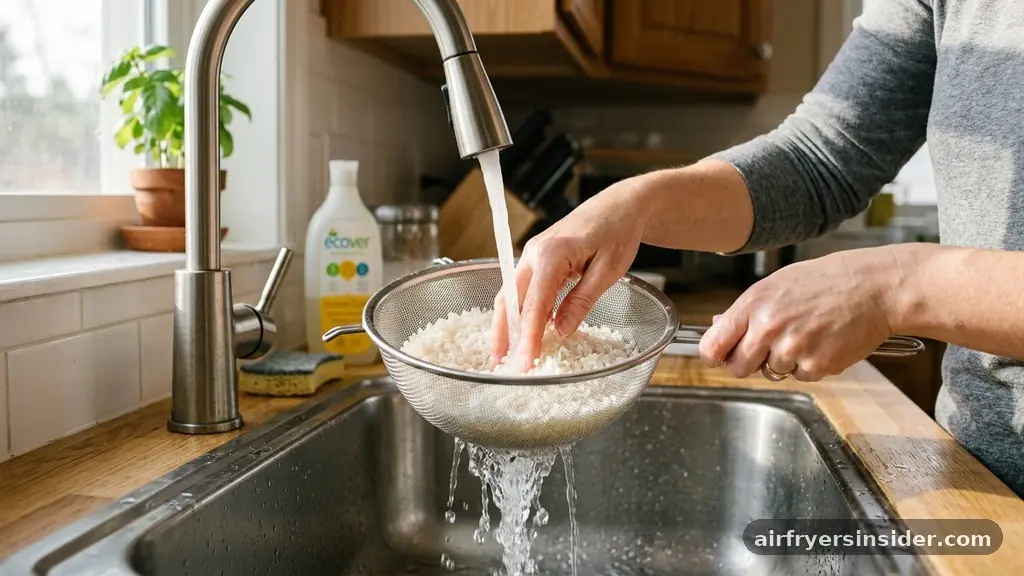
1. Rinse your rice thoroughly in a fine-mesh strainer until the water runs clear. This removes excess surface starch, which prevents the final product from becoming gummy or clumpy.
2.
Place the rinsed rice into your chosen oven-safe bowl.
3. Pour your pre-boiled water over the rice and add a pinch of salt if desired.
4. Cover the container tightly with foil or a heat-safe lid.
5.
Preheat your air fryer to 360°F (180°C) for a few minutes to ensure even thermal circulation from the start.
6. Place the container in the basket and set the timer based on your rice variety.
7. Once the time is up, let the rice sit inside the unit for an additional five minutes to allow for even moisture distribution.
Why Rinsing Matters for Texture
Many people skip the rinsing step, but it is vital for high-quality results. Rice is covered in a fine layer of starch that turns into a paste when cooked. If you don’t rinse this away, the grains will stick together and lose their individuality.
By rinsing, you ensure that the water can penetrate the grain evenly, leading to a light, fluffy result rather than a dense, sticky mass. This is particularly important when working with long-grain white rice or basmati rice, where you want to maintain a distinct grain structure.
Additionally, rinsing helps to remove any dust or debris that might be present from the milling process. While the air fryer is efficient, it does not provide the same agitation that a pot of boiling water does, so you cannot rely on the cooking process to “clean” the rice. A simple cold-water rinse under the tap for thirty seconds is all it takes to significantly improve the mouthfeel of your finished dish.
Troubleshooting Common Issues
If you find that your rice is still hard after the timer goes off, don’t panic. You can simply add a tiny splash of hot water, re-cover the container, and return it to the air fryer for another three to five minutes.
The most common cause of undercooked rice is a loose lid that allowed too much steam to escape during the cooking process. If you notice this happening, ensure your next batch is sealed more tightly around the edges.
Conversely, if your rice is too mushy, you likely used too much water or didn’t rinse it well enough. The beauty of this method is that it is highly experimental; once you learn how your specific unit handles the heat, you can adjust your ratios accordingly.
Remember that the wattage of your air fryer also plays a role. A higher-wattage machine may cook faster, so it’s always a good idea to check the consistency five minutes before the timer is scheduled to end.
Creating Crispy Rice Variations
Some people actually prefer a slightly toasted or crispy rice, similar to the bottom layer of Persian tahdig or Spanish paella. You can intentionally achieve this in an air fryer by removing the lid for the final five minutes of the cooking cycle. By exposing the top layer of rice to the direct heat of the air fryer after the water has been mostly absorbed, you can create a delightful texture variation.
* Use a wide, shallow bowl to maximize the surface area exposed to the air.
* Drizzle a small amount of oil or butter over the top before the final crisping phase.
* Monitor the rice closely, as it can go from golden-brown to burnt in less than a minute.
* Stir the crispy bits into the fluffy rice for a contrast in textures that adds depth to the dish.
Safety and Maintenance Considerations
Kitchen safety is paramount when working with high-heat appliances. Always use heat-resistant gloves or tongs when removing the bowl from the air fryer basket, as the container will be extremely hot.
Furthermore, keep the area around the air fryer clear of flammable objects. Because the unit pulls in air from the surroundings, it is important to maintain at least five inches of clearance on all sides to prevent the motor from overheating.
Regarding maintenance, ensure that no water from the bowl splashes onto the internal heating element. If you notice any buildup inside the air fryer, clean it promptly once the unit has cooled down.
Using a non-stick accessory specifically designed for your model is the safest way to prevent spills and make cleanup easy. If you use a glass bowl, ensure it is tempered glass to prevent it from shattering under the rapid temperature changes inherent in air frying.
Frequently Asked Questions
Can I use any type of rice in an air fryer?
Yes, you can cook most varieties, including long-grain white, basmati, and brown rice. However, you must adjust the water ratio and cooking time for each type, as brown rice requires more moisture and a longer duration to soften compared to the quicker-cooking white rice varieties.
Why is my rice crunchy after air frying?
Crunchy rice is usually the result of excessive moisture evaporation. This happens if the container is not covered tightly enough or if the cooking time is too short. Ensure you are using a secure lid or heavy-duty foil to trap the steam effectively during the entire process.
Is it faster to cook rice in an air fryer than on a stove?
Generally, no. The air fryer is not necessarily faster, but it is highly convenient if your stovetop is occupied. It provides a “hands-off” cooking experience that allows you to focus on preparing other parts of your meal without needing to monitor a boiling pot.
Can I add seasonings while the rice cooks?
Absolutely. You can add salt, bouillon, butter, or dried herbs directly to the water before you begin the cooking process. This allows the grains to absorb the flavor as they steam, resulting in a much more aromatic and tasty side dish compared to plain water-cooked rice.
Conclusion
Making rice in an air fryer is a reliable and efficient technique once you understand the necessity of using a covered, heat-resistant container. By treating the appliance as a small convection oven, you can prepare perfect grains that rival those made in a traditional rice cooker. Always prioritize safety by using proper equipment and ensuring your lid is securely fastened to prevent debris from reaching the heating elements.
Whether you are looking to save space on your stovetop or simply experimenting with your kitchen tools, this method offers a consistent way to produce fluffy rice for any meal. Start with a basic batch of white rice, observe how your specific model performs, and feel free to adjust your ratios for the best results. Enjoy the convenience of this modern cooking approach and continue exploring new ways to utilize your air fryer.
The primary keyword for this article is can you make rice in an air fryer, which explains the process of using convection for grain preparation.


