

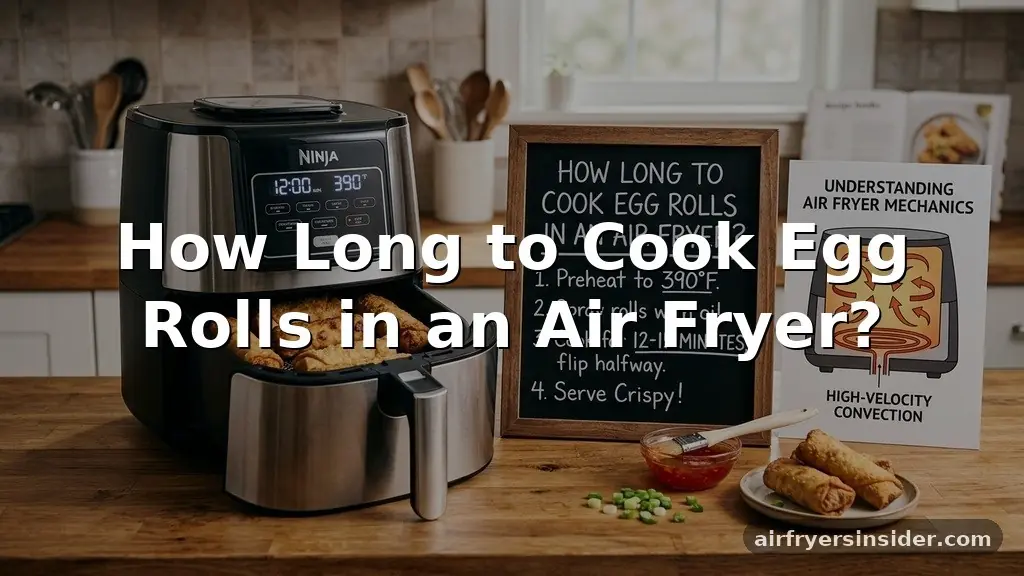
Getting that perfect crunch on your favorite appetizer is easier than ever with modern countertop convection technology. Figuring out exactly how long to cook egg rolls in an air fryer depends largely on whether you are starting with frozen goods or fresh, refrigerated versions.
Mastering this timing ensures you achieve that signature golden brown exterior without burning the delicate pastry, while keeping the savory filling hot and safe to eat. By understanding the relationship between heat distribution and surface moisture, you can transform a simple frozen snack into a restaurant-quality treat right in your own kitchen.
Understanding the Mechanics of Air Frying
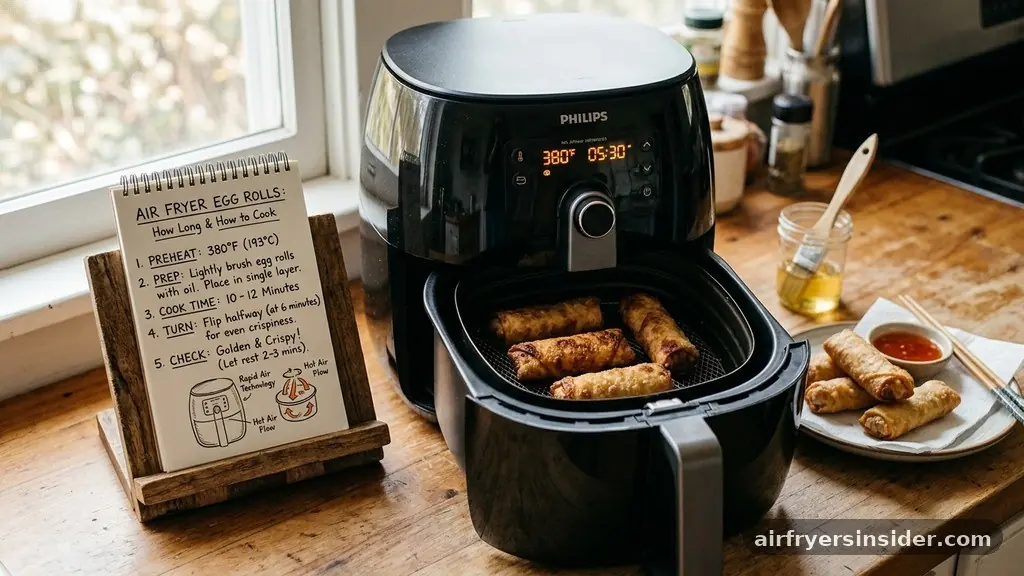
The air fryer functions as a compact, high-powered convection oven. It uses a heating element combined with a powerful fan to move hot air rapidly around your food. Because the cooking chamber is significantly smaller than a standard oven, the heat intensity is much higher and more focused.
When you place egg rolls inside, the convection currents strip away surface moisture, which is the primary secret to achieving those crispy wrappers everyone loves. Unlike deep frying, which submerges the item in boiling oil, this method relies on circulating air to cook the exterior and heat the interior simultaneously.
Effective air circulation is the cornerstone of success here. If you overcrowd the basket, the airflow is restricted, leading to uneven cooking and potentially soggy patches. To ensure your egg rolls come out consistently perfect, you need to manage the density of the load.
This is why most manufacturers recommend cooking in a single layer. When air can flow freely around all sides of the wrapper, the heat transfer is uniform, resulting in an even, golden-brown finish that mimics the texture of traditional deep-fried versions without the excess grease.
Determining the Ideal Temperature Settings
When setting your device, temperature is just as critical as timing. Most recipes for egg rolls perform best between 375 and 400 degrees Fahrenheit. If the temperature is too low, the wrappers will dry out before they get crispy, often resulting in a tough or leathery texture.
Conversely, if the heat is too high, the exterior might char before the internal temperature of the filling reaches a safe level. A setting of 380 degrees Fahrenheit is generally considered the “sweet spot” for most models, including popular ones like the Ninja Foodi or Cosori.
Consistency is key when you are learning how long to cook egg rolls in an air fryer. If you are working with frozen egg rolls, you might want to start at a slightly lower temperature to allow the center to thaw without burning the outside, then crank it up for the final few minutes to crisp everything up.
Modern air fryers vary in wattage and fan strength, so your first batch should always be treated as a test run. Once you identify how your specific unit handles frozen versus refrigerated items, you can adjust your standard operating procedure accordingly.
Calculating Cooking Times for Frozen Varieties
Frozen egg rolls are designed to be convenient, but they require a bit more patience during the cooking process. Because they start at a sub-zero temperature, the center takes longer to heat than the surface.
Typically, you should plan for 10 to 14 minutes of cooking time when the air fryer is set to 380 or 400 degrees Fahrenheit. It is vital to check the packaging instructions, as different brands and sizes—such as mini vegetable egg rolls versus large pork egg rolls—will have distinct thermal requirements.
To achieve the best results, you should flip the egg rolls halfway through the process. Using a pair of tongs, gently rotate each one to ensure that the bottom side, which often misses out on the direct airflow of the top, gets equal exposure to the heat.
If you notice the wrappers are browning too quickly, you can reduce the temperature by 20 degrees for the final two minutes. This technique allows the internal temperature to rise sufficiently without compromising the structural integrity of the crispy exterior.
Handling Refrigerated and Fresh Egg Rolls
Refrigerated egg rolls have a significantly shorter cooking window compared to their frozen counterparts. Since they are already thawed, they generally require only 6 to 9 minutes to reach a perfect, golden-brown state.
Because they lack the icy core of frozen items, the heat penetrates the ingredients much faster. You must monitor these closely, as the difference between a perfectly cooked roll and an overdone, brittle one can be a matter of mere seconds.
When dealing with fresh or refrigerated rolls, a light coating of oil makes a world of difference. Using an olive oil spray or a neutral cooking spray ensures that the dough doesn’t dry out prematurely.
This extra layer of fat helps conduct the heat more efficiently across the surface, promoting that desirable deep-fried color. Remember that fresh wrappers are often more delicate than frozen ones, so avoid using excessive force when flipping them with your tongs to prevent tearing the pastry.
The Importance of Preheating and Preparation
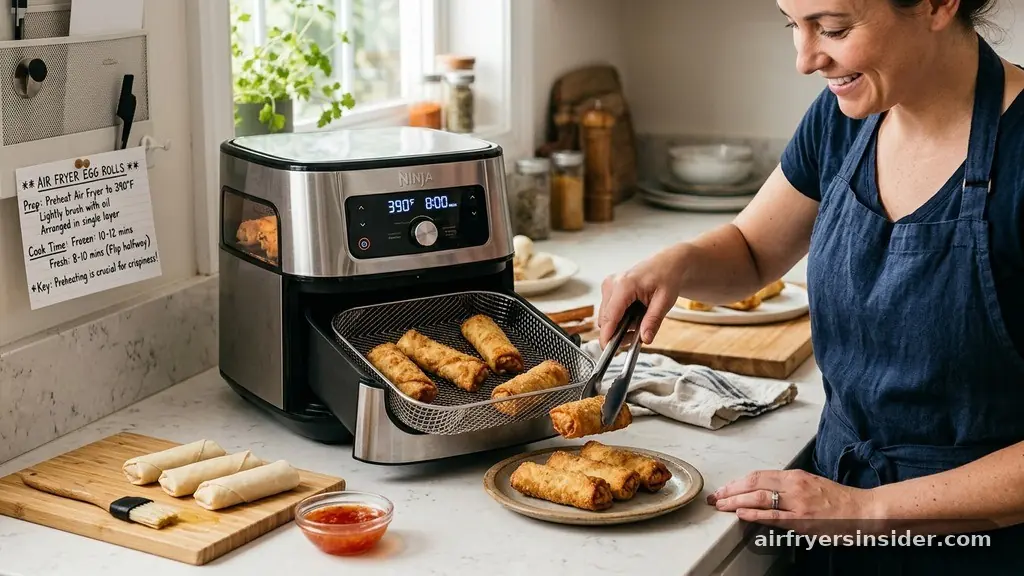
Many home cooks skip the preheat step, but it is a massive mistake when working with delicate pastry items. When you preheat the air fryer for three to five minutes, you ensure that the cooking environment is at the target temperature the moment the food enters.
This immediate blast of heat is essential for sealing the exterior of the egg roll quickly, which prevents the filling from leaking out and keeps the wrapper from becoming soggy. If you start with a cold basket, the egg rolls will sit in a warm, humid environment as the unit heats up, which is the enemy of crispiness.
Preparation also involves how you arrange the items in the air fryer basket. Even if you are in a rush, resist the urge to stack them. If you have a large batch, it is far better to cook in two smaller, well-spaced cycles than one massive, crowded one.
The air circulation is the most important factor in the entire process. If the air cannot reach the sides of the egg roll, you will end up with soft, unappealing dough instead of the satisfying crunch you expect.
| Egg Roll Type | Temp (F) | Time Range |
|---|---|---|
| Frozen (Standard) | 380-400 | 10-14 mins |
| Refrigerated | 380 | 6-9 mins |
| Mini/Vegetable | 375 | 8-10 mins |
Addressing Topical Gaps in Air Fryer Cooking
One common issue that many guides overlook is how to handle internal temperature and food safety. While we often focus on the exterior, it is crucial to ensure that the filling—especially if it contains meat like pork or chicken—has reached a safe internal temperature. You can use an instant-read thermometer to check the center of the thickest roll.
For meat-based fillings, aim for at least 165 degrees Fahrenheit. This is particularly important when reheating leftovers, as you want to ensure the center is piping hot without turning the outside into a rock.
Another gap involves the use of accessories. Many people wonder if they can use parchment paper or silicone liners. While these items make cleanup easier, they can severely obstruct the airflow if they aren’t designed specifically for air fryers with perforated holes.
If you use a liner that covers the entire bottom of the basket, you are essentially turning your air fryer into a standard oven, which will significantly increase your cooking time and reduce the crispiness of the bottom of the egg rolls. Always opt for perforated liners if you choose to use any at all.
Optimizing the Final Texture with Oil
While air fryers are marketed as a way to cook without oil, a tiny amount of fat is often the secret to perfection. Using a light misting of olive oil spray or avocado oil spray can help the flour in the wrapper undergo the Maillard reaction more effectively.
This reaction is what gives the egg roll that beautiful, deep golden-brown color and the distinct, savory flavor associated with frying. Without any oil, the wrapper may look pale and dry, even if it is technically cooked through.
You don’t need to drench the items. A simple, quick pass with a high-quality cooking spray is usually enough. If you are using a brush, be careful not to apply too much, as pooling oil can make the wrapper soggy rather than crispy.
The goal is to provide a thin, even coating that helps the heat transfer. This technique is especially effective for vegetable egg rolls, which can sometimes lack the natural fats found in pork-filled versions, making them more prone to drying out during the intense convection process.
Selecting the Perfect Dipping Sauce
No egg roll experience is complete without the right accompaniment. Because air-fried egg rolls are lighter than their deep-fried counterparts, they pair exceptionally well with a variety of dipping sauces that highlight the crunch.
Sweet and chili sauce is a classic choice, providing a sticky, sweet-and-spicy contrast to the savory filling. Alternatively, a simple mixture of soy sauce, rice vinegar, and a touch of sesame oil creates a salty, umami-rich profile that cuts through the richness of the wrapper.
If you are feeling adventurous, consider a creamy mustard sauce or a spicy peanut dip. The texture of the sauce can influence how you enjoy the meal; a thicker sauce clings better to the exterior, while a thinner, vinegary sauce soaks into the wrapper slightly, adding a layer of flavor.
Experimenting with these combinations allows you to customize the dish to your preference. When serving, ensure the sauces are at room temperature or slightly chilled to provide a refreshing contrast to the hot, crispy rolls straight from the air fryer.
Troubleshooting Common Air Frying Issues
Even with the best instructions, you might run into problems. One of the most frequent complaints is the filling bursting out of the side of the roll. This usually happens if the egg roll was wrapped too loosely or if the air fryer fan is too powerful for the delicate pastry.
To prevent this, ensure your rolls are tucked tightly and consider using a slightly lower fan speed if your model allows it. If a roll does burst, don’t worry; it will still taste delicious, even if it isn’t as pretty.
Another issue is uneven browning. If you find one side is burnt while the other is pale, it is almost certainly a problem with air circulation or the placement of the food. Ensure you are shaking the basket or using tongs to turn the items at least once during the cooking cycle.
If your air fryer has a “hot spot”—a common occurrence in some cheaper models—try rotating the basket or moving the items to different positions halfway through. Taking these small steps will ensure every bite is consistent and satisfying.
Frequently Asked Questions
Can I cook frozen egg rolls in an air fryer without preheating?
While you can, it is not recommended. Preheating ensures the air fryer starts at the target temperature, which is crucial for achieving a crispy exterior. Without preheating, the egg rolls may sit in the warming chamber too long, leading to a soggy texture rather than a crisp one.
How do I know when the egg rolls are finished cooking?
Your egg rolls are done when they reach a deep golden-brown color and the wrapper feels firm and crispy to the touch. If you are cooking meat-filled rolls, use a thermometer to ensure the internal temperature has reached 165 degrees Fahrenheit for food safety.
How do I prevent the egg rolls from drying out?
To keep them moist on the inside while crispy on the outside, use a light coating of cooking spray before you begin. This adds a necessary layer of fat that promotes browning and prevents the pastry from becoming overly brittle or dry during the high-heat convection process.
Is it possible to reheat leftover egg rolls in the air fryer?
Yes, the air fryer is the best tool for reheating leftovers. Set the temperature to 350 degrees Fahrenheit and cook for 3 to 5 minutes. This restores the original crunch of the wrapper and heats the filling through without the rubbery texture often caused by using a microwave.
Final Thoughts
Mastering the art of cooking egg rolls in an air fryer is a simple way to elevate your snack game. By focusing on proper preheating, maintaining a single layer for optimal air circulation, and using a light touch of oil, you can achieve that perfect, professional crunch every time. Whether you prefer traditional pork or vegetable fillings, the key is to stay attentive during those final few minutes of the cooking cycle.
Experiment with different dipping sauces and temperatures until you find the exact combination that suits your taste. Once you get the timing down, you will likely find that this method becomes your go-to for quick, delicious, and satisfying appetizers that never fail to impress.
Meta Description: Learn exactly how long to cook egg rolls in an air fryer to achieve the perfect golden-brown crunch. Get expert tips on temperature, timing, and preparation.


