

Many home cooks wonder if they can achieve a high-end steakhouse experience using their countertop appliances. The short answer is yes, and you can cook steak in an air fryer with surprising precision if you respect the physics of the machine. Because air fryers function as high-powered convection ovens, they excel at circulating hot air to create a crisp exterior while maintaining a succulent interior.
By mastering temperature control and timing, you can avoid common pitfalls like overcooking or rubbery textures. This approach is particularly useful for busy weeknights when you want a professional-grade meal without the cleanup required by traditional pan-searing methods.
The Science of Air Frying Your Favorite Cuts
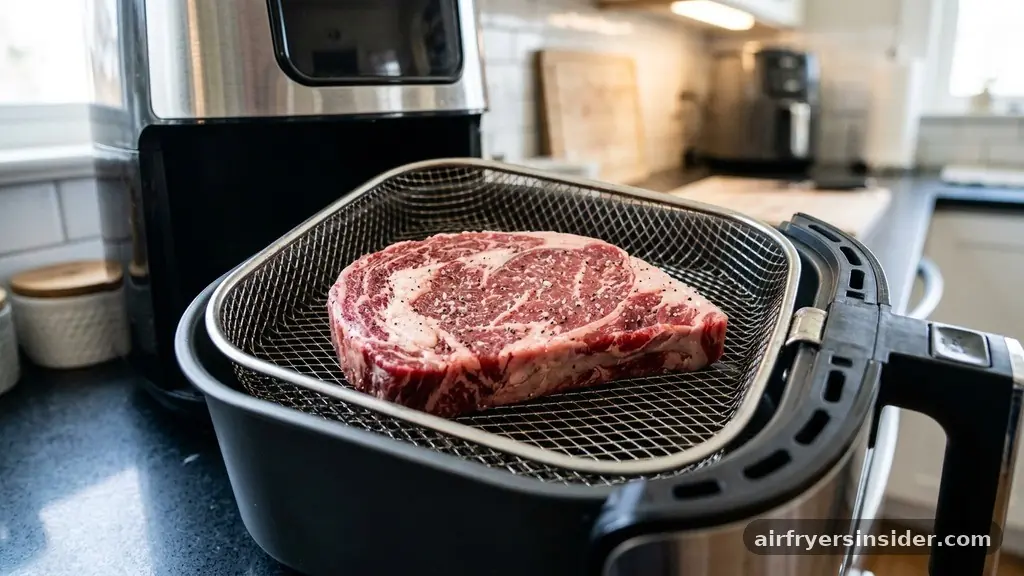
At its core, an air fryer is a miniature convection oven that relies on rapid air circulation to cook food quickly. When you decide that you can cook steak in an air fryer, you are essentially harnessing this intense airflow to mimic the dry heat of a grill.
Unlike a traditional oven, the compact chamber of an air fryer forces hot air to envelop the protein, which promotes efficient moisture evaporation on the surface. This is critical for achieving a desirable crust.
The physics of the device means that heat transfer happens much faster than in a conventional oven. You aren’t just baking the meat; you are using the high-velocity fan to create a localized environment where the surface temperature rises rapidly.
This helps initiate the Maillard reaction, the chemical process that gives seared meat its complex, savory flavor. Because the air is constantly moving, it strips away the boundary layer of cooler air surrounding the steak, leading to a more consistent cook across the thickness of the cut.
Preparing Your Beef for Optimal Success
Success starts long before you turn on the machine. To ensure the best results, start by bringing your steak to room temperature. A cold steak dropped into a hot environment will cook unevenly, resulting in a gray band of overcooked meat just under the surface.
Pull your ribeye or sirloin out of the refrigerator about thirty minutes before you plan to start cooking. This small step allows the internal temperature to stabilize, ensuring that the center reaches your target doneness at the same time the exterior achieves that golden-brown finish.
Next, focus on surface moisture. Moisture is the enemy of a good crust. Use paper towels to pat the steak dry until no visible liquid remains.
If the surface is damp, the air fryer will steam the meat instead of searing it. Once dry, season generously with coarse salt. If you have the time, a dry brine—leaving the salted steak uncovered in the fridge for a few hours—can further improve the texture by drawing out moisture and then pulling the seasoned juices back into the muscle fibers.
Choosing the Right Temperature and Timing
Selecting the correct temperature is the most important variable when determining how you can cook steak in an air fryer. For most cuts, you want to set your device to its highest setting, usually between 400°F and 450°F.
High heat is essential to achieve a crust before the center becomes overcooked. If you prefer a slow-cooked, edge-to-edge pink result, you might opt for a lower temperature, but you will sacrifice the exterior texture.
Cooking time will vary significantly based on the thickness of your cut and your preferred level of doneness. Use the following table as a general guideline for a one-inch-thick steak cooked at 400°F:
| Doneness | Internal Temperature | Estimated Time |
|---|---|---|
| Rare | 120°F – 125°F | 7-9 minutes |
| Medium-Rare | 130°F – 135°F | 9-11 minutes |
| Medium | 140°F – 145°F | 11-13 minutes |
The Essential Role of the Meat Thermometer
Never rely solely on a timer when cooking high-quality protein. Every air fryer model has slight variations in airflow and heating element intensity. The only way to guarantee a perfect medium-rare is by using a reliable meat thermometer.
Insert the probe into the thickest part of the steak, ensuring you aren’t hitting a bone or a large pocket of fat. This provides an accurate reading of the internal temperature, which is the only true measure of success.
It is helpful to pull the steak out of the air fryer when it is about five degrees below your target temperature. This accounts for carryover cooking, where the residual heat continues to raise the internal temperature while the meat sits on your cutting board.
Relying on a thermometer removes the guesswork and prevents the disappointment of cutting into a steak only to find it has been cooked well-done. It is the single most important tool in your kitchen for consistent results.
Mastering Crust Formation and Fat Rendering
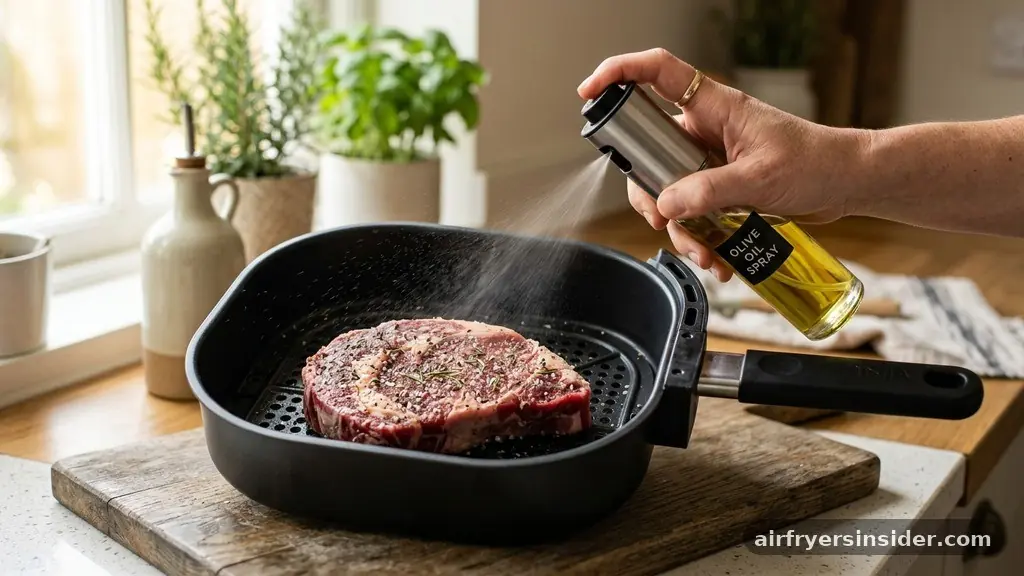
One of the biggest complaints about air-fried steak is the lack of a deep, dark crust compared to a cast-iron pan. You can improve this by using a light coating of oil spray.
Choose an oil with a high smoke point, such as avocado or grapeseed oil, to ensure it doesn’t burn or produce acrid smoke inside your appliance. A thin, even mist allows the heat to transfer more efficiently to the surface of the meat.
For cuts like ribeye, fat rendering is essential. The fat cap on the edge of the steak needs enough time to soften and turn translucent.
If you find the steak is reaching your desired internal temperature before the fat has rendered, you can trim the fat cap slightly before cooking or use a searing rack to elevate the meat, which allows the rendered fat to drip away and prevents the steak from sitting in its own juices. This elevation also improves air circulation, ensuring the bottom of the steak browns as well as the top.
Common Mistakes and How to Avoid Them
Even experienced cooks can stumble when trying new methods. One frequent mistake is overcrowding the basket. Air fryers rely on air circulation to work; if you pack the basket with multiple steaks, you block that airflow and create a steaming environment.
Always leave space between pieces so the hot air can reach every surface. If you are cooking for a crowd, it is better to cook in batches rather than trying to cram everything in at once.
Another issue is failing to flip the meat. While the convection environment is efficient, the top of the food usually receives more direct heat than the bottom. Using tongs to flip the steak halfway through the cooking time ensures that both sides receive equal exposure to the heating element.
Finally, avoid using sugary marinades or rubs with high sugar content, as these will likely burn and become bitter at the high temperatures required for a proper sear. Stick to dry rubs, herbs, and aromatics like garlic or rosemary for the best flavor profile.
Answering Topical Gaps in Air Fryer Cooking
You might wonder if you can cook steak in an air fryer using frozen meat. Technically, it is possible, but it is rarely the best way to get a high-quality result.
If you must use a frozen steak, you will need to lower the temperature slightly and increase the cooking time to ensure the center thaws and cooks before the outside burns. However, you will miss out on the ability to dry-brine or properly sear the surface, leading to a much duller flavor profile.
Another common gap involves the use of accessories. Many people ask if they can use a cast iron trivet or a specialized searing rack. Using a small rack to keep the steak off the bottom of the basket is an excellent idea; it promotes better circulation and helps the bottom crust form.
However, always ensure your accessories are rated for the high temperatures your air fryer reaches. Avoid using parchment paper if it is not specifically designed for air fryers, as it can be sucked up into the heating element and cause a fire hazard.
The Importance of the Resting Period
The final step is the most ignored but arguably the most vital: the resting period. Once your meat thermometer confirms the steak has reached your target temperature, remove it from the air fryer and place it on a warm plate or cutting board.
Let it rest for at least five to ten minutes before slicing. This allows the muscle fibers to relax and the juices to redistribute throughout the meat.
If you cut into the steak immediately, the juices will run out onto the board rather than staying inside the meat, leaving you with a dry, disappointing dinner. Resting is not just a suggestion; it is a fundamental part of the cooking process that ensures every bite is as tender and flavorful as possible.
Use this time to prepare a compound butter or finish your side dishes. When you finally slice against the grain, you will be rewarded with a perfect, juicy piece of beef that proves you can indeed cook a steak in an air fryer with professional results.
FAQ
Is it really possible to get a good crust on a steak in an air fryer?
Yes, provided you pat the meat very dry, use a high-temperature oil spray, and ensure the air fryer is fully preheated. The combination of high heat and rapid air circulation is highly effective at browning the exterior while keeping the center tender and juicy.
What is the best temperature to use for air frying steak?
The best results typically come from cooking at 400°F. This high temperature is necessary to create a Maillard reaction on the surface of the meat before the interior overcooks. Always use a meat thermometer to monitor the internal temperature to reach your preferred level of doneness.
Do I need to flip the steak during the cooking process?
Yes, flipping the steak halfway through the cooking time is essential. It ensures that both sides of the meat receive even exposure to the circulating hot air, which leads to a more uniform crust and consistent internal temperature across the entire thickness of the cut.
How long should I let the steak rest after air frying?
You should let the steak rest for at least five to ten minutes after removing it from the air fryer. This resting period allows the juices to redistribute throughout the muscle fibers, resulting in a much more tender and flavorful experience when you finally slice into the meat.
Cooking steak in an air fryer is a reliable way to get a delicious result when you understand the balance of heat and time. By focusing on surface moisture, using a meat thermometer, and allowing for proper resting, you can achieve a steak that rivals those cooked in a traditional pan. The key is to manage the airflow and respect the internal temperature of the beef.
Whether you are craving a quick ribeye or a simple sirloin, your air fryer is a capable tool that deserves a place in your culinary repertoire. Feel free to experiment with different seasoning rubs or compound butters to make the process your own, and enjoy the convenience of a perfect meal prepared right on your countertop.
Meta Description: Learn how to cook steak in an air fryer perfectly every time with our expert tips on temperature control, seasoning, and the essential resting period.


