

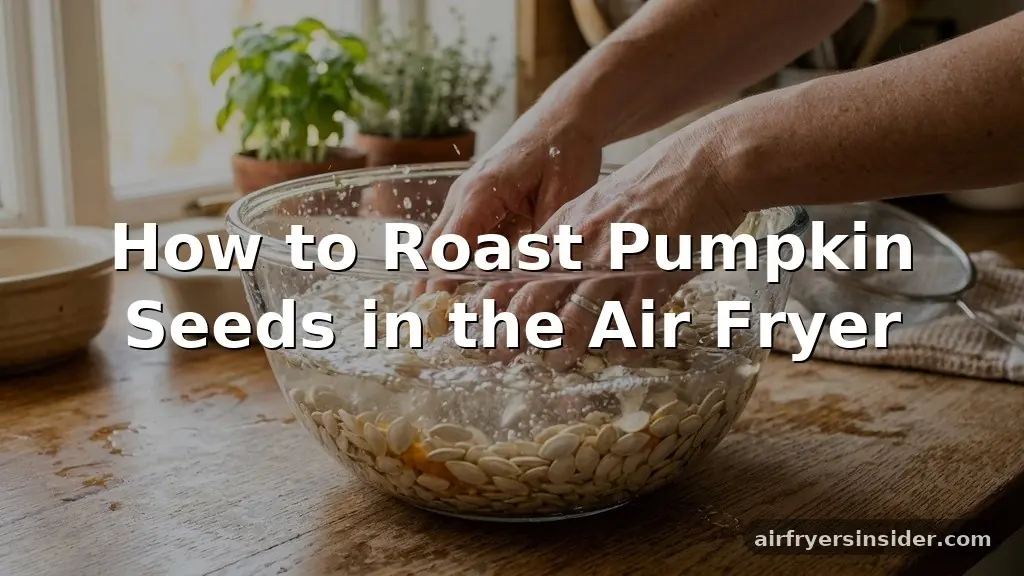
Learning how to roast pumpkin seeds in an air fryer is one of the best ways to transform a messy byproduct of carving jack-o’-lanterns into a delicious, nutrient-dense treat. While traditional oven roasting can take nearly an hour and often results in uneven browning, the rapid convection heat of an air fryer produces a perfect, crunchy snack in a fraction of the time.
By mastering a few simple techniques for moisture removal and seasoning, you can ensure your seeds turn out crisp and flavorful every single time. This method is not only efficient for small batches, but it also helps you avoid heating up your entire kitchen during the busy autumn season.
Preparing Seeds for Maximum Crispness
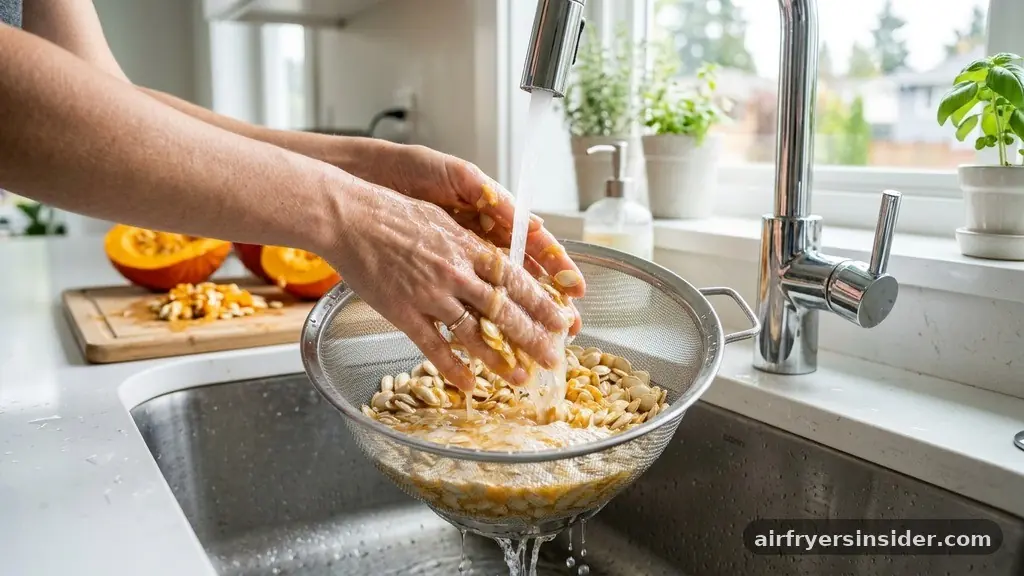
The secret to achieving the perfect crunch lies in how you treat the seeds before they ever hit the heat. When you first scoop the seeds out of a pumpkin, they are coated in a thick, slimy pulp. You must remove this residue completely to ensure the final product isn’t soft or chewy.
Start by placing the seeds in a large bowl of cold water and agitating them with your hands. The fibrous strings will naturally float to the top or separate, allowing you to strain the clean seeds through a colander.
Once the seeds are clean, drying them is the most critical step in the entire process. If any moisture remains on the hull, the seeds will steam rather than roast, leading to a lackluster texture. Spread the damp seeds out on a clean kitchen towel or several layers of paper towels.
Pat them down thoroughly and let them air dry for at least 30 minutes, or even an hour if your kitchen is humid. This surface dehydration ensures that when you add oil, the seasoning adhesion is significantly improved, preventing the spices from sliding off during the cooking cycle.
Selecting and Applying Your Seasoning
Once your seeds are dry, they are ready for a light coating of fat to help them crisp up and hold onto flavor. A high-quality oil, such as avocado oil or extra virgin olive oil, works best because it coats the hull evenly without burning too quickly.
You only need about a teaspoon of oil for every cup of seeds; using too much will leave you with greasy results rather than a light, airy snack. Toss the seeds in a bowl with your chosen oil until they look glossy but not submerged.
After the oil is applied, you can experiment with various spice blends to suit your palate. For a classic savory profile, kosher salt is the primary requirement, but you can elevate the flavor by adding garlic powder or smoked paprika. If you prefer a sweet treat, cinnamon mixed with a touch of brown sugar creates a festive flavor profile perfect for cool weather.
Always add your dry seasonings after the oil has been applied to ensure they stick to the hull. If you are using a delicate spice blend, consider adding it halfway through the roasting process to prevent the spices from scorching under the intense heat of the air fryer.
Mastering Air Fryer Convection Heat
The air fryer functions as a powerful convection oven, circulating hot air rapidly around the food. This is ideal for roasting because it draws moisture out of the seeds while simultaneously browning the exterior.
However, because the air fryer is so efficient, you must be mindful of the cooking temperature. Setting the device too high, such as above 350°F, can lead to burnt seeds before the inside has had a chance to reach that satisfying, nutty crunch.
Most air fryer models perform best for this task when set between 300°F and 325°F. This lower temperature range allows the heat to penetrate the hull gently. It is also important to consider the density of the seeds in your basket.
If you stack them too high, the air circulation will be obstructed, leading to uneven roasting. Use a single layer whenever possible. If you are preparing a larger quantity, it is better to roast them in two distinct batches rather than crowding the basket and compromising the final texture.
The Importance of Monitoring and Shaking
Even with the best air fryer, you cannot simply set a timer and walk away. Because pumpkin seeds are small and lightweight, they can fly around inside the basket if the fan is particularly strong, or they can quickly move from perfectly golden brown to charred in a matter of seconds. You should plan to check on your seeds at least every three to four minutes.
During these check-ins, it is vital to shake the basket thoroughly. This redistributes the seeds, ensuring that those which were tucked underneath or on the edges get equal exposure to the direct heat source. If you have an air fryer rack, you can use it to create a secondary layer, but remember that the seeds on the rack may cook slightly faster than those on the bottom.
If you notice the seeds are starting to smoke, your temperature is likely too high, or you have too much oil on the hulls. Adjust your heat accordingly and keep a close eye on the color to avoid the disappointment of burnt seeds.
Comparing Roasting Methods
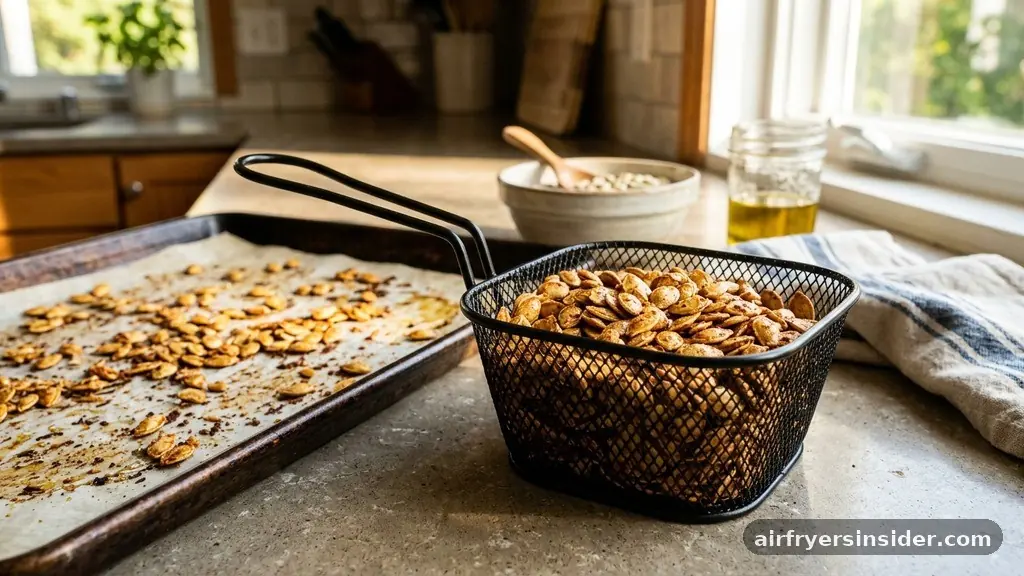
Many home cooks wonder whether the air fryer is truly superior to the traditional oven. While the oven is excellent for large quantities, the air fryer offers distinct advantages for smaller batches. The table below outlines the primary differences between these two common methods for preparing pumpkin seeds.
| Feature | Air Fryer | Traditional Oven |
|---|---|---|
| Cooking Time | 8-12 Minutes | 30-45 Minutes |
| Energy Usage | Low (Efficient) | High |
| Texture Result | Very Crispy | Lightly Crisp |
| Batch Capacity | Small/Medium | Large |
As shown in the table, the air fryer is the clear winner for speed and energy efficiency. It is particularly well-suited for a quick snack preparation when you have a single pumpkin’s worth of seeds.
The oven remains the preferred choice if you are hosting a large party and need to process several cups of seeds at once. However, for the average household, the speed of the air fryer makes it a much more accessible option for a mid-week treat.
Addressing Common Troubleshooting Issues
Even with a reliable recipe, you might encounter minor hurdles. One common issue is the “flying seed” problem, where the fan speed of the air fryer picks up the seeds and blows them into the heating element.
If this happens, you can place a piece of parchment paper or a metal rack on top of the seeds to weigh them down. Ensure that the paper is small enough to allow air to flow around the sides of the basket, or use a piece of heat-safe mesh.
Another common complaint is that the seasoning falls off the seeds during the process. This usually happens if the seeds were not dried thoroughly or if they were not tossed well with the oil. If your seeds come out of the air fryer and the salt is all at the bottom of the basket, try adding a tiny spritz of oil or a drop of water to the finished seeds, then toss them with the seasoning again.
This “post-roast” seasoning can often save a batch that lacked flavor. Furthermore, be careful not to over-salt during the initial phase, as the salt will concentrate as moisture evaporates.
Effective Cooling and Storage
Once your seeds reach a beautiful golden brown color, the cooking process doesn’t technically stop the moment you remove the basket. Residual heat continues to work on the seeds, and they will crisp up significantly as they cool down.
It is tempting to eat them immediately, but giving them a proper cooling time of at least ten minutes is essential. This allows the internal moisture to stabilize, resulting in a much crunchier bite.
When the seeds are completely cool to the touch, you should store them properly to maintain their freshness. Pumpkin seeds contain healthy fats that can go rancid if exposed to air or light for extended periods. Use an airtight container, such as a glass mason jar or a heavy-duty silicone bag, to keep them fresh.
If you live in a humid climate, adding a small food-grade desiccant packet to the jar can help prevent them from losing their crunch. Properly stored, your roasted seeds will remain delicious for up to two weeks, making them a perfect staple for quick autumn recipes or healthy snacking throughout the month.
Expanding Your Culinary Horizons
Once you have mastered the basic technique, you can start incorporating these roasted seeds into other dishes. Because they have a neutral, nutty flavor, they work well in both savory and sweet applications.
You can sprinkle them over a bowl of creamy butternut squash soup to add a contrasting texture, or fold them into a batch of homemade granola for an extra boost of protein. They also make a fantastic addition to salads, where they provide a satisfying crunch that replaces traditional croutons.
If you enjoy experimenting with flavor, consider moving beyond standard salt and pepper. Try tossing your seeds with a dash of soy sauce and ginger powder for an Asian-inspired snack, or use a blend of cumin and chili powder for a smoky, Mexican-inspired twist. The versatility of the air fryer means you can prepare multiple small batches with different flavor profiles in under an hour.
This allows you to cater to different preferences within your household, ensuring that everyone gets their favorite style of snack. By treating the humble pumpkin seed as a culinary asset rather than a waste product, you can enjoy a sustainable and delicious treat throughout the harvest season.
FAQ
Do I really need to remove every bit of pulp from the seeds before roasting?
Yes, removing as much pulp as possible is essential. Any remaining fibrous material will burn quickly in the air fryer and prevent the seeds from drying out properly. Thoroughly cleaning and drying the seeds ensures a clean, crisp texture and prevents a bitter, burnt aftertaste.
Can I roast the seeds with the hull still on?
Absolutely. The hull (the outer shell) is edible and becomes very crunchy when roasted in an air fryer. Most people prefer to roast them with the hull on because it provides the best texture. If you prefer to eat just the inner kernel, you would have to shell them after roasting, which is quite time-consuming.
How do I know when the seeds are perfectly done?
The seeds are done when they turn a light golden brown and sound hollow when stirred. Because air fryers vary in power, you should rely on visual cues and the “shake test” rather than just the timer. If they look too pale, give them another minute or two, but watch them closely to prevent burning.
Is it possible to overcook pumpkin seeds in the air fryer?
Yes, it is very easy to overcook them due to the high intensity of the convection heat. Once they start to turn dark brown, they are likely only seconds away from burning. Always check them frequently, especially as you get near the end of your estimated cooking time.
Conclusion
Mastering how to roast pumpkin seeds in an air fryer provides a simple, fast, and highly effective way to enjoy a classic seasonal snack. By prioritizing thorough drying, careful temperature management, and frequent shaking, you can achieve a level of crunch that rivals any store-bought alternative. This process turns a simple byproduct into a versatile ingredient that elevates everything from soups to salads.
As you experiment with different spice blends and techniques, you will find that these nutrient-dense seeds are a staple worth keeping in your rotation throughout the autumn months. Start with a small batch to gauge your air fryer’s specific heat output, and feel free to get creative with your seasonings to find your perfect flavor combination. Enjoy the crisp results of your next kitchen session.
Meta Description: Learn how to roast pumpkin seeds in an air fryer for a perfectly crunchy, healthy snack. Follow these simple steps for cleaning, seasoning, and roasting.


