

Mastering the art of cooking raw chicken wings in air fryer setups transforms a simple protein into a restaurant-quality appetizer. Achieving that elusive, perfectly golden exterior while keeping the meat succulent inside relies on understanding how hot, circulating air interacts with poultry skin. By focusing on moisture management and thermal consistency, you can bypass the mess of deep-frying without sacrificing texture.
Whether you are prepping for a game day spread or a quick weeknight dinner, the process is straightforward once you grasp the essential mechanics of heat transfer and surface preparation. This approach ensures your wings come out shattered-glass crispy every single time you hit start.
Preparing the Wings for Maximum Crispiness
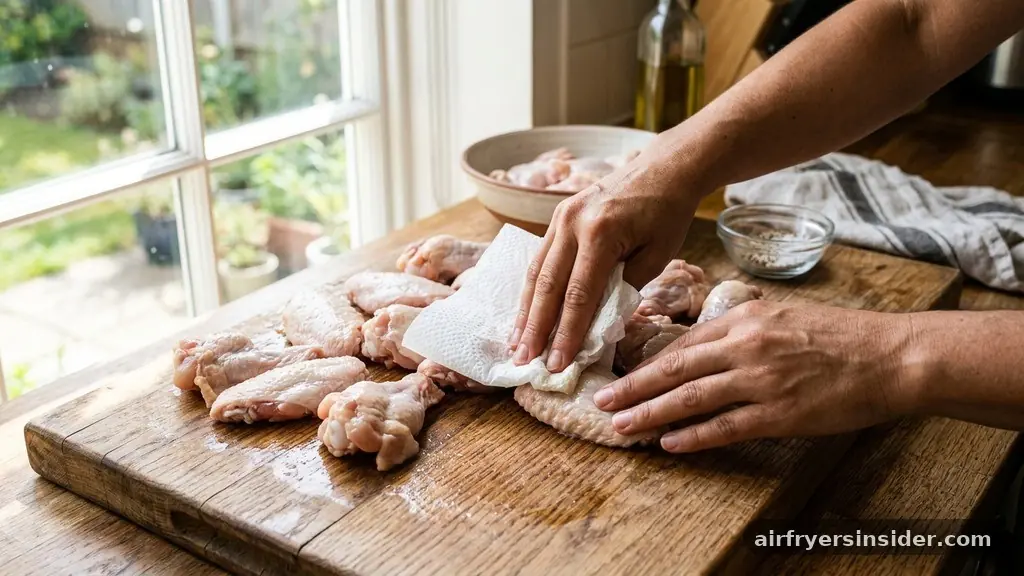
The secret to achieving a superior crunch starts long before the wings enter the appliance. Moisture is the enemy of crispiness; if the skin is damp, it will steam rather than sear. Begin by patting your wings thoroughly with paper towels.
You want the surface to feel bone-dry to the touch. Some enthusiasts take this a step further by letting the wings sit uncovered in the refrigerator for an hour, as this dehydrates the skin further, allowing for a better crunch.
Once your wings are dried, consider the role of additives. A light dusting of baking powder—not baking soda—is a classic trick that alters the pH of the skin, accelerating browning and creating an airy crust. Toss the wings in a bowl with the powder and your preferred dry rub, ensuring every crevice is coated lightly.
Avoid heavy, wet marinades at this stage, as they introduce excess liquid that interferes with the rendering process. By keeping the exterior dry and lightly coated, you create the perfect canvas for the hot air to work its magic.
The Importance of Consistent Temperature Control
Air fryers operate on the principle of convection, where a powerful fan pushes heat around the food. Maintaining consistent temperature control is vital because it ensures the rendered fat drips away rather than pooling around the meat.
For raw chicken wings, starting at a slightly lower temperature helps the fat under the skin begin to liquefy. Once the fat has started to render, you can crank the heat to finish the skin.
Most modern air fryers have a sweet spot for wings. Aiming for 380°F to 400°F is standard practice. If the temperature is too low, the wings will simply cook through without developing that signature golden-brown color.
Conversely, if it is too high, the outside might burn before the interior reaches the required internal temperature. Using a steady heat profile allows the skin to bubble and crisp while the meat stays juicy. Always preheat your unit for at least three to five minutes before adding the wings to ensure the cooking cycle starts at the target heat immediately.
Avoiding Overcrowding and Ensuring Air Circulation
One of the most frequent errors in home cooking is the urge to cram as many wings as possible into the basket. Effective air circulation is the engine behind crisp results.
If the basket is packed too tightly, the air cannot flow between the pieces, leading to uneven cooking and soft, soggy patches. You want each wing to have enough space for the hot air to hit every surface.
If you are cooking a large batch, it is far better to work in two smaller rounds than one massive, crowded load. Arrange the wings in a single layer, ensuring they are not overlapping. If you must stack them, you will notice a significant drop in quality.
Think of the air fryer like a miniature convection oven; the more room the air has to move, the better the final texture. Shaking the basket halfway through the cycle is a non-negotiable step that redistributes the heat and ensures that the wings on the bottom get as much exposure as those on the top.
Strategic Seasoning and Oil Application
While the air fryer renders fat effectively, a small amount of fat added before cooking can help bridge the gap between dry skin and crispy perfection. Using a high-smoke point fat like avocado oil is ideal.
Avocado oil has a neutral flavor and can withstand high heat without breaking down or smoking excessively. A light misting or a quick toss in a bowl with a teaspoon of oil is all you need.
Strategic seasoning goes beyond just salt and pepper. Because the air inside the fryer is moving rapidly, it can sometimes blow away loose spices.
Applying your dry rub after a light coating of oil helps the seasonings adhere to the skin. Consider the following flavor profiles for your next batch:
- Classic Buffalo: Cayenne-based hot sauce, melted butter, and garlic powder.
- Lemon Pepper: Zest of two lemons, cracked black pepper, and a touch of sea salt.
- Garlic Parmesan: Minced garlic, finely grated parmesan, and dried parsley added post-cook.
- Smoky BBQ: Smoked paprika, brown sugar, cumin, and a hint of chipotle powder.
Optimal Temperature and Timing Guidelines
Understanding the relationship between heat and time is the foundation of successful air frying. While every machine varies slightly, the following table provides a general baseline for standard-sized chicken wings. Remember that regardless of the cooking time, the ultimate test is the internal temperature.
| Step | Temperature | Time |
|---|---|---|
| Preheat | 400°F | 5 Minutes |
| Initial Cook | 380°F | 15 Minutes |
| Flip/Shake | N/A | Every 7-8 Minutes |
| Crisping Phase | 400°F | 5-8 Minutes |
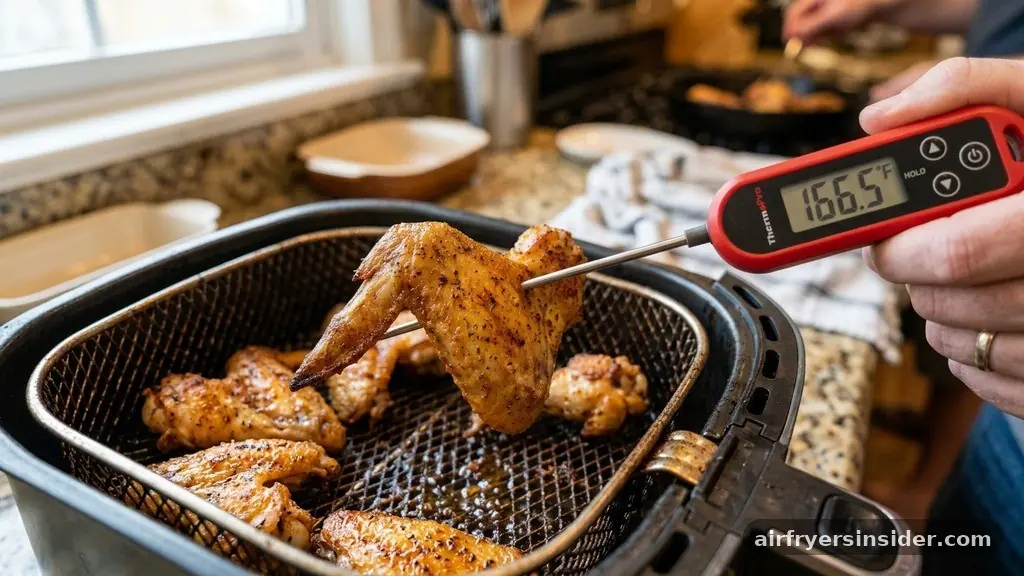
Always verify doneness using an instant-read thermometer. Insert the probe into the thickest part of the wing, avoiding the bone.
The USDA recommends an internal temperature of 165°F, but for chicken wings, many cooks prefer pulling them off at 175°F to 180°F. At this range, the collagen breaks down more thoroughly, resulting in meat that pulls away from the bone with ease.
Common Mistakes to Avoid During the Process
Even experienced cooks can fall into traps that undermine their efforts. One of the most common mistakes to avoid is failing to clean the bottom of the air fryer basket between batches.
If there is old grease or debris left behind, it will smoke intensely as the unit heats up, imparting a burnt, acrid flavor to your fresh wings. Always wipe out the bottom tray or use a fresh piece of parchment paper if you are worried about cleanup.
Another oversight is neglecting to shake the basket. While it feels like a simple task, failing to move the wings around means the ones on the bottom will sit in their own rendered fat. This prevents the underside from crisping up.
Furthermore, don’t be afraid to pull a wing out early to check it. If the skin looks ready but the meat seems underdone, you can simply lower the temperature to 350°F and continue for a few more minutes. This flexibility is the beauty of the air fryer.
Addressing Topical Gaps: Saucing and Resting
Many guides skip the “what happens next” phase, assuming the work ends when the buzzer sounds. However, saucing strategies are just as important as the cooking method. If you toss your wings in sauce too early, the residual heat and moisture from the sauce will soften the skin you worked so hard to crisp.
Always sauce your wings immediately before serving. If you are serving a crowd, keep the wings in a warm oven and toss them in batches as needed.
Resting is another overlooked component. Giving the wings two to three minutes to rest after coming out of the fryer allows the juices to redistribute and the skin to set. If you slice into them immediately, the steam trapped inside can make the coating feel gummy.
Pair your wings with classic sides like carrot sticks and celery to provide a crunchy, cooling contrast to the richness of the chicken. These vegetables help cleanse the palate and balance the heat of spicy sauces, making for a more complete and satisfying dining experience.
The Science of Rendered Fat
The magic of the air fryer lies in how it handles fat. As the wings cook, the skin heats up and the fat underneath begins to melt.
Because the air fryer basket is usually a perforated grate, this fat drips away from the meat. This process is essentially “frying” the skin in its own rendered fat, but without the massive volume of oil required by a traditional deep fryer.
If you notice your wings are not crisping, it may be because the fat is not rendering properly. This usually happens if the temperature is too low or the wings are too cold when they enter the basket. Always bring your chicken to room temperature for about 15 minutes before cooking.
This small adjustment allows the skin to start rendering the moment it hits the heat, rather than spending the first few minutes of the cooking cycle just warming up. The goal is a steady, continuous render that transforms flabby skin into a golden, crunchy shell.
Advanced Techniques for Pro-Level Results
Once you have mastered the basics of how to cook raw chicken wings in air fryer, you can experiment with more advanced techniques. Brining is one such method.
Soaking your wings in a saltwater solution for an hour before drying and cooking can infuse the meat with moisture and seasoning from the inside out. If you choose to brine, you must be extra diligent about drying the wings afterward, as the surface will be saturated with liquid.
Another advanced technique involves double-cooking. You can par-cook the wings at 300°F until they are cooked through but pale, then let them cool completely. When you are ready to serve, blast them at 400°F for 8-10 minutes.
This method is often used by restaurants to ensure they can serve large volumes of wings quickly without sacrificing quality. It allows the first stage to focus on cooking the interior, while the second stage focuses entirely on achieving that perfect, shatter-crisp exterior that defines a great wing.
Frequently Asked Questions
Is it necessary to use oil when air frying raw chicken wings?
While chicken skin contains its own fat, a light coating of oil helps conduct heat more efficiently and aids in browning. Using a small amount of avocado oil or olive oil spray ensures a more uniform, crispy crust, especially if you are using a dry rub seasoning.
What is the best internal temperature for air-fried wings?
While 165°F is the food-safe minimum, wings are best cooked to an internal temperature of 175°F to 180°F. At this higher range, the connective tissues and fat within the wing break down, resulting in more tender meat that pulls away from the bone easily.
How do I prevent my wings from smoking in the air fryer?
Smoking usually occurs when rendered fat drips onto the heating element or when food debris burns in the bottom of the basket. To prevent this, ensure you clean the basket thoroughly, avoid using excessive oil, and consider placing a slice of bread at the bottom to absorb excess drippings.
Can I cook frozen wings directly in the air fryer?
Yes, but you must adjust your timing. Start by cooking the frozen wings at a lower temperature (around 350°F) for 10 minutes to thaw and cook through, then increase the heat to 400°F for the final 10-15 minutes to crisp the skin properly.
Conclusion
Perfecting the process of cooking raw chicken wings in air fryer is a balance of patience and technique. By focusing on moisture control, maintaining consistent heat, and ensuring proper airflow, you can produce wings that rival those from any pub or restaurant. Remember that the quality of your result depends on how you prep the skin and how you manage the space within your basket.
Whether you prefer them dry-rubbed or tossed in a spicy sauce, the air fryer offers a cleaner, more efficient way to enjoy this classic comfort food. Start with these fundamentals, experiment with your favorite spice blends, and don’t be afraid to adjust your timing based on your specific appliance’s performance to find your own perfect wing recipe.
Meta Description: Learn how to cook raw chicken wings in air fryer for perfect, crispy results every time. Follow our expert tips on temperature, timing, and seasoning.


