

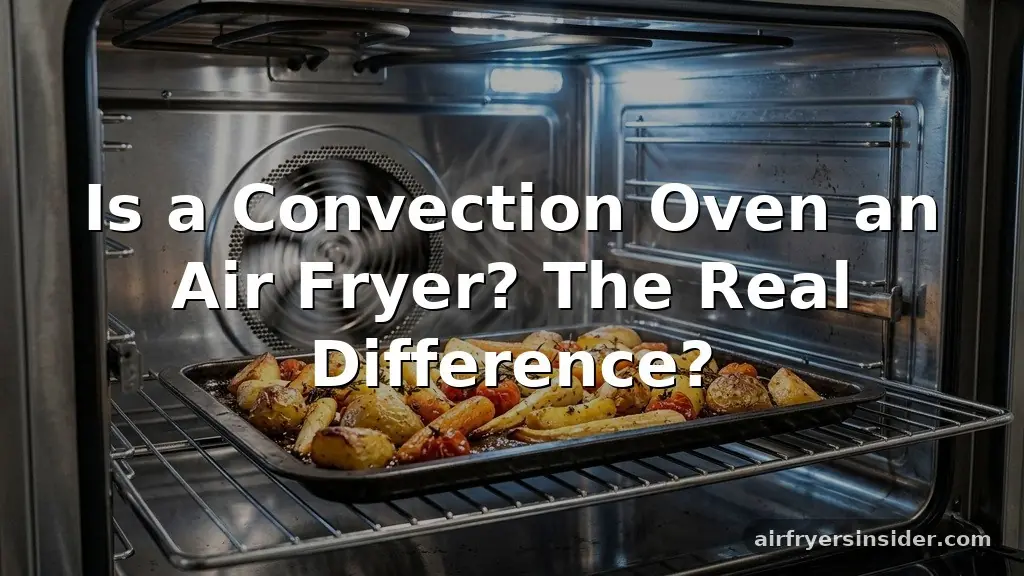
Many home cooks find themselves confused when trying to determine if a convection oven is an air fryer. While both machines rely on circulating hot air to cook food, they are not strictly the same appliance.
Understanding how your kitchen tools function helps you achieve better results, whether you want golden fries or a perfectly roasted chicken. By exploring the mechanics behind each, you’ll see why the distinction matters for your dinner plans.
The Core Mechanics of Convection Cooking
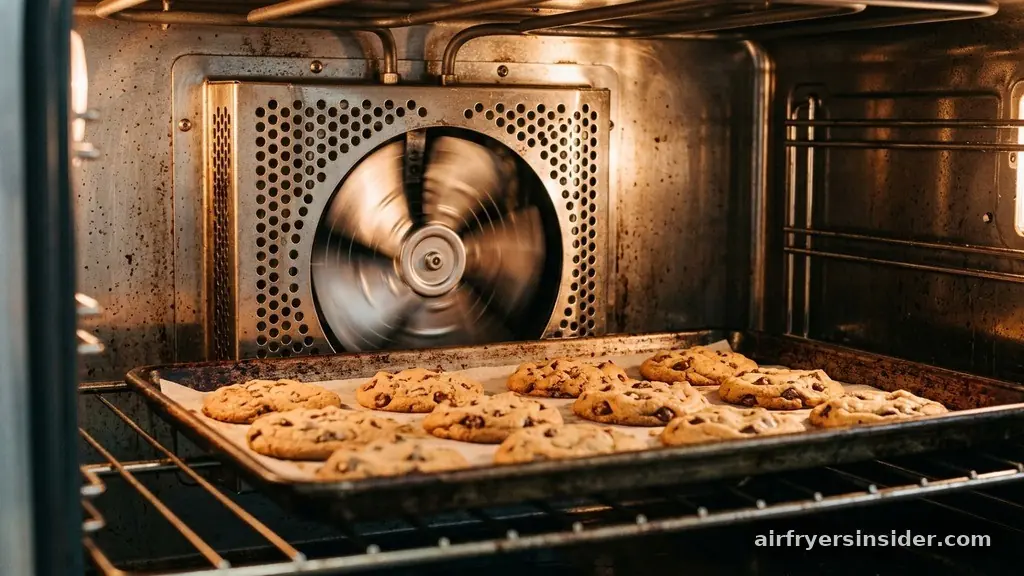
At its heart, a convection oven is essentially a standard oven equipped with a fan. This fan promotes thermal circulation, which moves hot air around the food inside the cavity.
In a traditional oven, heat often settles in pockets, causing uneven cooking. By adding a fan, the oven ensures a more consistent temperature throughout the chamber.
This fan-assisted cooking process is highly effective for tasks like baking cookies or roasting large cuts of meat. Because the air is constantly moving, it strips away the cold air barrier that naturally surrounds food.
This leads to faster cooking times compared to conventional radiant heat. However, the airflow in a standard convection oven is typically less aggressive than what you find in a dedicated air fryer.
The primary goal of convection is uniform heat distribution. It’s perfect for multi-rack cooking where you need the same level of browning on the top shelf as you do on the bottom. While it does promote browning, it isn’t specifically engineered to create the intense, deep-fried effect that many people associate with air frying.
How Air Fryers Achieve That Crispy Texture
When you look at an air fryer, you are essentially looking at a powerful, miniaturized convection oven. The secret to its success is the intensity of the rapid airflow.
These devices have a heating element placed very close to a high-speed fan, which sits right above the food. This setup creates a much more concentrated blast of heat than a full-sized oven ever could.
The proximity of the heating element to the air fryer basket is crucial. Because the chamber is small, the air has nowhere to go but around the food, effectively enveloping it in high-temperature currents. This process triggers the Maillard reaction—the chemical process that gives seared food its distinct flavor and crispy exterior—much faster than a larger oven.
By contrast, a full-sized convection oven has a much larger interior volume. The air must travel further and bounce off more surfaces, losing some of its velocity by the time it reaches the food. While an air fryer is a countertop appliance designed for speed and crunch, a convection oven is designed for versatility and capacity.
Key Differences in Cooking Performance
The most significant divergence between these two tools lies in how they handle moisture and crust formation. Air fryers are masters of moisture evaporation. By blasting the surface of the food, they dry out the outer layer almost instantly, which is exactly why they are so good at making fries or breaded vegetables feel like they came out of a deep fryer.
A convection oven, while capable of browning, often allows more moisture to remain inside the food. This can be a benefit for roasts or pastries where you want a tender interior, but it can be a drawback if you are chasing that specific “fried” crunch. The following table highlights the primary functional differences:
| Feature | Convection Oven | Air Fryer |
|---|---|---|
| Airflow Speed | Moderate | High / Intense |
| Heating Element Proximity | Distant | Very Close |
| Ideal For | Roasts, Baking, Large Batches | Crispy Sides, Snacks, Small Batches |
| Preheating Time | Longer | Minimal |
Can You Convert Your Convection Oven?
If you don’t have an air fryer, you might wonder if you can replicate the effect in your oven. It is possible, but you have to adjust temperature and time to account for the difference in power. Generally, you should lower the recipe’s recommended temperature by about 25 degrees Fahrenheit and keep a close eye on the clock.
To mimic the air fryer experience, you need to maximize the airflow around your food. Using an oven-safe wire rack placed over a baking sheet is the best way to achieve this. This allows hot air to reach the underside of your food, preventing the dreaded “soggy bottom” that often occurs when food sits directly on a solid pan.
Essential Tips for Oven Air-Frying
- Use an oven-safe wire rack to elevate ingredients for better circulation.
- Always avoid overcrowding the pan, as trapped steam will prevent crisping.
- Pat your food dry before seasoning; excess surface moisture is the enemy of crunch.
- If your oven has a dedicated “convection roast” setting, use it, as it often uses a higher fan speed.
- Flip your food halfway through the cooking process to ensure even browning on both sides.
The Impact of Cooking Capacity
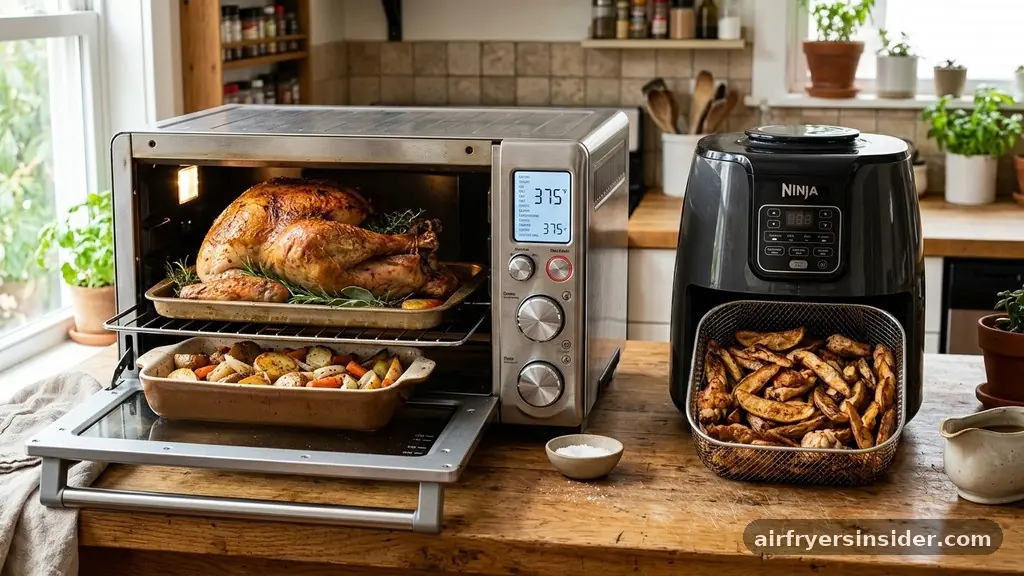
One of the biggest factors in the “is a convection oven an air fryer” debate is the sheer scale of the equipment. A standard convection oven can hold multiple trays of food, making it the champion of kitchen efficiency when cooking for a crowd. You can roast an entire turkey while simultaneously crisping potatoes on another rack.
An air fryer is limited by the physical dimensions of its basket. While manufacturers are releasing larger models, you will still struggle to cook a full meal for a family of four in one go.
If you try to stack food in an air fryer to increase volume, you defeat the purpose of the device. The air cannot circulate properly, and you end up with steamed food rather than crispy food.
Therefore, the choice often comes down to your lifestyle. If you prioritize quick, small-batch cooking for one or two people, the air fryer is a clear winner. If you are a baker or someone who frequently cooks large roasts and side dishes for a household, the convection oven is the more practical tool.
Addressing Topical Gaps: Why Air Fryer Marketing Confuses Consumers
Much of the confusion regarding whether a convection oven is an air fryer stems from clever marketing. Many modern oven manufacturers have added an “Air Fry” mode to their appliance settings. This is essentially a high-speed convection setting that pushes the fan to its maximum capacity.
However, labeling it “Air Fry” doesn’t change the physics of the oven. Because the oven cavity is still large, it will never be as efficient as a 3-quart air fryer basket at turning frozen snacks into crispy treats. Marketing teams use the term because it signals convenience to the consumer, but it is important to recognize that the result is often just “better convection” rather than true air frying.
Another gap in understanding is the role of oil. People often think air fryers require no oil, but the “fried” texture is actually a result of the hot air interacting with a small amount of oil on the surface of the food. Whether you use a convection oven or an air fryer, you need a light coating of oil to achieve that golden finish.
Energy Usage and Preheating Time
When looking at kitchen efficiency, energy usage is a significant consideration. Because a convection oven has a larger cavity, it requires more energy to heat up and maintain that heat. If you are only cooking a handful of chicken wings, it is significantly more energy-efficient to use a small air fryer than to heat up your entire oven.
Preheating time is another differentiator. A compact air fryer can reach 400 degrees in under three minutes, while a standard oven might take ten to fifteen minutes. If you are in a rush, the air fryer saves you time not just in the cooking process, but in the preparation phase as well.
However, if you are cooking multiple batches of food, the air fryer might actually take longer than the oven. You have to cook in segments, whereas the oven handles everything at once. Analyze your typical cooking habits to see which machine aligns better with your time management needs.
Maintenance and Cleaning Requirements
Cleaning an air fryer is generally easier than cleaning a convection oven. Most air fryer baskets are non-stick and dishwasher safe. Because the unit is small, you can quickly wipe down the interior heating element and the basket after each use.
A convection oven, by contrast, requires more intensive maintenance. You have to clean the glass door, the interior walls, and the oven racks. If you use the convection setting often, grease can splatter onto the fan assembly, which can be difficult to clean without professional help or specialized cleaners.
If you are someone who hates cleaning up after cooking, the air fryer is likely the more appealing option. Just ensure you aren’t using metal utensils that could scratch the non-stick coating, as this will shorten the lifespan of your appliance.
Choosing the Right Appliance for Your Needs
Ultimately, you don’t necessarily need both. If you already have a high-quality convection oven, you can achieve 90% of what an air fryer does by using a wire rack and a bit of patience. If you live in a small apartment or find yourself cooking for one, the air fryer is an excellent space-saving addition to your kitchen.
Consider your primary goals. Do you want to bake sourdough bread, roast whole chickens, and prepare holiday meals? Stick with the convection oven.
Do you want to quickly heat up frozen vegetables, make crispy snacks, or prepare fast weeknight dinners? An air fryer will serve you well.
There is no right or wrong answer—only the right tool for your specific culinary style. By understanding the mechanics of thermal circulation and the importance of rapid airflow, you can make an informed decision that elevates your cooking experience regardless of which machine you have on your counter.
Frequently Asked Questions
Can I use my convection oven like an air fryer?
Yes, you can mimic the air fryer effect in a convection oven. Use an oven-safe wire rack to elevate your food, which allows air to circulate underneath. Lower the temperature by about 25 degrees Fahrenheit compared to a standard recipe and ensure you do not overcrowd the pan.
What is the main difference between an air fryer and a convection oven?
The main difference is the intensity of the airflow and the size of the cooking chamber. Air fryers have a more powerful fan and a smaller cavity, which creates a more concentrated blast of heat, making them superior for achieving a crispy, fried-like texture on small items.
Are there foods I should avoid cooking in a convection oven?
You should be cautious with light, airy batters, such as soufflés or delicate cakes, as the strong fan can cause them to rise unevenly or tilt. Additionally, avoid placing lightweight parchment paper or foil near the fan, as the airflow can blow it around and cause a fire hazard.
Which appliance is better for health-conscious cooking?
Both are excellent for health-conscious cooking because they use circulating hot air rather than deep-frying in oil to cook food. Both appliances allow you to achieve a crispy texture with only a minimal amount of oil, significantly reducing the fat content compared to traditional frying methods.
Conclusion
Deciding if a convection oven is an air fryer comes down to understanding the nuances of how they manipulate heat. While both utilize fans to move air, the air fryer’s compact design and high-velocity fan offer a level of crispness that a larger oven struggles to match. That said, a convection oven remains the king of versatility and capacity for larger meals.
You can easily achieve great results in either device by mastering techniques like using wire racks and ensuring proper airflow. Experiment with your current setup before rushing to buy new gadgets, as you might find that your existing oven is more capable than you realized. We hope this breakdown helps you feel more confident in your kitchen adventures.


