

Turning leftover fries into a meal that tastes like it just came out of the deep fryer is a common kitchen struggle. Most people settle for soggy, sad-tasting potatoes because they rely on the microwave, but mastering the art of reheating french fries in an air fryer changes everything. By leveraging rapid air circulation, you can revive that signature crunch without the grease-laden mess of a stovetop pan.
You’ll find that a few simple adjustments to your timing and temperature settings make all the difference in restoring that fresh-cooked quality. Whether you’re dealing with shoestring cuts or thick wedges, this method ensures your snack remains a highlight of your meal rather than a disappointing afterthought.
The Science of Air Frying Leftover Potatoes
When you reheat french fries in an air fryer, you are essentially reversing the process that made them soggy in the first place. Leftover fries suffer from moisture migration; the starch in the potato absorbs water from the interior, softening the exterior crust.
An air fryer acts as a powerful convection oven, using a fan to circulate hot air at high speeds. This environment encourages rapid moisture evaporation from the surface of the potato, which is essential for regaining a crispy texture.
Unlike a standard oven, which takes time to heat up and often dries out the entire potato, an air fryer focuses heat directly on the surface. This triggers the Maillard reaction, the chemical process that gives fried foods their golden brown color and complex, toasted flavor.
Because the air fryer basket allows air to pass through the bottom as well as the top, you get even heating without needing to flip the fries constantly. The goal is to reach a high enough internal temperature to make the center fluffy while the exterior undergoes a quick, intense crisping.
Optimal Temperature Settings for Perfect Results
Choosing the right temperature is arguably the most important step in the process. If the heat is too low, the fries will sit in the basket and lose more moisture without crisping up, leading to a dry, mealy texture.
Conversely, if the temperature is too high, the exterior will burn before the inside has a chance to warm through. For most standard potato types, a temperature between 350°F and 375°F (175°C to 190°C) is the sweet spot.
Thin shoestring fries require slightly less time and a lower temperature to prevent them from becoming brittle. Thick-cut or steak fries, on the other hand, benefit from the higher end of that range to ensure the middle gets hot.
Always consider the residual oil already present in the fries. Since they have been fried once, they contain internal fats that help them crisp up again, so you rarely need to add more oil unless they look completely parched.
Managing Basket Capacity and Airflow
One of the most common mistakes people make is overcrowding the basket. When you stack fries on top of one another, the rapid air circulation is blocked, creating pockets of steam rather than dry, hot air.
To ensure every fry gets the proper treatment, spread them out in a single layer. If you have a large batch, it is much better to reheat them in two separate cycles than to cram them all into the unit at once.
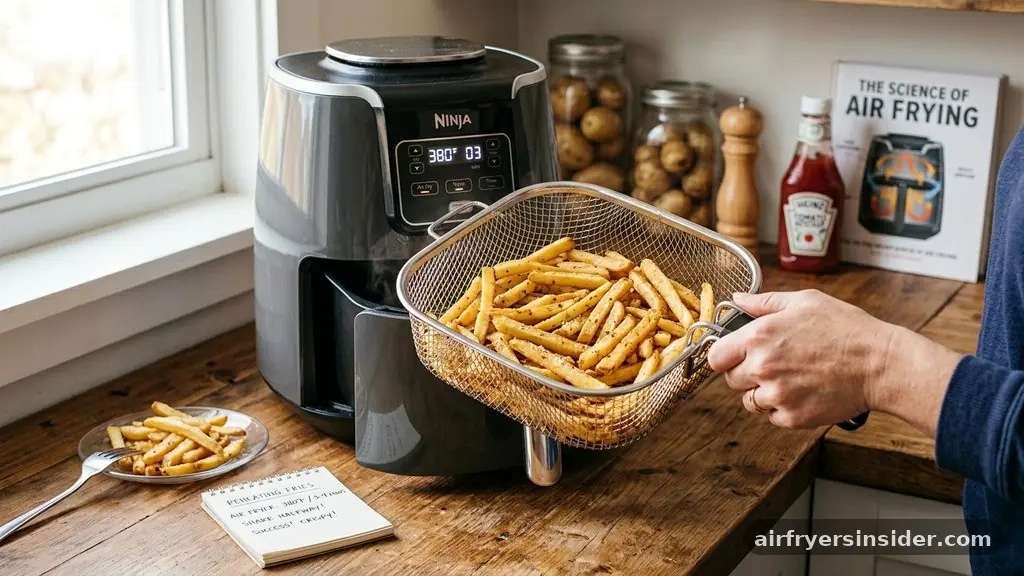
If you are using a basket-style air fryer, remember to shake the basket halfway through the reheating duration. This simple motion redistributes the fries and ensures that any areas shielded from the airflow are exposed to the heat.
For those using oven-style air fryers with racks, rotate the trays if possible. Proper airflow is the engine of the air fryer; if you restrict it, you are effectively just using a very small, inefficient oven.
Addressing Different Fry Styles
Not all fries respond to the heat in the same way. The shape and density of the potato play a significant role in how much time they need to crisp up.
Shoestring fries, due to their high surface-area-to-volume ratio, can go from perfect to burnt in a matter of seconds. Keep a close eye on these, as they often only need three to four minutes to reach their peak.
Crinkle-cut and waffle fries are more forgiving because of their ridges. These grooves actually catch the hot air, allowing for a more even distribution of heat across the surface. However, they can also trap moisture in their crevices.
If you are working with these thicker varieties, you might need to extend the reheating time by a minute or two. The following table provides a general baseline for different fry types to help you avoid overcooking.
| Fry Type | Recommended Temp | Estimated Time |
|---|---|---|
| Shoestring | 350°F | 3-4 minutes |
| Crinkle-Cut | 360°F | 4-6 minutes |
| Waffle Fries | 375°F | 5-7 minutes |
| Steak Fries | 375°F | 6-8 minutes |
The Role of Preheating and Preparation
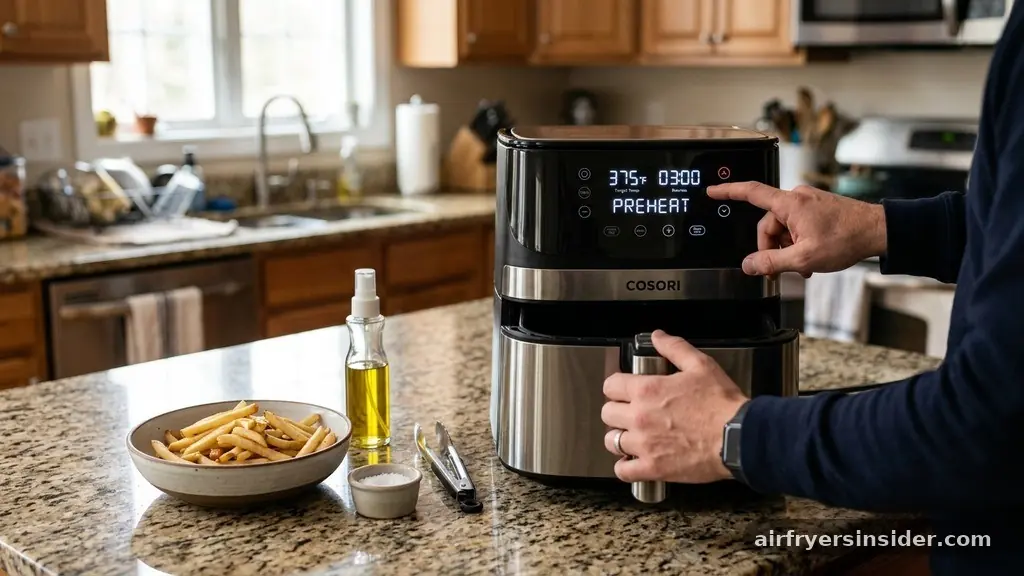
While many modern air fryers claim they don’t need to be preheated, doing so is highly recommended when you want to achieve a specific, crispy texture. Preheating the unit for three minutes ensures that the chamber is at the target internal temperature the moment the fries hit the basket. This immediate blast of heat starts the crisping process instantly, which is vital for maintaining the structure of the potato.
Before you toss the fries into the air fryer, check their condition. If they have been sitting in the refrigerator for a long time, they may have absorbed excess moisture. You can pat them dry with a paper towel if they feel damp, though this is rarely necessary.
If you feel the fries are too dry, a very light mist of oil spray can help them conduct heat more effectively and regain a golden brown finish. Avoid heavy coatings, as the residual oil from the initial frying process is usually sufficient.
Ensuring Food Safety and Quality
When reheating any leftovers, food safety should always be a priority. Fries should never be left at room temperature for more than two hours, as this puts them in the “danger zone” where bacteria can multiply rapidly. If your fries have been sitting out on the counter overnight, it is best to discard them rather than trying to reheat them.
When you reheat them, ensure they reach an internal temperature that is hot to the touch. The goal is not just to make them warm, but to heat them thoroughly. If you are storing fries to reheat later, keep them in an airtight container in the refrigerator.
This limits their exposure to oxygen and moisture, which helps keep them in better condition for the air fryer. If you notice an off-smell or a slimy texture before you even start the reheating process, it is a sign that the potatoes have spoiled and should not be consumed.
Topical Gaps: Troubleshooting Common Issues
Many users encounter problems when they try to fix their leftover fries. One common gap in knowledge is how to handle fries that have become completely dehydrated.
If your fries are hard and dry, add a tiny splash of water to the bottom of the air fryer basket—not directly on the fries—to create a small amount of steam during the first minute of heating. This rehydrates the interior before the dry, hot air crisps the exterior.
Another issue is the use of parchment paper. While parchment paper makes cleanup easier, it can block the holes in the bottom of the air fryer basket, which limits airflow. If you choose to use it, ensure it is perforated or that it doesn’t cover the entire surface area of the basket.
If you find your fries are still soggy, you might be overcrowding the basket or using a temperature that is too low. Don’t be afraid to pull a single fry out to taste test; it is the only way to confirm if your specific appliance and the fry thickness are working in harmony.
Essential Tools and Techniques
Beyond the air fryer itself, a few accessories can improve your results. A pair of silicone-tipped tongs is essential for moving the fries around without breaking them or scratching the non-stick coating of your basket. If you have a large family and need to reheat significant quantities, look into an air fryer rack that allows you to layer the fries while still maintaining airflow.
- Use silicone-tipped tongs to avoid damaging the non-stick surface.
- Avoid overcrowding the basket to ensure consistent rapid air circulation.
- Lightly mist with oil only if the fries appear completely dehydrated.
- Check the fries a minute before the timer goes off to prevent burning.
- Place fries on a cooling rack for thirty seconds after removing them to let excess steam escape.
Another technique for the best texture is to let the fries rest for just a moment after removing them from the air fryer. Placing them on a cooling rack for thirty seconds allows the surface to firm up slightly as the last bit of moisture evaporates. This small step prevents the steam trapped inside the fry from softening the crust immediately upon plating.
Modern Kitchen Appliances and Future Trends
As home cooking technology evolves, the integration of smart sensors into air fryers is becoming more common. Some high-end models now feature sensors that detect humidity levels inside the basket, automatically adjusting the cooking time to ensure the perfect crunch. While these features are convenient, the core principles of air frying remain the same: high heat, low moisture, and consistent circulation.
The shift toward healthier cooking has made the air fryer a staple in modern kitchens, and its ability to handle leftovers is a major part of its appeal. By moving away from the microwave, which turns starches into rubbery, unappealing lumps, you are embracing a method that respects the culinary integrity of the dish.
Whether you are a fan of shoestring fries or thick-cut pub wedges, the air fryer is the most reliable tool for breathing new life into your leftovers. As you continue to experiment with different temperature settings and timing, you will find that the air fryer becomes an indispensable part of your routine.
Frequently Asked Questions
Do McDonald’s fries reheat well in an air fryer?
Yes, they reheat exceptionally well. Because of their thin, shoestring nature, they regain their crispy texture very quickly. Preheat your air fryer to 350°F and heat them for about 3 minutes, shaking the basket halfway through for the best results.
Can I use parchment paper when reheating fries?
You can, but it is not always recommended. Parchment paper can restrict the airflow necessary for crisping. If you use it, ensure it is perforated or only covers a small portion of the basket bottom to maintain the convection heating effect required for crispy fries.
How do I stop my fries from getting soggy again?
The key is to avoid overcrowding the basket, which traps steam. Ensure the fries are in a single layer to allow the hot air to circulate freely. Additionally, letting them rest on a cooling rack for thirty seconds after heating allows residual moisture to escape.
Is it safe to reheat fries multiple times?
It is generally recommended to reheat fries only once. Repeatedly heating and cooling potatoes can affect their texture and increase the risk of bacterial growth. Only reheat the portion you intend to eat immediately to ensure the best flavor and food safety.
What is the most common mistake when reheating fries?
The most common mistake is using a temperature that is too high for too long, which burns the exterior while leaving the center cold. Always start at a moderate temperature like 350°F and monitor the fries closely, as they can crisp up faster than you expect.
Final Thoughts on Reviving Your Leftovers
Mastering the technique for reheating french fries in an air fryer is a simple way to reduce food waste and enjoy your meals to the fullest. By focusing on proper airflow, choosing the right temperature, and avoiding the urge to crowd the basket, you can restore that golden brown, crispy texture that makes fries so satisfying. It takes only a few minutes to transform a soggy, refrigerated potato into a hot and delicious snack.
Start by experimenting with these settings, and you will soon find the perfect rhythm for your specific appliance. Now that you have the knowledge to get the most out of your kitchen tools, you can confidently turn every leftover serving into a fresh-tasting treat.
Meta Description: Learn how to reheat french fries in an air fryer to achieve a perfect crispy texture. Follow these expert tips for temperature, timing, and airflow.


