

Mastering the art of reheating biscuits in air fryer is the secret to reclaiming that fresh-out-of-the-oven quality without the wait. Many people struggle with leftover baked goods becoming either rock-hard in the microwave or soggy when left on the counter, but the rapid air circulation of your appliance changes the game entirely.
By utilizing the right temperature and timing, you can restore the ideal balance of a crisp exterior and a soft, airy center. This approach is far superior to using a traditional oven, which often requires a lengthy preheat cycle that wastes energy and dries out delicate dough.
Why the Air Fryer Excels for Pastry
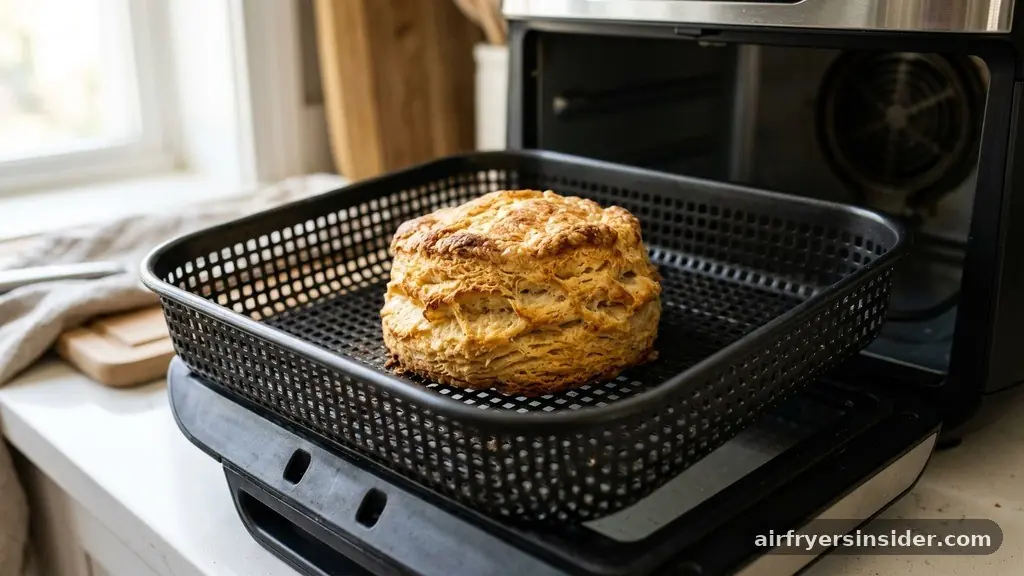
The primary advantage of using an air fryer for leftovers lies in its specialized convection heating technology. Unlike a standard toaster oven, an air fryer forces hot air into a concentrated chamber, ensuring that the heat hits all sides of the pastry simultaneously.
When you are focused on reheating biscuits in air fryer, you are essentially harnessing the power of a small-scale convection oven. This rapid movement of air works to evaporate surface moisture while locking in the structural integrity of the crumb, preventing that dreaded gummy or dense texture often associated with microwave reheating.
Furthermore, the compact nature of the air fryer basket allows for precise temperature control. Most standard ovens have hot spots that can cause one side of a biscuit to burn while the other remains lukewarm. Because the air fryer creates a vortex of heat, your buttermilk biscuits or savory scones are warmed evenly.
This thermal conductivity is essential for restoring the flaky layers that define a high-quality biscuit. By avoiding the microwave, you bypass the uneven heating caused by moisture pockets, ensuring that every bite feels just as indulgent as it did when the item was first baked.
Essential Preparation for Optimal Results
Before you place your leftovers into the basket, a few preparation steps can significantly enhance the final product. Even if your biscuits seem sturdy, they can lose their moisture retention over time.
A quick trick is to use a light butter brush on the top of the biscuit before it goes into the machine. This adds a small amount of healthy fat back into the crust, which encourages a golden brown finish and prevents the surface from becoming overly dry or brittle during the quick reheating process.
Another critical factor is the use of non-stick spray or parchment paper. While many air fryer baskets are non-stick, the sugar or butter content in some pastry recipes can lead to residue buildup. Placing a small circle of parchment paper at the bottom of the basket ensures easy cleanup and prevents the bottom of the biscuit from sticking.
You should also be mindful of the spacing; even though the air needs to circulate, you do not want to overcrowd the basket. If you are reheating several pieces at once, ensure they are not touching, as this blocks the airflow and creates cold spots between the items.
Mastering the Temperature and Timing
Achieving the perfect reheat is all about the balance between temperature and duration. The goal is to warm the internal temperature of the biscuit without overcooking the outer crust. For most standard biscuits, setting your appliance to 325°F or 350°F is ideal.
If you go too high, the outside will darken before the center has a chance to heat through. If the temperature is too low, you risk a dry texture because the biscuit sits in the heat for too long, essentially dehydrating rather than warming.
The specific reheating time will vary based on the size and density of the item. A small, light buttermilk biscuit might only need three minutes, while a dense, loaded breakfast sandwich or a thicker scone could require five to six minutes. It is always better to start with a shorter time frame and check the progress.
You can always add an extra minute, but you cannot fix a burnt biscuit. Using the preheat setting on your machine for just two minutes before inserting the food can also improve the consistency, as it ensures the cooking process begins at the target temperature immediately.
Addressing Common Reheating Challenges
Many home cooks encounter the issue of a dry texture when attempting to revive baked goods. This is usually a result of too much heat for too long, which strips the pastry of its internal moisture.
If you notice your biscuits are particularly stale, you can combat this by lightly misting them with water or using the aluminum foil trick. Wrapping the biscuit loosely in a small piece of foil allows it to steam slightly in its own moisture during the first half of the cycle, before opening the foil for the final minute to crisp up the top.
Another challenge involves reheating complex items, such as when you decide to reheat chicken biscuit sandwiches. These require more care because the protein inside needs to reach a safe internal temperature without the bread becoming like a crouton. In these cases, lower the temperature to 300°F and increase the time slightly.
This slower, gentler approach ensures the chicken remains juicy while the biscuit recovers its structure. Always prioritize food safety by ensuring that any meat inside the pastry is thoroughly heated through before serving.
Comparison of Reheating Methods
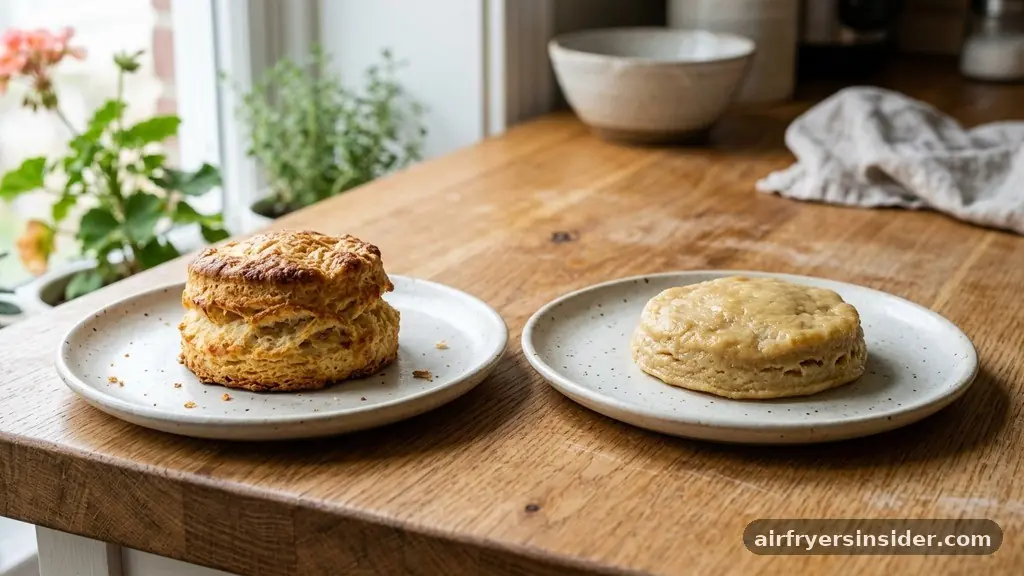
To understand why the air fryer is often the superior choice, it helps to look at how it stacks up against other common kitchen appliances. The following table illustrates the typical outcomes for different heating methods regarding texture and convenience.
| Method | Texture Outcome | Speed | Best Use Case |
|---|---|---|---|
| Air Fryer | Crispy exterior, soft center | Fast | Perfect for flaky, buttery pastries |
| Microwave | Soft, often soggy or rubbery | Very Fast | Emergency situations only |
| Oven | Evenly heated, traditional | Slow | Large batches for crowds |
| Toaster Oven | Good, but uneven | Moderate | Small snacks |
As shown in the table, while the microwave is the fastest option, it almost always compromises the quality of the pastry. The oven is reliable but inefficient for small quantities. The air fryer sits in the “sweet spot,” providing a high-quality texture that mimics fresh baking while maintaining the speed required for a quick breakfast or a mid-day snack.
Topical Gaps: What Most Guides Miss
There are several nuances often overlooked in generic advice about warming up pastries. One such gap is the impact of the specific recipe’s fat content. Biscuits with higher butter content have a lower melting point, meaning they will soften and potentially collapse if they are reheated at too high a temperature.
If you are dealing with delicate, high-fat, or laminated doughs, it is vital to keep the heat lower and the time shorter. You are essentially “tempering” the fat rather than cooking the dough.
Another frequently missed detail is the ambient humidity in your kitchen. If you live in a very humid environment, your leftover biscuits will absorb moisture from the air, making them limp. In this case, you might need to extend the reheating time by thirty seconds to drive off that excess atmospheric moisture.
Conversely, in a dry climate, you should be much more conservative with your timing to prevent the biscuit from turning into a dry, crumbly mess. Understanding your environment is just as important as understanding your machine.
Tips for Maintaining Kitchen Appliance Efficiency
To keep your air fryer performing at its peak, you must maintain the heating element and the basket. Over time, grease buildup can act as an insulator, preventing the air from reaching the desired temperature.
Regularly cleaning the basket with warm, soapy water and checking the heating element for debris will ensure that your convection heating remains consistent. A clean machine is not only safer but also significantly more efficient, which translates to better results when you are reheating leftovers.
Additionally, consider the airflow. The air fryer relies on a vortex of air to function. If you stack items, or if the basket is warped from high-heat use, the air may not circulate as intended.
Always ensure the basket is seated correctly in the unit. If you find that your biscuits are consistently uneven, try rotating them halfway through the cycle. This simple manual intervention compensates for any minor dead zones in the airflow, ensuring every part of your pastry reaches that perfect golden brown state.
Strategic Ingredient Pairings
When you are reheating biscuits, consider what you are serving alongside them to maximize the experience. Since you have already put in the effort to restore the texture, pairing them with the right accompaniments can make a leftover meal feel like a gourmet breakfast.
A dollop of high-quality jam or a side of savory gravy can hide any minor imperfections that occur during the reheating process. If you are reheating a plain biscuit, consider brushing it with a garlic-herb butter immediately after removing it from the air fryer.
The heat from the biscuit will melt the butter, infusing the flavor deep into the crumb. This is a great way to transform a plain, day-old biscuit into a flavorful side dish for dinner. Don’t be afraid to experiment with different toppings.
Because the air fryer does such a good job of restoring the crust, the biscuit becomes a blank canvas for both sweet and savory applications. Whether it is honey, clotted cream, or a slice of sharp cheddar cheese, the right topping can elevate the entire experience.
The Role of Storage in Reheating Success
Much of the success you will have with reheating depends on how you stored the biscuits in the first place. If you leave them on the counter in a plastic bag, they will inevitably become soft and prone to mold.
If you store them in the refrigerator, they will dry out and harden. The ideal way to store biscuits for a future reheat is to wrap them individually in plastic wrap and then place them in an airtight container or a heavy-duty freezer bag.
When you are ready to use them, you can take them directly from the freezer to the air fryer. You will need to increase the reheating time by about two to three minutes, but this method preserves the internal structure better than any other.
By minimizing the time the biscuit spends in a “stale” state, you ensure that when it finally hits the heat of the air fryer, it returns to its original, peak condition. Proper storage is the unsung hero of the entire reheating process.
Frequently Asked Questions
How can I prevent my biscuits from drying out in the air fryer?
To keep them moist, lightly brush the tops with melted butter or water before starting. You can also loosely wrap them in aluminum foil for the first half of the cycle to trap steam, then remove the foil for the final minute to crisp the crust.
What is the ideal temperature for reheating biscuits?
The best temperature is typically between 325°F and 350°F. This range is high enough to create a crisp exterior without burning the crust, while still being gentle enough to warm the center of the biscuit thoroughly without dehydrating the delicate crumb.
Can I reheat a biscuit that has meat or cheese inside?
Yes, you can, but you must be careful. Lower the temperature to 300°F and increase the time slightly. This allows the heat to penetrate the center and warm the filling to a safe temperature without overcooking the outer pastry layer.
Do I need to preheat my air fryer before reheating?
While not strictly required, preheating for two minutes is highly recommended. Starting the cycle at the target temperature ensures consistent results and prevents the biscuit from spending extra time in the machine as it slowly warms up, which can lead to a dry texture.
Conclusion
Bringing your leftovers back to life doesn’t have to be a gamble. By leveraging the specific capabilities of your air fryer, you can consistently achieve that sought-after flaky, golden brown finish that makes a biscuit so satisfying. Focus on using moderate heat, ensuring proper airflow in the basket, and being mindful of your specific ingredients.
With these techniques, you can enjoy fresh-tasting results every time you decide on reheating biscuits in air fryer. Experiment with these settings to find what works best for your specific appliance, and you will find that your leftovers become a welcome part of your meal planning rather than a kitchen burden. Enjoy the process of refining your technique and reclaiming the quality of your favorite baked goods.
Meta Description: Learn the best method for reheating biscuits in air fryer to achieve a crispy exterior and soft center. Discover tips for perfect results every time.


