

Reheating fried chicken in an air fryer is arguably the most effective way to restore that elusive, fresh-out-of-the-fryer crunch. When you store leftovers in the refrigerator, the breading often absorbs moisture, turning once-crispy coatings into a soggy, unappealing mess. By utilizing the rapid air circulation of an air fryer, you bypass the dull results of a microwave and the slow, uneven heating of a conventional oven.
This method revives the texture while keeping the meat juicy, ensuring your meal tastes nearly as good as the day it was prepared. Mastering this technique allows you to enjoy high-quality poultry for several days without sacrificing quality.
The Science of Air Frying Leftovers
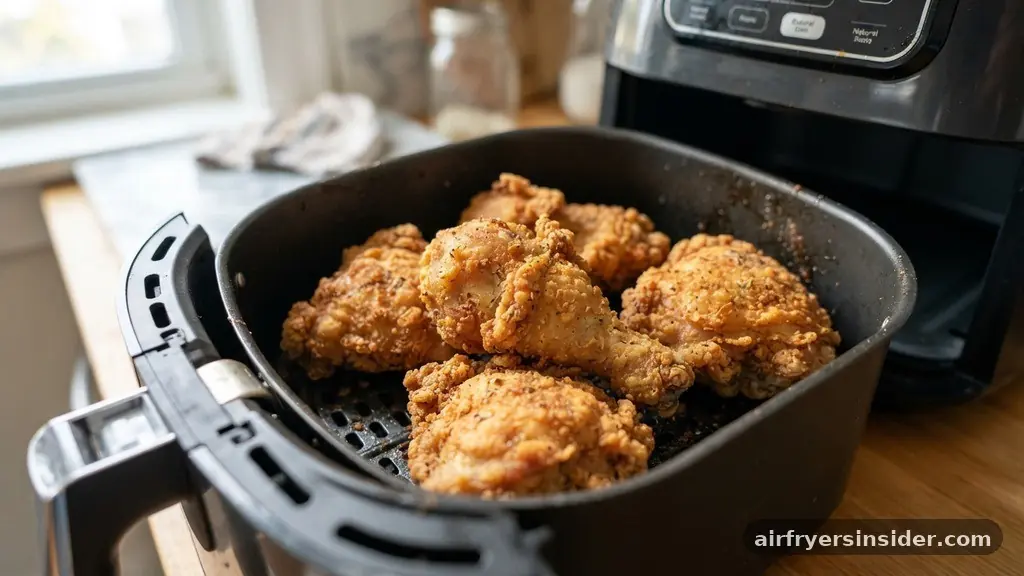
To understand why an air fryer works so well for this task, you have to look at the physics of convection heating. Unlike a standard oven that relies on radiant heat from a single element, an air fryer uses a powerful fan to circulate hot air at high speeds. This movement of air creates a thin, intense boundary layer around the food, which is perfect for dehydrating the surface of the breading just enough to bring back that signature crispy texture.
This process is essentially a controlled form of the Maillard reaction. When you apply high heat to the proteins and sugars in the flour or batter coating, you trigger browning and flavor development. While the chicken is already cooked, the air fryer provides the thermal energy required to crisp the exterior without overcooking the meat inside.
This is why the appliance is superior to a microwave, which excites water molecules and often leaves the breading soft or rubbery. By focusing on surface dehydration, the air fryer delivers the crunch you crave.
Preparing Your Chicken for the Best Results
Before you even think about turning on the machine, you need to prepare the leftovers properly. Cold chicken straight from the fridge will take significantly longer to heat through, increasing the risk of the exterior burning before the center is warm.
Take your chicken out of the refrigerator and let it sit on the counter for about 15 to 20 minutes. This brings it closer to room temperature and ensures more even heating throughout the reheating time.
You should also check the condition of the breading. If there are large clumps of soggy coating, consider gently patting them with a paper towel to remove excess surface moisture.
Do not wrap the chicken in plastic or store it in airtight containers for too long, as this traps steam. If you have a wire rack, placing the chicken on it inside the air fryer basket can further improve air circulation underneath the pieces, ensuring that the bottom of the chicken gets just as crispy as the top.
Optimizing Temperature and Timing
Finding the optimal temperature is the secret to success. Most experts agree that setting your air fryer between 350°F and 375°F is the sweet spot.
If you go too high, say 400°F, you risk scorching the spices in the breading before the heat can penetrate the bone. If the temperature is too low, the chicken will stay in the device for too long, leading to dry chicken that has lost all its natural juices.
The duration depends heavily on the size of the pieces. A thin chicken tender will require much less time than a thick, bone-in breast or thigh. On average, most pieces will be perfectly reheated in about 6 to 8 minutes.
Always flip the pieces halfway through the process to ensure uniform browning. If you are reheating a large batch, avoid overcrowding the basket, as this restricts airflow and prevents the convection effect from working efficiently.
| Chicken Cut | Reheating Time | Temperature |
|---|---|---|
| Tenders/Strips | 4-6 Minutes | 360°F |
| Wings | 6-8 Minutes | 375°F |
| Bone-in Breast | 10-12 Minutes | 350°F |
Managing Moisture and Texture
One common complaint when working with kitchen appliances like these is that the meat can become tough. Moisture retention is a delicate balancing act. To prevent the meat from drying out, you can give the chicken a very light misting with an oil spray before placing it in the basket. This adds a tiny bit of fat back into the breading, which helps conduct heat and encourages a golden-brown finish.
Be careful not to overdo it with the oil, though. Too much liquid can make the coating greasy rather than crispy.
If you notice the chicken looking particularly dry, you might consider adding a tiny splash of water to the bottom of the air fryer basket—underneath the rack—to create a bit of steam. This is an advanced trick that works well for larger, thicker pieces of poultry, keeping the interior succulent while the fan does the heavy lifting on the exterior.
Safety and Internal Temperature Considerations
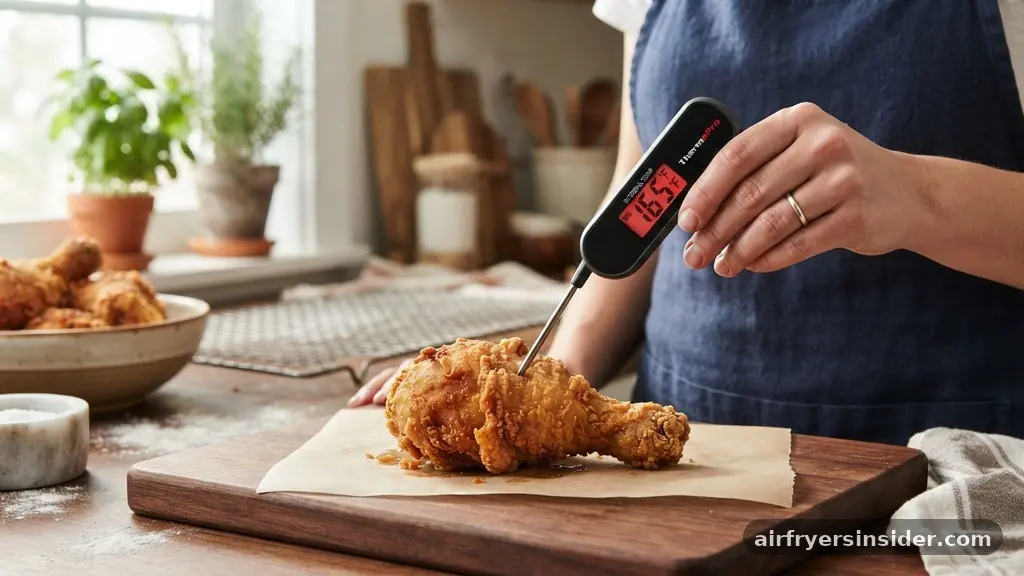
While you are focusing on taste and texture, food safety must remain a priority. Because you are dealing with previously cooked meat, there is always a risk of bacterial growth if the chicken wasn’t stored correctly. The USDA recommends that all reheated leftovers reach an internal temperature of 165°F to ensure any potential pathogens, such as salmonella, are neutralized.
Using a reliable food thermometer is the only way to be certain. Insert the probe into the thickest part of the meat, avoiding the bone, as the bone can conduct heat differently and give you a false reading.
If the chicken hasn’t reached 165°F after the initial reheating cycles, simply pop it back in for another minute or two. Never rely on guesswork; checking the temperature is a quick, professional habit that prevents foodborne illness and guarantees a safe dining experience.
Addressing Topical Gaps in Reheating Methods
Many people wonder if they can use accessories like parchment paper to make cleanup easier. While you can use perforated parchment liners designed for air fryers, be aware that they can slightly impede the airflow if the holes don’t align perfectly with the basket’s vents. For the best results, skip the liner if you want maximum crispiness, or ensure you are using a high-quality, ventilated version.
Another common gap involves reheating different brands of machines, such as a Ninja Foodi versus a Cosori. While the underlying technology is the same, these units have different heating element intensities and fan speeds. A Ninja Foodi often runs hotter and faster than a standard basket-style air fryer.
If you are using a high-powered unit, start on the lower end of the time spectrum—perhaps 5 minutes—and check the progress frequently. You can always add more time, but you cannot fix a burnt crust.
Common Mistakes to Avoid
Even with the right equipment, it is easy to fall into traps that ruin your meal. One of the biggest mistakes is stacking the chicken pieces.
Air fryers rely on air circulation to function; if the chicken is piled up, the hot air cannot reach the surfaces, resulting in soft, soggy spots. Always arrange the pieces in a single layer with a bit of space between them.
Another error is using too much oil or sauce before reheating. If the chicken was originally tossed in a heavy barbecue or buffalo sauce, that sauce will likely burn at high temperatures.
It is much better to reheat the chicken first and then toss it in your desired sauce once it is hot and crispy. This preserves the structural integrity of the breading and prevents a sticky, blackened mess in your basket.
Comparing Methods for Best Results
When you look at the landscape of kitchen tools, you might wonder why the air fryer wins out over alternatives. The oven is a common fallback, but it takes much longer to preheat and often fails to achieve that high-heat crispiness unless you use a convection setting. Microwaves, while convenient, are almost never the right choice for fried foods because they turn the breading into a chewy, unappealing texture.
- Air Fryer: Best for restoring original crunch and speed.
- Conventional Oven: Good for large batches but requires more time.
- Toaster Oven: A decent middle ground if it has a convection fan.
- Microwave: Avoid entirely unless you are making a soup or stew.
- Stovetop: Risky, as it often leads to uneven browning and burnt spices.
Using the air fryer provides a level of control that other appliances simply cannot match. It is essentially a miniature, high-velocity oven designed specifically for browning and crisping, making it the perfect tool for quick meal prep when you want to make the most of your leftovers.
Refining Your Technique Over Time
As you get more comfortable with your specific appliance, you will start to develop an intuition for how your chicken reacts to heat. You might find that your particular unit needs a slightly higher temperature for wings but a lower one for breasts. Keep track of your results.
If the chicken comes out a bit too dark, dial the heat down by 10 degrees next time. If it’s not quite crisp enough, add a minute to the duration.
Remember that reheating cycles are a personal process. There is no single “perfect” time that applies to every piece of chicken in existence.
Factors like the thickness of the coating, the type of breading, and the density of the meat all play a role. By paying attention to these variables and using your thermometer, you will eventually master the art of the perfect leftover meal.
Frequently Asked Questions
Is it safe to reheat fried chicken more than once?
It is generally recommended to reheat leftovers only once. Repeatedly cooling and heating chicken increases the risk of bacterial growth and significantly degrades the quality, texture, and flavor of the breading. For the best food safety and taste, only reheat the amount you intend to eat immediately.
Do I need to add oil when reheating fried chicken?
You do not strictly need to add oil, but a light misting of high-smoke-point oil can help revive the crispiness of the breading. It helps the exterior brown more evenly and provides a better texture, especially if the chicken has been in the refrigerator for more than 24 hours.
What is the best way to keep the chicken from drying out?
To prevent the meat from becoming dry, avoid overcooking it. Use a food thermometer to pull the chicken as soon as it hits 165°F. You can also place a small amount of water or broth in the bottom of the air fryer to create a humid environment during the process.
Can I reheat frozen fried chicken in an air fryer?
Yes, you can reheat frozen fried chicken directly in the air fryer. Simply increase the cooking time by about 3 to 5 minutes compared to refrigerated chicken. Ensure the internal temperature reaches 165°F to guarantee the center is fully thawed and heated through properly.
Conclusion
Mastering the art of reheating fried chicken in an air fryer is a simple way to reduce food waste and ensure your meals remain delicious long after the initial dinner. By focusing on consistent temperature control, proper air circulation, and checking for safety, you can transform yesterday’s leftovers into a crispy, satisfying treat. Whether you are dealing with a few leftover wings or a full breast, the air fryer provides the precision needed to avoid the soggy pitfalls of other methods.
Start experimenting with these techniques today to see how easily you can bring your favorite comfort food back to life. If you have any specific tips or favorite settings for your own model, feel free to share your experiences with other home cooks looking to improve their daily routine.
Meta Description: Learn how to reheat fried chicken in an air fryer to restore its crispy texture and juicy interior using these expert tips and safety guidelines.


